Religion
Sam Harris, the Atheist Who Believes in Spirituality
Sam Harris, an atheist who believes in spirituality and a member of the 'Four Horsemen of the Apocalypse', promotes rationalism after the decline of his fellow thinkers. He turned to writing after 9/11 and is one of America's controversial figures.
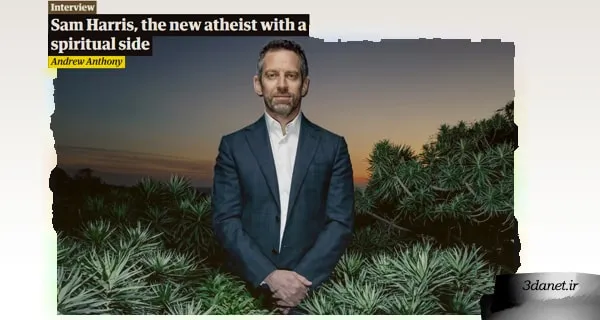
In the middle of the first decade of this century, the publication of several books on a single subject signaled the emergence of a new movement. The four main authors were Richard Dawkins, Christopher Hitchens, Daniel Dennett, and Sam Harris. This movement became known as "New Atheism."
At the time, Harris, who in fact published the first book attributed to this movement, The End of Faith, was undoubtedly not as famous as the other three. Those three were renowned in their fields—Dawkins in evolutionary biology, Hitchens in journalism and oratory, and Dennett in philosophy and epistemology. Harris only had a bachelor's degree in philosophy and had published just this one book. These four, who became known as the "Four Horsemen of the Apocalypse," gathered in Hitchens' apartment in Washington in 2007 to discuss their agreement on atheism, or more accurately, their opposition to faith. The meeting was recorded on video and the footage is available on YouTube.
Harris was much younger than the other three and resembled Ben Stiller [the comedic actor]. After watching this video, the viewer gets the feeling as if Ben Stiller has participated in a conversation among great thinkers and, despite his inexperience, has succeeded in a serious discussion. It was entirely possible that Harris would meet a fate like Ringo Starr [the least popular member of the Beatles], but that did not happen, and he thrived.
Now this conversation has been published in a book titled The Four Horsemen of the Apocalypse, with an effusive foreword by Stephen Fry. Reviewing that period gives the reader a strange feeling. "New Atheism" is no longer in the headlines; one of the reasons for this, which supporters of New Atheism also acknowledge, is that it was not very different from old atheism. Another reason is that New Atheism was a product of the "War on Terror," or at least an intellectual response to the Islamic extremism against which this war was waged.
Now Dawkins and Dennett are in their late seventies and are not as active as before; Hitchens, the most charismatic member of the group, has also passed away. Therefore, the advocacy of this movement falls to Harris, and he has continued this with great passion and enthusiasm. Today, thanks to several best-selling books, a widely listened-to podcast, and a dispute with Hollywood actor Ben Affleck, he is one of the most famous public intellectuals in America.
In a telephone conversation with Harris, I first ask him how well he knew the other three before participating in that discussion.
He says, "I first met Hitch in 2007, just before the publication of his book God Is Not Great. [Before the discussion at his house] I hadn't seen much of him. My history of acquaintance with Richard and Dan was longer—our communication was mainly via email. As I said in the introduction to this book [The Four Horsemen of the Apocalypse], it is strange that this was the only time all four of us gathered together and talked."
The book's strength and its appeal to customers lie precisely in this uniqueness. The book's subtitle is: The Discussion That Launched an Atheist Revolution. This title might be a bit exaggerated, but it cannot be denied that this meeting, if not having attained a mythical status, has at least acquired a particular historical significance. These four—or, in a phrase suited to the era of identity politics, these four heterosexual white men—have become champions not so much of the atheist movement as of the movement of forthright rationalism.
There is a growing rift between two groups: champions of empirical evidence and those who analyze the cultural and social conditions that empiricism overlooks. Harris is unquestionably in the vanguard of the first group, and the second group—including many postmodern leftists—detests him. In internet forums and online debates, everyone cites him, and his name is on everyone's lips in many social and intellectual controversies. He is often labeled a racist, an Islamophobe, and the epitome of white self-righteousness. He has denied all these accusations, but they have not gone away.
There is a growing rift between two groups: champions of empirical evidence and those who analyze the cultural and social conditions that empiricism overlooks.
Perhaps what turned Harris into a controversial figure in the eyes of the American public was his on-air argument four years ago with Ben Affleck on the comedy television show Real Time with Bill Maher. During a discussion about Islam, the Hollywood star accused Harris of Islamophobia and racism. The burly Affleck spoke with a self-righteous and passionate air, and although Harris kept his composure and tried to make his point understood, he seemed intimidated by Affleck's physical stature and fame. Harris says it was only toward the end of the show that he managed to get a word in edgewise.
"I said, 'If we burned the Bible on live television tonight, there would be an uproar, but our lives wouldn't be destroyed. If we burned the Quran on the show tonight, the consequences would haunt us for the rest of our lives. You know this, and you're lying.'"
This is precisely the kind of thing Harris says: an illustrative comparison, a vivid image, and a kind of explicit moral challenge. These are the familiar methods Harris employs, the interesting asides that hearten his supporters and infuriate his enemies.
Before discovering his calling, Harris was a frustrated writer and a failed novelist. The terrorist attacks of September 11 suddenly turned him into a writer of non-fiction.
He says, "The End of Faith was a direct reaction to these events. I started writing the book on September 12 or 13. As soon as it became clear what had happened, I knew I had to write this book."
Shortly before that, Harris had received his bachelor's degree in philosophy from Stanford University, after an 11-year hiatus from his university studies and abandoning an undergraduate degree in English. In his early college days, he had recreationally used ecstasy, become interested in meditation, traveled to India and Nepal, and spent two years on retreats ranging from one week to three months. His life during that period resembles a Hermann Hesse novel—he spent a great deal of time in contemplation and studying philosophy, with no tedious day job in sight. During that long educational and career break, his parents, Berkeley Harris (an actor) and Susan Harris (the producer of the television series "The Golden Girls"), supported him financially (his parents separated when he was two).
In his view, this financial support was "both a blessing and a curse" because, although it allowed him to read, write, and pursue his interests, he forgot to build a career for himself.
"The End of Faith" changed everything completely. The book's central thesis was simple. Harris argued that human actions and behaviors are influenced by ideologies or belief systems. For example, if you look at the social, ethnic, class, and cultural backgrounds of suicide bombers, you see no single pattern. But the common denominator among all of them is a certain kind of belief system or, more precisely, a certain kind of faith. He has made this argument repeatedly, especially regarding Islam. He tells me the same thing again.
He says, “There is only one religion that poses such a problem for civil society. Mormons do not create such a problem. Fundamentalist Christians do not create such a problem. Of course, in places like Uganda they do, but in many places, including developing countries, they do not.”
Statistically, Harris is right, although many other factors must also be considered. Harris gets into trouble when he abandons strict definitions and speaks in generalities. This has led many to accuse him of Islamophobia. While rejecting this accusation, he distinguishes between two things: attacking Islam as a set of codified beliefs, and demonizing Muslims, who constitute a large and diverse group.
In 2006, following the crisis over the publication of cartoons of the Prophet Muhammad in Denmark, he wrote:
“Throughout Western Europe, Muslim immigrants show little inclination to embrace the secular and civil values of their host countries, yet they heavily exploit these values and demand that others tolerate the backwardness, misogyny, anti-Semitism, and murderous hatred constantly promoted in their mosques.”
Hitchens believes that all religions are “inherently” equally dangerous. But Harris disagrees with this cautious equivalence.
Although the prevailing mood at the time was emotional, in this quote Harris seems to be condemning all Muslims more than Islam itself. He says, “In that period, emotions were running high, and these phrases are very general and not at all qualified, yet they are descriptively true.”
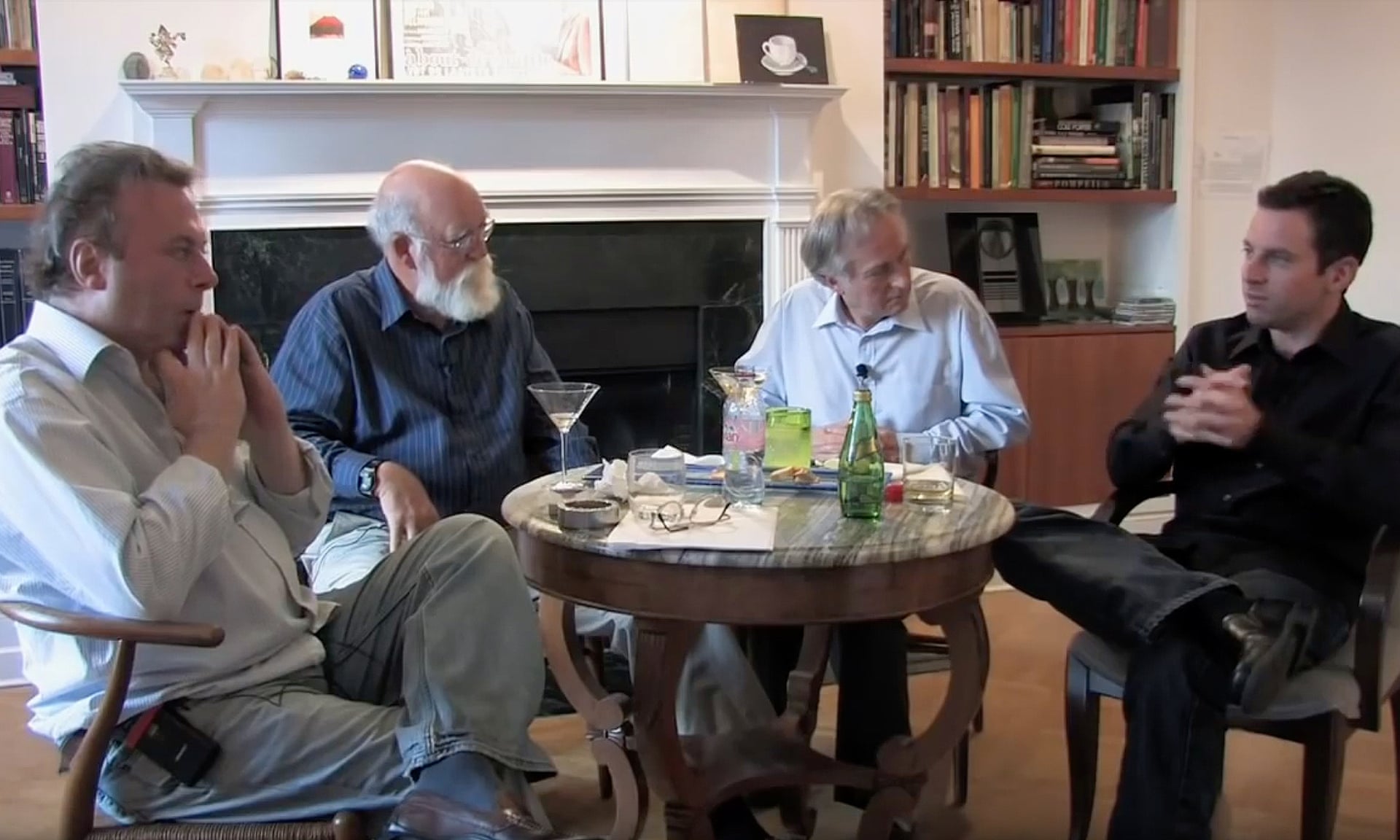
One of the few points of disagreement among the Four Horsemen of the Apocalypse is the issue of Islam’s incompatibility with secular humanist values. The discussion turns to comparing malice and ill-will among different religions. Dawkins asks, “Is Islam worse than Christianity?” Hitchens believes that all religions are “inherently” equally dangerous. But Harris disagrees with this cautious equivalence.
Addressing the other three, he says, “The chaos and mayhem that Islam has unleashed cannot be compared to the fact that every ten years a couple of [fundamentalist Christians] murder abortion providers.”
Harris does not mention the chaos and mayhem that followed the US invasion of Iraq. This conversation took place in an atmosphere filled with despair and pessimism, which can still be felt when reading the book. It is as if these four, just like their religious adversaries, were awaiting a final, catastrophic confrontation between the religious and secular worlds.
The mood at the end of the conversation is bleak. Harris asks the other three what their fears and hopes are, and what developments they think will occur within their children’s lifetimes. Hitchens says that although they might win the rational argument, on a global scale he and other secularists are “a small and dwindling minority who will be defeated by the proponents of theocracy.” Hitchens says the true defender of secularism is the US Army’s 82nd Airborne Division [which was then engaged in combat in Iraq].
Does Harris agree with this military assessment by Hitchens?
He says, “I think this is a problem we might ignore for months or even years. But this problem will eventually erupt. I don’t know how it could possibly resolve itself without fundamental reforms in Islamic society. It’s hard to imagine right now.”
After the 2007 conversation, Harris continued his education and earned a PhD in cognitive neuroscience. Since then, he has written various articles about consciousness from a scientific and materialist perspective and has stated that free will is nothing more than an illusion. Yet at the same time, he has approached this issue from a spiritual viewpoint as well. Harris has long written works on meditation and has practiced the martial art of Brazilian Jiu-Jitsu. This aspect of his personality has made him resemble a Californian follower of “new spiritual movements” more than a “New Atheist,” compared to his three colleagues. In that same conversation, he says that “the sacred also has a place in our lives,” and Dawkins looks at him with skepticism, as if Harris were about to roll out a prayer mat.
Harris is a militant rationalist, and this is incompatible with his interest in what sandal-wearing hippies called “self-transcendence.” The title of one of his recent books is: “Waking Up: A Guide to Spirituality Without Religion.” In Harris’s view, there is no contradiction between the objective study of the mind and the subjective experience of escaping its constant chatter. He sees both methods as a way to understand consciousness or awareness.
He says, “The fact that we are here, experiencing the world in the light of our consciousness every moment, is a deeply mysterious and profound reality. The more we pay attention to it, the more our experience resembles the claims of the founders of religions throughout the ages.”
In his view, the West can learn a great deal from the East—not from Islam, but from the meditative traditions of the Hindu and Buddhist religions.
He says, “We are like sleepwalkers, unaware. When we learn to meditate, we realize that another possibility exists, and we can be so aware of our experience in every moment that we are liberated from everyday sufferings. Meditation is nothing more than the practice of learning to break the spell and wake up.”
Harris is adept at using the commercial possibilities of new technology and has recently released a meditation app. Despite all this, when I ask him what need this spirituality fulfills for him, he says something unexpected.
He says, “We need more than just understanding the facts to live. Not being wrong is not the highest state of human existence in this life.”
Perhaps this is true, but one cannot imagine anyone more determined to avoid being wrong than Harris himself. I don’t mean that he speaks abstrusely or is arrogant; rather, I mean that although he speaks calmly and composedly, he is extremely tenacious in presenting his arguments. Listeners of his popular podcast, Making Sense (formerly titled Waking Up), are familiar with this trait of his.
He skillfully prompts his guests—people like Stephen Fry, Steven Pinker, and Yuval Noah Harari—to delve deeply into the topic of conversation. But if he thinks his point hasn’t been correctly understood, he becomes pedantic and combative. For example, one can point to his dispute with Ezra Klein, editor-in-chief of the website Vox and a long-time critic of Harris. This quarrel stemmed from the fact that Harris had invited Charles Murray onto his program and, in Klein’s view, had allowed him to say whatever he wanted without challenging him.
Murray is the author of The Bell Curve, one of the most controversial books of recent decades. In this book, among other things, he addresses the difference in intelligence between white and black Americans. Murray has been accused of racism, advocating eugenics, and other unsavory charges, and universities and many media outlets do not allow him to speak.
Interestingly, in The Four Horsemen, during a discussion about things that might be true but should not be debated, Harris casually mentions The Bell Curve as a potential example. Hitchens dismisses the idea, saying none of them agree with the contents of that book. The discussion on this topic abruptly ends there and does not continue. So why did Harris invite Murray onto his program?
He says, “I had accepted the fairly common view that The Bell Curve was an ugly, racist book. I hadn’t read the book. I had never spoken to Murray and had accepted all the criticisms raised in the press.”
But the media had also painted an ugly picture of Harris after the argument with Affleck. So, he decided to see whether Murray deserved such treatment or not. He read the book and concluded that Murray did not deserve such treatment. Klein disagreed with Harris, and when Harris published their angry email correspondence, they argued for two hours on Harris’s podcast.
Harris emphasizes that he is concerned about social justice and says that if we want consensus on justice, we must “step out of [the shell of] our identities.” In his view, society is harmed when political activism is based on identity. He says, “In that case, all undesirable things are amplified.”
Identity, consciousness, faith, and reason: these are the major concepts at the heart of many current debates. Harris is never far from these discussions, and although he speaks softly, he fuels disagreement in a fitting manner. Harris, this fourth horseman of the apocalypse, rides on, solitary and assured.
.
.
Andrew Anthony is a writer and journalist. What you read is a translation of his piece with the following original title:
Andrew Anthony, ‘Sam Harris, the New Atheist with a spiritual side’, The Guardian, 16 February 2019.
Translation: Erfan Sabeti
.
.


Discussion5 comments
سلام نظرتون درمورد این بیت به ظاهر ساده چیست ؟ اسلام به ذات خود ندارد عیبی هر عیب که هست از مسلمانی ماست
گناه عمده به گردن دیندارهائی است که به اسم دین نفرت و خشونت می افرینند و دیکتاتوری خود را به نام دین رواج میدهند
شاید هم سلطه کامل غرب بر تحصیلات ، رسانه، و تکنولوژی دنیا که از کودکی در ذهن ما القا می شود . کارتون ارزش، اندیشه، فرهنگ اوبرمانشی رقابت دیوانه وار و غیر انسانی غرب را در کودک dramatize می کند. پدر و مادر تشنگی سکس، ثروت، و لاکشری را در نهاد او می کارد، معلم و استاد متظاهر و تشنه جایگاه دروغین علمی آن را تئوریزه می کند. نتیجه journaleseو تخریب خود و اگزجره کردن تکنیک غربی و down playکردن فاشیسم غرب. در کلاس درس ایرونی هم شیک بودن بدگویی از ملا و تنفر از ایران و ایرانی و خارجی بازی!
دین را از متنفرین دین نمی تونی بشناسی. اگر خفقان غرب اجازه بدهد.
self-contradictory! How weird to raise a theme like that. All Hellenism, Humanism, Epicurantism lay claim to and stand on is . mechanistic weltanshauung. All that is aspired about constitutes atomism, mechnism, evolution, blind accident, and mathematical world. The giant clock, Man is a wolf, Man is the measure of everything and you name it, all refer to the core theory behind western philosophy, namely, man is a spec in the universe. Matter is primordial. Everything started from nothing. To counterfeit non- divine spiritualism, or to conjure up meaning from total meaninglessness is baltant philosophical charlatanism!m!