Iranian thinker
Sedigheh Vasmaghi
Sedigheh VasmaghiReligious intellectualism, jurisprudence and women's rightsIranianb. 1962
In their times
Open in the Timeline of ThoughtLife and Thought
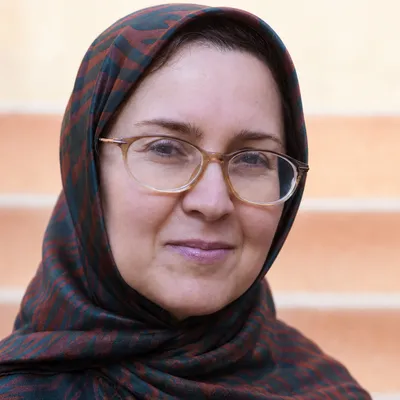
Sedigheh Vasmaghi, born March 1962, is an Iranian poet, writer, translator, and Islamic studies scholar. She holds a PhD in Islamic Jurisprudence and the Fundamentals of Islamic Law and is considered one of the figures of religious modernism in Iran.
Sedigheh Vasmaghi, born March 1962, is an Iranian poet, writer, translator, Islamic studies scholar, jurist, and one of the figures of religious modernism in Iran. She holds a PhD in Islamic Jurisprudence and the Fundamentals of Islamic Law and taught Islamic jurisprudence at the University of Tehran for many years. Vasmaghi is among the few women who, from within the jurisprudential and academic tradition, have critiqued certain common interpretations of Sharia, particularly in the areas of women's rights, hijab, freedom, and human dignity.
She began her religious studies at the Shahid Motahari Higher School and then continued to the doctoral level at the University of Tehran. In addition to university teaching, she has written on jurisprudential, social, and legal issues in Persian-language press and media. Her political and social presence, including membership in the first term of the Tehran City Council, is part of her public life; however, her primary significance in this list lies in her intellectual and religious role in reinterpreting Sharia and defending women's rights.
The core of Vasmaghi's work can be described as "critiquing traditional jurisprudence from within the religious tradition." Drawing on her jurisprudential and legal knowledge, she has presented critical views on issues such as hijab, women's rights, freedom of religion, the relationship between Sharia and law, and the place of the human being in understanding religion.
In her writings, Sharia is not regarded as something fixed and beyond reinterpretation; rather, she views religious understanding as historical, human, and in need of rethinking. For this reason, her works stand alongside those of religious modernists who strive to establish a new relationship between faith, rationality, justice, and human rights.
In addition to jurisprudence and law, Vasmaghi is also a poet. Her poetry collections show that her language is not solely that of jurisprudential and legal argument; she has also expressed the experience of suffering, hope, protest, faith, and freedom in poetic form. This combination of poetry and jurisprudence has given her career a distinctive hue.
Bibliography
Writings and transcribed lectures10 titles
Women, Jurisprudence, Islam
The Poverty of Jurisprudence
Rereading Sharia
On the Path of Prophethood
Why I Rebelled Against the Hijab
There Must Be a Way
Rain Prayer
Broken Branches
Description of Molten Pains
Selections from Contemporary Literature