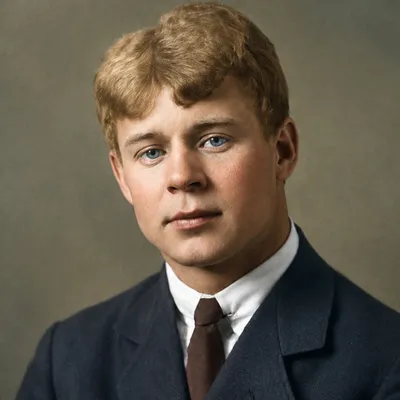
Foreign thinker
Sergei Yesenin
Sergei YeseninRussian poetry and literatureRussian1895–1925
“I do not regret, I do not call, I do not cry; everything will pass away like white smoke from apple trees.”


Life and Thought
Sergei Yesenin was a prominent Russian poet and one of the most important figures in early twentieth-century Russian poetry. Through his lyrical and nature-oriented poems, he portrayed rural life, love, loneliness, and the spiritual crises of modern humanity, becoming one of the notable representatives of Russian Imagism.
Sergei Yesenin was born in 1895 in the village of Konstantinovo in the Ryazan region of Russia. He grew up in a rural family, and his childhood experiences of nature, peasant life, and Russian folk culture deeply influenced his poetic language and worldview. From a young age, Yesenin was interested in poetry, and after moving to Moscow he entered literary circles.
Yesenin published his first poetry collections in the 1910s and quickly became known as a young and distinctive poet. His early poems were filled with images of nature, Russian folklore, and nostalgia for the rural world. Later, he joined the Russian Imagist movement, which emphasized poetic imagery and the independence of poetic language.
Among his important works are the poetry collections "Confessions of a Hooligan", "Moscow of the Taverns", and the long poem "The Black Man". In his later works, themes such as identity crisis, anxiety, disappointment in ideals, and alienation became more prominent.
Yesenin's personal life was marked by many difficulties, intense emotional relationships, and psychological struggles. His marriage to the famous American dancer Isadora Duncan is one of the well-known events of his life. He died in 1925 at the Hotel Angleterre in Saint Petersburg; although different views exist about the circumstances of his death, the official report considered it suicide.
Today, Yesenin remains one of the most beloved Russian poets of the twentieth century, and his poetry continues to be read for its musical language, emotional sincerity, and deep connection with human experience.