Foreign thinker
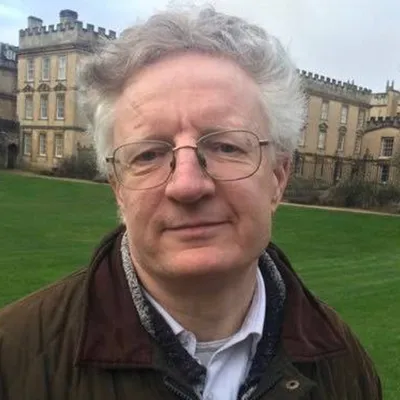
Timothy Williamson
Timothy WilliamsonAnalytic Philosophy, Logic and EpistemologyBritish
Knowledge is a fundamental and irreducible concept in the human mind; we understand belief by analyzing knowledge, not the other way around.
Life and Thought
Timothy Williamson is one of the most prominent and influential contemporary analytic philosophers and a professor of philosophy at the University of Oxford. By presenting groundbreaking theories in epistemology, philosophical logic, and vagueness, particularly his 'Knowledge-First' theory, he has introduced tradition-breaking views in the philosophy of mind and knowledge.
Timothy Williamson (born 1955) is a British philosopher and the former Wykeham Professor of Logic at the University of Oxford. He completed his studies at Oxford and, before returning to the university, taught at prestigious institutions such as Edinburgh and Dublin. Williamson is now recognized as one of the central and pioneering figures in the analytic philosophy tradition.
One of the most important topics Williamson addressed in the 1990s was the issue of vagueness. In his renowned book *Vagueness*, he defended the 'Epistemicism' view; according to this view, the boundaries of vague concepts are precise and absolute, but human ignorance and cognitive limitations prevent us from grasping these boundaries.
Williamson's greatest contribution to contemporary epistemology is the presentation of the 'Knowledge-First' approach in his landmark work *Knowledge and its Limits* (2000). Contrary to the Platonic and contemporary tradition that considers knowledge to be a combination of 'justified true belief', he argued that 'knowledge' is a compact and fundamental mental state that cannot be analyzed into simpler components. His other highly influential works include *Modal Logic as Metaphysics* and the book *Doing Philosophy*, in which he defends metaphysical and modal methodology.