Foreign thinker
Yuval Noah Harari
Yuval Noah HarariMacrohistory and Philosophy of HistoryIsraeli
Life and Thought
Yuval Noah Harari is an Israeli historian and author who gained worldwide fame with his books Sapiens, Homo Deus, and 21 Lessons for the 21st Century. In his works, he examines human history, the role of shared narratives, the power of technology, the future of artificial intelligence, and the political and ethical transformations of the contemporary world.
Yuval Noah Harari was born in Israel in 1976 and taught history at the Hebrew University of Jerusalem. He pursued his studies in history, particularly military history and macrohistory, and later became a global figure in public thought with the publication of popular works on human history and the future of humankind.
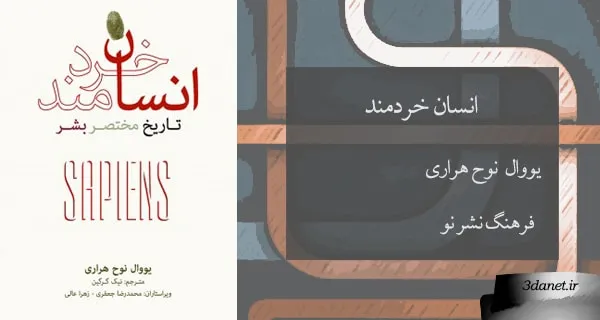
His most important work is Sapiens: A Brief History of Humankind, a book that narrates the path of Homo sapiens from the Cognitive Revolution and the Agricultural Revolution to the formation of empires, religions, capitalism, science, and the modern world. In this book, Harari emphasizes the idea that the human ability to construct shared narratives, myths, and imagined realities has enabled large-scale cooperation and the formation of civilization.
In Homo Deus, he addresses the future of humanity, biotechnology, dataism, and the possibility of humans transcending biological boundaries, and in 21 Lessons for the 21st Century, he examines contemporary issues such as artificial intelligence, nationalism, religion, terrorism, education, and the crisis of meaning. Harari's works have found a wide readership due to their engaging prose and the broad scope of their discussions, although they have also been subject to serious criticism for their grand simplifications and some controversial judgments.