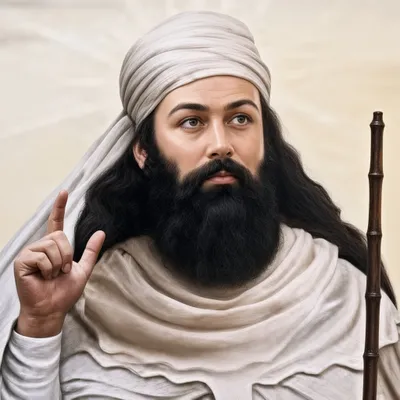
Humata, Hukhta, Huvarshta (Good Thoughts, Good Words, Good Deeds)


Life and Thought
Zarathushtra (Zoroaster) was an ancient Iranian prophet and thinker and the founder of Zoroastrianism. His teachings, preserved in the Avesta, especially the Gathas, emphasize monotheism, the struggle between good and evil, ethical choice, and individual responsibility in shaping the world.
Zarathushtra, whose name appears in ancient Iranian sources as Zarathushtra and in other languages as Zoroaster, is one of the most important figures in the history of Iranian religious thought. The exact date of his life is uncertain, and scholars usually place him in the second millennium or the early first millennium BCE. His birthplace is also debated, though many studies associate him with the cultural regions of eastern Iran.
His teachings are preserved in the oldest parts of the Avesta, especially the Gathas, which are attributed to him. At the center of his thought is Ahura Mazda, the wise and good Lord, and the human being is a free and responsible agent who must choose between Asha (truth, order, and righteousness) and Druj (falsehood and moral disorder). Zarathushtra emphasized the importance of good thoughts, good words, and good deeds.
Zoroastrian thought has had a wide influence on Iranian culture, and concepts such as moral judgment after death, reward and punishment, the struggle between good and evil, and the final renewal of the world have held major importance in the history of religions. Zoroastrianism was an important religious tradition during the Achaemenid, Parthian, and Sasanian periods and has continued among Zoroastrian communities in Iran and among Iranian diaspora communities.