Tim Maudlin: Why Physics Needs Philosophy
Contrary to claims of philosophy's demise, contemporary physics requires conceptual clarity to understand reality and resolve ambiguities in relativity and quantum mechanics. The 'shut up and calculate' approach is insufficient, and philosophical skepticism fortifies its foundations.
Tim Maudlin: Many questions about the nature of reality cannot be properly pursued without taking contemporary physics into account. Investigations into the fundamental structure of space, time, and matter must consider the theories of relativity and quantum mechanics...
“How can we understand the world in which we live? How does the universe behave? What is the nature of reality? Traditionally, these are questions for philosophy, but philosophy is dead. Philosophy has not kept up with modern developments in science, particularly physics. Scientists have become the bearers of the torch of discovery in our quest for knowledge.” Stephen Hawking and Leonard Mlodinow
This passage from the book “The Grand Design” sparked considerable controversy. Has philosophy been overshadowed by science in the quest to understand reality? Is philosophy merely embellished mysticism, irrelevant to scientific understanding? Many questions about the nature of reality cannot be properly pursued without taking contemporary physics into account. Investigations into the fundamental structure of space, time, and matter must consider the theories of relativity and quantum mechanics. Philosophers accept this. In fact, some prominent philosophers of physics hold doctorates in physics. Nevertheless, they prefer to work within philosophy departments rather than physics departments, because many physicists strongly discourage questioning the nature of reality. The prevailing approach in physics has been “shut up and calculate”: solve the equations and don’t ask what they mean. But prioritizing calculation over conceptual clarity can lead to confusion. Consider, for example, the famous “twin paradox” in relativity. Identical twins are separated at birth and later reunited. When they meet, one is biologically older than the other. (The astronaut twins, Scott and Mark Kelly, will soon realize this experiment: when Scott returns from a year in Earth orbit in 2016, he will be 28 microseconds younger than his brother Mark, who remained on Earth.) No skilled physicist would err in calculating the magnitude of this effect. But even the great Richard Feynman did not always provide the correct explanation. In “The Feynman Lectures on Physics,” he attributes the age difference to the speed experienced by one of the twins. The twin who moved at a higher speed remains younger. But one can easily find counterexamples, or even cases where neither twin experienced a higher speed yet ends up with a different age. The calculation can be correct while the accompanying explanation is wrong. If your goal is calculation, this may suffice. But understanding existing theories and proposing new ones requires more than this. Einstein arrived at the theory of relativity by reflecting on conceptual, not empirical, problems. He was fundamentally troubled by an explanatory asymmetry in the theory of electromagnetism. For instance, physicists before Einstein knew that moving a magnet inside or near a coil of wire induces an electric current in the coil. But the standard explanation for this effect appeared completely different when the motion was attributed to the magnet versus when it was attributed to the coil: the reality is that the effect depends only on their relative motion. Resolving this explanatory asymmetry required rethinking the idea of simultaneity and rejecting the classical account of time and space. This required the theory of relativity. Understanding quantum theory requires an even deeper challenge. What does quantum theory implicitly say about the “nature of reality”? Scientists do not agree on the answer to this question; they even disagree on whether the question is sensible. The problems surrounding quantum theory are not mathematical. They stem instead from the unacceptable technical vocabulary used in presenting the theory. Physical theories must be expressed in precise, unambiguous terms. John Bell lists concepts that are not sufficiently clear in his paper “Against ‘Measurement’”:
Here you see some words that, however legitimate and necessary in their proper use, have no place in a formulation—even one that merely claims physical precision: system, apparatus, environment, microscopic, macroscopic, reversible, irreversible, observable, information, measurement.
Textbook expositions of quantum theory freely employ these forbidden terms. But, ultimately, how are we to know that something is a “system,” or large enough to count as “macroscopic,” or that an interaction counts as a “measurement”? Bell’s linguistic scrupulousness was the outward manifestation of his concern with concepts. Sound physical theories cannot be built on vague ideas. Philosophers seek conceptual clarity. Their training inculcates certain habits of thought: sensitivity to ambiguity, precision of expression, attention to theoretical detail. These are essential for grasping what a mathematical formalism suggests about the actual world. Philosophers also learn to detect gaps and elisions in everyday arguments. These gaps are entry points for conceptual voids: corners where neglected alternatives can take root and grow. The “shut up and calculate” ethos does not promote this critical approach; philosophy encourages it. So what philosophy offers to science is not mystical ideas, but a rigorous method. Philosophical skepticism focuses on conceptual weak points in theories and arguments. Philosophy encourages the exploration of alternative explanations and new theoretical approaches. Philosophers obsess over subtle ambiguities of language and over causes and effects. When the foundations of a discipline are secure, this can be detrimental: just get on with the job, finishing is what matters! But when solid foundations (or new foundations) are needed, critical scrutiny can illuminate the way forward. A precise account of the fundamental concepts of quantum theory and relativity can certainly help find a way to unify the two theories, even if such an effort is limited to suggesting that something be abandoned or modified. Philosophical skepticism derives from theories of knowledge, the branch of philosophy called “epistemology.” Epistemology examines the basis of our beliefs and the sources of our concepts. This branch of philosophy often exposes implicit presuppositions that may be false, presuppositions that are a source of doubt about what we really know. We began with Hawking, but let us end with Einstein:
How does it happen that a properly endowed natural scientist comes to concern himself with epistemology? Is there no more valuable work in his specialty? I hear this from many of my colleagues, and I sense that many more feel this way. I cannot share this sentiment…
Concepts that have proven useful in ordering things easily achieve such an authority over us that we forget their earthly origins and accept them as unalterable givens. Thus they come to be stamped as “necessities of thought,” “a priori givens,” etc. The path of scientific advance is often made impassable for long periods by such errors. Therefore, it is by no means an idle game to examine and analyze them, and to show the circumstances in which their usefulness was judged and upon which it depends, and how they grew and developed outside the arena of experience. In this way, their excessively great authority is broken.
.
.
Tim Maudlin
Translated by Zahir Bagheri Noaparast
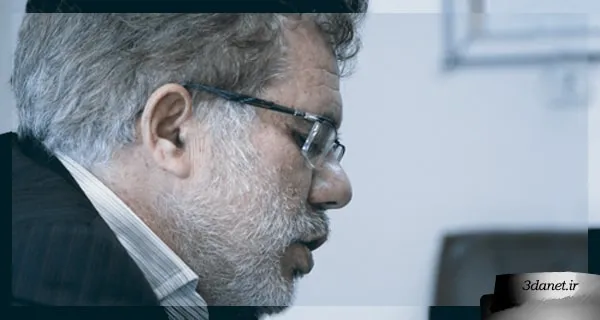
Tim Maudlin is a professor of philosophy at New York University. He received his B.A. in physics and philosophy from Yale University and his Ph.D. in the history and philosophy of science from the University of Pittsburgh. His work revolves around the interpretation of physical theory. His recent books include Philosophy of Physics: Space and Time and New Foundations for Physical Geometry. He is a Guggenheim Fellow, and a member of the International Academy for Philosophy of Science and the American Academy of Arts and Sciences.
.
.





Discussion2 comments
ببخشید متن خوانا نیست. لطفا رسیدگی کنید
اصلاح شد