Philosophy
War in the Womb
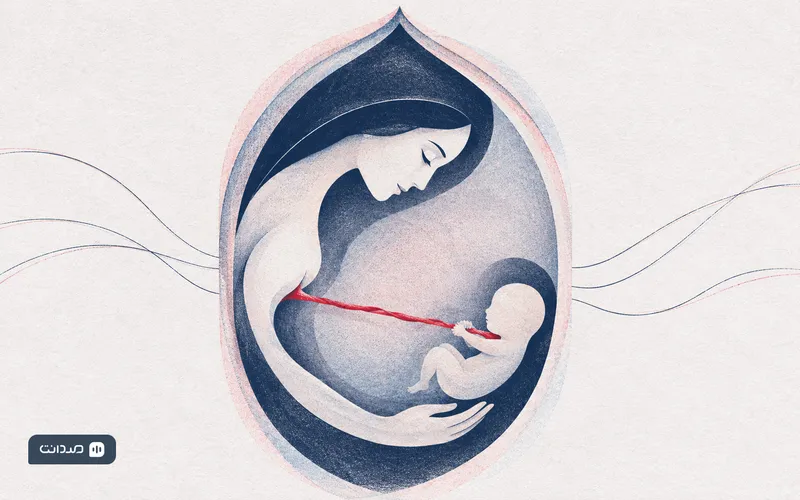
We usually think of pregnancy as a symbol of a mother's tenderness and generosity, but evolutionary biology shows a different picture: the womb is a hidden arena of competition between the genes of the father and the mother, and between the interests of mother and fetus. Drawing on David Haig's theory of genomic imprinting, Suzanne Sadedin explains why pregnancy is so perilous for humans and how it is tied to the extraordinary growth of our brains.

سوزان سددین
نویسنده
Aref Ebadi
مترجمWar in the Womb
Suzanne Sadedin[1]
Translated by Aref Abadi
What scene could be more moving than a mother nursing her child? Could there be a better embodiment of a mother's love, intimacy and boundless generosity? It is no accident that the image of the Virgin and Child[2] has become one of the great religious symbols of the world.
To grasp where the spirit of maternal generosity leads when taken to its logical conclusion, consider an Australian spider, Diaea ergandros. All summer long, the mother spider fattens herself on insects so that, when winter comes, her young can suck blood from the joints of her legs. This leaves her so weak that the spiderlings gather on her body, inject her with venom, and devour her like any other prey.
You might imagine that mammalian offspring[3] would never be capable of such cruelty. You would be wrong. Mammalian young are every bit as ruthless as spiderlings, but here it is the mothers who are less generous. Among mammals, a mother strives fiercely to keep her offspring from taking more than she is willing to give. The offspring retaliate with trickery, extortion and violence. The womb is where this dreadful struggle appears in its clearest form.
This reality sits uneasily with some long-held cultural notions about motherhood. Even today we hear doctors describe the uterine wall as an "optimal environment" for nurturing the embryo. But physiology has long since called this romantic view into question.
The cells of the human endometrium[4] are tightly aligned, forming a fortress-like wall around the inner surface of the womb, one packed with lethal immune cells. Since 1903, researchers have known that the embryo makes its way into the uterine wall by "invading" and "digesting" it. In 1914, Robert William Johnston[5] described the implantation site[6] as a "front line" "where the struggle between the maternal cells and the invading trophoderm[7] takes shape". It is a battlefield where "the dead of both sides ... lie scattered all over it".
When scientists tried to grow mouse embryos outside the womb, they expected them to perish, cut off from the surface that had evolved to nourish them. To their astonishment, the embryos, which had been implanted in the brains, testes and eyes of mice, ran completely amok. Placental cells infiltrated the surrounding tissue and, in their hunger for nutrients and their thirst for blood, slaughtered everything in their path by tapping into blood vessels. It is no coincidence that many of the genes active in embryonic development are the same ones implicated in cancer. Pregnancy is more like war than we care to admit.
All right, then: if pregnancy is a kind of battle, what starts it? The gist can be put this way: we are not genetically identical to our closest relatives, and that means we are in competition with them. Because we live in the same environment, our nearest kin are in fact our foremost rivals.
In the 1970s, Robert Trivers[8] was the first to have the nerve to explore the sinister implications of this fact, in a series of influential papers. A decade later, David Haig[9], then a part-time student, was mulling over Trivers's ideas when it occurred to him that the nurturing behaviour of mammalian mothers offers an exceptional opportunity for exploitation.
Haig realised that, genetically, it is in your mother's interest to invest equally in each of her children. But your father may not have another child with your mother. That means your mother's other children [by other fathers] can be your direct rivals. So your father's genes have a motive to cheat the system. Paternal genes should have evolved to trick the mother into providing more resources for the baby. In turn, the mother's genes cleverly try to give the baby fewer resources. The situation is like a tug-of-war in which some genes are silenced and others become more active to keep the balance.
This insight led Haig to the theory of genomic imprinting[10], which seeks to explain how some genes are expressed differently depending on whether they came from the father or the mother. With this theory in hand, we can see how the conflict of genetic interests between parents shows up in the genomes of their offspring.
Because the parental genomes push each other to produce ever more of powerful hormones, the failure of a single gene can have disastrous consequences for mother and baby alike. Just as in a tug-of-war, where one team letting go of the rope sends both teams tumbling, the normal development of a baby can proceed only when paternal and maternal hormones are held in precise balance. This is one reason why mammals cannot reproduce asexually and why cloning them is so difficult: development in mammals requires a delicate collaboration between the paternal and maternal genomes, and a single error can ruin everything.
Of course, the Diaea ergandros spider, that paragon of motherhood, need not worry about any of this. She gives birth only once and has no need to impose limits on her young. But most female mammals reproduce more than once, and with different males. This very fact guarantees that the paternal and maternal genomes will be pitted against each other. The tragic consequences of this hidden war can be seen across the entire class of mammals. But in one particular species the war reaches an astonishing ferocity: our own.
Despite this hidden conflict, the lives of most mammals go on as usual during pregnancy. While pregnant, mammals flee predators, hunt, build nests and defend their territories as they always do. Even birth is relatively free of risk: they may sweat a little and grimace during labour, but it goes no further than that. There are exceptions, of course. Female hyenas, for example, give birth with great difficulty because of their pincer-like anatomy[11], and roughly 18 percent of them die during their first delivery. But even for them, pregnancy itself is rarely dangerous.
If we look at the primates[12], however, the story is entirely different. In primates, the embryo sometimes implants in the fallopian tube[13] instead of the womb. In such cases the embryo burrows ruthlessly toward the most nutrient-rich source within reach. The result is nothing other than maternal haemorrhage. Among the great apes,[14] things are even more dangerous. Here we meet the most sinister complication of pregnancy: preeclampsia,[15] a mysterious condition marked by high blood pressure and protein in the urine. Preeclampsia accounts for the deaths of 12 percent of mothers worldwide. But that is only the beginning of the trouble.
The list of reproductive diseases dangerous to our species begins with placental abruption (abruptio placentae),[16] severe nausea and vomiting of pregnancy, gestational diabetes, cholestasis[17] and miscarriage, and goes on from there. All told, roughly 15 percent of women suffer life-threatening complications during pregnancy. Without medical help, more than 40 percent of women in hunter-gatherer groups never reach menopause. Even today, with modern medicine, pregnancy still causes the deaths of roughly 800 women around the world every day.
We are now facing a puzzle. The genetic conflict that turns the womb into a war zone exists across many species: what sparks the war is that mothers can have several children by different fathers. But as you have seen, this is the ordinary reproductive arrangement in nature, and it causes other mammals little real trouble. So why have we humans been so unlucky? And does it have anything to do with our other extraordinary trait, the remarkable growth of our brains?
In most mammals, the mother's blood supply is safely separated from the fetus. Blood vessels deliver nutrients to the fetus through a filter that the mother controls. Here the mother acts like a despot who gives only what she chooses to give, and so pregnancy is largely immune to manipulation by the father's [genes].
In mice and primates, however, the story is quite different. The invading placental cells clear their path by digesting the surface of the endometrium, puncture the mother's vessels, and pack themselves inside them so as to reshape them in the fetus's favour. Outside pregnancy, the uterine arteries coil in narrow, twisting spirals deep into the uterine wall. During pregnancy, though, the invading placental cells paralyse the vessels to stop them from constricting and to secure more blood, and by pumping out growth hormones they enlarge them to ten times their size. These fetal cells are so invasive and relentless that colonies of them remain in the mother's body for the rest of her life, migrating to other organs such as the brain and liver. What is seldom said about motherhood is that it turns women into chimeras.[18]
This enormous blood supply may explain why primates have brains five to ten times larger than the average mammal's. Metabolically, the brain is an extremely expensive organ, and most of its growth takes place before birth. Without such a blood supply, how could the fetus have afforded the cost of its brain?
Given the invasive and relentless nature of pregnancy, it is no surprise that the primate womb has evolved so as not to yield to it easily. In mammals whose placentas do not break through the uterine wall, the mother may easily drop or reabsorb unwanted fetuses at any stage of pregnancy. In primates, such an arrangement would separate the placenta from the mother's large, paralysed vessels and expose her to severe haemorrhage. That, in a single sentence, is the main reason miscarriage is dangerous.
For this reason, primates do everything they can to assess the embryo before it is allowed to implant. While a delicate hormonal conversation goes on between mother and embryo, the compact cells of the endometrium hold the embryo at a distance. Haig likens this conversation to a "job interview". If the embryo cannot convince the mother that it is perfectly healthy and ordinary, it will be dismissed on the spot.
But how does the embryo convince its mother? By showing its vitality and its lust for life, which is to say, by bringing every ounce of its strength to bear on implantation. And how does the mother assess the embryo? By making its task as hard as possible. It is true that the placenta has evolved to advance and invade, but the endometrium, for its part, has evolved to be hard and hostile. That is why, among humans, nearly half of all pregnancies fail, mostly at the implantation stage. They fail so early, in fact, that the mother herself does not even know she was pregnant.
Embryonic development is a kind of trial of strength,[19] and this set the stage for another peculiar feature of the primate reproductive system: menstruation. Women menstruate for the simple reason that it is not easy to get rid of a fetus that is fighting for survival. The tissues of the endometrial surface are partly isolated from the mother's bloodstream, so as to protect her circulatory system from the onslaught of a placenta she has not yet decided to accept. But this makes it difficult for the mother's hormonal signals to be received inside the womb. What can the mother do, then, instead of risking the decay of the endometrial tissue and constant clashes with the embryo? After every ovulation she discards the entire lining of the inner surface of the womb, the endometrium. This way, even the most aggressive embryo must win the mother's consent before it can settle in. Without constant, strong hormonal signals from a healthy embryo, the whole system is automatically torn down. This is the fate of roughly 30 percent of pregnancies.
I said that the mother has difficulty sending hormonal signals into the womb. But once implantation succeeds, the embryo takes complete control of the tissue. This asymmetry has two implications. The first is that the mother no longer controls how many nutrients are sent to the fetus: cutting the fetus's supply means cutting the supply to the mother's own tissues. Might this unlimited access to the mother's blood be the key to the exceptional brain development of primates? Indeed, there appears to be a correlation between the intensity of invasion and the development of the brain. The attack on the mother's arteries is more extensive and deeper in the great apes[20], who have the largest brains among primates, than in other primates. The placental cells of humans, the apes with the largest brains of all, attack the mother's blood vessels earlier than those of other great apes, and in the very early stages of development they grant the fetus unprecedented access to oxygen and nutrients. Perhaps it is one of evolution's little jokes that, were it not for the big brain and the cognitive and social capacities it gives us, far more of us would have been eliminated from the savage cycle of reproduction. Although one can imagine how these two traits arose together, the womb rarely fossilises, so we still lack the precise details of how the placenta evolved, and the link between the two remains no more than conjecture.
The second major consequence of direct access to nutrients is that the fetus can release its hormones into the mother's bloodstream and thereby manipulate the flow of blood in its own favour. This is exactly what happens. The mother, of course, retaliates. But an important imbalance remains: although the fetus freely pours its products into the mother's blood, the mother has no such access to the fetal bloodstream. She is separated from the fetus by placental membranes, and so her responses are limited to defensive regulation of her own body's hormones.
As pregnancy advances, the fetus increasingly produces hormones that raise the mother's blood pressure and blood sugar in order to obtain more nutrients. In particular, the fetus tries to force the mother's brain to secrete cortisol,[21] one of the major stress hormones. Cortisol suppresses the mother's immune system and prevents it from attacking the fetus. More importantly, it raises the mother's blood pressure, driving more blood and nutrients toward the fetus.
The mother does not ignore this manipulation. In fact, she gets ahead of it and lowers her blood sugar. She also produces a protein that binds to the fetus's hormones and neutralises them. The fetus, in turn, does not sit idle and increases its output. By eight months, roughly 25 percent of the protein the fetus receives each day comes from forged hormonal messages. How does the mother respond? She too increases her hormone production to counter the embryo's hormones and bring blood sugar and blood pressure down. Through all this manipulation and counter-manipulation, the fetus in most cases ends up with just as much blood and just as much sugar as it needs to be born plump and healthy. This is a living example of the tug-of-war between the paternal and maternal genomes that Haig spoke of. As long as both sides keep hold of their end of the rope, no one is hurt.
But what if things go wrong? Since the start of the twenty-first century, the Human Genome Project[22] has yielded a wealth of data, much of which we still cannot make sense of. But by looking for the signatures of genomic imprinting, that is, genes being expressed differently depending on whether they come from the father or the mother, researchers have been able to identify the genetic causes of many diseases of pregnancy and childhood. We now know that genomic imprinting, and the mother-fetus battle that arises from it, underlies gestational diabetes,[23] Prader–Willi syndrome,[24] Angelman syndrome,[25] childhood obesity and several kinds of cancer. Some researchers further believe that these factors may underlie devastating psychiatric conditions such as schizophrenia,[26] bipolar disorder[27] and autism.[28] In 2000, Ian Morison and his colleagues compiled a database of 40 imprinted genes. That number had doubled by 2005 and doubled again by 2010. Identifying genetic mechanisms does not in itself lead to cures for complex diseases, but it is the first step along that path.
Preeclampsia, perhaps the most mysterious disease of pregnancy, may be a good example of how medical, evolutionary and genetic diagnoses come together. More than two decades ago, Haig claimed that preeclampsia is the result of a disturbance in communication between mother and fetus. In 1998, Jenny Graves[29] extended the idea, proposing that preeclampsia might be explained by a failure of gene imprinting inherited from the mother. It is only in the last few years that we have been able to piece together the details of how this process works.
To make this clear, picture a fetus boring its way toward the mother's blood vessels. All else being equal, the dilation of the vessels in early pregnancy can lead to a drop in blood pressure. At this point, fetal hormones counter the effect by raising the mother's blood pressure.
Early in pregnancy, several hormones are involved in dilating the mother's vessels. But if the balance among these chemicals is upset, the vessels cannot dilate, and as a result the fetus does not receive enough oxygen. In such circumstances the fetus sometimes resorts to drastic measures, releasing certain toxins that injure the mother's vessels and make them constrict in order to raise her blood pressure. Even if this does not end in a stroke, it puts the mother's kidneys and liver at grave risk: these are nothing other than the symptoms of preeclampsia.
In 2009, researchers showed that the H19 gene, inherited from the mother, is strongly associated with preeclampsia. This is exactly what Jenny Graves had predicted. H19 is of fundamental importance in the early stages of placental growth. We know, of course, that changes in several genes inherited from the mother and several inherited from the father are probably involved in the disease as well. Although much remains to be clarified, the story shows how, with the help of evolutionary theory, we have at last begun to understand the complex and unruly mixture that is human development.
Our brains and our perilous pregnancies seem to be closely linked; after all, both are uniquely human traits. Did the ancients, in composing their myths, have some inkling of this? Perhaps the story of Eve, condemned to bear the pain of pregnancy for eating the "forbidden fruit of the tree of knowledge", was once an intuitive explanation of the cruelty nature had in store for us. Whatever the case, we should not forget that the only way to reduce the suffering and danger of pregnancy is to face it, not to flee from it. What we need is more knowledge, far more.
[1] Suzanne Sadedin is an evolutionary biologist who has worked at Harvard University, the University of Tennessee, Monash University and the Catholic University of Leuven.
[2] Madonna and Child, a painting by the Italian artist Duccio di Buoninsegna (c. 1255–c. 1318)
[3] Mammalian children
[4] Endometrium: the lining layer that covers the inner surface of the womb, sometimes also called the inner womb lining
[5] Robert William Johnstone (1879–1969), a Scottish obstetrician and gynaecologist
[6] Implantation zone: the site where the mass of the blastocyst attaches to the uterine wall
[7] Trophoderm, also known as the trophoblast: the outer layer of the mammalian blastocyst, which supplies nutrients to the embryo and aids its implantation.
[8] Robert Trivers
[9] David Haig
[10] Theory of genomic imprinting
[11] Penis-like
[12] Primates
[13] Fallopian tube: the fallopian tubes, or uterine tubes, are two simple ducts situated on either side of the upper end of the womb. The end of each tube nearest the ovary is open, and the eggs pass through it on their way to the womb.
[14] Great apes
[15] Preeclampsia
[16] Placental abruption
[17] Cholestasis
[18] Chimera: in Greek myth, the Chimera was a monster with the head of a lion, the body of a goat and the tail of a serpent, breathing fire from its mouth. In genetics today the term refers to an organism whose cells derive from two or more distinct genotypes.
[19] Trial of strength
[20] Great apes
[21] Cortisol
[22] Human Genome Project
[23] Gestational diabetes
[24] Prader-Willi Syndrome
[25] Angelman Syndrome
[26] Schizophrenia
[27] Bipolar disorder
[28] Autism
[29] Jenny Graves

Related articles
All articles Philosophy
“Playing God in Biology” by Brian Klaas
 Philosophy
In Praise of War, or of Death?
 Philosophy
A Letter After Death (A Reflection on 'Death' and 'Life')
 Sociology
Death from the Perspective of Life: An Interview with Maghsoud Farasatkhah
 Philosophy





Discussion0 comments
No comments yet; let yours be the first voice.