Religion
What Does Dr. Abdolkarim Soroush Do with His Critics (Part One)? Mohammad Sahimi
Abdolkarim Soroush's responses to serious criticism, including the writings of Akbar Ganji, have been devoid of logical argument and filled instead with insults and slander. A review of his conduct over recent decades traces a pattern in his treatment of critics, from the Cultural Revolution to the present day.
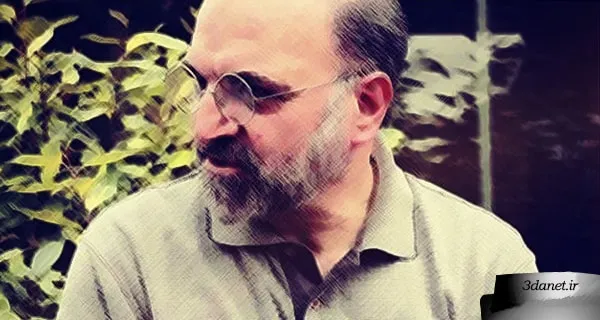
Mohammad Sahimi:
Not all critics are illiterate, unqualified, liars, biased, and slanderers. Either retract your claims about receiving revelation, seeing the faceless God, smelling the scent of God, experiencing the God of Rumi, and being a saint of God, so that the prophethood necessitated by these words is dispelled, or else, with that beautiful prose of yours, patiently, carefully, and kindly explain where the mistake of these intellectuals (Kadivar, Ganji, Naraghi) lies, and what the true interpretation of your statements should be.
Introduction Recently, Mr. Akbar Ganji, journalist, human rights activist, and researcher, published a series of articles in five parts criticizing some of the views of Dr. Abdolkarim Soroush. Regardless of the correctness or incorrectness of Mr. Ganji's critiques, in the author's opinion, the articles were very well-documented and coherent, and possessed a logical structure. The author, who himself holds religious beliefs and believes in a compassionate reading of Islam, believed and still believes that Mr. Ganji's critiques are so serious that Dr. Soroush would be compelled to provide a reasoned and logical response. Such an expectation, considering that Dr. Soroush is a very well-known religious intellectual, was and is not an excessive expectation. However, not only was there no sign of such a response, but Dr. Soroush contented himself with only a short, few-line "response," and that too in reply to a question from one of his disciples who had asked him about Mr. Ganji's articles, which was unfortunately filled with profanity and slander, and astonished the author, who holds great respect for Dr. Soroush. The author was astonished because Dr. Soroush teaches mysticism and ethics, yet it seems that when it comes to his critics, all those lessons of ethics and morality he discusses are forgotten. This treatment of Mr. Ganji's critiques by Dr. Soroush is nothing new. Every time Dr. Soroush has been criticized, instead of a reasoned and respectful response to the critics, he has launched the most severe attacks against them, which is in fact an evasion of accountability. The purpose of this article is a review of some of the criticisms that some of Dr. Soroush's critics have raised over the past several decades, and his response to these critiques. All the criticisms presented in this article from the past, as well as Dr. Soroush's response to them, have documented and credible references. All the critiques, as well as Dr. Soroush's response to them, are presented in their entirety and completely, so that there is no doubt about "selective writing." Mentioning the names of various figures in this article in no way signifies support for their opinions and viewpoints. The point of contention is Dr. Soroush's treatment of critics. The author himself has repeatedly been subjected to the most severe attacks, slanders, and lies by those whose positions he has criticized. Two years ago, in a respectful article, the author criticized the political positions of a compatriot in this area who introduces himself everywhere as a university professor, but his response was an "abusive letter" based on lies, conjecture, and the internal discussions of a political group, which was published on this very website, while the author's response was not allowed to be published on the same website. Another, who from the moment of arrival in America has "melted into the guardianship of the West," and with whom the author had participated in a detailed discussion, after the publication of the author's criticisms of his warmongering positions, all of which were based on his own writings, instead of responding, pushed forward his "lackey" to curse the author, without giving even a superficial answer to the smallest criticism. For this reason, the author has long been preparing to write a series of articles about this kind of treatment of critics. A friend had suggested to the author that this work should begin with a religious intellectual "who is, in terms of belief, of your own kind," and for reasons mentioned below, unfortunately, Dr. Soroush was a good "candidate" for that. The recent developments regarding Mr. Ganji's articles and the response of Dr. Soroush, his family, and his disciples provided a strong motivation for the author to update and publish the first part of such articles. Before addressing the main subject of this article, mentioning a few points is necessary. First, the author is completely familiar with the works and thought of Dr. Soroush, and has followed his work for many long years, but has never met him in person, nor has he had any contact with him. Second, the author is also completely familiar with the intellectual works of Mr. Ganji and his political and human rights activities, and has followed his work since the year before Mr. Khatami's era. However, the author has never met Mr. Ganji, and even when he traveled to Los Angeles and Southern California in the past, not only did he not meet him, but he did not even have the opportunity to attend any of his lectures. Third, the purpose of this article is not to take a position on the correctness or incorrectness of Mr. Ganji's critiques of Dr. Soroush's beliefs and positions.
این به عهده خوانندگان گرامی، بخصوص آنها که دارای دانش کافی درباره اسلام و دو طرف این موضوع هستند، است که درباره این موضوع تصمیم بگیرند. مانند همیشه منابع این مقاله در نسخه پی دی اف آن موجود هستند.The Cultural Revolution There is a great deal of talk and controversy surrounding Dr. Soroush's role in the "Cultural Revolution" of the first half of the 1980s. Many claim that they were expelled from the universities by Dr. Soroush, and that he played a significant role in the dismissal of professors and students from the universities after the Cultural Revolution. Dr. Soroush has denied all of this and has attacked the claimants and critics in the harshest possible manner. It is as if all the claimants and critics are liars who have united to destroy him, and that Dr. Soroush had received an order from Ayatollah Khomeini to resolve the disruptive actions of the students who had shut down the universities and to reopen them quickly. It seems that Dr. Soroush's claim is precisely the execution of such an order from Ayatollah Khomeini. Of course, with what is known of Ayatollah Khomeini, everyone knows that he could not tolerate the criticisms of a prominent figure like the late Ayatollah Hossein-Ali Montazeri, who was Khomeini's "fruit of a lifetime," so how could he have tolerated someone like Dr. Soroush standing up to him and acting contrary to his command? So it seems that Dr. Soroush's argument is that the order was an order to reopen the universities and apologize to dissident professors and students, not an order for the Cultural Revolution. This, of course, is nothing more than a myth. Dr. Nasser Katouzian, the distinguished professor at the University of Tehran, says the following about Dr. Soroush in an interview with the Ham-Mihan newspaper on Sunday, May 27: "I remember Dr. Soroush, who was the theorist and standard-bearer of the idea of closing the university, invited me, who was a serious opponent of this solution, to a televised debate and repeatedly insisted and chanted the slogan that to fix a machine that works badly, you must turn it off.... Another time, he, accompanied by Jalal al-Din Farsi and another person I do not recall, came to the Faculty of Law to promote their idea and engaged in discussion and argument with the faculty professors, and due to the uproar and inappropriate slogans chanted by his companions, I and a group of professors left the meeting, and no result was achieved." Dr. Mohammad-Reza Bateni, a professor at the University of Tehran, recounted his departure from the University of Tehran after the Cultural Revolution at the 133rd Shab-e Bukhara on September 28, 2013, in the presence of figures such as Dr. Dariush Shayegan, Ms. Jaleh Amouzgar, and Messrs. Mahmoud Dowlatabadi, Ali Masoumi Hamedani, Baha'eddin Khorramshahi, Fakhreddin Fakhreddini, Gholamhossein Sadri Afshar, Iraj Parsinejad, Kourosh Safavi, Tofigh Sobhani, Zia Movahed, and others: "The Revolution happened, and then the Cultural Revolution happened. The universities were closed. Until one day, the members of the Cultural Revolution Headquarters sat in session at the Faculty of Law and also asked the professors of the Faculty of Literature to go there. That headquarters consisted of Mr. Jalal al-Din Farsi, Mr. Abdolkarim Soroush, Shams Al-e Ahmad, and one or two others. In that meeting, time was being wasted, and I did not want time to be wasted. I said, gentlemen, you cannot make a revolution in culture. Culture is something we learn from under the korsi. If it changes, it changes bit by bit. What goes in with the mother's milk comes out with the soul. Now, let us suppose that a revolution can be made in culture. Now, is a headquarters necessary for this revolution? Now, let us suppose a headquarters is necessary, are you five people sitting here the best people who could form this headquarters? As soon as these words left my mouth, it was like a match thrown into a gunpowder depot. The professors whose throats were choked with resentment began to clap, bang on the table, and stomp their feet. Mr. Soroush grabbed the microphone and said that we did not come here to be insulted, and then the situation turned into a brawl. Beforehand, they had also brought a number of university janitors and seated them in a corner, and they also stood up and chanted takbirs. Until one of the professors of the Faculty of Law, whose name I will not mention, grabbed the corner of my coat as I was leaving and pulled it, meaning get up and come outside. I spoke with him in the hallway of the Faculty of Law, and he told me, now that you have spoken your mind, I recommend you do not come to the university for about ten days, and I said, alright. I think I did not go to the university for about a week or ten days. When I returned, I saw that all the looks directed at me had become dagger-like. In short, they both told me directly and sent me a message that either you request retirement or we will expel you from the university. So I requested retirement and came home. My retirement was in September 1981, and I was 47 years old at the time. I had not yet felt that shock."
Dr. Ismail Khoi, in an interview with US television, has also described his meeting with Dr. Soroush regarding the purge of the universities. Dr. Soroush denied all of this and attacked the speakers fiercely. In response to the harshest words Dr. Soroush had spoken against him, Dr. Mohammad Maleki wrote to him: "In the presence of renowned professors such as Dr. Naser Katouzian and in defense of the Cultural Revolution Headquarters, you insulted the professors and told them, 'We ourselves know what to do; you go about your own business.' Now you claim that in the Cultural Revolution Headquarters you were merely an observer of the discussions!? At this point, it is necessary to remind you that in those days when you, as an ideologue, were theorizing religious government, I was enduring the harshest tortures in the prisons of the regime you defended for the sake of defending academics, and by accepting all responsibilities, I prevented the arrest of even one of my colleagues on the Supreme Council and the University Management Council. And in response to your friend Dr. Kazem Abhari, a professor at the Faculty of Engineering, who asked you, given your closeness to the regime, to object to this matter, you said, 'Whoever eats melons must also endure the shivers; it is natural that someone who opposes the government's programs will face the consequences' (orally quoted from Dr. Kazem Abhari, former professor at the Faculty of Engineering, University of Tehran, and current professor at a university in Australia)... In your conversation with the Ham-Mihan newspaper, you have on several occasions called the respected Professor Dr. Naser Katouzian a liar (the defense rests with him), but I, as a university colleague who has known him for decades, testify that I have seen nothing from him but honesty and courage." It is necessary to recall that Mr. Reza Fani Yazdi, who was imprisoned for years in the Islamic Republic and came close to execution, mentioned points almost similar to the words of Dr. Mohammad Maleki in his article "With Dolatabadi and Soroush in Prison." On this same matter, Dr. Soroush made very harsh remarks against Dr. Sadegh Zibakalam. In response to Dr. Soroush's harshness, Dr. Zibakalam wrote: "Dr. Soroush has an interesting characteristic that boils down to deeming his opponents worthless and valueless. Anyone who dares to oppose him even a little and says there is a hair out of place above his eyes is met with an artillery of literature, the least of which are 'dishonesty,' 'insincerity,' 'ugliness,' 'ignorance,' and so on, because he considers himself the absolute truth and the truth absolute. Those familiar with history know what has befallen the people of a nation when such self-centered and megalomaniacal individuals have come to power. It is not far-fetched to imagine what a person who cannot tolerate the slightest criticism or fault-finding would do with opponents, critics, protesters, the discontented, and dissidents. In his interview, anyone who has dared to attribute a flaw or criticism to the said gentleman has either been accused of boasting and lying (this humble servant), or is mistaken and suffering from forgetfulness (Dr. Katouzian), or is throwing dust in the eyes of truth (Dr. Maleki), because Dr. Soroush, in his own opinion (and of course that of the Ham-Mihan newspaper), had no role other than striving to reopen the universities and prevent loss and damage; the purge of professors was fundamentally not related to the Headquarters, and if the Headquarters did have a role, it was that of other members of the Headquarters such as Dr. Ali Shariatmadari, Hojjatoleslam Dr. Ahmad Ahmadi, Jalal al-Din Farsi, Dr. Mehdi Golshani, Dr. Mohammad-Ali Najafi, the late Hojjatoleslam Mehdi Rabbani Amlashi, Hassan Habibi, and others." Dr. Mohammad-Ali Najafi, who is renowned for his decency and integrity, and was Minister of Culture and Higher Education from 1981 to 1985, while refuting Dr. Soroush's claim that the purge of the universities was the work of the Ministry of Science, wrote in response to him that the expulsion and purge of students and professors was based on the regulations approved by the Cultural Revolution Headquarters and was carried out by committees operating under the supervision of this Headquarters: "-2 I (and other Ministers of Culture and Higher Education) were never members of the Cultural Revolution Headquarters, and only about six years after the formation of that Headquarters, with the establishment of the Supreme Council of the Cultural Revolution, did the then-ministers of the three ministries (Education, Culture and Higher Education, Culture and Islamic Guidance) become members of that Council. And this membership occurred at a time when the universities had already been reopened and the purges had ended.3- Dr. Soroush knows well that the same extremist group dominating the Cultural Revolution Headquarters (before whom, as he says, he usually remained silent in meetings) considered the purge of professors and the selection of students to be among the principal concerns of the Cultural Revolution... As a result, the Ministry of Culture and Higher Education (Science) was never responsible for the dismissal or purge of professors, and this matter was carried out based on the regulations approved by the Cultural Revolution Headquarters and by committees that operated under the supervision of that Headquarters. For a long time, the said Headquarters even opposed the presence of a representative of the minister on those committees, let alone entrusting the responsibility for purging professors to the ministry.” Dr. Soroush also wrote a sharp letter to Engineer Mir Hossein Mousavi, parts of which read: “It was reported in the news that Mr. Engineer Mousavi, in response to a student who had asked about his role in the Cultural Revolution, had replied, ‘I was not Prime Minister at that time and had no role in the Cultural Revolution, and there is no document on this matter.’ The answer to that student was, in fact, an answer to Abdolkarim Soroush, who, in response to the lies, insults, and mockery of a writer [Mr. Mahmoud Dowlatabadi] in a gathering of Engineer Mousavi’s supporters, had pointed to Mir Hossein Mousavi’s important role in the Cultural Revolution Headquarters and had asked him to reveal this simple secret and provide accurate and precise information to the questioners... Mr. Mousavi, however, instead of telling this simple truth, chose an improper path and gave such a vague answer to that aggrieved student that no one would know what his role was in those days. Mr. Mousavi, you whose entire pride is following the Imam, why? You who were appointed by the Imam himself and presided over the meetings by his command, why do you not provide accurate and precise information about it? If you sit in the presidential chair tomorrow, will you respect the people’s ‘right to know’ in the same way? You have said you had no role in the Cultural Revolution, which is... I know that your supporters, including Mr. Masjed Jamei, committed a grave political and moral error in organizing that meeting, inviting that writer, and inciting him, and they filled the ‘empty space of a lie’ and stained your electoral campaign with injustice. But washing away that stain with another color is not possible... Evasion, burying one’s head in the sand, giving equivocal and evasive answers, concealing the truth, rising to the defense of insulters, and remaining silent in the face of liars and foul-mouthed individuals is not the way of the truthful and the noble.” Dear readers, note that Dr. Soroush writes as if Mir Hossein had an important role in the Cultural Revolution Headquarters and the purges, yet he does not write a single word about what Mir Hossein’s role was, if this is true. He merely suffices with this “conspiracy theory” that yes, Mr. Ahmad Masjed Jamei, a supporter of Mir Hossein, by inviting Mr. Dowlatabadi, had schemes for Dr. Soroush in 2009, 25 years after the original events. On February 7, 2012, on the Ofogh program on Voice of America, Mr. Erfan Ghaneifard accused Dr. Soroush of being the interrogator of Alinaghi Monzavi – the renowned bibliographer – in Evin Prison. Dr. Soroush responded to this accusation and wrote in part: “But Soroush saw Alinaghi Monzavi only once. That was when he came to visit him at the Cultural Revolution Headquarters (sixth floor of the Ministry of Science building, Villa Street, 1981). In this meeting, Monzavi praised Soroush’s ‘sweet pen’ and said, ‘I fear that injustices will befall the owner of that pen.’ He also complained about Jalal Farsi, saying he harbors enmity towards him and attributes sins he has not committed to him. Yes, he (Monzavi) took money from Mansour Ghodar, the Shah’s ambassador in Lebanon, and wrote a book, but what did he know that the source of that money was SAVAK. He also said that he is deeply committed to historical materialism and had given his notes on this subject to Ali Dashti, and he, in turn, wrote the book ‘Twenty-Three Years’ based on them. This was the account of Soroush and Monzavi’s first and last meeting.” Mr. Ghaneifard did not retract the accusation he had made against Dr. Soroush and issued a further response. He said he has a film that proves his claim and demanded it be broadcast on American television. Dear readers, note that the author in no way claims that Mr. Ghaneifard’s accusation is true. Mr. Ghaneifard has been a controversial figure, and his interview with Parviz Sabeti, the head torturer of SAVAK, gave Sabeti the opportunity to both claim innocence and justify his crimes. The main issue here is Dr. Soroush’s response. Everyone remembers that until 1981, no injustice had been done to Dr. Soroush for Mr. Monzavi to have been upset about.Dr. Soroush was a member of the Cultural Revolution Council by decree of Ayatollah Khomeini, and gave lectures on radio, television, and elsewhere. His lectures were broadcast on the radio until around 1991. After Mr. Bani-Sadr’s removal from the presidency, Dr. Soroush gave a lengthy interview with Soroush magazine, issues 111, 112, and 113, in which, while defending “Imam Khomeini,” he described Bani-Sadr’s removal from the presidency as a “prudent move by the Imam” and said:
“The rare event that occurred in our country in recent days, in which the president was removed from the political scene by the general will of the people and through a prudent move by the Imam, was one of the most instructive and cautionary political events in our country during the nascent Islamic Republic of Iran.”
A few years later, at the International Iqbal Lahori Congress, Dr. Soroush recited a long poem he had composed in praise of Ayatollah Khomeini, in which he told Iqbal that Imam Khomeini is the very man you promised would come and break the chains of the slaves, and he broke them. In a part of this poem, Soroush said:
“I pride those eyes that gained kohl from the Truth – and tore the veils of the present and the future
The days of us and our children – a view from the embrasure of our prison
You saw that wise man of masterly skill – the one who broke the chains of the slaves
That Abraham who, with the ‘stroke of Moses’ – splits the skulls of demons in two
Now that brave champion has come – now that eastern sun has come
He has cast a resurrection in Persia – cast down the crown of King Jamshid”
After Ayatollah Khomeini’s passing, Dr. Soroush delivered two lectures for him. One of them was given under the title “Yesterday’s Sun and Today’s Elixir” (Abdolkarim Soroush, The Tale of the Lords of Wisdom, pages 358–381). In the introduction to the same book, regarding his relationship with Ayatollah Khomeini, Dr. Soroush wrote in March 1993:
“Imam Khomeini and Dr. Ali Shariati are two other beloveds of mine whom I have remembered in this notebook… After the Imam’s release from prison [in 1963], I went to Qom among the throngs of his many enthusiasts and supporters, and this was the first time I saw him up close. Years later, during my student days, I read his clandestine book Islamic Government [Velayat-e Faqih] and joined the ranks of his followers. In the heat of the revolution, when the Imam came to Paris, I was granted the fortune of seeing him more often… When he returned to Iran, the fortune of seeing him increased. In the gathering of the Cultural Revolution Council, I hastened to his presence several times. I spoke little with him and listened to him more. I had learned from Rumi that: When you reach a man of heart, sit in silence – do not make yourself a gemstone in that circle. And if you speak, ask in the manner of inquiry – speak to kings humbly and meekly… In my eyes, he appeared as a combination of Ghazali and Sayyid Jamal. And the best title I found befitting him was this: ‘The Messenger of the Dignity of the Muslims’ (ibid., pages twenty-eight to thirty).
After the unjust massacre of several thousand political and ideological prisoners, Dr. Soroush continued to exalt “Imam Khomeini” to the heavens and regarded him as an “elixir” and a “sun.”
Given this background, what injustice had befallen Dr. Soroush in 1981 that Mr. Monzavi was fearful for him and had gone to his presence to raise them?
The International PEN Congress in Helsinki Dr. Soroush said in an interview with the Mihan newspaper: "Alas, the opposition inside and outside the country converge in one place: in the ethics of exposure and vengeance, inquisitorial conduct, case-building, and pretext-seeking for elimination, exclusion, and vilification. A few years ago, when I traveled to Helsinki at the invitation of the Finnish PEN Association, upon arrival I discovered that certain babblers, through their false propaganda, had so disturbed the minds of the hosts that they were reluctant to receive me. Fortunately, the Finnish Ministry of Foreign Affairs astutely grasped the story and compensated for that discourtesy. Upon returning from Finland, I wrote an open piece addressed to those compatriots, saying: You, who have not yet sewn a pouch or amassed any power, are already so aggressive; if you were to grow horns, how insolent would you become? Now the story concerns the domestic ones. I do not know what they gain from all this uproar. A matter which, even if proven—by an impossible assumption and in the realm of imagination—would change nothing." Mr. Faraj Sarkohi, in an article, explained in detail that Dr. Soroush is not recounting the truth. Mr. Sarkohi explained in detail how the embassy of the Islamic Republic dispatched Dr. Soroush to the International PEN Congress and that Iranian writers protested this. Mr. Sarkohi has said that the Finnish Ministry of Foreign Affairs wanted to introduce Dr. Soroush as the representative of the Iranian PEN Association, and he explains that they said nothing about Dr. Soroush's past; their only objection was that no institution called the PEN Association exists in Iran, and the Writers' Association's activities are also banned. Dr. Soroush asked Mr. Mohsen Sazegara to respond to Mr. Sarkohi, and he did. Mr. Sarkohi also replied to him. Mr. Reza Baraheni, in an article titled "Faraj Sarkohi Is Right," also confirmed Mr. Sarkohi's claims. At least in this instance, Dr. Soroush was the one who initiated this story and called the objectors the babblers of the opposition abroad who, through "exposure and vengeance, inquisitorial conduct, case-building, and pretext-seeking," had "eliminated, excluded, and vilified" him. In response to Dr. Soroush's insults, in which he had accused them of butting with horns and so on, Mr. Sarkohi merely wrote that Dr. Soroush had said, "oxen butt with horns and donkeys carry loads," meaning you have equated Iranian writers abroad with oxen and donkeys.
Iranian Thinkers The author’s late father, may God have mercy upon him, always said, “Everyone is expected to act according to their level and learning.” God states in the Quran (paraphrasing), “Every servant is expected to act according to their capabilities.” Dr. Soroush teaches ethics and mysticism. He is a herald of spirituality. Expectations arise from a teacher of such disciplines. But Dr. Soroush also makes greater claims. He has called himself one of the saints of God who is also “the divine messenger of the celestial realm” (he has never denied this). He has said that revelation has come to him and that he has seen the God of the mystics and Rumi, that is, the formless divine command. He apparently believes he holds such a station in the sacred and angelic realm that he has “inhaled the fragrance of God.” He has said that God gives him his poems in his sleep so that he may convey them to others while awake. Even if we assume that Dr. Soroush has not made these claims to elevate himself to a level close to that of the prophets, and that these words merely stem from his profound love for God and his feeling of closeness to the Divine Truth, our expectations of Dr. Soroush will still increase unprecedentedly. Yet it seems that he, the “saint of God” in the present age, cannot bear the slightest criticism and responds to the criticisms directed at him in the harshest possible manner. Dr. Soroush has also had very harsh encounters with the thinkers and cultural figures of Iran. It is emphasized here that Dr. Soroush has every freedom to hold whatever opinion he deems appropriate about any thinker. However, if he publishes these opinions in the public sphere, others will also have the right not only to critique those opinions but also to object to the manner of his criticism. With this explanation, consider the following cases: Dr. Soroush, Mohammad Ali Foroughi, Sadegh Hedayat, and Ali Dashti: In the book Razdani va Roshanfekri va Dindari, Serat, page 293, Dr. Soroush wrote the following about three important figures of contemporary history: “Foroughi was a weak-faithed servant of oppression [the Pahlavi court], Hedayat a bourgeois-minded Freudian, and Dashti a base, unprincipled libertine.” [The author’s reference to the late Dashti does not imply support for his anti-religious ideas, as the subject is Dr. Soroush’s treatment of him.] Dr. Soroush and Dr. Seyyed Javad Tabatabai: It appears that in the article “Dorosti va Doroshti,” Dr. Soroush accuses Dr. Tabatabai, a philosopher and researcher of history and politics, of “plagiarism.” He writes: “A parvenu writer who spouts many old sayings and has been stuck in the mud with Hegel for a lifetime, and whose only art is plagiarizing from this person and that, writes no book in whose preface or footnote he does not settle a score with the knife of his tongue or spill poison with the scorpion of his pen. For years now, he has been peddling such venom, and I have remained silent and overlooked his faults, sitting in the shadow of the forgiving and the restrained. But the day the cauldron of zeal boils over, the garment of patience is torn, and the pen of chastisement blackens the record of that foul-mouthed, insolent face, ‘cries and shouts will arise that there is no Muslim left.’ As it happens, this same arrogant, foul-mouthed individual is among those who falsely accuse religious intellectualism [Dr. Soroush] of ‘purging professors,’ and in this way soothe their thick animosity and malice toward religious intellectualism and its servants. Do the well-meaning critics still lack the resolve to forbid evil? They do not sew their own mouths shut, yet then bitterly reproach me, asking, ‘Why are you sullen with these people?’” In the article “The Merciless Presence of the Axe of Destruction,” Dr. Soroush also wrote the following about Dr. Tabatabai: “There is another person who is allergic to the ‘Luther of Islam’ [Dr. Soroush]. He, too, suffers from the rigidity and impossibility of thought and has been stuck in the mud with Hegel for a lifetime. I said they should give him the title ‘Machiavelli’ so he would calm down.” Dr. Soroush, who accuses Dr. Tabatabai of having “his only art is plagiarizing from this person and that,” what would his reaction be if someone accused him of the same thing? Would he welcome individuals conducting research to show whether he, for example, has presented the views of others on revelation, prophethood, and textual interpretation under his own name without citing the source?
Dr. Soroush and Dr. Seyyed Hossein Nasr: In an article for the conference “Religion and Modernity,” Dr. Soroush says of Dr. Seyyed Hossein Nasr: “Contrary to the notion and effort of the traditionalists, who desire a crude and impossible return to the past—and, of course, clothe it in a garb of bombastic words—the ringleader of whom, who once, from the office of Farah Pahlavi, searched for the sacred in the heavens of monarchy with the telescope of Illumination, has now, more pretentious than ever, stepped into the arena of self-promotion with the aid of his long-time eulogists and disciples.” In “The Disturbed Dream of Returning to Tradition,” Dr. Soroush again says of Dr. Nasr: “Regarding Dr. Nasr, I did not reveal a hidden secret. Mr. Nasr himself is proud and delighted by his relationship with the court and proclaims this at the top of his voice. Moreover, the project of promoting Dr. Nasr is a one-hundred-percent political project to erase the line of religious intellectualism. Therefore, it merits a political response.” Let us be a little fair. Considering what has been mentioned so far, if Dr. Nasr were merely to point to Dr. Soroush’s record of service to the Islamic Republic regime—the dispute is over Dr. Soroush’s role in the purge of senior professors—and say, compare both of our records, would Dr. Soroush not say that this is not the method of scholarly debate? In fairness, in which purge and exclusion of the Shah’s regime’s opponents did Dr. Nasr play a role? As far as the author knows, Dr. Nasr was close to Mrs. Farah Pahlavi around 1977, that is, the period when the Shah’s “political opening” was taking shape in Iran due to the election of President Jimmy Carter. Dr. Soroush and Dr. Reza Davari Ardakani: Dr. Davari, a retired professor of philosophy at the University of Tehran, claimed that the concept of religious intellectualism is like metallic verjuice. In the article “Milk and Sugar” (February 2008), Dr. Soroush responded to his words as follows: “Metallic verjuice was, in truth, something else. It was a manifestation of a hidden taste and talent that only some ‘poets in times of hardship’ find, and it remains until, before turning into raisins, they become unripe grapes, and then, in a ‘time of pleasure,’ it sprouts and resumes its youthfulness and playfulness. This writing, however, is not a critique of verjuice-like philosophers or a defense of religious intellectualism, which needs no defense or argument... One of these fantasists had said that in all novels written in the West, the essence of the West, which is arrogance and egoism, is present. I asked him, have you read all existing Western novels? What about the novels of the next two centuries? How do you know what they are like or what themes they have or will have? It was evident that these questions were futile, and access to the realm of essences had made him needless of referring to the external world and of caution in issuing decrees... Stranger still is that these same deniers, who, for a five-day reward, ‘strained the veins of their necks with strong argument’ and spoke of Platonic guardianship and issued decrees on the amalgamation of those two ‘non-contradictory’ categories and water and bread, have today arrived at the contradiction of intellectualism and religiosity! Platonic guardianship is possible, but religious intellectualism is not... One can say religious intellectualism is like metallic verjuice, and one can say it is like lemon syrup, and, of course, giving examples depends both on a talent for humor, taste, and aptitude (which in some is very strong!) and on fairness (which, in fairness, is also very high in some).” Shahrvand-e Emrooz (Issue 64), in a conversation with Dr. Soroush, asks him: “Mr. Davari Ardakani has said that if Dr. Soroush were a supporter of Popper, instead of the Cultural Revolution Headquarters, he should have joined the Bazargan government and been a supporter of Bazargan.” Dr. Soroush replies: “Of course, I did not possess the revolutionary zeal and cunning of the esteemed professor Mr. Davari, and I did not go on the ‘Identity’ program, did not sign the letter against academics, and was not a regular contributor to the Kayhan newspaper. Moreover, I saw no contradiction whatsoever between the Cultural Revolution Headquarters and Mr. Bazargan’s government. Mr. Habibi was both in the government and in the Headquarters. We were doing cultural work, and Bazargan was doing political and governmental work. Incidentally, I resigned from the Cultural Revolution Headquarters when I saw that the same esteemed professor had entered the Cultural Revolution Council. I knew then that it was no longer my place. For I saw that pressure groups were emerging from his philosophy with force, who came and turned the universities into an arena of assault and plunder. The 18th of Tir and the 14th of Khordad and... were the offspring of that same philosophy. Let go of this sorrowful tale.” In November 2012, Dr. Soroush once again, in the article “Come, Let Us Cast This Judgment Before the Judge,” attacked Dr. Davari in a very harsh tone.The author emphasizes that mentioning these figures in relation to Dr. Soroush does not imply endorsement of them. For example, Dr. Soroush is not the only figure who has criticized Dr. Davari. He has also been criticized by others for his views on Karl Popper, the Austro-British philosopher. The issue here is Dr. Soroush's harsh tone and manner of dealing with others.
.
.
PDF file of the article What Does Dr. Abdolkarim Soroush Do with His Critics (Part One)?
.
.
Related content:
What Does Dr. Abdolkarim Soroush Do with His Critics? (Part Two and Final), Mohammad Sahimi
.
.
Discussion2 comments
متاسفانه دکتر سروش جز خودش, هیچکس را قبول ندارد؟
نویسنده عزیز شما بارها و بارها با عنوان عبارتی مثل اینکه غرض من جانبداری از فلانی نیست عبارات خود را بازگو کرده اید در حالیکه جوی که در سراسر نوشته خود اتخاذ کرده اید تماما جانبدارانه از همان فلانی هاست. خوب بود دست کم وقتی شروع ایراد نظرات سروش می کنید زهری که در کلام مخالفان بود را هم بر کاغذ نقش می زدید. آخر مگر می شود کسی بی جهت چنان عصبانی شود ! بخشی از پیش فرض های شما خطاست. می فرمایید که تا سال 70 اتفاقی برای سروش نیفتاد و... حرفی که سروش نقل می کند این است" خائف است که بر آن قلم جفاها رود" این جمله واضح است که حامل بار پیشگویانه است. مگر نه اینکه در همان سالها داستان آغاز شده بود. نامه فردید به آقای خمینی درباره سروش را ندیده اید؟!یا از نفوذ شاگردانش در ارکان قدرت بی اطلاعید؟! بخش مهمی از حوادث 68 تا قبل از خاطرات مرحوم منتظری برای بسیاری چیزی شبیه یک خبر غیر مستند بود. مجاهدین سالها از این حرفها می زدند. شما انتظار دارید سروش در سال 68 درباره امری نامعلوم موضع گیری کند؟! آیا امروز هم نظر سروش همان نظر است؟! اگر هست قطعا ایراد شما به جاست...حرفهای زیادی در باب نوشته شما قابل طرح است. زبان دکتر سروش را من نیز در مواردی تند می دانم و با شما هم داستانم اما بادمان باشد منتقدین سروش در چه شرایطی شروع به زدن او کردند. وبسیاری از شماتت های آنها_ در صورت صحت_ پایه چوبه داری را که برایش به دانشگاه می بردند محکم می کرد! آیا با امثال جواد طباطبایی هم معامله ای با سروش شد انجام گرفت؟! فرزندش را وادار به شهادت های زننده بر علیه پدر کردند؟! دامادش را از شکنجه به مرز بی خدایی رساندند؟! برای زندگی شخصی اش پرونده ساختند؟! نه اینکه جواد طباطبایی حق انتقاد ندارد اما در زمانه ای که دیو تحجر با اسلحه برهنه در دست قامت بسته تا هر که چون او نمی اندیشد بزند منصفانه است -که بی پروای شرایط- کسانی که در جبهه اندیشه ورزی هستند و هدف عربده کشان اینگونه تازیانه بر پیکر هم بکشند.ما بارها موقعیت نشناسی و عدم مسئولیت پذیری امثال گنجی و نراقی را دیده ایم ... خدا کند دکتر سروش با خواندن مقاله شما متوجه احساسی که گاه نوشته هایش برانگیخته می کند بشود و پرهیز کند از افراطی که در کلام داشته و دیگر اندیشمندان نیز بر زمان و مکان و موقعیتی که در آن به نقد می پردازند بیشتر بیندیشند مگر اینکه در پی به در گردن حریفان به هر قیمتی باشند! از آنان دور باد