Philosophy
Why does separation from the beloved wound us, and what can we do to avoid it?
Mostafa Malekian says that regret for the good we failed to do and sorrow for the joys we never seized are the most painful of sufferings; therefore every encounter is both a greeting and a farewell. If we do not postpone goodness and pleasure, parting from the beloved will be free of sorrow and regret.
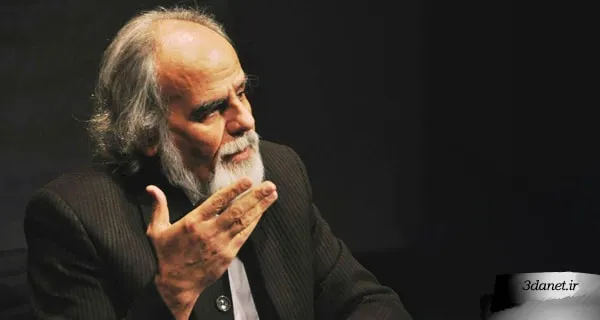
Mostafa Malekian: Generally speaking, and as a matter of experience, I want to share a point with you, and that is that no pain or suffering in life is more intense, more lingering, or more searing than the pain and suffering of remorse and regret (1). These two alone are utterly impossible to come to terms with: one is the remorse arising from not having been good to others, and the other is the regret arising from not having taken joy in others; all other negative feelings and emotions are bearable except for these two, and of these two, remorse is worse than regret. Now, the philosopher says, in a world where everything is in flux, I accept as a law that the beloved may depart from my presence, from my perspective, from my sight, and from my reach; I grieve, but because I have not accompanied this grief with that regret, and have not accompanied it with that remorse, this grief is like the grief that comes from the yellowing of tree leaves—this grief can slowly, slowly be resolved. But we are not like this, because we thought that a product had fallen in love with a product, and that these two things were exempt from the passage of time, that these two would neither age nor transform; then we are confronted with an unforeseen and unexpected event, and then you see that the benefits love brought us are drained from our minds by that remorse and regret. That is, when you tally it all up, you see there was no benefit. I do not mean material benefit; I mean, on the whole, for the flourishing of your psyche, when you review the file, it did not make you more flourishing. Because in the days of love, you neither took any joy, since you had no management, nor did you do any good, since you were not living ethically; then, after you lost them, you are perpetually lamenting, perpetually sorrowful. You have seen those machines that pass rapidly in front of the workers, and each worker must perform a task—for instance, you have seen it in Charlie Chaplin's film [Charlie Chaplin's film Modern Times]. Consider such a machine; when this machine comes and passes in front of you, if you want to think and reflect and so on... you cannot work. You must tighten a bolt every two seconds. If your view of life is like this, when you are in the presence of your beloved, you understand what you must do. This is where Buddha said, "Whenever you part from a human being, have no debt to them, for it may be your last meeting with them." Therefore, if you have unperformed kindnesses toward them, perform those kindnesses right now, and do not say, 'Well, in the next meeting...' Perhaps an unperformed kindness that I owe you is an apology I must ask of you. Do not postpone and delay the unperformed kindnesses that pertain to the goodness of your life; perhaps this is your last meeting, because, believe me, we are living in an unstable world. Do not say of any untaken joy, 'I will leave it for tomorrow'; perhaps there will be no tomorrow for you. (Of course, Buddha spoke of connection with every human being, not just romantic connection.) Why? Because of that saying of Buddha: "Every meeting is a greeting and a farewell!" In this unstable world, every meeting is a greeting and a farewell; it is a hello and a goodbye. Understand that this meeting is a hello, because it might not have occurred, and it is a goodbye, because it might not occur again; and therefore, regard it as both new and the last. For this reason, be not indebted to them. When we pay attention to this point, we see that the behavior of Zorba in Zorba the Greek [Zorba is the main character of the novel Zorba the Greek by Nikos Kazantzakis] is completely meaningful; Zorba did what he considered his moral duty and took every pleasure he could, and when they beheaded his beloved and threw her, he said to his friend, 'Come, let's go do a dance! What else can we do?' This means he understands that he is living in an unstable world. These things seem very, very unromantic and unsentimental to us, and we say these are very hard-hearted people, but believe me, this way we behave more kindly in practice than that way which, prima facie, seems hard-hearted.
.
.
1. Regret pertains to a joy we have lost in the past and which now grips us, and remorse pertains to a good we could have done in the past but did not do; and grief is the feeling of loss for something in the past, or the feeling of not having attained something we wanted to attain.
.
.
Audio of Mostafa Malekian's Talk on Separation from the Beloved
Download from Server 1 | Download from Server 2
.
.
Why does separation from the beloved wound a person, and what can they do to avoid it?
Source: Session 4 of the Philosophical Life Lecture Series
Excerpted by the Esteemed Channel of Professor Mostafa Malekian
.
.



Discussion0 comments
No comments yet; let yours be the first voice.