Literature
A New Ghazal by Hafez?
News of the discovery of an unknown ghazal by Hafez with the line 'Thank God I am once more granted the sight of your face' has been published, even though Yadollah Samareh had already shown in an article that this poem was found years ago by Blochmann and is not by Hafez.
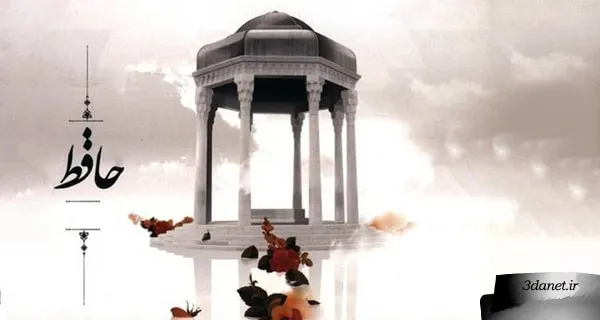
Recently, news reports have mentioned the discovery of an old manuscript copy of Hafez's Divan of Ghazals, which contains a ghazal not seen in other manuscripts, beginning with the hemistich“بحمدالله که بازم دیدن رویت میسر شد” (Praise be to God that seeing your face has again become possible for me). Regardless of the significance of this discovery, which will undoubtedly be of great importance to manuscript scholars and literary figures, the author's attention was drawn to an article by Yadollah Samareh, a professor at the University of Tehran, published in the solar year 1354 (1975/1976) [1]. In that article, he mentions a five-couplet ghazal attributed to Hafez in 1877 by Blochmann, the German Orientalist. A translation of Blochmann's report in Yadollah Samareh's article is as follows: “Among the lectures and articles of the November 1871 Congress, (page 208) of the Asiatic Society of Bengal, I came across a manuscript collection of various poems by Persian-speaking poets, which also incidentally contained a biography of Prince Khurram (Shah Jahan). Among the poems in this collection, the following ghazal by Hafez was seen, which I have not seen in any manuscript or printed edition of Hafez's Divan to date [1].” The first hemistich of this ghazal is exactly identical to the aforementioned hemistich recently published in the news. In the continuation of the article, Yadollah Samareh, based on phonological and semantic techniques, critiques Blochmann's view that the ghazal belongs to Hafez, and ultimately, using a quantitative criterion concludes that: “It can be said with certainty that the mentioned poem does not belong to Hafez of Shiraz (Lisan al-Ghayb) [1].”
At any rate, the writer of these lines is not in a position to judge the attribution or non-attribution of the said ghazal to Hafez. However, the articles by Blochmann and Yadollah Samareh are significant in three respects: First, Blochmann's descriptions of the manuscript seen at the Congress of the Asiatic Society of Bengal bear similarities to the recent descriptions of the discovered copy of Hafez's Divan, which will certainly be interesting and important for experts; second, the ghazal described in recent news as a new and unknown ghazal by Hafez is apparently neither new nor unknown; and third, the scholarly article by Yadollah Samareh and his quantitative method for determining the attribution of a ghazal to a poet (in this case, Hafez) and his conclusion, which opines against the attribution of the ghazal to Hafez, is noteworthy for scholars and experts.
.
.
Footnote:
[۱]. Yadollah Samareh, Faculty of Literature and Humanities, University of Tehran, Year 22, Fall and Winter 1354, Nos. 3 & 4 (Consecutive Nos. 91 & 92).
(http://www.ensani.ir/storage/
A New Ghazal by Hafez
Author: Ali Sanaei
University of Hamburg, Germany
.
.

Discussion1 comments
از همان مطلع و مصرع آغازین اش معلومه که اساسا به گروه خونی جناب حضرت حافظ نمیخوره. صرفنظر از آرایه های لفظی، کلا از نظر مضمون معنوی و مفهوم پردازی و سطح تفکر و هوش هم در حد عبید زاکانی شوخ و فکاهی هم نیست. احتمالا خارجی ها هوش ادیبان ایرانی را تست میزنند تا ببینند چگونه تحلیل میکنند یا اینکه جعلیات تقلبی را جا زده و در محفل خودشان یواشکی هرهر پوزخند بزنند.