Literature
Introducing Issue 155 of Ettela'at Hekmat va Ma'refat
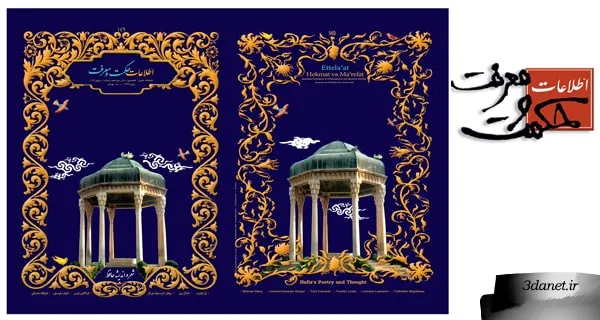
Issue 155 of Ettela'at-e Hekmat va Ma'refat, titled 'Hafez's Poetry and Thought II' and guest-edited by Masoud Faryamanesh, has been published; the third special issue on Khwaja Shams-ud-Din Mohammad Hafez-e Shirazi, featuring articles by Leonard Lewisohn and Peter Avery.
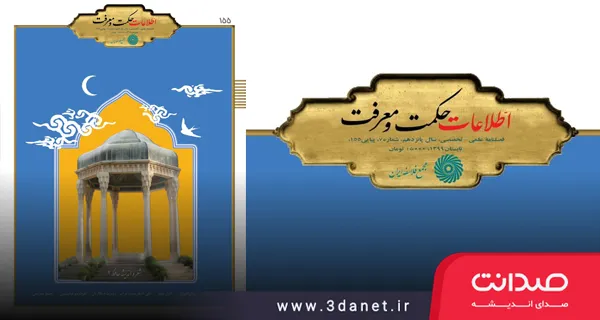
Issue 155 of the journal Ettela'at Hekmat va Ma'refat, titled “Hafez’s Poetry and Thought 2,” has been published under the editorship of Masoud Faryamanesh. This issue is the third special issue dedicated to introducing the poetry and thought of Khwaja of Shiraz in this journal.
The titles in this issue are as follows:
?Special Issue Editor’s Note / About This Special Issue, Masoud Faryamanesh
The Religion of Love and the Puritans of Islam: Hafez’s Anti-Asceticism in Sufi Sources / Leonard Lewisohn, translated by Mohammad Ehsan Mosahhafi
Budding Love: Changes in Perspective and the Text-Dependency of Experience in Hafez’s Ghazals / James Morris, translated by Farzad Moravveji
Hafez of Shiraz / Peter Avery, translated by Sara Haji Hosseini
Contemplating the Garden of the World: The Garden/Rose-Garden as a Metaphor for Life in Hafez’s Divan / Masoud Faryamanesh
The Frenzied Soul: Love, Man, and the Devil in Hafez’s Poetry / Ali Asghar Seyed Ghorab, translated by Alireza Rezayat
The Ray of Theophany: The Prospect of Beauty and Love in Hafez’s Pre-Eternal Poetry / Leili Anvar, translated by Leila Elahian, Maryam Karimi
?Thought and Opinion Utilitarianism (Part Two) / Enshallah Rahmati, prepared and edited by Samaneh Erfan
Popper’s Theory of Democracy / Karl Popper, translated by Zolfaghar Hemmati Democritus / Christopher Charles Whiston Taylor, translated by Morteza Gharaei Gorgani, Ali Gharaei
?Report The Oral History of Philosophy and Wisdom in Iran (Part Two) / compiled and edited by Fatemeh Mohammad
?Book Critique and Dialogue / Monireh Panjteni
The Japanese Lifeworld / A Look at Ozu’s Cinema, Focusing on the Book Ozu and the Poetics of Cinema
Ozu and the Poetics of Cinema / A Conversation with Robert Safarian New Publications / Sasan Yaghmaei
.
.
Editor’s Note
Masoud Faryamanesh (About This Special Issue): For those who have a hand in philosophical research and a heart devoted to sapiential knowledge, Hekmat va Ma'refat is a familiar name; a specialized scientific journal that, despite financial constraints, has managed to experience its fifteenth year of presence in Iran’s scientific and cultural arena to this day. This journal entered the cultural sphere of the country with the aim of disseminating and promoting the intellectual, sapiential, and spiritual heritage of humanity, and for fourteen years it was published regularly every month. That being said, the emergence of numerous constraints and financial problems, which, as it happens and as you know, have for some time now severely gripped the press and cultural centers of this land, did not prevent the publication of Hekmat va Ma'refat, and the worthy support of the esteemed Ettela'at Institute and the esteemed Iranian Philosophers’ Assembly made it possible for Hekmat va Ma'refat to be published at least in the form of a quarterly, and for its life in the country’s press not to come to an end. Let us move on. Describing the factors and issues that have confronted the publication of this journal, and publications of this kind in general, with great difficulties is beyond the scope of this writing.
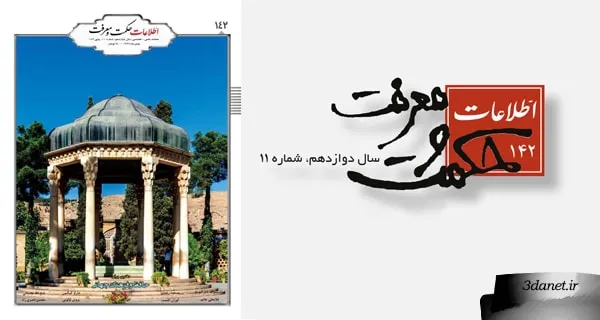
One of the distinguishing features of Hekmat va Ma'refat magazine throughout all these years has been that it has never confined or restricted itself solely to the domain of philosophical research, and has always kept in view the presentation of articles (whether authored, translated, or edited) in the field of Iran's literary and mystical heritage; a number of the magazine's issues have been devoted to research on the ancient and precious tradition of Persian mysticism and literature—a magnificent tradition that holds a worthy and rich share in world literature and, through the luminaries it has nurtured, has made the name of Iran renowned in global culture. Among the issues published on this subject, one can point, for instance, to special issues on
The fifth article in this issue is a piece written by Dr. Ali-Asghar Seyed-Ghorab, titled “The Frenzied Soul: Love, Man, and the Devil in Hafez’s Poetry.” The author examines the theme of love in the Divan of Khwaja Hafez in light of the myth of the creation of Adam, based on the interpretation offered by Sufi masters over many centuries. He believes that understanding the cause and purpose of creation, according to the views of the Sufis of the “religion of love,” can define the place of love in existence and in the relationship between man, God, and the world; for Hafez, love has a pre-eternal existence, and in a sense, its truth is one with the truth of God Almighty.
In the sixth article, titled “The Ray of Manifestation: The Prospect of Beauty and Love in Hafez’s Pre-Eternal Poem,” Leili Anvar, through a commentary on Hafez’s famous ghazal beginning “In pre-eternity, the ray of your love breathed of manifestation / Love appeared and set fire to all the world,” explicates several key terms in his Divan. By posing the question of whether Hafez is a mystical poet or not, Anvar elaborates on the mystical meaning of sorrow, love, and pre-eternity, which express the poet’s passage from the world of inexpressible concepts to the realm of poetry and tangible images. In the author’s view, the words borrowed from earthly love to serve as the vehicle for Hafez’s mystical thoughts are derived from the ideas of Ahmad Ghazali, although these words and ideas reach their perfection in the poetry of Khwaja Hafez.
In closing, the writer hopes that each of these articles will, in its own way, reveal further corners and aspects of the poetry and thought of the Master of Rogues.
.
.
Email Address: ehvm86gmail.com
Telegram Channel: t.me/Doostanehekmatmarefat
.
.

Discussion0 comments
No comments yet; let yours be the first voice.