Philosophy
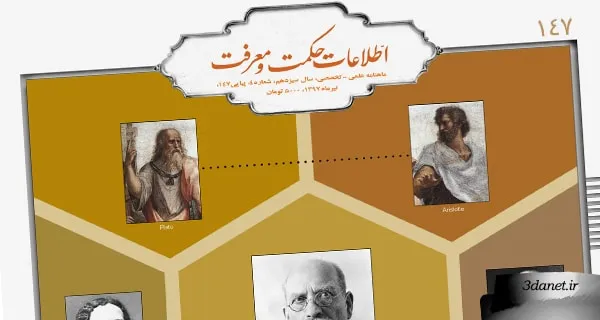
Introducing Issue 161 of Ettela'at-e Hekmat va Ma'refat
Issue 161 of Ettela'at-e Hekmat va Ma'refat is devoted to the phenomenon of midlife and old age, drawing on philosophy, mysticism, and psychology to show that even in the face of physical decline, one can experience a kind of 'successful aging' and play one's best role in life.
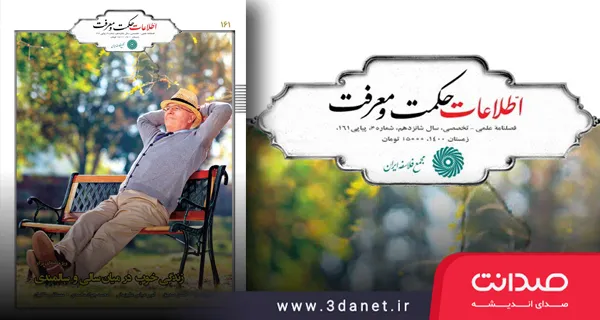
Although philosophical reflection on issues related to the final stage of life has a long history, and philosophers such as Aristotle believed that subjects like happiness, virtue, and self-realization come to fruition in middle age and old age, the sheer volume of products specifically for the elderly testifies that, in the present era, manufacturers and merchants, more than any other group, have recognized this demographic shift toward an older population. While philosophizing for the age groups of children, youth, and adults is flourishing more and more each day, and each of these groups can easily benefit from psychological and spiritual counseling tailored to them, the arrival of old age is still, to some extent, akin to exile to a waiting room for death, where the elderly individual is left neglected with a kind of psychological and spiritual condition that is unknown even to themselves. Such discrimination in the treatment of the elderly age group and the lack of attention to the psychological state of this part of life is like having paved a beautiful road that ends at a terrifying precipice, or it can be likened to a story left unfinished, without regard for its final part.
The Greek term Epoché, used more often in religious studies, means stepping out of one's own skin and immersing oneself in the state and atmosphere of other human beings, in such a way that one can view issues from their perspective and understand their feelings. Perhaps one of the reasons for the lack of attention to old age is that expert examination of the issues of this period is often undertaken by those age groups who have not yet experienced the soap of moving toward old age on their bodies, and for whom it is not easy to speak of something whose lived physical and psychological experiences they have not undergone and whose nature they have not touched.
But in any case, despite all these obstacles, in recent years there has been an attempt to view old age and its prelude, middle age, from the perspective of broader philosophical and psychological considerations. Considering these new quests to find solutions for a more meaningful and enjoyable continuation of life in old age, it can be claimed that although speaking of old age has a long history, "aging" from the perspective through which it is viewed today is a young phenomenon.
In this special issue, which is dedicated to the phenomenon of middle age and old age, the physical misfortunes that occur during these periods are not addressed. The aim of this issue is to show that even though in old age the hands of our epigenetic clock are in a hurry to degrade DNA, and cells no longer have much capacity to produce energy, and the body's immunity seems more worn out than ever and wants to reach the end of the line as soon as possible, one can, and should, experience a kind of successful aging and find a way to play the best possible role in life even in old age. Therefore, in this volume, we intend, with the help of philosophy, mysticism, and psychology, to integrate aging with the usual ways of thinking about life, so that it might be a help in illuminating this final but valuable part of life.
.
.
Special Issue
Editor's Note / Maturity, in Moving Towards Old Age, Naghmeh Parvan
Old Age; Generativity and Wisdom / A Conversation with Mostafa Malekian, Naghmeh Parvan
How Can One Achieve Meaningful Middle Age and Old Age? / A Conversation with Bengt Brülde, Translated by Taghi Farzaneh
What Makes Life Worth Living? / A Conversation with John Barss, Translated by Shahin Pishbin
The Best Times of Life / Caroline Lodge, Eileen Carnell, Marianne Coleman, Translated by Alireza Rezayat
Old Age and the Exploration of the Experience of Contradictions and Doubts / John Barss, Translated by Shahin Pishbin
Wisdom and Spirituality; Important Requirements for Growth in Old Age / Bengt Brülde, Translated by Naghmeh Parvan
A Brief Review of Middle Age Theories; From Depression Crisis to Golden Opportunities / Samira Entezari
The Fetal Ascension: The Different Stages of Human Development from Rumi's Perspective / Iraj Shahbazi, prepared and edited by Seddiqeh Olovin Chaharsuqi
Thought and Opinion
Remembering Josef van Ess, Author of "Theology and Society" / Ulrich Rudolph, translated by Zakiyeh Azadani
A Look at Religion and Ideology in the Western World in the Context of Globalization / Seyyed Hassan Saduq
The Influence of the Historian's Perspective on Historical Reports, Case Study: The Battle of Poitiers / Mohammad Javad Mohammadi
A Phenomenological Approach to the Philosophy of Illumination: Suhrawardi's Immaterial Light and Husserl's Reduction / Olga Louchakova-Schwartz, translated by Haniyeh Mofidi
Report
The Relationship Between Pleasure and Happiness in the Meaning of Life / Amir Abbas Alizamani, edited and revised by Fatemeh Mohammad
Book
Design and Fashion Narrated by Philosophy / Monireh Panjtani
A Glimpse into the World of Design and Fashion / A Conversation with Manzar Mohammadi, Monireh Panjtani
.
.
Maturity, in the Movement Toward Old Age
Naghmeh Parvan
Although humans today have a greater chance of entering the stage of old age than in past eras, they are not, as they should be, seeking new perspectives for viewing this period. Perhaps before reaching this stage of life, we imagine the elderly population as a group with fixed members and fail to realize that a new member enters it at every moment. Such thinking causes us to imagine ourselves as completely separate from this phenomenon, and engaging with issues related to the state of old age does not seem necessary to us. But especially in the current circumstances, where more of us are granted entry into this stage of life, why shouldn't we welcome it, even before its arrival, with broader philosophical and psychological considerations? What has caused us to naively overlook this period of life and pass the days indifferent to it? Is it not true that to avoid falling into the pitfalls of any part of life, one must be equipped with the specific map of that era? What is the cause of the negligence of specialists in preparing the map and the evasion of audiences from obtaining a guideline to prevent this important part of life from being wasted?
Although philosophical reflections on issues related to the final part of life have a long history, and philosophers like Aristotle believe that subjects such as happiness, virtue, and self-realization bear fruit in middle and old age, the large volume of goods specific to the elderly is a testament to the fact that in the present era, manufacturers and merchants, more than any other group, have recognized this overtaking of the young population by the old. While philosophizing for the age groups of children, youth, and adults flourishes day by day, and each of these groups can easily benefit from their own specific psychological and mental counseling, the arrival of old age is still somewhat akin to an exile to a waiting room for death, where the elderly individual is left neglected with a kind of mental and psychological state that is unknown even to themselves. Such discrimination in behavior toward the elderly age group and the lack of attention to the psychological conditions of this part of life is like having undertaken to pave a beautiful road that ends at a terrifying precipice, or it can be likened to a story that has been abandoned halfway, without regard for its ending.
The Greek term Epoché, as used in religious studies, means stepping out of one's own skin and immersing oneself in the moods and feelings of other people, so that one can view issues from their perspective and understand their emotions. Perhaps one reason for the lack of interest in these stages of life is that expert analysis of the issues of these periods is often undertaken by those age groups who have not yet felt the sting of moving toward old age, and for whom it is not easy to speak of something whose lived physical and psychological experiences they have not undergone and whose nature they have not touched.
In any case, despite all these obstacles, in recent years there has been an effort to view old age and its prelude, middle age, from the perspective of broader philosophical and psychological considerations. Considering these new quests to find solutions for a more meaningful and enjoyable life in old age, one can claim that although speaking of old age has a long history, "aging" from the perspective through which it is viewed today is a young phenomenon.
In this special issue, which is dedicated to the phenomenon of middle age and old age, the physical misfortunes that occur during these periods are not addressed. The aim of this issue is to show that even though in old age the hands of our epigenetic clock are in a hurry to degrade our DNA, and cells no longer have much capacity to produce energy, and the body's immunity seems more exhausted than ever and wants to reach the end of the line as soon as possible, it is possible, and necessary, to experience a kind of successful aging and find a way to play the best possible role in life during old age. Therefore, in this volume, we aim, with the help of philosophy, mysticism, and psychology, to integrate aging with the usual ways of thinking about life, in the hope that it might help illuminate this final yet valuable part of life.
The opening piece of the special issue "The Good Life in Middle Age and Old Age" is a conversation with Mostafa Malekian entitled "Old Age; Generativity and Wisdom." In this conversation, Malekian, referring to the limitations and possibilities of middle age and old age, examines ways to better cope with the natural flow of life and to spend old age more enjoyably and consciously. Turning to "generativity," meaning the expansion and deepening of relationships and service to the previous generation, with the aim of making the world a better place to live, is among the solutions that Mostafa Malekian recommends in this conversation. Among the other topics of this conversation are the conditions that must be met to achieve wisdom and sagacity during middle age and old age.
The second piece in this issue consists of two conversations. "Achieving a Meaningful Life After Youth" is the first part of this conversation, in which Professor Bengt Brülde, a specialist in practical philosophy and author of the book "Live All of Life," offers advice on how to achieve a meaningful middle age and old age. The second conversation, "What Makes Life Worth Living?," is a conversation with Jan Baars, author of the book "Aging and the Art of Living." He believes that knowing we will soon die is precisely what makes life valuable and full of meaning. In the present conversation, Baars discusses how, in his book "Aging and the Art of Living," he draws on a philosophical perspective to confront, with a critical view, the theories and practices that are predominantly instrumentalist approaches and distort the experience of aging.
The third article in this issue, "The Best Years of Our Lives," is a piece written by Caroline Lodge, Eileen Carnell, and Marianne Coleman, based on studies, evidence, interviews, and testimonies of individuals who are at this age. The aim of conducting such research is to show that stereotypical images of the elderly can be set aside. Having a new image of old age depends to a significant extent on the attitude of individuals in this period, which itself is preceded by education and learning. The article emphasizes the importance of learning methods and skills that can enable the elderly to derive the greatest benefit from every single moment of this period.
The article “Aging and the Discovery of the Experience of Contradictions and Doubts” by John Bares is the fourth piece in the special issue on aging. In this article, Dr. John Bares examines different approaches to investigating and studying the aging process and considers the problems and issues that stand in the way of such studies. He believes that “growing old” and “aging” is a subject in which the researcher himself is also involved, and his personal experiences intervene in drawing conclusions from that study. He also emphasizes the necessity of gathering scattered studies on this topic and sharing different opinions from various study groups.
“Wisdom and Spirituality; Important Requirements for Growth in Old Age” by Bengt Brülde is the fifth writing in this issue. Brülde, the author of the book “Live All of Life,” in this writing, which is the fourteenth chapter of the book, shows how one should connect with old age, that is, the time when all the important tasks of life have been completed; one must actively reflect on life and take responsibility for it so that when facing this period of life, instead of falling into the abyss of depression, which sometimes afflicts elderly individuals, one can change direction towards a happier life.
The sixth piece in this issue, “A Brief Review of Midlife Theories; From the Crisis of Depression to Golden Opportunities,” is an article by Samira Entezari. In this writing, pointing out that the flow of development is a continuous and ongoing matter and each period of development is a beginning for growth in the next stage, she emphasizes that by realistically evaluating and accepting one’s abilities, possibilities, and conditions in old age, it can be turned into a turning point towards individual maturity and self-actualization. In this article, “acceptance” is introduced as the most important approach that can keep a person from drowning in the crises of aging.
The seventh and final piece of this issue is written by Iraj Shahbazi; an article titled “The Embryonic Ascension,” which is a classification and analysis of the sayings of Molana Jalal al-Din Balkhi regarding the stages of human development. In this writing, by describing and comparing the periods of life from Molana’s perspective, Shahbazi acquaints enthusiasts with specific dimensions of this issue. In examining the true elder from Molana’s viewpoint, he calls the journey of life “the journey from nothingness to intellect” and points out that Molana considered human life in this world as a kind of ascension; not an ascension from earth towards the sky, but a journey from sperm to intellect; the human being is a traveler whose origin is sperm and whose destination is intellect. Relying on the necessity of precise planning for old age in the words of Molana and emphasizing the point that old age does not mean saying goodbye to the joys and pleasures of life, Shahbazi offers instructions for preparing to enter this period of life.
The final word is that since a large part of the quality of our old age depends on how we have spent the preceding periods, we must plan to spend it well long before this period of life arrives, at least from midlife. Old age must be imagined as an important part of life, a part in which, just at the time when the body has begun its decline, the brain benefits from the blessing of experiencing a valuable kind of inner maturity. Old age is that important part of life in which, through an exchange between youth and self-knowledge, the orbit of life is completed and the flow of meaning begins to circulate within it; and it is for this reason that the story of a life is not complete without this conclusion, that is, without the optimal experience of old age.
.
.
Email Address: ehvm86gmail.com
Telegram Channel: t.me/Doostanehekmatmarefat
.
.


Discussion0 comments
No comments yet; let yours be the first voice.