Literature
Arash Naraghi's Lecture: 'Hafez's World of Thought'
Hafez's thought and art are interwoven with his personal life experiences—from the joyful revelry of youth to the sorrowful hedonism of middle age, which becomes a path to liberation from the burning nature of existence. A report on Arash Naraghi's lecture, 'The World of Hafez's Thought.'
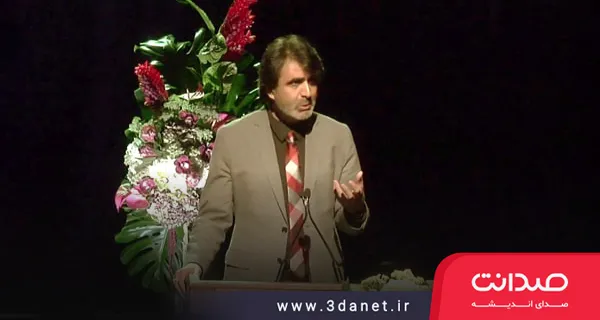
In my view, for every original thinker and artist, a large part of their artistic creations or intellectual innovations arises from their personal life experiences. Of course, books and formal study have always been sources of knowledge and experience, but the source of an individual's personal life and their interactions with other human beings and the surrounding world have always been able to serve as a source of inspiration for original scientists and thinkers, and Hafez is no exception to this rule. Hafez's thought and art are, to a very great extent, interwoven with his personal life experiences. Admittedly, our information about Hafez's personal life is very scant and is often mixed with legends that later writers and biographers, out of fascination and devotion to Hafez, wove about him. But you can very well, from amidst these sources and the themes of his own poems, find points and unveil the relationship between Hafez's personal life and its reflection in his thought and art. In my view, Hafez's life can be reread in three distinct periods, and in each period, Hafez cultivated a central theme in his world of thought that has a close connection with his personal life. Of course, this division has fluid boundaries, but I believe it can be largely illuminating.
The first period of Hafez's life pertains to his youth, which continues until the fall of Abu Ishaq. In this era, the central theme of Hafez's life is mostly joyful revelry, pleasure-seeking, and a cheerful seizing of the day. Historians have explained to us that the Shiraz of Hafez's time was a prosperous, delightful, and spirited city, and its gardens were famous, a description of whose beauty is found in Hafez's own poems. The tall cypress trees and the fragrance of bitter orange blossoms in spring had created a very suitable atmosphere for the contemplations and daydreaming of a highly tasteful, learned, and talented young man in the city of Shiraz. Hafez's adolescence and youth coincide with the reign of Shah Abu Ishaq in Shiraz. Shah Abu Ishaq was a roguish, pleasure-loving, and poetically-inclined king, more or less similar to Hafez. During Abu Ishaq's era, Hafez was passing through his twenties. From every nook and cranny of Shiraz in Abu Ishaq's time, the clamor of revelry, which was a reflection of the king's own spirit, could be heard, and all of this provided the ground for attracting a tasteful and talented young man. Hafez lived in a civilized and well-to-do family, to the extent that in his adolescence they had sent him to school. Therefore, Hafez enjoyed the blessing of being able to cultivate his personal abilities and talents under the tutelage of the wise and learned teachers of Shiraz. Thus, Hafez had studied his school lessons well and pursued them diligently. We know that he was a very talented and intelligent young man. He had a good voice and likely knew music well. And he possibly also played an instrument. But the most important characteristic of this young man was the early blossoming of his poetic gift. A young man with these qualities was highly sought after in circles of pleasure and revelry, and in this period, he experienced a life of joyful revelry and pleasure-seeking. The fresh poetry of this young man quickly attracted the attention of the greats, and the grandees and the king himself summoned him to their circle. You see a reflection of Hafez's revelry and pleasure-seeking in some of his poems. And you see the temptation of joyful and hedonistic attractions pouring from every nook and cranny of the city, and it is natural that this young poet surrenders himself to these allurements, as he himself says:
Alas, these playful, sweet-working gypsies, city-tumultuous,
So stole patience from the heart, as Turks do a plundered feast. (Hafez/Ghazals/Ghazal No. 3)
This temptation is so attractive to him that he cannot restrain himself:
I, from piety, had not seen wine and minstrel before this;
The passion for Magian youths cast me into this and that. (Hafez/Ghazals/Ghazal No. 16)
In a famous ghazal, he describes one of these gatherings thus:
Love-making and youth and ruby-colored wine,
A gathering of intimacy, a constant companion, and perpetual drinking,
A sweet-mouthed cupbearer and a sweet-talking minstrel,
A good-natured companion and a well-reputed boon companion,
A beloved whose grace and purity rival the Water of Life
A sweetheart whose beauty and goodness vie with the full moon
Rose-colored wine, bitter, sharp, pleasant to drink, light
Its sweetmeat from the beloved's ruby lips, its sweetmeat from raw ruby
The coquettish glance of the cupbearer, sword drawn to plunder reason
The beloved's tresses, a snare spread wide to hunt the heart
A subtle wit, a jester like sweet-tongued Hafez
A world-illuminating, generosity-teaching one like Haji Qavam (Hafez/Ghazals/Ghazal No. 309)
The reflection of these moments of joy continues in Hafez, who in a ghazal depicts existence so vividly that one can clearly understand it is unlikely the poet himself did not have a firsthand experience of such states:
Disheveled tresses, sweating, smiling lips, and intoxicated
Torn shirt, singing ghazals, and a wine flask in hand
Her narcissus eye quarrelsome, her lip regretful
Last night at midnight, she came to my bedside and sat
She brought her head close to my ear, with a sorrowful voice
She said, 'O my ancient lover, are you asleep?'
A lover who is given such a morning draught of wine
Is an infidel to love if he does not become a wine-worshipper
Go, O ascetic, and find no fault with the dregs-drinkers
For no other gift than this was given to us on the Day of Alast
Whatever He poured into our cup, we drank
Whether it is from the wine of paradise or the wine of intoxication
The laughter of the wine cup and the beloved's knotted tresses
Alas, many a repentance that, like Hafez's repentance, broke (Hafez/Ghazals/Ghazal No. 26)
Hafez's carousing in this period was, of course, largely a requirement of his youth, and one of the most important features of this carousing, which stays with Hafez until the end of his life, is an attention to joy and pleasure based on an aesthetic understanding of existence. That is, beauty condemns him and captivates his heart. Immersion in physical beauties and perceiving the grace of the beloved's presence and the magical cup he takes from their hand was an exceedingly pleasant and delightful experience for a young, dreamy, imaginative, and charming poet. And the evidence suggests that our young poet did not restrain himself in the face of these temptations and cultivated his aesthetic taste in these pleasure-seeking and carpe-diem exchanges. As I mentioned, this zest and joy persist in Hafez's thought, but with the passage of time and according to the developments that occur in his life, the basis of this primacy of pleasure in his thought changes. The hedonism of the young Hafez differs from the hedonism of the middle-aged and old Hafez. Of course, it is similar in that throughout all these stages, Hafez remains sensitive to beauty. But in middle age and old age, his experience of hedonism becomes different. The youthful hedonism of Hafez, as I mentioned, is joyful, but the middle-aged and old hedonism of Hafez is sorrowful. In fact, here, Hafezian carousing gradually becomes a path to liberation for him. It is not merely the experience of a positive pleasure, but becomes a way to escape the painful nature of human existence in this world. The second period of Hafez's life particularly begins with the fall and murder of Shah Abu Ishaq at the hands of Amir Mobarez al-Din and ends with the Amir's deposition by his son, Shah Shoja. This era roughly coincides with Hafez's middle age. The times in those days were times of hypocrisy, violence, and sullenness. The libertines of the city sarcastically called Amir Mobarez al-Din the 'Mohtaseb' (censor). Someone who clung to the outer shell of religion and tried to impose this superficial Sharia by force on the city's libertines. The dominant theme that Hafez displays in his poems during this period is largely due to the bitter experiences of his life in this era and also the maturity resulting from middle age. The experience and deep understanding of the painful aspects of human life in this world. The era of Shah Abu Ishaq was a very pleasant and ideal time for Hafez, and Hafez always recalled those days with a kind of sorrow and regret.
Truly, the turquoise seal of Bu Ishaqi
Shone brightly, but it was a fleeting reign (Hafez/Ghazals/Ghazal No. 207)
But the era of Amir Mobarez al-Din is a hard and bitter time for Hafez, and poverty grips him. In this era, more than anything, it is asceticism and hypocrisy that torments the artist's soul:
Will it be that they open the doors of the taverns
And untie the knot of our closed affairs?
If they closed them for the heart of the self-regarding ascetic,
Take heart, for they will open them for God's sake.
They have closed the tavern door, O God, do not approve
That they open the house of deceit and hypocrisy.
Hafez, this cloak you wear, tomorrow you will see
What a Christian girdle they untie from beneath it with deceit. (Hafez/Ghazals/Ghazal No. 202)
Hafez in this middle age faces various accusations from opponents. He was accused of blasphemy and sodomy, and they made his living environment largely unsafe, to the extent that perhaps due to the dangers he felt, he preferred to leave Shiraz, although it is said that after a short time he regretted this decision and returned to Shiraz. It is possibly in this same period that Hafez loses his beloved wife, and shortly thereafter loses his child. Therefore, in middle age, he has first-hand experience of losing loved ones and knows how death can take your loved ones from you. Poverty, the loss of loved ones, the horrific death of his all-powerful patrons, seeing how the times have turned so that the unworthy sit at the top:
It is a time for blood to surge in the heart of the ruby
زین تغابن که خزف میشکند بازارش (حافظ/غزلیات/غزل شماره ۲۰۷)
Hafez sees that wealth, riches, power, and children have been faithful to none of us. And he finds observing this state of the world deeply shocking. Even the fall of Amir Mobarez al-Din, who had embittered his life, was accompanied by a bitter and unpleasant experience for Hafez. Amir Mobarez al-Din was overthrown by his own sons. Amir Mobarez al-Din's eyes were gouged out by his son, and Hafez, who himself was grieving for his child, is suddenly left in wonder at what has become of human relations and the father-child bond, that a child would do such a thing to his father over power struggles:
آنکه روشن بد جهانبینش بدو
میل در چشم جهانبینش کشید (حافظ/قطعات/قطعه شماره ۱۴)
The experience of the violence and brutality latent in this act, of course, clearly pained Hafez's soul. The sum of these bitter experiences and the series of emotional, financial, and physical insecurities and political instabilities gradually revealed another face of this world to Hafez's soul. The tragic aspect of existence became apparent to him. In youth, the world is joyful, but the experience of life gradually teaches us that the world has another aspect too. The thread of non-existence is woven into the woof of existence, and tragedy seems an inseparable part of this world. Hafez was, of course, a skilled scholar of the Quran and was therefore theoretically familiar with this image of the world. But knowing is one thing, and experiencing is another. Knowing that the world is unfaithful to us is one thing, and experiencing the world's unfaithfulness is another. It is here that the middle-aged Hafez, in the painful experiences of his life, gradually comes to consciously perceive and experience the tragic aspects of existence. And it is here that you see Hafez's existential experience gradually taking on the quality of Khayyam-like experiences. Hafez experienced the Khayyam-like experience of the tragic nature of existence on several different levels and has reflected it in his poems. The first place where Hafez perceived the tragic nature of existence was in the understanding he gained of the structure of this world (the world in which we live). The understanding of this truth that the world is impermanent. The understanding of this truth that the world is unfaithful and does not stay with us:
جهان پیر است و بیبنیاد از این فرهادکش فریاد
که کرد افسون و نیرنگش ملول از جان شیرینم (حافظ/غزلیات/غزل شماره ۳۵۴)
مجو درستی عهد از جهان سست نهاد
که این عجوز عروس هزاردامادست
نشان عهد و وفا نیست در تبسم گل
بنال بلبل بی دل که جای فریادست (حافظ/غزلیات/غزل شماره ۳۷)
These verses have a completely Khayyam-esque resonance. Khayyam, too, in fact, experienced these same tragic aspects and brought them into his works:
ساقی گل و سبزه بس طربناک شدهست
دریاب که هفته دگر خاک شدهست
می نوش و گلی بچین که تا درنگری
گل خاک شدهست و سبزه خاشاک شدهست (خیام/رباعیات/رباعی شماره ۳۷)
This sage, too, when looking at the beauties of spring, sees above all the transient existence before his eyes:
آنها که کهن شدند و اینها که نوند
هر کس بمراد خویش یک تک بدوند
این کهنه جهان بکس نماند باقی
They went, and in my eyes others come and go (Khayyam/Quatrains/Quatrain No. 56)
Therefore, this is one aspect of the sorrowful nature that is revealed in Hafez's Khayyam-like poems.
Another aspect is that when Hafez contemplates the human condition, he finds sorrowful dimensions within it. Perhaps the most important aspect of tragedy in human life is human mortality. Hafez tasted this obvious truth through experience: that the human being is a perishable and mortal creature. We always consider death to be distant and a neighbor, but gradually this camel kneels at our door. It takes our loved ones one by one, and a time comes when it stares into our eyes, and it is at this moment that death becomes a real experience in our personal lives. Animals die, but the human being is the only creature that becomes aware of its own death, and death becomes an inevitable part of the structure of its life. You see how Hafez, like the sage of Nishapur, absorbs the awareness of death into his inner being and reflects it in his intellectual system and his art.
On the shore of the sea of annihilation, we wait, O cupbearer
Know that the chance from lip to mouth is not all this (Hafez/Ghazals/Ghazal No. 74)
Or elsewhere he says:
Sit by the stream's edge and watch the passing of life
For this hint of the transient world is enough for us (Hafez/Ghazals/Ghazal No. 268)
And you see the same kind of awakening, with the same intensity, in Khayyam's poems. When Khayyam, too, contemplates the human being, human mortality looms large in his eyes:
When the cloud washes the tulip's cheek for Nowruz
Arise and resolve firmly with a goblet of wine
For this greenery that is your spectacle today
Tomorrow will all sprout from your dust (Khayyam/Quatrains/Quatrain No. 24)
Alas, the book of youth has been folded up
And that fresh springtime of life became yesterday
That bird of joy whose name was youth
Alas, I know not when it came, when it went (Khayyam/Quatrains/Quatrain No. 63)
For a while in childhood we were with a master
For a while we were gladdened by our own mastery
Hear the end of the tale: what befell us?
From dust we came in, and on the wind we went (Khayyam/Quatrains/Quatrain No. 134)
You see how these profound human experiences, this deep awareness of human death, is manifested in the artistic and wise consciousness of these sages.
I went to the workshop of the potter last night
I saw two thousand pots, speaking and silent
Suddenly one pot raised a cry
Where is the potter, the pot-buyer, the pot-seller? (Khayyam/Quatrains/Quatrain No. 117)
O eye, if you are not blind, behold the grave
And behold this world full of turmoil and commotion
Kings and chiefs and leaders are under the clay
Behold moon-like faces in the mouths of ants (Khayyam/Quatrains/Quatrain No. 137)
This attention to death was entirely present in Khayyam's thought, and the experience of life taught Hafez the same. As soon as you pay attention to these aspects of the world—that is, you see the perishability of the world and the mortality of man—the sage suddenly finds himself confronted with the important question of the meaning of life. Consider that the tragedy of human life is not suffering, affliction, evil, and death; the tragedy is the meaninglessness of these phenomena. Our tragedy is not suffering, but meaningless suffering. And if the world is perishable and man is mortal, you immediately ask yourself: what, then, is the wisdom of living in this world? What is the meaning of this coming and going? Grasping the nothingness-tinged aspect of life confronts the sage with the terrifying question of the meaning of life, and confronts him with the meaninglessness of sufferings:
The world and the world's affairs are all nothing upon nothing
A thousand times I have investigated this point
Go to a place of refuge and count the moment as a prize
For in life's ambush are the highwaymen (Hafez/Ghazals/Ghazal No. 298)
And you see again that this Khayyam-esque resonance is manifested in his poems. Khayyam also says somewhere:
It is a cup that the Intellect-Acclaimed One fashions
And plants a hundred kisses of love upon its brow
This potter of the age, such a delicate cup
He makes, and then dashes it to the ground (Khayyam/Rubaiyat/Quatrain No. 115)
Observe, the sage is astonished: this potter of the world has created such a beautiful being, and when it reaches perfection, he dashes it to the ground! What is the meaning of this game and game-playing in this world?
From my coming, the celestial sphere gained no profit
Nor did my going add to its glory and dignity
Nor from anyone did my two ears ever hear
What this coming and going of mine was for (Khayyam/Rubaiyat/Quatrain No. 60)
This question of the meaning of life, for a sage who has divine attachments, of course, also creates intellectual crises. For example, the sage finds himself confronted with the problem of evil and divine justice; that is, this intelligent sage immediately asks himself how a world that has a wise and compassionate God allows the existence of these horrific and meaningless evils. The problem of evil arises from the fact that the evils of this world seem meaningless. Therefore, the existence of a wise, benevolent God seems incompatible with the existence of meaningless evils in this world. Hafez was, of course, familiar with the works of the sages and their theological discussions, and it apparently seemed to him that some of these theological problems find no answer, and so he roguishly expresses his theological doubts through Khayyam's verses:
Our Pir said, 'No error passed upon the canvas of creation'
Blessings be upon his pure, fault-covering gaze (Hafez/Ghazals/Ghazal No. 105)
Observe what a subtle taunt is hidden in this utterance.
I asked the Pir of the Tavern, 'What is the path to salvation?'
He called for a cup of wine and said, 'Covering faults' (Hafez/Ghazals/Ghazal No. 393)
But what was Hafez's response to this tragic aspect? We know that Hafez himself was a man of theology and had read the Mawaqif of Qadi Adud well. It seems he had more or less reached the conclusion that human reason is incapable of solving these difficult problems, and that there seems to be no rationally satisfying answer to these questions.
Speak of the minstrel and wine, and seek less the secret of the age
For no one has ever solved, nor will ever solve, this riddle through wisdom (Hafez/Ghazals/Ghazal No. 3)
Ask the drunken rogues about the secret within the veil,
For this state is not for the ascetic of high station.
The Anqa is no one's prey; draw in your snare,
For there the wind is always in the snare's hand. (Hafez/Ghazals/Ghazal No. 7)
It is in reaction to this inevitable and irremediable crisis of meaninglessness that the joyful, aesthetic hedonism of the young Hafez takes on a darker hue. The cheerful Hafezian hedonism transforms into a sorrowful Khayyamian hedonism. Henceforth, joyful drinking and hedonism become a reaction to the elusiveness and transience of the world; a way to forget the meaningless sufferings of existence; a way to escape the heavy burden of being that casts inexpressible anxieties and terrors into the human heart.
Seize the moment as much as you can,
The yield of life, O soul, is this very breath, until you know it. (Hafez/Ghazals/Ghazal No. 473)
Like the rose and wine, come forth from the veil for a moment and enter,
For another meeting may not be found. (Hafez/Ghazals/Ghazal No. 157)
Count companionship as an opportunity, for from this two-way station,
Once we pass, we can never meet again. (Hafez/Ghazals/Ghazal No. 392)
Cupbearer, do not cast today's pleasure to tomorrow,
Or bring me a writ of safety from the court of fate. (Hafez/Ghazals/Ghazal No. 248)
O heart, if you cast today's pleasure to tomorrow,
Who will guarantee the ready cash of life's capital? (Hafez/Ghazals/Ghazal No. 164)
Arise, and into the golden cup pour the water of mirth,
Before the cup itself becomes a skull cast into the dust.
Our final abode is the valley of silence,
For now, cast an uproar into the dome of the spheres. (Hafez/Ghazals/Ghazal No. 264)
The sorrow of the age, for which I see no end,
I see no remedy for it but wine, like the Judas-tree blossom. (Hafez/Ghazals/Ghazal No. 358)
If wine does not carry the heart's sorrow from our memory,
The terror of calamity will uproot our foundation.
If reason does not drop anchor in drunkenness,
How can the ship escape this whirlpool of woe?
I am the physician of love, give me wine, for this elixir
Brings tranquility and carries away erroneous thought. (Hafez/Ghazals/Ghazal No. 129)
And again, you can see the reflection of this sorrowful hedonism, seizing the moment, and wine-drinking in the thoughts of Khayyam:
This caravan of life passes by wondrously,
Seize the moment that passes with joy.
Cupbearer, why worry about the sorrow of tomorrow for your companions?
Bring forth the cup, for the night is passing. (Khayyam/Rubaiyat/Quatrain No. 66)
I cannot live without pure wine,
I cannot bear the burden of the body without wine.
I am a slave to that moment when the cupbearer says,
“Take another cup,” and I cannot (Khayyam/Rubaiyat/Rubai No. 132)
You observe here that the Hafezian and Khayyamian carpe diem and joie de vivre is by no means born of recklessness; it is the result of their profound understanding of the tragic nature of existence within this world. It is the reaction of a sensitive and delicate soul that has lost the capacity to bear the burden of existence in the face of the world’s meaningless sufferings.
At this point, I would like to point out an important difference between Hafez and Rumi in this regard. Hafez and Khayyam on one side, and Rumi on the other. Rumi is also among the Persian sages who pay attention to the tragic nature of existence in this world. From his perspective, however, the tragedy of this world does not stem from the constriction of existence, but from the narrowness of the world-dwellers’ vision. That is, he believes that our eyes have become confined to the sensory world and cannot see the horizons beyond the world of sense, which embrace our world. And it is this narrowness of the world-dwellers’ vision that is the source of the tragedy of this world, not the constriction of the world and its confinement within the enclosures of non-existence. Like Hafez, when Rumi looks at the world, he sees it in the form of a stream. But the difference in his perspective from Hafez is very noteworthy. We pointed out here that when Hafez looks at the world, he captures it in its moment of decay; in the moment it joins non-existence. The perishability of the world catches his eye. But Rumi describes the same experience in a different way, saying:
The world is like flowing water; it seems still, but
It goes and comes, ever new—where does this come from?
Where does the new arrive from, where does the old go?
For beyond sight, there is an endless world.
New day and new eve, new garden and new snare,
Every breath, a new thought, a new joy, and a new song.
What is the sign that there is another world?
The renewal of states, the passing of these old things. (Rumi/Divan-e Shams/Ghazal No. 462)
When Rumi looks at this stream, he sees the world in the moment of birth and renewal, not in the moment of death and decay. Decay, in his view, is in fact a going from the manifest to the hidden of the world, only to emerge again from the hidden to the manifest.
And now the third and final period of Hafez's life. The third period of Hafez's life begins roughly with the death of Shah Shoja and, during the reign of Shah Mansur, the last king of the Muzaffarid dynasty, ends with the poet's death at around seventy years of age. This period remains one of endless instability. Timur the Lame has conquered the region of Khorasan and installs Shah Yahya as his puppet ruler in Shiraz. Shah Yahya's presence is, of course, a relief for Hafez. In his later years, Shah Shoja had a period of rigid, exoteric piety that had greatly distressed Hafez, but Shah Yahya was a generous man and appreciated the stature of Hafez of Shiraz more or less, so Hafez found some breathing room during the era of Shah Yahya and especially the subsequent king, Mansur. In this period, Hafez had gained renown for the region of Fars, and others in different lands appreciated the sweetness of his speech. Although in Shiraz itself, the poet found himself destitute and poor. We know that in these days, Hafez gradually finds tranquility and prepares himself for death. It is in this final maturity that we gradually see more pronounced signs of a kind of spiritual and mystical experience in his life. Hafez was certainly deeply familiar with the Islamic mystical tradition. His poems are the best evidence of this familiarity. But genuine and profound spiritual experiences are perhaps not so abundant in Hafez's poems. It is difficult to consider Hafez a mystic and a Sufi. At least, the earliest biographers of Hafez, including the one who wrote the preface to his Divan, never described Hafez using the titles typically used for Sufis and mystics. He was usually described as a poet or a scholar. In Hafez's own words, there are biting jabs and insinuations against the Sufis:
Look at the city's Sufi, how he eats the morsel of doubt,
May his crupper be long, that well-fed beast. (Hafez/Ghazals/Ghazal No. 296)
But the important point I wish to emphasize here is Hafez's relationship with the unseen world and what transpires behind the veil of the sensory world. This is something that gradually evolves in Hafez in his old age. In my opinion, Hafez's relationship with the unseen world lies somewhere between Khayyamic and Rumi-esque thought. In Khayyamic thought, there is nothing behind the veil of the sensory world. All that exists is what occurs to our senses and within the context of this world, and there is no unseen world, and death is the end of the matter and pure nothingness. Of course, if only our life would continue beyond the veil of death:
If only there were a place of rest,
Or this long road had a destination,
If only, after a hundred thousand years, from the heart of the earth,
Hope could blossom like grass. (Khayyam/Rubaiyat/Rubai No. 163)
But, in Khayyam's words, what can be done, for this hope is vain:
Before they launch a night raid upon your head,
Command them to bring the rose-colored wine.
You are not gold, O heedless fool, that they
Bury you in the earth and bring you out again. (Khayyam/Rubaiyat/Rubai No. 80)
In Khayyam's view, the world is in the heart of the desert of nothingness. But in Rumi's thought, the truth of existence is actually hidden behind the veil of the sensory world.
The unseen world is considered the origin and foundation of the visible world. What appears to our senses is not truly real; these are, in Rumi's terms, non-existents that appear to exist. And what appears non-existent to our senses is truly real; in his terms, they are existents that appear non-existent. And this is why the perishability of the world and the mortality of man is not worrying for Rumi. His existence is not in the desert of nothingness. In his view, our life in this world is like a cage hidden in the middle of a pure and pleasant garden. You are trapped inside this cage, but through the bars of the cage, you see the expanse of the surrounding garden and the circle of your friends and companions in this beautiful garden. His image is a completely different image. Rumi says in the Masnavi:
Death became sweet, and my departure from this abode
چون قفس هشتن پریدن مرغ را
آن قفس که هست عین باغ در
مرغ میبیند گلستان و شجر
جوق مرغان از برون گرد قفس
خوش همیخوانند ز آزادی قصص
مرغ را اندر قفس زان سبزهزار
نه خورش ماندست و نه صبر و قرار (مولوی/مثنوی معنوی/دفتر سوم/بخش ۱۹۲)
اصلاً عارفی که چنین تصویری دارد برای پریدن از قفس و پیوستن به یاران مشتاق و بی تاب است.
سر ز هر سوراخ بیرون میکند
تا بود کین بند از پا برکند
چون دل و جانش چنین بیرون بود
آن قفس را در گشایی چون بود (مولوی/مثنوی معنوی/دفتر سوم/بخش ۱۹۲)
اما حافظ همان طور که اشاره کردم در میانه این دو حد است.او بر خلاف خیام معتقد است که در پس پرده غیب خبری هست؛هر چند که بر خلاف مولانا معتقد است که آنچه در آن سوی پرده می گذرد چندان آشکار نیست و تردید هایی در این باره دارد:
راز درون پرده چه داند فلک خموش
ای مدعی نزاع تو با پرده دار چیست (حافظ/غزلیات/غزل شماره ۶۵)
کس ندانست که منزلگه معشوق کجاست
این قدر هست که بانگ جرسی میآید (حافظ/اشعار منتسب/شماره ۱۱)
حافظ می گوید حداکثر چیزی که ما می شنویم یک بانگ جرسی است که از دور دست می آید نه چیزی بیش از این. بنابراین تفاوت او با خیام این است که معتقد است در پس پرده غیب خبری هست اما بر خلاف مولانا نمی داند آن خبر چیست.با همه این احوال شما در اشعار خصوصاً دوره پختگی و کهن سالی حافظ نشانه هایی می بینید که گه گاه به او گوشه ای از پرده را برای او کنار می زند و او چیزی را در ورای پرده می بیند.این مشاهدات چندان بوده است که ایمان او را به غیب محفوظ بدارد اما ظاهراً چندان پایدار و ماندگار نبوده است که او را از نگاه سوزناکش به هستی و واکنش لذت گرایانه نسبت به جهان یک سره جدا بکند.
دوش دیدم که ملایک در میخانه زدند
گل آدم بسرشتند و به پیمانه زدند
ساکنان حرم ستر و عفاف ملکوت
با من راه نشین باده مستانه زدند
آسمان بار امانت نتوانست کشید
قرعه کار به نام من دیوانه زدند
جنگ هفتاد و دو ملت همه را عذر بنه
چون ندیدند حقیقت ره افسانه زدند (حافظ/غزلیات/غزل شماره ۱۸۴)
دوش وقت سحر از غصه نجاتم دادند
واندر آن ظلمت شب آب حیاتم دادند
بیخود از شعشعه پرتو ذاتم کردند
باده از جام تجلی صفاتم دادند
چه مبارک سحری بود و چه فرخنده شبی
آن شب قدر که این تازه براتم دادند
بعد از این روی من و آینه وصف جمال
که در آن جا خبر از جلوه ذاتم دادند
If I became fortunate and joyful, what wonder is there?
I was deserving, and these were given to me as alms.
The heavenly voice gave me tidings of this fortune that day,
That for that cruelty and injustice, patience and constancy were given to me.
All this honey and sugar that drips from my speech
Is the reward for the patience that was given to me by that sapling of sweetness.
It was Hafez's resolve and the breaths of those who rise at dawn
That granted me deliverance from the bonds of the world's sorrow. (Hafez/Ghazals/Ghazal No. 183)
This is an experience that delivered him from the sorrow of the age. In any case, the unique characteristics of Hafez, which define his rendi (libertine spirituality), is that he never fully settles completely into any of these periods. Hafez's settlement was in his restlessness; it was in his skeptical faith; it was in his aesthetic taste and the sincere commitment he had to the truth of his own states. It was this rendi, this honesty, and the continuity of this honesty that Hafez, in fact, carried with him from youth to old age.
.
.
PDF file of the text of Arash Naraghi's lecture titled 'Hafez's World of Thought'
Watch Arash Naraghi's lecture titled 'Hafez's World of Thought' on YouTube
Watch Arash Naraghi's lecture titled 'Hafez's World of Thought' on Aparat
Download the audio of Arash Naraghi's lecture titled 'Hafez's World of Thought' 9 MB
Download the video of Arash Naraghi's lecture titled 'Hafez's World of Thought' 200 MB
.
.
Arash Naraghi's lecture titled 'Hafez's World of Thought'
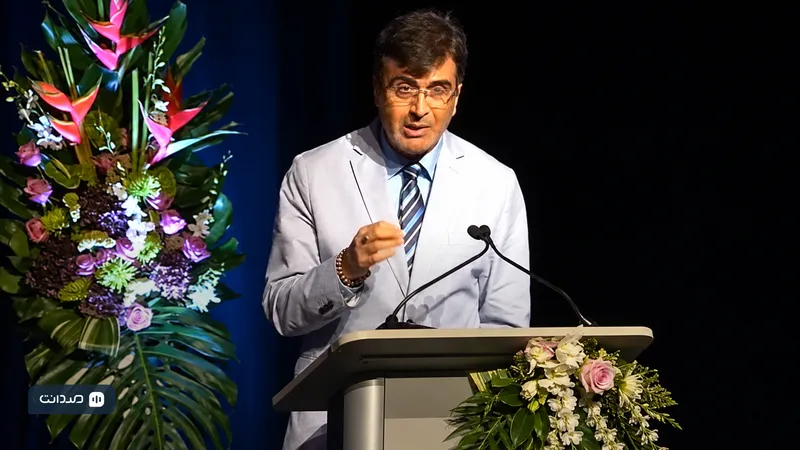
This lecture was presented at the invitation of the Society of Friends of Iranian Culture in Chicago on September 6, 2015 (15 Shahrivar 1394). In this talk, the relationship between Hafez's thoughts and his personal life experiences is examined.
.
.



Discussion1 comments
بدحال نبود در بهشت این آدم خوش سرشت اسامی را می دانست چه زیبایش یا که زشت جمال بوده است جلوه گر زشتی می بود چون نهشت در گیرودار با شیطان سرنوشتش خود نوشت