Philosophy
A Note by Mohammad Mehdi Ardebili in Morvarid Bimonthly, Titled “In Defense of Endogenous Critique”
Effective critique is not an external attack based on the critic's presuppositions, but the discovery of internal contradictions by relying on the opponent's own premises. The critic seeks truth and must, while critiquing the adversary, also critique themselves in order to avoid dogmatism and relativism.
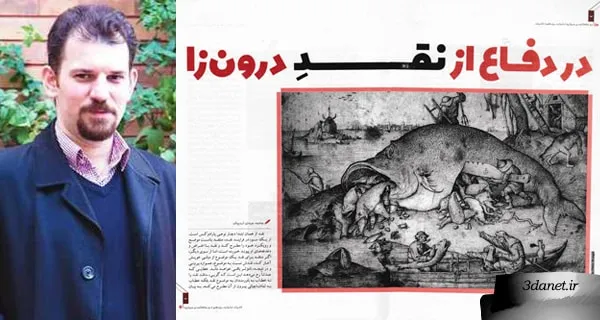
Critique is, from the very outset, entangled in a kind of paradox. On the one hand, in the process of critique, the critic is supposed to present their own position and approach, and the critique is bound up with their intentions and concerns; yet on the other hand, if the critic begins from their own foundations to critique a subject, their critique will always remain external to the subject, and consequently, ineffective. The error that mostly occurs is that the critic seems to present the critique not to the believers in the subject of critique, but to spectators outside it. In other words, this critic (who can be called a polemicist) strives, in the process of critique, to satisfy their own like-minded peers rather than to persuade the opposing party. Hence, such a critic begins the critique from their own perspective, relying on their own worldview and their own theoretical presuppositions. This, however, renders the critique itself ineffective. Critique must, instead of settling scores or attacking from the outside, expose the internal contradictions of the subject under critique, at the enemy's own positions. In this sense, critique must operate from within.
In fact, the premises and presuppositions upon which the critique begins must be the most fundamental and robust positions and foundations of the rival. Precisely the opposite of "polemic," which goes for the enemy's weakest positions to attack. Adopting this procedure in critique is, of course, an exceedingly arduous task. Critiquing the rival with their own presuppositions requires a kind of sacrifice and a level of empathy, even if temporary, with the enemy. The critic must be able to suspend their own positions and presuppositions in order to think in the place of the adversary and to carry out an endogenous critique of their enemy as the enemy themselves. Now the question is, what if the situation is reversed, or what if the suspension becomes permanent? Is it not the case that the true critic, while critiquing the rival, must always keep a corner of their eye on their own positions and intellectual blockages? In this sense, if the critic, in order to critique the rival, truly dons their garb and begins from their foundations, it is quite possible that this garb fits them better and they accept the adversary's position. If the critic looks at the issue from their enemy's perspective, will they not lose their own perspective? With these preliminaries, we can now briefly allude to two key issues, the solution to each of which lies in the heart of the other: first, the criterion of critique, and second, the end of the critic.
One of the issues that every critique invariably faces is the criterion of critique. If the critic is to employ their own criterion, the rival will not take their words seriously at all, because they simply do not recognize the critic's criteria as criteria, and thus, the critique will become ineffective. The result will also not be an endogenous critique but a kind of external polemic that serves only for psychological catharsis and score-settling rather than persuading the rival. On the other hand, if the critic is to speak based on the rival's criteria, what guarantee is there that they will not be led to affirm the rival's conclusions and ultimately transform the critique into an endorsement of the adversary and a negation of themselves?
To answer this question, one must pay attention to the other issue, namely the end of the critic. What is the end of the critic? If the critic's end in critique is merely to drive the rival from the field (as is mostly the case), then they must resort to mere polemic or rabble-rousing and present the critique as absolutely external and demagogic, with the aim that, although they cannot convince the rival, they can at least persuade others and discredit the rival. The critic in this sense is a full-fledged sophist. But is the critic's end merely the negation of the rival? What if the critic's end is the discovery, disclosure, or construction of "truth"? Then, in the midst of critique, at the height of their polemic with the rival, can the critic not also doubt themselves, their own foundations, and critique themselves as well? Although perhaps if the critic, in the midst of critiquing the rival, also abandons their own positions and critiques themselves, they may have been defeated from the first viewpoint (critique as polemic), but have they not fulfilled their mission from the second viewpoint (critique as contributing to the consolidation of truth)? In other words, if the criterion is truth, then what harm is there even if the critic, in the midst of endogenous critique, accepts the rival's position and abandons their own?
In short, the critic, in the sense that this note attempts to defend (which may be called the radical-dialectical critic), must, while equipping the weaponry of war against the opponent, always keep in view the criticizable and dynamic nature of their own foundations and presuppositions. If they aspire to truth, they must critique themselves while critiquing the opponent. On the other hand, they must always begin from the opponent's foundations. If a critique is to be leveled against the opponent, the critic must expose it in an internal manner and based on the exigencies of their adversary. Instead of demonstrating the lack of "correspondence" of the opponent's conclusions with the critic's own criteria, they must demonstrate the inconsistency between the opponent's conclusions and the opponent's own criteria.
Only in this case can one speak of genuine critique. A critique that, of course, must ultimately be acknowledged, if formulated in a radical manner, cannot merely have two sides; that is, it is not supposed to, by relying on a two-valued logic, proceed solely either to the negation of the opponent (affirmation of the self) or to the affirmation of the opponent (negation of the self), but rather, in a dialectical encounter, there exists the possibility that the critic ultimately elevates and sublates (Aufhebung) both themselves and their opponent to a kind of third level. If the critic aspires to truth, they must simultaneously avoid dogmatism – so that they can critique themselves – and avoid relativism – so that they can permit themselves to critique the other. Both dogmatism and relativism render "critique" impossible. The true (radical-dialectical) critic must know that truth is not a pre-given dogmatic proposition, or more precisely, truth does not "exist" at all, but rather "becomes." They themselves, their very critique against their opponent, even their critique against themselves, their very effort to find a way to a more comprehensive level that encompasses and sublates both self and opponent, confirm and constitute this dynamic truth. Truth is nothing but this progressive process of negation and affirmation; and it is only through this that the critic can consider themselves the herald of truth and the representative of the authentic tradition of critique.
.
.
PDF file of this note in Morvarid Bimonthly
.
.
A Note by Mohammad Mehdi Ardebili Titled "In Defense of Endogenous Critique"
Source: Morvarid Bimonthly, Issue 13, Khordad 1398
.
.



Discussion1 comments
از دید خود به دیدار بنای فکری دیگری رفتن و بیان ابهام و تضاد و نمودن کاستی و کژی چنان که برای او قابل فهم باشد ( نقد همدلانه ! ؟ ) همواره مؤثرتر از نقد از موضع دانای کل و تهاجم بیرونی است ؛ چه رسد به رجز خوانی که نقد خواندنش پربسامد است .