Philosophy
A Philosophical Approach to the Concept of Nationality: A Debate with Mostafa Malekian
Mostafa Malekian sees nationalism as the transformation of the natural feeling of patriotism into beliefs about national superiority, and considers this shift philosophically, ethically, and pragmatically indefensible; a summary of the session on the concept of nationality.
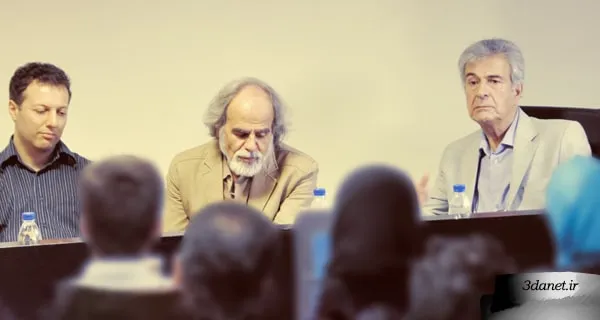
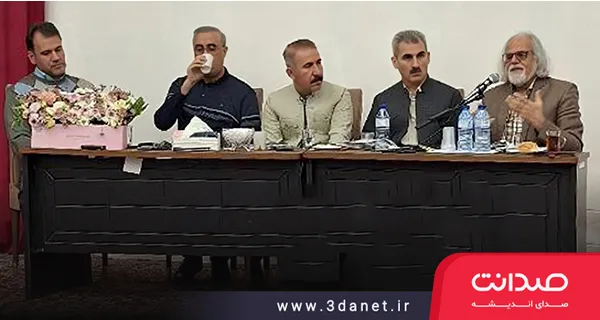
Etemad — Ali Varamini: Some time ago, a meeting was held at the Contemporary Architects Forum with the presence of Mostafa Malekian, Asghar Dadbeh, and Shervin Vakili on the subject of “A Philosophical Approach to the Concept of Nationality.” The story of this meeting began with the International Hafez Shirazi Conference, which took place in Tehran and Shiraz in May of this year. At that conference, a roundtable titled “Hafez and Iran’s National Identity” was held, attended by Jaleh Amouzegar, Asghar Dadbeh, Shervin Vakili, and Mostafa Malekian. A difference of opinion emerged between Malekian on one side and the two other speakers on the other, the core of which was the objectivity and truth of the concept of nationality. This roundtable ran short of time, and it was decided that the discussion would continue at the earliest possible opportunity, and this aforementioned meeting is that promised opportunity. This meeting lasted more than four hours, and numerous dialogues took place between Mostafa Malekian and the two other speakers, as well as between the audience and the speakers. The following text is a summary of the talks and dialogues that took place in this session.
Malekian: My claim is that “nationalism” is indefensible philosophically, ethically, and from a prudential standpoint. Of course, if one of these three is indefensible, the other two will also be indefensible, but nevertheless, I will examine my claim separately. Although it is enough for one of these three claims to be taken from the proponents of nationalism for the other two to be taken as well. In any case, I will address these three independently, but first, I must state what I mean by nationalism.
What is meant by nationalism—a psychological phenomenon belonging to psychology, and particularly to the branch of social psychology, which has existed in all human beings throughout history and in every society, culture, and civilization—is that everyone loves their own homeland. A kind of patriotism exists in every human being, and this is not specific to any particular society, culture, civilization, time, or place. Whether this patriotism is a phenomenon related to natural anthropology or to cultural anthropology is another story. That is, are we human beings made in such a way that we love our homeland, and by nature, according to our physical, mental, and psychological structure and function, have we been made this way, or is it the result of the inductions and inculcations of the culture in which we have grown up, and society has instilled in us the love of homeland? I am not concerned with this. Because this discussion itself is a lengthy one. But the reality is that, whatever the case, we are patriotic. Just as we love our mother and father. This patriotism is not exclusive to any nation or homeland, nor is it limited or confined to any history or geography. Up to this point, neither having nor lacking patriotism is at all a matter for judgment. In any case, it is a reality that exists within us, and no one is excluded from the scope of this rule, meaning that even I, who am one hundred percent opposed to nationalism, possess this patriotism, though I neither take pride in it nor feel ashamed of it. This is something natural. We can neither take pride in our instincts nor feel ashamed of them. That I am attached to my mother is neither a source of pride for me nor a source of shame. Because such matters lie outside the realm of value judgment, and particularly outside the scope of moral value judgments. But nationalism means transforming patriotism, which is a feeling and an emotion, into one, two, three, or n beliefs. For example, I love my mother, and perhaps I love my mother more than anyone else; this is a feeling, emotion, and passion within me. Up to this point, there is no fault or objection to it. But if, from having this feeling, passion, and emotion towards my mother, I deduce one, two, three propositions. For instance, I say my mother is the most beautiful woman in the world, or my mother is the bravest woman in the world, or my mother is the best wife who has ever existed, or my mother is kinder to her children than any other mother; these are a series of beliefs. Logically and epistemologically, the transition from a feeling and emotion to one, two, three, and n items of belief is never permissible. I have the right to say, without a shred of explanation, that I love my mother and that I love my mother more than any other being on the face of the earth, and you cannot find any fault with me. But if I say, do you know why I love my mother? Because my mother is the most beautiful woman I know, the bravest woman I know, the best mother I know, and so on, then I have transitioned from mother-love to mother-worship. That is, I have in fact transformed a feeling and emotion into one, two, three, and n items of belief. Now, if someone does this regarding the motherland and says, I love Iran more than any other country, there is no problem, and says, I love my homeland more than any other homeland and land, there is no problem, but if they immediately say, because my homeland is the best homeland, the language of this homeland is the best language, the culture of this homeland is the best culture, the historical record of this homeland is more brilliant than the historical records of other lands, because this homeland has produced greater scientists, because it has served philosophy, music, architecture, and literature, and so on... you have transitioned from a feeling and emotion to n propositions. The difference between patriotism and nationalism lies precisely in this. My meaning of nationalism is what I have clarified. Now, what name you give to the concept I have clarified makes no difference. You may call it nationalism, you may call it chauvinism. If nationalism means the transition from a completely natural feeling and emotion to an item of belief about the homeland and country (those beliefs, of whatever kind they may be, turn the individual into a nationalist), it is flawed from a philosophical, ethical, and prudential standpoint. Now, I will present these three flaws one by one.
The Philosophical Flaw of Nationalism Since we are Iranian, and when we speak of patriotism we mean love of Iran or devotion to Iran, and so on—that is, our discussion is confined to Iranian nationalism—I will henceforth pursue the example with Iran. What kind of entity is Iran, anyway? First, one must prove the existence of an entity called Iran. First, one must prove the existence of an entity called Iran—that we have something, an identity, a concrete thing, an object whose name is Iran. You must first prove that something exists, and then say it is the object of my love, hatred, anger, or satisfaction. What kind of entity is Iran? Here I can fully guess what answers might be given. Is Iran a geographical unit? That is, have we considered an irregular geometric shape and called it Iran? Someone might say it is not a geographical unit but a racial unit. Just as we might speak of the Aryan or Indo-European race. We call a specific race the Iranian race. For us, Iran has no geographical identity; it has a blood and racial identity. I say, specify this so we can see whether it even exists or not. You might say it is a linguistic unit; we call people who have had a particular language throughout history, however scattered they may be and whatever ethnicity or race they belong to, Iranian. I say, specify this language—which language is it? Does a pure language even exist in the world? A pure language is a concept without a real referent. No language is pure; every language has emerged from the mixing of many languages, which themselves emerged from the mixing of many other languages. A pure race does not exist. We do not have a pure Aryan race. The concept of a pure race and a pure language does not exist. A pure language is like pure, unadulterated water. You can produce pure, unadulterated water in a laboratory, but that is not what exists in nature. You can create a language in your own imagination and call it Persian, but no such language exists in the real world. It is interesting that nationalist friends think the Persian language lost its purity the day the Arabs invaded Iran, as if from the end of Yazdegerd III's reign backward, we are dealing with a pure Persian language. If you know the alphabet of linguistics, you realize this is laughable. It is merely a subject for ridicule. No pure language exists. You should not imagine that if you purge today's Persian language of Arabic and European words, you will arrive at a pure language. You would only arrive at a language containing Mongolian, Chinese, and Japanese words. You might say it is a political identity. For instance, suppose you say we call the Iran that is called Iran "now" Iran. Why do you call the "now" Iranian? What is your preference for considering the Iran of the late Qajar period as Iran, or the Iran of the late Afsharid period? Should we consider the time when the Caucasus was part of Iran, or when parts of Afghanistan and Pakistan belonged to Iran, as Iran? Which era's political borders are you referring to? And wherever you point your finger, it is an arbitrary preference, and I will ask why you did not point your finger a hundred years earlier or later. You might say when we say Iran, we refer to a specific cultural identity. I say, name the cultural components of us Iranians that exist only in us Iranians and, moreover, do not exist in non-Iranians—and you must demonstrate both. After it becomes clear what kind of unit this (political, geographical, identity-based, and cultural) unit is, the next, more difficult problem arises. Well, suppose I concede that Iran exists in one of these senses; why should we cling to this Iran? Just as I had no choice in selecting my parents at birth, my homeland was also not in my hands. Now, because I was born here involuntarily at birth, am I condemned to attach my affections to this place? For what reason? Clinging to a culture, race, or language requires a justification. Therefore, firstly, the philosophical identity of that which we call Iran must be specified; secondly, it must be shown that the entity possessing that philosophical identity has a superiority over other entities, a superiority that justifies our clinging to it, holding beliefs about it, and taking pride in it.
The moral flaw of nationalism Let us suppose we have moved past the philosophical problem and entered the moral one. Why is moral narcissism, moral egoism, condemned, while group narcissism is not condemned but rather praised? Why is it that if it turns out I look at everything solely through the lens of my own interests, only seeking to gain benefit and avert harm for myself, always self-interested and always preferring myself to others, I am an egoist, and we consider this morally very repugnant and reproach it, yet when this individual self-interest becomes group self-interest—that is, I do not prefer myself over you, but I say we Iranians should be preferred over you Greeks—why is this praised? What preference does group self-interest have over individual self-interest? Now, let us suppose group self-interest is unproblematic. Why did you choose the national group as this group? We want to be self-interested, but let us say we have a Muslim self-interest. We have an ethnic self-interest, but let our ethnicity, our group, be a religious one. I say, yes, we like our own group to be superior in the world, and we insist on this superiority, but what we mean by our group is the group that shares our faith and our blood, whose skin color is like our skin color, or shall I say the group that shares my profession and occupation? Why, among all these groupings, did you choose the national grouping? Well, I want to choose a political, economic, religious, or class grouping. Therefore, firstly, this is not morally correct. Secondly, after this, if I am to consider my own group in my behavior, I must often deviate from the standards of honesty, humility, and benevolence (which I believe are among the foundational concepts of morality). When a person develops a group attachment, they cannot look upon their own group and those outside their group with the same eye. They cannot look with the eye of fairness. I can never look upon an insider and an outsider with the same eye. When you define my nationality as our insiders, then if my nationality comes into conflict with another nationality, I cannot act fairly. Well, this is contrary to the standards of justice. Whether you consider three concepts like I do, or other concepts. In other words, even if you subscribe to the Golden Rule and say all of morality is based on the Golden Rule, this is incompatible with nationalism. And the third thing that exists from a moral perspective is that in ethics, the human being, qua human being, must be the object of consideration. I ask a question: why do we protest the historical injustice done to women? We want to say that throughout past history, people were not treated as human beings qua human beings. They said, if a human is a man, this treatment, and if a woman, that treatment. What is the moral foundation of these patriarchal ideas? It is to first see whether one is a man or a woman, and then treat the man one way and the woman another. Well, now, when this division is made, why do you protest, and why do feminists rightly say we must return to a healthier state? Now, instead of man and woman, if I say Iranian and non-Iranian, why is this correct? The human being, qua human being, must be the recipient of kindness, compassion, and love. Just as we cannot accept that our behavior toward Black people should differ from our behavior toward White people because they are Black, and we cannot accept that our behavior toward women should differ because they are women, by the same token, we cannot accept that our behavior toward an Iranian should differ from our behavior toward a non-Iranian.
The flaw of nationalism from a pragmatic standpoint Suppose you do not accept moral standards or are a moral nihilist and say that, morally speaking, I subscribe to no moral value whatsoever. Or suppose you are a skeptic or agnostic and say I do not really know what constitutes right or wrong action, and therefore you wish to exclude ethics from your calculations. Yet another consideration arises, namely practical rationality, i.e., prudence. Is it in the interest of Iranians and non-Iranians for Iranians to be nationalists? The same question can be repeated for every other nation. I maintain that if we are to pursue this discussion as a matter of “Realpolitik,” free from any values, is it in the world’s interest for every group to come forward and say: we and no other, we are superior to others, we take precedence over others, we are more virtuous than others—whatever that group may be (Turk, Persian, Arab, etc.)? I say that if in the former world one could have harbored the slightest doubt that this course of action is not in anyone’s interest, today that doubt no longer exists. Genghis Khan spent a lifetime in the saddle, perpetually at war. How many people did he kill? Today you can kill that many people in three minutes. In a world where I can, by pressing a single button, accomplish what Genghis did in a lifetime, you then go and champion Pan-Iranism while another champions Pan-Arabism; then see whether we can live in this fragile, brittle world—a world whose theoretical domain expands daily while its practical domain shrinks. Suppose a Daesh member gets his hands on an atomic weapon, and do not consider it at all unlikely that the very nuclear weapons present in Pakistan could fall into the hands of Daesh. Would that Daesh member leave any trace of the world’s Shiites first, and then of the world’s non-Muslims? If you merely disagree with his opinion, he will leave nothing of you. As Bertrand Russell said, there was a day in the world when we used to say, “A man’s home is his castle”; I would go inside my own house, lock the door, and then no one could interfere within my own home. Russell said that today is an age in which we are so bound together in practice that “a man’s home is his castle” is a statement entirely contrary to law. Why? Because if you say “a man’s home is his castle” in your home today, the apartments above and below will protest, and they are right to do so. Our relations have become so tightly interwoven that almost nothing private remains. Given this situation, some people come along and champion “Pan-” ideologies. The one who says, “Art is found among Iranians, and only them”—whoever he may be (though we have no doubt that Ferdowsi is one of Iran’s glories)—when he utters this sentence (I say that if he had not said “and only them,” there would be no problem, and it would not conflict with art also being found among the Greeks), the sentence is beautiful, possessing eloquence and rhetoric, and it employs no Arabic words at all (thank God and praise be to God he did not use them), yet with this thought he is committing a crime. I do not address this to Ferdowsi, for he lived in a world where such words did not carry such practical consequences and results. But the one who today says, “Art is found among Iranians, and only them,” and is delighted by this expression, is doing an injustice to humanity and to himself. This has a precedent in our literature and is not unique to Ferdowsi. Nezami, who was not a composer of Persian verse, also has many such statements. The outward appearance of these words is very beguiling, but their inner meaning creates boundaries between human beings. In the words of Thoreau (the renowned American thinker and writer of the second half of the nineteenth century), anything that creates a boundary between human beings is a potential crime against humanity. Anything that creates a boundary between human beings—even gender, or even more natural distinctions such as childhood, adolescence, and youth (if legal boundaries are to be predicated upon them)—is morally indefensible. However, its lack of prudence is the subject of my discussion.
The possibility of living without identity? Perhaps the question arises: can one live without identity? Everyone defines themselves in some way, both to themselves and to others. Well, we too define ourselves: we are Iranian, or we are Iranian Muslims; some also say modern Iranian Muslims. I say, if the problem is identity, wherever you are, say you are an Earthling and therefore a cosmopolitan; your creed is truth-seeking and benevolence; your kin are all the virtuous people of the age. Whoever cares for humanity is my kin. Others are not my kin, but that does not mean I wish to annihilate them. Therefore, I am a human being, a cosmopolitan. Where are you from? From planet Earth. If one day beings are found in another planetary system, I will no longer say I am from planet Earth; I will say I am from the solar system. And I claim kinship with all the virtuous people of the age.
Vakili: The truth of the matter is that I know few individuals for whom I have as much affection as I do for Mr. Malekian, while simultaneously disagreeing with him. What I will say is, in a way, a critique, a line of reasoning, and a response to the questions he raised. These are serious issues and must be brought up and thought about. Although my proposed solution and the course of my discussion are slightly different. Mr. Malekian raised three positions. One of these was a philosophical position, which I consider existential and call the existential problem of nationality. That is, whether we have a problem of nationality, and if we do, what its definition is. Iranian nationality also falls under this discussion. The other discussion concerns the good or bad ethical consequences of believing in nationality. The third issue is whether, in terms of practical and operational expediency, believing in nationality is good or bad, what consequences it has, and I will discuss it especially with regard to the views he held about ISIS, which also caught my attention. Therefore, the first part of my talk is a response to the three questions that Mr. Malekian raised. In the continuation of the discussion, I will present my own critique of his methodology, which I believe is incorrect and has dangerous consequences, and I will also state the reasons for its incorrectness and its grave consequences.
Nationality, the Natural Form of Configuring Social Identity When we are critiquing a concept, I believe demarcating that concept is very important. We must specify and state what we are talking about and the basis of our opposition. What I gathered is that the patriotism you have in mind has an emotional and affective aspect. Another concept that Professor Malekian had in mind was nationalism. Ethnocentric concepts (Pan-Iranism, Pan-Arabism, etc.) and racist ones were also raised in Professor Malekian's remarks, each of which, I believe, is different and each is a specific sociological label that refers to a particular subject. I completely agree with the professor that extracting scientific propositions from personal senses, emotions, and affects is impossible or at least unsound. I fundamentally think it is incorrect for anyone to do such a thing, and I am in full agreement with him on this matter. Therefore, when I speak about nationality, I express my opinion independently of what feeling I have about that nationality or what the content of that nationality is. I want to speak about the concept of nationality as a mode of configuring collective identity. Therefore, the passage you posited from emotional, affective patriotism to the concept of nationalism as a political ideology is, in my opinion, impassable, and the reality is that I think no one really makes such a passage. The modern theorists who speak about national identity or nationalism, or even those who spoke about it in the ancient world, did not base their discussions on emotions and feelings. Another point is that I, too, have many critiques of the modern concept of nationalism in the sense of the modern mode of configuring national identity. I state quite clearly that I do not consider myself a nationalist, but I am nationality-oriented, and I believe a mode of configuring national identity was formed in ancient civilizations, a prime example of which is Iran, and it gradually evolved and has reached our time. Incidentally, in the Iranian lands, where we are the heirs to this form of identity, it is relatively more promising than other ancient civilizations that possessed such a concept. One example of other ancient civilizations is China, which had a kind of pre-modern national identity for itself that has continued to this day. Italy also had a Roman identity that took on a modern form from the beginning of the twentieth century and after the First World War. The main question is not whether this movement can be made or not; rather, the main, existential question is whether we have something called nationality at all. This is a very objective question. It is like me asking you whether we have something called a clock or not, and then I show you something and say we call such a thing a clock. I might be speaking about this when there is a unique, singular thing with these characteristics, and I say this is the clock and nothing else exists that is a clock except what is in my hand. That is, this thing in my hand is special and unique, and therefore it is not much of a subject for discussion. At other times, we are dealing with a general concept called a clock, and there is something in the external world called a clock. Similarly, I might say we have something in the external world called a human being, which was the subject of your discussion. The truth is that none of the propositions I express are absolute, and more clearly, they are a series of rational conjectures. I am not as certain as you are that the human being exists. I am not as certain as you are that nationalism exists. I am not as certain as you are that anything exists. The firmness that exists in Professor Malekian's speech does not exist in me. I am very skeptical about all of these things. I declare quite clearly that I believe in scientific methodology. That is, I think that with the empirical method, and without falling into the trap of there being something called the pure clock, we can look and see whether we have something like a clock or not. There is no doubt that there is something, an entity, a system that does something and has a form that we call a clock. Because it has a specific function and shows time, and we do not have a pure clock. That is, can anyone show us the Forms of the clock or the Forms of the human being? Was Plato able to show us the Form of the horse? But there is something called a clock that has a system and a function, and people call it a clock, and it is recognizable and has an external presence, and it is to the extent that we can experience it. In such a form, we have a clock or clocks.
یعنی میتوانیم بگوییم كه مجموعهای از موجودات هستند كه دارای ویژگیهای مختلفی هستند، كه ژنتیكی شبیه به هم دارند یا جمعیتی هستند كه ویژگیهای جمعیتی شبیه به هم دارند و سیر تحولات و تكامل زیستشناختیشان در تاریخ شبیه به هم بوده است. ما به اینها انسان یا (Homo sapiens) میگوییم. به همین ترتیب با همین درجه عینیت چیزی به نام شهر داریم. یعنی با همان ترتیبی كه انسان و ساعت را تعریف میكنیم، میتوانیم شهر را هم تعریف كنیم. میتوانیم برای آن مرز هم ببندیم همان طور كه در مورد انسان این كار را انجام میدهیم. حد و مرز انسان با جهان خارج كجا است؟ آیا درون لوله گوارش من كه مربوط به جهان خارج است، چون از دو طرف به جهان خارج مربوط است و در آن باكتری وجود دارد و غذایی كه میخوریم هیچوقت وارد بافت بدن نمیشوند بلكه داخل لوله گوارش، خارج از بدن است. آیا داخل لوله گوارش من كه غذا وارد آن میشود، داخل بدن انسان است یا خارج از بدن؟ بسیار در این مورد میتوان بحث كرد. به همان ترتیب حد و مرز یك ساعت یا شهر هم همینطور است و میتوان در مورد آن سوال كرد و حتی به آن هم پاسخ داد. میتوان گفت كه به لحاظ كاركردی در شرایط و موقعیتهایی، مثلا درون لوله گوارش انسان هم جزو انسان است. یا مثلا حریم یك شهر جزو شهر است یا درون پیچ و مهرههایی كه قرار است زمان را نشان دهند، ساعت قرار دارد. میتوان تعریف كرد و این تعریف هم عینیت داشته باشد ولی مطلق نیست. به همین ترتیب من میتوانم بپرسم آیا چیزی به نام ملیت داریم؟ آیا میتوانیم سیستمی عینی در جهان خارج مشاهده كنیم كه به آن ملیت بگوییم و مثلا از ملیت ایرانی و چینی و یا... صحبت كنیم؟ پاسخ من مثبت است و اعتقاد دارم كه میتوان به چنین تعریفی دست یافت و پاسخ هم بسیار عینی و روشناست. این پاسخ از بسیاری از مفاهیم عینیتر است. مثلا مفهوم قبیله كه به نظر خیلی عینی است و باید نوعی رابطه خویشاوندی میان اعضایش وجود داشته باشد، این مفهوم بر خلاف آن چیزی كه به نظر میرسد بسیار سستتر از مفهوم ملیت است. مثلا من میپرسم حد و مرز قبیله هون دقیقا كجاست؟ احتمالا میدانید كه شاخهای از هونها (آرلانها) كاملا ایرانی بودند و شاخهای از آنها كاملا مغول بودند و شاخهای از آنها هم آلمانی (گوتها) بودند. بنابراین شما با سیستمی روبهرو هستید كه عینیت و حد و مرز دارد و میتوانیم آن را تعریف كنیم. استاد ملكیان پرسیدهاند كه حد و مرز آن دقیقا كجا است. من دقیقا میتوانم در مورد هویت ایرانی بگویم. این تكرار مكررات است و بار قبل هم كه در كنگره حافظ بحث میكردیم چنین بحثی را مطرح كردم و الان چكیده آن را برای دوستانی كه نشنیدهاند بیان خواهم كرد. گمان من این است كه باید به صورت تجربی نگاه كنیم تا ببینیم جوامعی كه به ملیت قایل هستند دارای چه ویژگیها و شاخصهایی هستند. شكل طبیعی پیكیربندی هویت اجتماعی، ملیت است. ما سازمان ملل را داریم و هر كسی در كره زمین به دنیا میآید وابسته به ملتی است و چنین چیزی قاعدهای حقوقی و جهانگیر است. در تاریخ اگر به عقب برگردید، میبینید در جوامعی كه نظم سیاسی مشخص داشتند و قبیلهای- عشیرهای و منزوی نبودند با سایر مناطق تجارت داشتند و نظم سیاسی در آنجا شكل گرفته است، مفهوم هویت ملی هم در آنها شكل گرفته و سابقه دارد. یعنی هویت لزوما مدرن نیست. گرچه در حال حاضر پیكربندی مدرنی پیدا كرده و فراگیر شده است.
The Objective Indicator of Nationality A question that arises is how these people define themselves as a nationality. That is, why does a Greek individual call himself Greek? Where is the territory of Greek nationality? Or, more precisely, what is its objective indicator? In summary, it must be said that we have two types of indicators. One indicator is the political order, that is, the state. When a state exists, a nation naturally follows behind it. Usually, the state is posterior to the nation. Take an early form like Poland. Poland is a nationality. However, from the late eighteenth century (1798) until 1918 and the end of World War I, this country had only 20 years of independence, and its state lasted only 20 years. But this country undoubtedly has a nationality, and its people are very sensitive about that nationality and have even made many sacrifices for it. Therefore, one concept is that a state must exist, although it is not a necessary condition. In some circumstances, the state is absent, but the concept of the state exists. In other words, the Polish people were fighting for the formation of a Polish state and succeeded in some periods. Similarly, if a state has been established in a region for a long time, a nationality naturally accompanies it. Rest assured, there is no counterexample; wherever you have had a state that was established and continued for several generations, a nationality forms there. This rule exists everywhere in the world. The second indicator is language. That is, where a national language, yet independent of ethnic language, exists and the people share this common language and recognize their national cultural concepts and elements and are sensitive to them, nationality will exist. We ultimately did not witness the endurance of a country called Czechoslovakia. The reason was that the Slovaks and the Czechs each recited their own poetry, or their myths and religions were different. In the mid-twentieth century, a country called Czechoslovakia existed, but they did not succeed in reaching a kind of common dough and language. If they had, they would have achieved nationality. Just as in Africa, there are many countries. For example, Nigeria is a nationality for itself. Congo, Cameroon, etc., have a national language. The national language of these countries may not even belong to them. It is Swahili, and this language is by no means pure but is a Bantu language merged with Arabic, and its keywords are Arabic. Therefore, we are faced with two variables: the state and the national language, and people objectively define their national identity based on this. It was the same in the past. That is, the Romans also defined themselves with the Latin language and the Roman state. The Franks also defined themselves with the French language and the Frankish state. That is, political power at the social level and national language at the national level are the key and main indicator for defining nationality.
Iranian Nationality The question that arises is whether we can define Iranian nationality. The answer is yes, and we can define it with the greatest possible precision. The oldest national language after China is found in Iran. That is, 1,100 years ago, Ferdowsi spoke the same language we speak today, and if he were among us now, we would understand his words, and he would understand ours. In this respect, such a thing is unparalleled, and from this standpoint, one cannot find such a characteristic in England, Germany, Africa, or America. In fact, among all the common languages of the world, this is prevalent only in Chinese and Persian. The national language can change. The state is the same. We have an Iranian state. The first expansive state to emerge within a specific geographical territory came into being in Iran. It was after the Iranian experience that the idea of an expansive state was replicated elsewhere. Why, when Iran disintegrates, does that same large, original state form again? Why, right now in our minds, when we think of Syria or Yemen, is it different from what we think about African countries? These remain close to us because they are still within our civilizational sphere, because they breathe and live within a circle of shared history. Can I objectively point to a spot and say, 'This is Iran'? Can I lay my hand on a group or a population and say precisely and clearly, 'These are Iranians'? Yes, I can. If, in a certain place, an ethnicity, or a group of people, an Iranian national language was dominant for 500 years or more, that place is Iran. This language might have been Old Persian, gradually becoming Parthian, and then Pahlavi or Dari. If such a thing existed, these people are Iranians. If you point to a spot on the earth's surface and an Iranian state that calls itself Iran has existed there for a thousand years or more, that place is part of Iran. At present, with the exception of China, all states that exist in the world have dual indicators (language and state) with a history of less than 300 years. That is, the French language became the national language of the French only after the country's revolution (1789). Before this date, many people spoke Italian. The state in Spain is new, and in the era of Christopher Columbus, when they sailed toward the American continent, there were still princely states, the states of Ferdinand and Isabella. That is, these states were different, and there was no single state called Spain. Germany is the same. It was Hitler who turned Germany into a single state. Before that, there was no common state. In World War I, the uniforms of German soldiers differed from one another. Therefore, in response to Professor Malekian's first question—whether nationality exists in an existential sense with objective and clear indicators—it must be said that such a thing does exist. Are these indicators precise, clear, and verifiable? Again, the answer is yes. You can precisely, systematically, and with documentation show in the external world that, for example, this place belongs to such-and-such nationality and that place belongs to another nationality.
Ethical Consequences of Nationalism The second point concerns ethics. Is adherence to nationality in conflict with ethics or not? Does it have positive or negative ethical consequences? This is a very serious question, much like adherence to anything else. For instance, I ask you: do you believe you are a vampire? If someone believes they are a cannibal and cannot subsist on any other food, it will likely have bad ethical consequences. The same question can be raised about other beliefs. For example, I ask you: do you believe you are a self-sacrificing person? This question also has ethical consequences. Can ethical consequences be imagined for adherence to nationality? Yes, they can. The question then becomes: how can it be tested? The reality is that I truly did not understand why you so clearly, firmly, and decisively link adherence to national identity to a series of events that are, at the very least, unrelated to nationality. For example, regarding warmongering, it must be said that many motivations for war have been about gaining access to resources and have little to do with national supremacism. Many wars have been religious. In fact, it is from the First World War onward that nationalism becomes a reason for war. That is, it is a modern phenomenon. All wars in Europe before that were religious. If you look at the body of wars throughout history, the situation is roughly the same. I seriously doubt this and think one must consult the sources. It seems to me very difficult to demonstrate that national identity has been the primary cause of war in the world. How you have connected these two is extremely difficult to understand. I continue to emphasize that my perspective is an empirical one, and there must be evidence for this argument. I suspect there is no such evidence, and what exists externally and is the agent of violence and war is absolutism. I suspect it is the belief that truth and the definition of truth are something absolute. Naturally, everyone ascribes truth to themselves. In my view, it is an unnatural matter, and I have not seen empirically anywhere that a person consistently believes the truth is with the other. Everyone consistently believes the truth is with themselves, except in specific instances where, for a particular reason, they reach a different conclusion. But the fact that a person believes truth is ascribed to themselves cannot be a sickness. This is a characteristic of the animal species called Homo sapiens. That an individual believes such a truth is absolute—meaning there is no room for doubt in it or it belongs to them without question—leads to violence or has very dire ethical consequences, and this has fundamentally nothing to do with the nationalism I criticize, nor with the national attachment I advocate. Regarding ethics, let me add one point: the good and bad, benevolence, and the pillars stipulated for ethics were, in my opinion, not very clear, and I hope they become clearer as the discussion continues as to exactly what is meant. Ethics, for me, has a very precise meaning. For me, all affairs and behaviors that goal-oriented systems perform have four ends. These four ends are investigable. They are either for survival, meaning there are living beings that want to survive; or for pleasure, meaning there are psychological identities that are pleasure-seeking; or for power, meaning there are social structures and institutions that power advances; or for meaning, meaning there are cultural structures and systems upon which meaning works. These four variables are interconnected and one. That is, they are four different descriptive layers referring to a single concept, and I call them by the acronym "PLuSM" (Power, Pleasure, Survival, Meaning). In my view, "PLuSM" is the natural end of goal-oriented systems. In other words, ethics is a natural, empirical matter. You can extract ethics through observation. In my opinion, Kant's famous proposition that "one can never derive an ought from an is" is incorrect, and in my view, if we have a precise, clear, and analytical perspective, one can derive an ought from an is. Therefore, I am an advocate of naturalizing and objectifying ethics, and I am deeply concerned about ambiguity in ethics. That is, it is precisely these ambiguities that produce absolute truth. Propositions like "I want to do good work. I like good people. All good people are my kin, or human beings are good." Human beings are not good at all. If you consider those four variables, the human being, across the entire globe you are discussing, is a very bad species. Does nationalism or any kind of distinct identity between me and the other diminish "PLuSM"? In my view, "bad"—meaning the morally undesirable and reprehensible—consists of diminishing "PLuSM".
Anyone who produces suffering, ill-health, emptiness, and weakness performs an immoral act. These four are objective and clear, and by looking at a person’s average age you can say whether that person is diminishing or increasing survival. By measuring a certain molecule in the brain, one can say whether they are experiencing pleasure or suffering. Whatever diminishes my “heart” is bad, reprehensible, and immoral. The moral act is that which increases my “heart.” Does nationality, and the affirmation of a difference between me and the other, necessarily diminish or increase my “heart”? My supposition is that it necessarily neither diminishes nor increases it; rather, it depends on how we define it.
Iranian Nationalism; Non-Violent Nationalism Regarding Iranian nationalism, I can tell you that Iranian nationalism—which itself must be examined in its historical context—increases my “heartfelt concern.” I tell you clearly and transparently that Iranian nationalism is not violent, and we can even examine it historically. That is, I can say that from the Parthian period onward, we have a Chinese nationality, and the people of China share a common “us and them” and a common “state and language.” Iran has been the same since the Achaemenid period. The Roman state and states like the Russian state in the north, the English state, and so on, are similar. You can examine how many wars this national identity—which took shape at a certain date and continued until a certain date—produced, how many people it killed, what behavior it exhibited, how many people were enslaved, and so on. You can even examine how much meaning increased or decreased, or what the level of pleasure and suffering produced was. These things can be measured and indicators can be defined for them. Iranian nationality, in comparison with other civilizations, is not such that it diminishes my “heartfelt concern.” I can even demonstrate such a thing with data. I can say that a strategy evolved here that produces “heartfelt concern.” The formation of Iranian identity is an unusual formation. For this very reason, it is very robust and enduring, which itself stems from the fact that from the beginning it was based on the evolution of methods for increasing “heartfelt concern.” At the beginning of the formation of the Iranian state in 539 BCE, that is, when Cyrus the Achaemenid entered Babylon and the lands of Iran became fully united, until 330 BCE when Alexander of Macedon conquered Iran, we have about 230 years of the Achaemenid state as the first comprehensive Iranian state. In this first Iranian state, you can measure whether “heartfelt concern” increased or decreased. There are many components in examining this factor. For example, you can measure whether the price of bread or sheep decreased or increased. You can also examine the average age, the number of wars and rebellions, people’s satisfaction, strategies of production or power, and how they functioned. I can tell you that in a certain period these strategies existed and worked, and after that, when Alexander attacked, they disappeared. These things can be shown with statistics. These are verifiable and exist in history. My critique of Professor Malekian regarding the ethical discussion is that ethics must be defined so that I understand precisely what good and bad are, and understand precisely why the human being is good and why the objectivity of the human being is assumed to be greater than nationality. Because I can tell you that the human being is also composed of a series of cells, and the objectivity of the cell is greater than the objectivity of the human being. I can even tell you that among the cells, some are more important than others, and for example, nerve cells possess greater complexity. Why are you not attached to each individual nerve cell? The important point is that we specify what we are talking about, where the boundary of objectivity lies, and how this objectivity connects to the moral boundary. In my view, the boundary of objectivity is an observable and empirical matter, and ethics is also defined by “heartfelt concern,” and these things interlock with each other in the framework of nationality. You spoke about expediency. I have a question first for Professor Malekian himself, and then I will ask the rest of the friends. What happened that ISIS or the Taliban came into being? What happened that the Uzbeks and Tajiks, the Kyrgyz and Uzbeks, and also the Armenians and Azeris killed each other? Naturally, something happened. Because these people lived alongside one another. What period in history has there been when all of these were in conflict with one another? Only this recent period exists. In this recent period, are they all at war with one another? Does ISIS have a connection to nationalism? If you look at the contemporary history of the Iranian land, you see forces that are opposed to a common identity. A common identity means looking at the historical background of the people who are in the region and considering the largest civilizational scope and domain where people who were similar to one another and had a common destiny, or could have lived within the framework of a common collective identity. This is what a common identity means. Those who oppose such a thing are ethnicists and fanatics, and their words are not documented. These are people who easily lie in their texts. These are people who believe in absolute truth and kill each other and start wars. These are people who shell the Buddha statues over there and the Parthian palaces and the museum over here.
Why do they do this? Is it because they are nationalists or because they possess a national identity? By what are they supported? In your view, are they supported by national identity? Does the perception of kinship that the people of Azerbaijan and the Armenians have had with one another, and who fought the Romans for thousands of years, prevent their war with each other or fuel it? My suspicion is that if we are talking about expediency, we are faced with a clear expediency that in our era becomes a necessity. I believe in the civilizational sphere of the Iranian world, which is not limited to our current map; it is a historical civilizational sphere, and its boundaries, like everything else, fluctuate, but they do not fluctuate everywhere. Just as the boundaries of myself and Mr. Malekian also fluctuate. We constantly shed the epithelial tissue of our skin, but there is an approximate boundary by which I say this Professor Malekian is the same Professor Malekian from four months ago, even though his epithelial cells have changed. The civilizational sphere of Iran is the same. The borders of the civilizational sphere shift slightly, and even its state disappears and a new state emerges. Shared identity is important, and whether that identity is revivable or not. Now is the last moment when this identity is historically revivable. It is at these very moments that violence becomes maximal, and indeed has become so. In terms of expediency, it must be said that the expediency of the people of the Iranian world is to be Iranian. If we look at history, Iranians were never supremacist in the way we described. Modern nationalism is, in most cases, especially in Europe, supremacist. For this very reason, the greatest wars of the twentieth century are nationalist wars. However, what is its connection to us? That is, what does the national identity of Iranians have to do with the nationalism of Europeans? How many times have we attacked other countries because of our aggressive identity? We only had Nader Shah and Sultan Mahmud of Ghazni. What other countries were there? How many kings did we really have who waged offensive wars? How many kings did we have who fought defensive wars? How many times was Iran attacked, or did it attack others? These can be compared and judged against other civilizations. If we wish to discuss it ethically, aggression can be considered equivalent to warmongering, and since in war people are killed and violence increases, it can be regarded as a negative ethical indicator. I personally tend to present military aggression against another country as an ethical indicator that is morally reprehensible. However, this indicator is not a significant one in the case of Iran. These were the three points I wished to raise.
A Critique of Malekian’s Methodology I also have a critique of Professor Malekian’s methodology. I believe that in the humanities we have two types of outlook. One outlook holds that the humanities rely on understanding and introspection and, in short, have a method different from the experimental sciences. According to this view, it is through the method of understanding, or having a shared understanding of something, and empathy that one can comprehend something in these sciences. This outlook relies on the idea that we have a branch of knowledge that is somewhat up in the air, where some of its elements are unverifiable or partly interpretive. In my opinion, this is not the case, and there is another outlook which says: the methodology of the humanities and the experimental sciences is the same. The same amount of interpretation and understanding that exists in the humanities exists in the experimental sciences as well. The interpretation and presupposition regarding the concept of the human being in the biological sciences demonstrates such a thing. My belief is that the methodology governing these is similar and is a mixture of empirical objectivity and subjective interpretation. With this presupposition, I want to say that it is dangerous, and I strongly criticize it, if we talk about concepts without defining them transparently, clearly, and precisely. The very statements you made here, due to their ambiguity, can easily be exploited, and this is dangerous. These statements are exploited by individuals who are ethnocentric, violent, and spread hatred. Incidentally, these individuals consider human differences as a basis for hatred. You said that some define nations based on cultures. I believe such a thing can be done, because the culture of nations changes over time. However, regarding Iranian culture, there are veins and threads, one of which is “Mehr” (love/kindness), and I point to it. The only civilization from its beginning to its end, and as long as it has had a national identity, in which the concept of Mehr has been sacred and repeated everywhere, is Iran. The old flag of Iran is the same way. We even have the deity Mehr. The rest of the world is not like this. Our literature and mysticism are full of Mehr. In our religion, the relationship between humans and God is a loving relationship. Mehr is not this important in other civilizations. One of the reasons it is so important in Iranian civilization is that there has been and is diversity and plurality in this civilizational domain, all of which are Iranian. That is, we have different ethnicities, religions, races, and climates that are all Iranian. For example, in Persian poetry, all eye colors are praised. My point is that there are a series of concepts and keywords in the Iranian civilizational domain that have kept people together, and this is based on similarities among individuals. That is, part of this is historical, linguistic, geographical similarity, and so on. My point is that if we do not define the keyword in question precisely, and if we do not define identity, which is a serious concept, correctly, it will be exploited by those who consider distinction a basis for hatred. Because identity generates political mobilization behind it. I fully understand that your intention is very good, but the reality is that the people of the planet Earth do not define themselves as the people of planet Earth. The people of planet Earth define themselves as Chinese, Spanish, Indian, and so on. You can either give them a reasoned, rational instruction to define themselves based on people belonging to a certain civilizational domain and a certain nationality and to live well alongside one another and be ethical, or you cannot. That is, an instruction that is unenforceable, no matter how good it is, is ambiguous. The critique I have of you is that, in my opinion, keywords must be transparent, and I believe that if they become transparent, many issues will be resolved. That is, if the concepts of benevolence, goodness, morality, and so on are precisely explicated, many problems will be solved.
Response to Malekian’s Objection There is a different method between my way of looking at the subject and the professor’s. For example, the slippery slope argument, which is a very good logical argument, but my perspective is an empirical one. In my view, the methodology of the humanities is not an abstract methodology detached from experience. Rather, it must be grounded. Bald and hairy are two external phenomena, not two logical concepts that do not exist. People consider some to be bald and some to be hairy, and if you want to see the concept of these two, you must take an average of how many hairs people call bald and how many hairs they call hairy. I did not state the number 500 arbitrarily. The people who are on the earth today, how many years at most do they have a national language? Apart from China, the rest have had a national language for at most 250 years, which belongs to the French. The oldest national sovereignty we have belongs to England and is close to 500 years ago. These two numbers I arrived at are empirical. I took double of each so there would be no room for doubt.
Nationality and the Argument by Contradiction Dadbeh: I will begin my remarks with a strange and peculiar statement with which Professor Malekian is familiar. The whole debate is over whether something called nationality and abstract concepts of this kind have reality or not? Our sages have an argument by contradiction and a solution-based argument. The contradictory form of the proposition is such that they first halt what the opposing party is saying. The contradictory answer to our discussion is that whether we like it or not, the people of the globe do not define themselves as global; they define themselves with titles such as Chinese, Iranian, Greek, etc. It is interesting that the side that has power seeks to negate the other side and say you do not exist. Champions, in particular, are always under attack. There is no reason for anyone to strike down destitute people. Why have Iran and its culture always been under attack? Because it is something whose very existence has always had value and something to say. Its name (Iran), which has been repeated more than 1,500 times in the Shahnameh and has been mentioned throughout history up to Malek al-Sho'ara Bahar and beyond, is cited as originating from a directive by Reza Shah (who said do not say Persia, say Iran). This is a long story and there is much evidence for it. So, something called Iran exists. Some ideas, however pleasant they may be, are only suitable for a utopia. When the utopia emerges and all problems are solved, there is no longer an issue; all people become "people of the earth," and the title becomes earthlings, and everything is resolved. But for now, and as long as these issues are not resolved, what is to be done? Should we negate ourselves while others are intensely negating themselves? Where does this lead? The wars that were spoken of were religious wars and had nothing to do with national wars. All the art and design that our great figures in mysticism had in proposing the religion of love was so that, while accepting pluralism, you would believe in something that is part of the human disposition, and that is affection and love. All efforts were, in fact, in the same direction that Professor Malekian speaks of. That is, the story that all our great figures tell. Rumi says something strange and peculiar in Fihi Ma Fihi; he states: Do you not say that this world is a world of multiplicity, so everything that exists in this world is multiple, so why do you want to convert everyone to one religion and creed? When this happens, it is when we reach the world of unity. Therefore, do not fight with one another. I am not saying this religion of love is entirely Iranian; it is human, but we have placed special emphasis on it. In any case, my initial point is that when a reality exists, let us accept it and not negate ourselves. We are negated enough. Enough that in broad daylight, they deny obvious truths and confiscate our figures. If a theory is not properly explained, it is abused. Mr. Malekian’s words are correct, but they are useful for a time when people become people of the earth. What he emphasizes is a wish; if humanity is not idealistic, it does not move. However, it must be explained.
Nationality and the Demonstrative Proof
We have a discussion in logic called primary intelligible and secondary intelligible. An intelligible is something that exists and for which a series of events have occurred; we measure that thing against its counterparts and finally give it a name. For example, we see individual human beings, then perform a mental operation on them, place a broad name upon them, and it becomes “human.” This is called an intelligible (universal concept). Their point is: what relation does this universal concept have with the external world? Phenomena upon which a mental operation is performed, because they have a referent in the external world and can naturally be qualified by an attribute in the external world, are called primary intelligibles.
How does it become secondary? In a way, they remove the phenomenon’s foothold in the external world. Sometimes they remove its foothold entirely, and sometimes their whole point is that it has one foot outside. If we do not have a foundation, the edifice we are building will collapse. That from which the foothold is entirely removed pertains to logical operations. That is, once you have constructed “human,” “animal,” and so on, you place certain names upon them and say “species,” “genus.” You have nothing in the external world called “species” that you can point to and say, “this species.” You have individual human beings. This is called the logical secondary intelligible.
But our discussion concerns the third kind, upon which the edifice of metaphysics, Islamic philosophy, and any philosophy that claims one can understand something beyond sensory experience is founded. Now, Westerners express it in their own way, and we in ours. As it is said, can we reach the noumenon (thing-in-itself) beyond phenomena? Those who believe it is possible must ultimately seek a path. Our philosophers state: when you universalize with your mind, for instance, you have causality and effect, where are these?
Their entire point is to say that here there is connection and reality. They argue that when you examine these phenomena and say “this is the cause,” this being-a-cause is an attribute of that phenomenon and a factor to which you point in the external world. For example, water quenches thirst. We have water externally. But being-a-cause is an attribute that adheres to water; therefore, it possesses a kind of external reality.
Now, my point is that nationality and Iranianness are of the same kind. Just as causality is a real matter from which one cannot deviate, Iranianness, nationality, and identity likewise entail commitment and, in the same manner, possess an external reality. If we wish to have a precise philosophical discussion, identity, nationality, and Iranianness fall under the category of philosophical secondary intelligibles and possess reality with the same intensity and form.
Dadbeh’s Critique of Malekian
In the continuation of the discussion, Dadbeh raised an objection to Malekian’s remarks. He stated: Malekian’s words are very beautiful, but they are suited for a utopia. If you know of a society that observes these principles, introduce it. Dadbeh also posed the question: if your words were accepted and everyone agreed that they have no nationality and are all human, what would be the result?
Malekian responded to Dadbeh’s criticism as follows: The result would be what Victor Hugo said: “We are servants of right and slaves of duty.” Do I not say that a human being’s honor lies in saying, “I have sisterhood and brotherhood with the seven billion people of the earth”?
All realities were initially ideals. When Kant lived in a small town in Germany, no one believed that one day this Kant would influence the seven institutions that exist today (family, economy, politics, education, law, ethics, and religion) in the lives of seven billion people.
Mostafa Malekian’s Objections to Shervin Vakili’s Arguments Malekian: The first point Dr. Shervin Vakili made was that one must speak clearly and define and elucidate concepts. I believe the only merit in my work is that I provide very clear, analytical, and transparent definitions. But apparently I have not done so here, though of course I do not know which part of my speech is unclear. However, I have a few points regarding his remarks. First, I must say that if someone wants to defend a fondness for nationality, they must defend it to this extent and magnitude. Of course, he distinguished fondness for nationality from nationalism and accepted my definition of nationalism, but I did not understand what his definition of fondness for nationality is. Instead of defining fondness for nationality, he defined national identity, which was not the subject of my question. In any case, the upshot of his remarks was that if we have had a national language for 500 years or more, or a unified political sovereignty for 1,000 years, then we are dealing with a nationality, and since both of these hold true in Iran, we can say that we have an Iranian nationality. I will set aside one dispute and not ask on what grounds I should accept these two criteria from you. But this criterion has two logical and fundamental flaws. First, why five hundred years? Say 499 or 600 years. What preference is there for the number 500 or 600? One of the basic principles of the logic of thought is that we cannot give a preference without a preponderant reason. We cannot prefer one thing over another without reason. I want to know why I should accept his number five hundred? If I accept the essence of his formula but say 480 instead of 500, who can stop me? Just as no one could stop Dr. Vakili. But our speech becomes somewhat groundless, because singling out a number cannot be at anyone’s discretion; one must see what relevance this number has to the judgment. If it has no relevance to the judgment, that number becomes groundless, and anyone can substitute any number for 500.
The Slippery Slope Fallacy In material logic, there is a fallacy called the slippery slope. For example, I say: if a person has a head full of hair, will they become bald if one of those hairs is removed? You say, "No." After your answer, I say: if that is the case, I will bring a completely bald head, and you must state that this is not bald either. Because according to your definition, if we remove one hair from that full head of hair, it is not bald, and since removing one hair from a non-bald head does not make it bald, we then remove another hair. Again, it does not become bald because you accepted that a full head of hair minus one does not equal baldness. Then I keep plucking the hairs of that person with a full head of hair one by one until there is no hair left on the head, but according to your definition, that hairless state cannot be called bald. Now, I say this to Dr. Vakili: if a national language is 500 years old, will a problem arise if three days are subtracted from it? He says no, three days have no relevance, and so I keep subtracting three days at a time and say: there is a language that is five and a half days old and has created a nationality. The point is that someone who wants to speak precisely must be careful not to fall into the slippery slope. Also, Dr. Vakili said that you cannot say with certainty that a human being exists. Why do you feel compassion for the human being? Turn to the smaller components. The difference is that all these cells possess a unity of the type of unity of consciousness. It is this unity of consciousness that turns me into a single entity. Otherwise, if this consciousness disappears and I die, since there is no consciousness in me, I am no longer a single entity. If they wanted to say how many entities there are, they would have to count my molecules. The question is: does such a unity of consciousness exist in a nation that we might call it an entity? The next point was that they said nations feel nationality, and everyone defines themselves under a nationality. I was not saying that nations do not say "we are a nation." My point is: are they correct in saying that we are a nation, or not? Another point that Mr. Vakili referred to in the short text "My Heart" was that human beings strive for survival, pleasure, power, and meaning. I do not have the opportunity here to critique this statement, but it must be said that these four do not sit alongside each other. I will show with an example that placing these four together involves a logical fallacy, and these four things are fundamentally four different things. Suppose I ask you if you like going to the cinema, and you say no; regarding theater, eating cake, sleeping, swimming, and whatever else I mention, you answer that you do not like it. In this situation, if I want to give you pleasure, what should I give you? This discussion means that human beings do not want pleasure; they want something else, and when they attain that thing, they feel pleasure. Pleasure is not something that human beings want, and in this example, since this person wants nothing, there is no way to bring them to pleasure.


Discussion7 comments
هر زمانی که قدرت مرکزی در این سرزمین افول کرد اقوام همدیگر را بلعیدند تا انکه دوباره یکی بر همه غالب میشددر دوران جدید افعانستان ادربایجان و قبل تر عراق از ایران جدا شد یعنی دوران سست و نکبت قدرت مرکزی قجر حال باز بشینین و بگویید زبان پارسی عامل وحدت ماست این سرزمین اگر روی ازادی و دمکراسی را دید و یکپارچه ماند هنریست نه طی این صد سال که قدرت مقتدر مرکزی بر ان حاکم بوده است ازمتکثر ترین کشور هابه لحاظ فرهنگی- زبانی ایالات متحده است که تکثر را بر تافته- با همان ناسیونالیسم نه ملی گرایی کشف شده -در عین ازادی و دمکراسی نه ایران که با وجود کمترین تکثری هر وقت قدرتی بر سر انها نبود همدیگر را پاره پاره می کردند
در رابطه با صحبتهای آقای وکیلی درباره زبان فارسی و نام ایران ایرادات جدی وجود دارد. مفهومی که از ایران در شاهنامه وجود دارد منطبق بر هیچکدام از شهرهای فعلی مستقر در محدوده جغرافیایی ایران نیست. تمام شهرهایی که در شاهنامه به عنوان شهرهای ایران نام برده شده همگی در محدوده افغانستان و سیستان قدیم است و حتی شهری مثل کرمان هم جزو ایران به حساب نیامده، مثلا در مصرعی داریم" ز کرمان به ایران شدم..." یعنی کرمان هم جزوی از ایران نیست! در رابطه با زبان فارسی هم اساتید زبان نیک می دانند که این زبان به لحاظ خاستگاه متعلق به منطقه نیشابور و ماوراءالنهر است و در طی 6 قرن به تدریج در بقیه نقاط مرکزی رایج شده، لذا اگر یک اصفهانی به عنوان مثال از قرن هفتم و هشتم به قرن اول و دوم همان منطقه اصفهان برود زبان مردم آن ناحیه را نمی فهمد اما اگر به قرن اول هرات برگردد مشکل زبانی خاصی نخواهد داشت. به همین جهت تا قرن ششم ما هیچ اثر ادبی فارسی از دیگر مناطق ایران به جز خراسان به زبان فارسی سراغ نداریم. به لحاظ واحد سیاسی هم محدوده فعلی تا زمان پهلوی به اسم رسمی ایران مسمی نبود و در هر دوره ای نامهای خاصی داشته، مانند ممالک محروسه قاجار، ممالک محروسه افشار یا صفوی و... در رابطه با تمرکز قدرت هم بر خلاف پندار جناب وکیلی تا زمان پهلوی ها سیستم مرکزگرایی در ایران نبوده و در هز ایالتی حاکم یا شاهی قویحکومت می کرده که متحد شاهنشاه بوده و اصطلاح شاهنشاه به همین جهت رایج بوده، یعنی شاه شاهان! پس نتیجه می گیریم که دولت و ملت در معنای مدرن آن از دوره پهلوی تلاش شده تا بوجود آید. آن هم با حذف و سرکوب زبانهای دیگر و نادیده گرفتن حقوق قومی و زبانی آنها.
با نظر جناب سلیمانی هم کاملا موافقم. فکر میکنم بهترین و علمی ترین کتابی که در مورد شکل گیری «کشور»ی به نام ایران وجود دارد، کتاب «آرمان ایران» نوشته گراردو نیولی با ترجمه سید منصور سیدسجادی است. البته این کتاب از جانب ناسیونالیستهای افراطی بسیار مورد حمله و توهین و نفرین قرار گرفته است و ا جاییکه من، به عنوان یک متخصص باستان شناسی دوران تاریخی ایران، خبر دارم هیچ نقد عالمانه ای بر آن صورت نگرفته است. تنها نقدی که ارزش اشاره دارد، نوشته مرحوم شاپور شهبازی است، که البته به هیچ وجه کتاب نیولی را به چالش نکشیده است.
با منطق مدرسی و ارسطویی نمی توان پدیده های اجتماعی ـ تاریخی را توصیف کرد ، چنان که یک فرد معین را نمی شود با مجموعه ای صفات خاص معرفی کرد مگر آن که برش خاصی از زندگی او را در نظر باشد . به عنوان نمونه : آیا تهران همان ری باستان است ؟ تهرانی که جهانگردان 150 پیش توصیف کرده اند ، همین است که امروز می بینیم ؟ آیا تهران به عنوان دهی در حوالی ری در 500 سال پیش با تهران کنونی فقط تشابه اسمی دارد ؟ از سوی دیگر ، آیا با تغییر اسم می شود از تغییر هویت سخن گفت مثلاً به جای پارس بگوییم ایران ، با هویتی جدید و نوظهور طرفیم یا با هویتی که با معنای قبلی واژه دریافت می شده ؟ ....به عبارت دیگر بر ناقدان است که پیش از هرچیز مبانی روش شناختی داوری خود را روشن کنند . مبانی و روش شناسی جناب شروین وکیلی که مشخص است ( ن.ک : سوشیانس ).
واقعیت این است که در عالم خارج در حال حاضر هم ما ملیت ایرانی به مفهومی که منتقدین استاد ملکیان می گویند نداریم. یعنی ایرانیان ساکن در محدوده جغرافیایی فعلی هنوز احساس یک ملت بودن ندارند. لذا به عنوان مثال می بینیم وقتی اوجالان رهبر حزب کارگران کردستان در ترکیه دستگیر می شود کردهای ایرانی اعتراضاتی در برخی شهرهای ایران می کنند که منجر به خشونتهایی هم می شود! پس می توان گفت ما یک ملیت کردی هم داریم که در درجه اول هویت خود را کرد بودن تعریف می کند! اینجا بحث قومیت و ملیت به هم می رسند. یعنی برخی اقوام ما در داخل جغرافیای موسوم به ایران داریم که برای خود ملت هستند و تقریبا تمام ویژگیهایی که برای ملت بودن شمرده شده دارا هستند الا استقلال حاکمیتی!
با نظر جناب حسینی کاملا موافقم. و یادآوری میکنم که علاوه بر مورد کردها، میتوان مثالهای متعدد دیگری هم در تایید این دیدگاه ارائه کرد.
1 ـ درصد شرکت کنندگان در انتخابات و همگونی بالای 60 درصد رأی کوردان با سایر اهالی ایران بیش از ابراز همدردی با « اوجالان » مبین همبستگی یا واگرایی ملی است در صورتی که این دو را منافی هم بدانیم ، که نیستند . ایران به همه ایرانیان از جمله کوردان تعلق دارد و کسانی که می کوشند تفاوت را به شکاف و رویارویی تبدیل کنند ، عاملان استعمار نوین اند ، استعماری که از پس جنگ سرد و فروریزی اردوگاه بلشویکی ، می کوشد تفاوت های زبانی ، مذهبی و ... را در منطقه ما پر رنگ کند و با این ترفند منطقه مهم حامل انرژی ( نفت و گاز ) را در تصرف و کنترل کامل خویش بگیرد . بقایای تفرق قومی از نوع بلشویکی ـ استالینی نیز از ابزارهای یورش جدید استعمار انگلیسی ـ آمریکایی است و کوردان افتاده در این دام فقط قربانی می دهند به ویژه اگر به جای این که به مأمن خویش ( ایران )بنازند ، بدان بتازند چون در این گرداب آتش عامداً برانگیخته و هدایت شده ، در برابر « تورک » و تازی بی پناه خواهند ماند . 2 ـ شاخص هویت ملی چیست ؟ پاسخ هر چه باشد ، ما ساکنان کشوری مشخص به عنوان یک واحد اداری ـ سرزمینی ، منافع مشترک داریم و با همه تنوع زبانی و مذهبی و رنگ پوست و عقاید سیاسی و هویت طبقه ای و .... ، برای حفظ داشته های سخت به کف آمده و ارتقای موقعیت خود در جهان گرفتار بحران ، به یاری هم نیاز داریم و باید پیوندها و رگه های مشترک خود را تقویت کنیم هر چند مزدوران کانون های استعماری را خوش نیاید . 3 ـ من عضو یک شبکه خانوادگی ام که کورد و لور و تورک و عرب خوزستانی و اصفهانی و تهرانی و ... در آن حضور دارند . جمعیت امروز ایران به ویژه طی 25 سال اخیر چندان در هم تنیده شده اند که شبکه خانوادگی ما استثنایی نیست ؛ چون ما زیادند . کسانی که روی تفرق زبانی و مذهبی و ... در ایران سرمایه گذاری می کنند ، در واقع می خواهند در ایران جنگ خانگی راه بیندازند . کور خوانده اند !