Philosophy
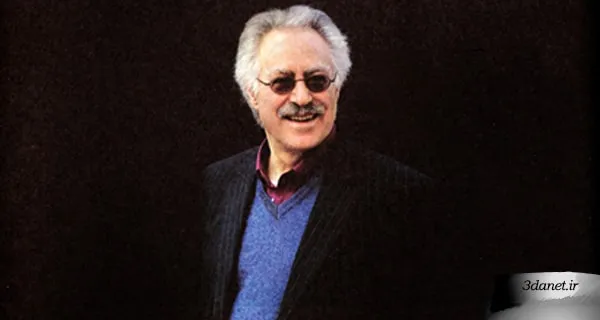
A Step Toward Understanding the Intellectual Project of Javad Tabatabai
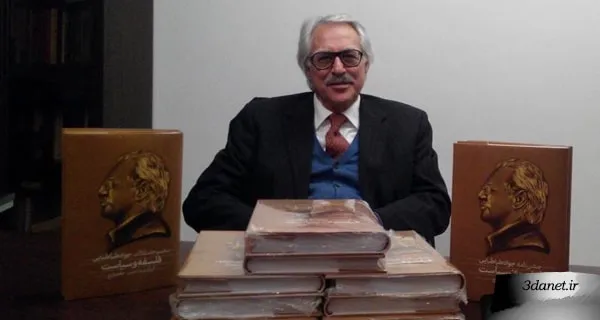
By excavating the tradition of Iranian thought and diagnosing its decline, Javad Tabatabai seeks to untie the knot of the present age and lay the groundwork for the emergence of modernity. It is a philosophical project that redefines Iran as 'unity in multiplicity' and clears the path for a new mode of thinking.
«مزاجِدهر تبه شد دراینبلا حافظ / کجاست فکرِحکیمی و رآیبرهمنی»(حافظ)
نخبگان ادبی ما به درستی به این اصل فلسفی{رابطه معرفت و عمل} باور داشتند که مشکلِ دوران و بههم خوردن مزاجِ دهر یا زیست سیاسی-اقتصادیشان لاجرم سررشتهای و راهحلی جز معرفت و نظر ندارد و این امرنیز جز با درافکندن طرحی فلسفی با کالبدینظاممند، آنهم بهوسیلهاندیشمند-حکیم برطرف نمیشود، به عبارت دیگر مشکلِ دوران یا بهبیانِشاعرِاندیشمند ما «برهم خوردن مزاج دهر»جز با تکیه بر مفاهیمی اندیشهای برای شناختِامرِعینی به منظور گشودن گرهزمانه و با تکیه بر تاملات صادره از حکیم-برهمن ممکن نیست. جواد طباطبایی که به دنبالسازوکاری نظری برای برون رفت از مشکل زوال ایران که خود به نحوی احسن به تئوریزهکردن آن پرداخت،از فیلسوفانی است که مشکل دوران را نه به طور تمام و کمال در عینیت که جامعهشناسان به تبیین آن پرداختند، بلکه در ستونهای نظری اندیشهورزان ما و زوال عقل و راه برون رفت از آن را تبیین عقلانی از این مشکل میداند، این پیر فرزانه با خوانشی مسئله محور از سنت اندیشه ای ما-که به نظر خود ایشان با عزل نظر از این سنت اندیشهای پی ریختن طرحی برای بهبود اوضاع اندیشه ای ممکن نیست- بر آن است که هم سنت اندیشهای خودی را مورد واکاوی قرار داده و به نخبگان فکری بشناساند و هم در پی محکم کردن طرح خویش و نشان دادن ردپای زوال در تاریخ اندیشه ایران باشد. البته منظور نظر طباطبایی از رفتن به درون سنت پیدا کردن پاسخ به پرسشهای نظری خویش است و دیگر اینکه با نقد عناصر موجود در سنت اندیشه ایران راه را برای ورود اندیشه جدید با گرفتن سنتزی از برخورد دو سنت اندیشهای هموار کند. بدون شک شناخت جایگاه یا به بیان فلسفی معرفت به زمینه و متن و مفاهمه سنت خوداصلیترین گام برای پروبلماتیک کردن مسئلهی خودی است که طباطبایی اندیشه خوانان را به شناخت این امر رهنمود میکند و خود به نحوی جدی و نه بسان بسیاری از اهالی خرابآباد ایدئولوژی بدان پرداخته است. رفتن طباطبایی به درون سنت با روش شناسی فلسفی انجام شده است،و صدالبته این پروژه طباطبایی با طی العرض کردن ایدئولوگ های معاصر که با هدف بزرگ کردن برخی از مفاهیم سنت و ساختن ایدئولوژی برای کسب قدرت انجام شده و میشود، بسیار متفاوت است، که در ادامه بدان خواهیم پرداخت.
روششناسی طباطبایی در تناظر به فلسفه غربی
بدیعی است که منظور از این سرفصل نه ادعای تقلیدی بودن پروژه طباطبایی از فیلسوفان غربی که آنها طرح نظری خویش را در پاسخ به شرایط و ضرورت های جامعه خویش طرح کردند، است{سخنی که منتقدین با عزل نظر از پروژه فکری طباطبایی و با توجه به یک سخنرانی آنهم بدون فهم اینکه این سخنرانی نه مانند هر سخنرانی دیگری بدون پیش فرض فلسفی گفته شده، بلکه گفتاری است بر اساس نظام گفتاری مندرج در متن تاملی درباره ایران }.باری منظور این است که طباطبایی با توجه به عناصر و مفردات قوام دهنده اندیشه غربی و اسلوب آن به ایضاح سنت اندیشه در ایران، از منظر ویژگیهای سنت ایرانی پرداخته و به بیان نظرات خویش مشغول شده است. وی بر تاریخ تحول اندیشه سیاسی و حقوقی در غرب تاکید دارد و البته نه فهم تجربی که تبیین عقلانی را وسیله خود در راه این شناخت و طرح اجتهاد خود قرار داده است.طباطبایی از این رو که سعی در پاسخ به بحرانی موجود در متن سنت و آشکار ساختن متن سخن و واکاوی وجوه امتناع اندیشه و گسستی که مناسبات تداوم اندیشه را به هم ریخته است،نمیتواندهگلی،مارکسی، اسکینری و.. باشد.
He has laid down the particulars for founding a theoretical method to construct his own theoretical apparatus in order to untie the knots and theoretical dead-ends and the contradictions of political, theoretical, and objective life, and has erected a magnificent edifice which, in the opinion of this reader of thought, the majority of critics have failed to grasp this point and, in their criticism, have been incapable of referring to the text of his thought; for this reason, they cannot be given any credence. In the author's view, a major portion of Tabatabai's philosophical exertions has been spent on posing the problem, laying the foundations of concepts, and breathing meaning and significance into the body of what he himself calls "ossified" concepts. In his view, history worthy of consideration is a history that guides individuals to an understanding of the era and clarifies the philosophical relationship between the forces of history. By posing this matter, Javad Tabatabai seeks to sensitize the minds of the elite to reflection upon time, the epoch, and the reality of the epoch. He has presented his project with the aim of obtaining possibilities and necessities for understanding the problem of the Iranian epoch {not in the geographical sense}. By delving into the evolution of Iranian thought through the mediation of a methodology corresponding to the problem of Iran, he has been able to pour a newly emergent consciousness into the body of an ossified tradition that is growing more feeble by the day and losing its possibilities for self-renewal. This philosophical project can, by overthrowing ideology as false consciousness and a conventional matter, lighting the bright lamp of reason, and breathing consciousness into the reason of Iranians, bring about a fundamental renaissance in our political life. In the author's view, by posing the problem and offering a solution for it, Tabatabai causes consequences such as laying the foundation of a place for the emergence of the modern. In other words, just as Kantian theoretical presuppositions have been considered the launching pad for the Age of Enlightenment, Tabatabai too, by providing theoretical preliminaries and rational presuppositions, can be a force and power for the emergence of modern philosophy and, consequently, objective transformations in our society.
The Philosopher of Iranshahr and a Reflection on Iran
Tabatabai has arrived at a fundamental understanding of Iran through his own lens of Iran; with tireless and indefatigable effort, he acquaints us with the millennia-old tradition of thought in Iran, which has been accompanied by ups and downs. He believes that after the golden age of culture and civilization, whose theoretical manifestation was Farabi's efforts to establish philosophy, Iran fell into a stagnation stemming from the unholy alliance of Sufism and the later apologists of caliphate thought, sinking into lethargy. For this reason, and with Ghazali's book The Incoherence of the Philosophers, the lamp of reason, which was the ladder of progress for the Iranian-Islamic civilization, was dashed to the ground. Hence, we have had the continuity of the refusal of thought in our intellectual tradition, and as long as we do not critique this decline through philosophical effort, this vicious circle of the refusal of thought will continue to prevent us from thinking. In the author's view, one can grasp Tabatabai's intent and purpose through this intellectual project of a reflection on Iran. Tabatabai, in defining Iran from a political perspective, truly points to the concept of unity, "unity in plurality," which is in no way compatible with the pre-modern definition of Iran as a country of resident tribes, ethnicities, and clans. In this definition, a modern concept is presented for engagement with the new Western civilization. Tabatabai himself points out somewhere that "every history is contemporary history," and the researcher narrates the history of thought according to the needs and necessities of the time, and to provide answers to the questions of the current situation, but through scholarly work. Before Tabatabai addressed this fundamental concept, there was a kind of semantic bewilderment in the intellectuals' articulation of Iran. Some defined it within the framework of a unified Ummah and its custodians, while others, through postmodernist deconstruction, sought to define it and perhaps break and fragment it. Still others, in flight from modernity, sought a traditionalist understanding of Iran, and yet another group, borrowing certain traditional concepts with an incomplete grasp of a few notions for the purpose of power struggles, were busy devising their own strategies for confronting Iran. However, Tabatabai, with knowledge and by presenting the problem of Iran to Iran, has addressed it as several concepts. He expresses this purpose through the project of a reflection on Iran, stating that the definition of a country and the human beings within it is the essence of a nation's politics. This statement can mean that party politics, democracy, civil society, and other related concepts do not function here because the proponents of these ideas, disregarding the history of the evolution of concepts in Iran and turning away from the Iranian tradition, seek to implement them in society in an imitative manner—an endeavor that has reached and will continue to reach a dead end. It seems that in Tabatabai's thought, a modern definition of Iran is the prerequisite for the entry of modern concepts such as party politics, etc. The intellectual definition of Iran carried out by ideologues leads nowhere and cannot be fundamental or effective, because ideologies value places, not individuals and the traditional Iranian existence. The concepts employed by various ideologies are the very concepts rooted in the rigid, ideology-stricken tradition, and they have no connection whatsoever to the modern idea.
The Sage Elder in Contestation with the Theory of Westoxification and Its Complications
One of the theories created to escape the order of the constitutional system, in order to steer the thinking of the elites toward conflict with power, was Gharbzadegi (Westoxification). This was also the result of a misunderstanding and a hasty assessment of the necessities of our own society and the history of intellectual and political-economic developments in the West, in such a way that the theorist of Westoxification, in order to move beyond modernism, turned to the latest intellectual combatants in the West and, under the influence of post-colonial theories, all aspects of modern thought and the mechanisms of modern life, which had been founded by the thinkers of the constitutional era in Iran, were discarded due to their incompatibility with tradition—specifically, an ideological and selectively chosen type of tradition—and the first blow was struck upon the head of modern ideas and the constitutionalist thought of Iranians. Later, following these elites, tradition as ideology was put forward for conflict with power, and in this way, the fundamental arrangement of tradition was disrupted, causing a kind of contradiction and paradox. The theory of Westoxification had consequences and defined our system of intellectual and philosophical tradition under post-colonial ideologies, so as to make any struggle for connection with the modern world impossible. The aforementioned contradictions generated other contradictions in our intellectual apparatus, and Javad Tabatabai, despite their struggle against the West, calls these militant ideologies, following Ahmad Fardid, "afflicted Westoxification," and has summoned the Iranian intellectual tradition without ideology in order to lay the foundation for a new thought. Javad Tabatabai points out somewhere that: "Everything began with Shariati and Al-e-Ahmad. They pulled the rug of understanding tradition out from under our feet, even in its own traditional form. We were left hanging in the air, and the foundation of the university and the country's scientific system was completely emptied, and our traditional system was destroyed." This statement means that our intellectuals, with presuppositions incompatible with Iran's cultural and intellectual foundations, took a passing glance at the history of social developments in the West and also in Iran, and they did this to gather concepts for constructing ideologies aimed at conflict with power, and in this way, our tradition, which for the reasons mentioned was in decline and had become rigid, also became afflicted with the chronic ailment of ideology.
Tabatabai and the Intellectuals of Ideology
He is also contrary to the habit of Iranian intellectuals who have cast the design of their concepts not in a turning away from the intellectual tradition, but in the recognition of the concepts and legacies present within the tradition, and without moving beyond this, by introducing continuity, he has opened a path in the effort to construct a way out of the theoretical deadlock originating from the neo-theologians, a path that can be a remedy for the predicament of our thought in the new era. It seems that the lack of knowledge of the Iranian intellectual tradition and its faintness and absence of recognition within our apparatus of philosophical concepts and our philosophical literature, for whatever reason—including its ambiguity or its depth, difficulty, and complexity—has led to a huge rift in Iranian thought, and this has dragged the Iranian intellectual toward that imitative face of modernism which is more easily accessible, more understandable, and of course, more superficial and familiar, casting us into a misunderstanding and an incomplete knowledge of the nature of the political-economic life of the West, which brought about subsequent events. But in the author's opinion, through the mediation of Tabatabai's intellectual system, one can understand one's relationship with modernity and, through his mediation, realize one's own place and one's own tradition, and arrive at a kind of "self-consciousness" and emerge from this deadlock of repetition, platitudes, and literary imitations. Despite the criticisms leveled at Tabatabai regarding taking the real matter into abstraction, Tabatabai implicitly states that philosophy is not merely to journey in the world of abstraction and to extend a transcendent and inaccessible thing called Utopia; rather, philosophy must define its relationship with history, the times, and reality, and be able to solve the problem of the era, and of course, help us in attaining a prescription by casting the concepts of our tradition into the apparatus of the modern world.
The Neo-Theologians, Followers of Arab Intellectuals, and Tabatabai's Critique
Islamic theology (kalām) is a discipline that Muslim believers employed to defend the fundamental principles of Islam against the creeds they encountered as Islam expanded, in order to prove the truth of Islam. This discipline was later utilized by Ashʿarite thinkers such as al-Ghazālī, who used it to completely expel the Muʿtazila and rationalists from the center of Islamic lands. With the final confrontation between Muslims and the Western world and the successive defeats of Muslims at their hands, Muslim thinkers resolved to draw upon the traditional resources of Islam to counter Western hegemony and to give kalām a new form—though this encounter by Arab thinkers was undertaken not out of reflection but out of anger, hatred, and vainglory. The most serious problem with this kind of outlook is that its relation to the problem of Iran is unclear. The phenomenon of modernist intra-religious attitudes did not emerge in Iran but became widespread in Egypt and Pakistan. In terms of historical sequence, too, Sayyid Ahmad Khan and Muhammad ʿAbduh have chronological precedence over their shadows in Iran, and many of the ideas of Iranian neo-theologians had been put forward years earlier by Nasr Hamid Abu Zayd. Javad Tabatabai also considers them incapable of opening a path to escape practical—and, of course, theoretical—dead ends, because in the Iranian neo-theologians, neither Iranian nationality, nor Shiʿi reason, nor the jurisprudence and ijtihād intended by Shiʿism had any place, and this was the best evidence for the imported nature of their theories; their questions and problems, as well as their relevance, were not raised within Iranian society. On the other hand, in a passing reference in his article “Intellectuals Against Iran,” Javad Tabatabai points to something called the historicity of the historical matter and implicitly states that failing to see this concept causes great harm. The neo-theologians, in order to adapt and align religion with the modern world, set aside that aspect of religion which they consider superstition and fantasy, because they see the cause of religion’s decline as the superstitions that have arisen over the course of history; they take charge of it contrary to the Islamic tradition, draw the surgical blade, and achieve a theoretical contraction and expansion of the Sharia in line with their own goals. Religion is ultimately refined to adapt to the conditions of the time, and many of its branches and requisites that restrain the jurist from issuing harsh fatwas are loosened, and the religious intellectuals arrive at its origins—namely, tawḥīd, maʿād, prophethood, jihād, and martyrdom—and return to the pious ancestors (al-salaf al-ṣāliḥ), at which point religion becomes an instrument for fundamentalism with which to confront any opposing conception of religion. In the introduction to his book The Decline of Political Thought, published three decades ago, Javad Tabatabai points, in a single concept, to a difference between kalām and Christian theology. The neo-theologians, insofar as they thought Martin Luther’s movement was undertaken consciously and to adapt to democracy—whereas the emergence of liberal democracy from it was unconscious, and the logical relations between the concepts of kalām and Christian theology follow a separate logic—in the West, too, this concept of Protestantism gave rise to the emergence of Christian fundamentalism. This overt critique by Tabatabai of the aforementioned school of thought has led some to judge Tabatabai—despite the existence of several thousand texts of thought and without referring to the text—and to subject him, on the basis of a few lectures, to a wooden critique that not only can lay no claim to fairness or scholarly merit, but merely causes the veils to fall away from their own lack of knowledge, weakness of thought, and tawdry pretensions.
The Meaningless Claim of the Pretenders to Mysticism
The ideologization of Iranian political life and the formatting of social behavior have, for various reasons, caused our moral system to suffer crises, and many Iranian thinkers have commented on the decline of morality in Iranian life. Some have also been astonished by the abundance of ethical texts in the tradition and have ventured to research and reflect on this matter. A large portion of our ethical texts belongs to mystical literature, and it is natural that they lack a philosophical character. Regarding mysticism, specialists in this field must offer their opinions, but what is evident, in the words of that poet belonging to the mystical world, is the changing temper of the age. In other words, Tabatabai believes that "the logic of forces in the new world has changed," and tradition has not been able to present its possibilities in accordance with the needs of the new era. On the other hand, in Europe too, after the nominalist revolution, philosophical modernity, and the emergence of man as the measure of all things, subsequent factors also underwent transformation, and a kind of fundamental rupture between the Western world and a part of the Eastern world became more profound. Naturally, given these contradictions and heterogeneities, one cannot link Kant's philosophy to Rumi, or use the Middle Ages of the Iranian world and mystical literature to patch together a cloak, especially within the context of the world of politics and the public sphere. The author, refraining from commenting on mysticism, points out that mysticism has its own internal logic, upon which an author claiming to arise from the heart of the Western world cannot comment. Whatever mysticism is, and even if it had a manifestation in the public sphere of society in medieval Iran, it differs from political philosophy and the sciences governing the public sphere. As the mystical poet says, "It is the work of kingship that requires prudence and reflection." The logic of political science and the new world differs from old Iranian mysticism, and the different nature of these two is evident even to literary figures belonging to the traditional world. However, the fact that a claimant does not accept this and, based on the tradition of Western thought, points a finger at mysticism and through it enters into the critique of the public sphere—which can never be the domain of mysticism—and ultimately rejects Iran and considers Persepolis {in a mistaken way} to have been built by the Romans, must be analyzed under the heading of Javad Tabatabai's project of decline. Furthermore, in the Iranian world, mysticism has always had a prominent manifestation, but what do writers who speak of Rumi's liberalism know of the cause of decline, given the widespread nature of mystical ethics that resided in the placeless individual realm of persons, and how can they analyze it?
One cannot enter into new secular human relations with a mystical logic that, in Tabatabai's words, belongs to the "placelessness of the individual." On the other hand, reason cannot have any standing in the theories of these philosophers as long as it is built upon a kind of mystical ethics incompatible with the reason of livelihood. Moreover, dragging mysticism into ideological struggles is another form of "religion as ideology" that ideologues have adopted to combat power.
Conclusion
In the author's view, Tabatabai, by making Iranian audiences and intellectuals aware of their philosophical needs, can undertake a task worthy of liberation from the intellectual and cognitive condition that has resulted from the influx of various theories and, prior to that, the decline of reason in our tradition. Javad Tabatabai, as one of his commentators has said, is a philosopher for shifting the position of Iranian thought from a place of decline and stagnation to a place of orientation {in its philosophical sense} and progress. In the author's view, our political-economic problems, before being an objective impasse, are the product of a kind of dissolution of Iranian thought due to not recognizing one's own position, a lack of understanding of one's own intellectual tradition, and the use of ideologies constructed in opposition to power. Javad Tabatabai's intellectual project, due to the breadth of its complexities and the difficulty of its theoretical subtleties, while not impossible, is very difficult, and some, imagining they can critique it succinctly by citing a single lecture, cannot have taken a step on the path to criticizing him, and for this reason they end up in the realm of hybrid writings and lengthy, vacuous critiques irrelevant to the subject of Tabatabai's project. Undoubtedly, the path to critiquing Javad Tabatabai's project, with all its manifold aspects, dense layers, and its repeatedly ambiguous corridors, passes through the existing text of his books, and one cannot become a scholar without having studied, and critique a part of his lecture without considering the connection of that lecture to the context and background of his thought—which is tantamount to removing the motley cloak from one's own meager intellectual frame before the spectators of wisdom.
.
.
A Step Toward Understanding the Intellectual Project of Javad Tabatabai
Sadegh Gheisari; Journalist
.
.

Discussion2 comments
درود قومگراها و تجزیه طلب ها مدتهاست زسر ضربه و فروپاشی اندیشه های دکتر طباطبایی قرار داد مجبور بهر علفی چنگ بزنن تا غرق نشن ناسونالیسته ایرانشهر رو دوست داره . مداحی براش می کنید جواد طباطبایی کاری کرد که پنجاه سال دیگه نتیجش مشخص میشه. آتشی از عشق و شور ایران بزرگ . با راهکارهای زیاد.
یک مداحی بلند بالا.