Philosophy
Ali Asghar Morovat's Critique of Tabatabai's Interpretation of Hegel's Phenomenology of Spirit
Seyyed Javad Tabatabai claims to have entered the palace of Hegel’s Phenomenology of Spirit, but an examination of his eight lectures shows that the interpretation he offers does not go beyond the earlier efforts of Hamid Enayat, and the promise of a translation of the text remains unfulfilled.
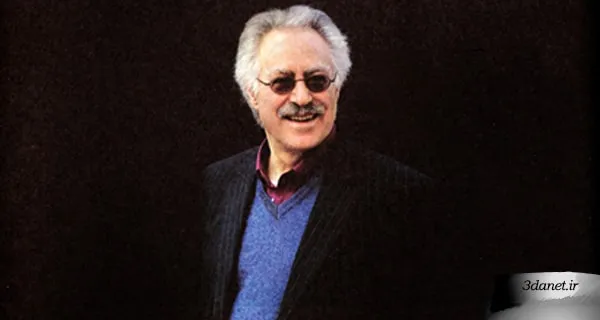
Hegel is one of those Western philosophers who have received considerable attention in our society; for a large number of books and articles on his philosophy have been translated and written in Persian to date, and many researchers have endeavored to learn his philosophy and teach it to others. One of these researchers is the eminent thinker, Dr. Seyyed Javad Tabatabai, whose eight lecture sessions on Hegel's Phenomenology of Spirit are well known among Hegel scholars in our society. Fortunately, these lectures have been recorded and made available to those interested, and Mr. Mostafa Nasiri, by committing them to writing, has turned the result into an electronic book, which has been placed on the World Wide Web in PDF format and 120 pages. Although this book, due to the inaccuracies observed in it in transcribing the lectures—some of which we will point out in the future—is not our primary source in this writing (our main source is the aforementioned eight lecture sessions), it has been used in the citations so that the esteemed reader can, with the help of these citations, find the original material in the lectures.
What doubles the eagerness to read this book or listen to those eight lecture sessions for those interested in Hegel's philosophy in Iran is that Dr. Tabatabai not only reports the results of 35 years of effort and pursuit in matters related to Hegel's philosophy in four philosophically important countries—namely England, France, Italy, and Germany—but also reports on two interpretive currents of Hegel's Phenomenology of Spirit, one in Germany and the other in a specific circle in France. (p. 3) And above all this, he claims that "philosophy in Iran is usually presented through summaries and histories of philosophy, and the text, especially the primary texts, is not taught. I am trying here to gradually interpret some important texts that we cannot afford not to know and not to read, as primary texts." (ibid.) and "Everything that has been written or translated in Persian about the Phenomenology of Spirit consists of discussions that take place outside this palace and are, in fact, descriptions from the outside" (p. 19).
We are now ready to take a look at the result of Dr. Tabatabai's 35-year effort and, by evaluating it, answer the question of what great step he has taken forward in the field of Hegel studies in our society.
Entering the Palace
Dr. Tabatabai likens Hegel's Phenomenology of Spirit to a lofty palace and considers himself the first person in the Persian language to have entered this palace. What he means by entering the palace of phenomenology is grappling with the very text of the book and translating and interpreting its passages. He quotes Gadamer from one of the philosophical gatherings in Germany as saying, "We Hegelians must learn to spell Hegel. What Gadamer meant was that the meaning of Hegel's words must be extracted with regard to the context of Hegel's own text. This point was also emphasized by the other participants, and as a result, a new period in Hegelian studies began, whose slogan was a return to the text. It was from this point onward that they concluded they must grow inside this great palace and explain it from within." (p. 4)
With the above explanation, the reader of his book expects to encounter a translation and commentary on a text in Dr. Tabatabai's interpretation, but is astonished to find that only 5 pages out of the 500 pages of the Phenomenology of Spirit—that is, about one percent of it—are read aloud and interpreted. These 5 pages, moreover, pertain to Hegel's discussion of "Lordship and Bondage," which the late Hamid Enayat had already translated and published alongside Kojève's commentary on it. The additional work Dr. Tabatabai has done on this translation and commentary, apart from criticizing the translation of two or three words—which does not make a noticeable change to Enayat's translation or to Kojève's commentary on it (which was provided by Enayat alongside the original text)—is to emphasize the point that when Hegel speaks of lordship and bondage, he is not speaking of the existence of two self-consciousnesses in two human beings, but rather of two self-consciousnesses within a single human being that are at war with one another, and that the topic of lordship and bondage in Hegel's work is merely an allegory for this conflict within the human individual. In Dr. Tabatabai's view, this mistake by Kojève, which was subsequently repeated by many others (including Hamid Enayat in our society), has been the source of one of the misunderstandings of Hegel's Phenomenology of Spirit. We will later pass judgment on this interpretive point that Dr. Tabatabai notes; but as far as those two or three words and their translation are concerned, it must be said that, to this extent, no significant work has been done by him. For, in the translation of any text, especially if the text is very difficult (Dr. Tabatabai has acknowledged that the Phenomenology of Spirit is, if not the most difficult book in the entire history of philosophy, then certainly among the most difficult), the existence of this amount of slippage is natural and is not unlikely even from him himself. Our evidence for this claim is that in his translation of Corbin's History of Islamic Philosophy, despite having succeeded in discovering and rectifying over a thousand translational errors that had crept into the previous Persian translation of this work (by the late Asadollah Mobasheri), he still acknowledges in the preface to the "seventh" printing of his own translation that "nevertheless, the translator is not entirely satisfied with the result and hopes to have another opportunity to remedy some of the other problems in the present text and to provide readers with a more refined edition." (Tabatabai, 1388: ث) When the existence of at least a few errors in translation is probable and entirely to be expected in a simpler book like Corbin's, this probability should, a fortiori, be taken as even more natural in the translation of a more difficult book like Hegel's. And therefore, this amount of error in Enayat's translation does not detract from its value, and if one cannot say that Dr. Tabatabai has not provided a successful translation of the aforementioned book because of a few mistaken translations of a few words, then one also cannot say that Enayat, because of those few errors, has not provided a successful translation and commentary on the topic of lordship and bondage in Hegel's Phenomenology of Spirit. Furthermore, Dr. Tabatabai himself acknowledges that Enayat's problem in relation to Hegel's text is only an interpretive one, but that his translation work is acceptable. (p. 66) Therefore, to the extent of the translation and commentary on these 5 pages of the Phenomenology of Spirit, if we set aside for the moment that one interpretive point (concerning the internality of the lordship and bondage relation), it can be said with absolute certainty that Dr. Tabatabai has done no more significant work in entering the edifice of the Phenomenology of Spirit than what Hamid Enayat had already done before him.
He also promises at the beginning of his commentary that he will translate the Preface (Vorrede) of the Phenomenology as well (p. 18), which he never does by the end of the lectures.
Inadequate Linguistic Resources
It is interesting that Dr. Tabatabai, on the one hand, claims: "We can more or less understand what happened in Western philosophy up to Descartes and a little after him, and more or less what modern Western philosophy is, but when we reach the beginning of the nineteenth century (around the year 1800), a fundamental earthquake suddenly occurs in human history, and a fault line opens there that we have never been able to cross." (p. 6) "… our linguistic resources, the linguistic resources from before the fault line, are on this side of the fault, whereas Hegel discusses on the other side of the fault." (pp. 7-8)
And on the other hand, in his interpretation of Hegel's Phenomenology of Spirit, he has endeavored, with our inadequate linguistic resources—which can only explain philosophy up to the nineteenth century—to introduce Hegel's philosophy to the Persian-speaking world in a fitting and proper manner, and from within. What is more interesting is that for this task he does not rely solely on the dry and abstract language of philosophy, but draws from here and there in Persian and Islamic culture, from symbolic tales in literature (such as the story of the Simurgh in Attar's Conference of the Birds) to sacred and non-sacred hadiths (such as: "I was a hidden treasure…": "Kuntu kanzan makhfiyyan…" and "The believer is the mirror of the believer": "al-Mu'minu mir'at al-mu'min" etc.) and from the verses of poets (such as "Every moment the beloved appears in a new guise, the coquettish idol" etc.) to the terminology of Islamic philosophy (such as "substantial motion," "the relation of the contingent to the eternal," "intelligible in itself and intelligible by accident," etc.), he uses all of them, so that by employing these linguistic possibilities in the Persian language, he might express something that our linguistic resources are incapable of expressing!
Entering Some of the Halls
Regarding entering the palace of phenomenology, Dr. Tabatabai says: "The risk of entering this palace is by no means within our capacity. Perhaps a century is needed for us to reach a level of familiarity with philosophy that would allow us to risk entering and strolling through this palace. So my main task will be, in certain cases and in places where the risk is less, to usher you into some of the rooms and halls of the palace of the Phenomenology of Spirit… My purpose in this explanation was to say that I cannot, and will not, discuss all the chapters and sections of the Phenomenology of Spirit." (p. 6)
In the above passages, Dr. Tabatabai wishes to acknowledge that an internal interpretation of the entire work is beyond his capacity and that he only intends to interpret some parts of this whole. However:
Firstly, the very chapters that are interpreted (with the exception of the discussion of lordship and bondage) are interpreted from outside the text, and Dr. Tabatabai does not engage himself with the difficult passages of these chapters and the arduous task of translating and interpreting them from within the text, as he did in the topic of "Lordship and Bondage," where he proceeded to translate and interpret five pages of Hegel's text;
And secondly, understanding some parts of a whole never leads us to an understanding of that whole. If those chapters were summaries of the entire book, perhaps by interpreting them we could arrive at a concise interpretation of the whole book, but the chapters in question are not summaries of the entire book but parts of it, and understanding some parts of a whole in no way entails understanding that whole; it is like someone flipping through a book, reading some of its pages, and understanding the content to the extent of those pages, but he will never be able to understand the position of the content of these pages within the whole book and the meaning of the entire book through that scattered reading of a few pages, unless he refers to others' extra-textual reports of the original book.
Of course, Dr. Tabatabai's justification for addressing only some chapters of the book is that "the book Phenomenology of Spirit… from beginning to end, contains no more than one fundamental discussion, but Hegel stages the repetition of this discussion across 500 pages, in different historical junctures, with different people, and on different scenes." (p. 34) But what is that one fundamental point? Dr. Tabatabai answers this question as follows: "This palace has internal characteristics and, in terms of its internal architecture, a structure such that if we have correctly understood one of these halls with all its possible angles, we can form an idea of the other halls and also understand its architectural structure. Because this is the very logic that is repeated everywhere else, in different ways and forms; that is, the phenomenology of spirit is nothing but the explanation of what I have said here at different stages. Spirit is identical with itself and is nothing but itself, and in fact, it also contains its own antithesis within itself. In this dialectical process, spirit creates its other in opposition to itself in order to reach, through it, a different unity and an identity and a different self." (p. 46)
From the above passages, it becomes clear that what Dr. Tabatabai means by that fundamental discussion is precisely Hegel's dialectical logic; but what is meant by this logic behind consciousness in the book Phenomenology of Spirit?
One of the factors that has always created difficulty in understanding Hegelian dialectic is the distinction between this dialectic as Hegel “defines” it and this dialectic in its “realization,” as seen in Hegel’s philosophical discussions. This is an issue that nearly all Hegel scholars have noticed. That Spirit is initially itself and not its other, and then its antithesis emerges within it, and to overcome this contradiction, Spirit reaches a higher stage in which that contradiction is both preserved and sublated, is a description of Hegel’s dialectic as he defines it; but in practice, Hegel does not always proceed according to this pattern. For, “in some of these triads, the second member of the triad is the direct and obvious inversion of the first, as ‘Being’ is the antithesis of pure ‘Nothingness’ or ‘Essence’ is the antithesis of ‘Appearance.’ In others, the opposition is of a less extreme nature (for example, the concept of ‘Whole’ and its ‘Parts’ gives way to the very similar concept of ‘Force’ and its ‘Expressions.’) In some triads, the third member is an obvious choice that mediates between the two other members, as Spirit mediates between the ‘Logical Idea’ and ‘Nature,’ or ‘Measure’ combines ‘Quantity’ and ‘Quality.’ In other cases, the third member of the triad is merely one of the things in which the first two members can be united, as the concept of ‘Ground’ mediates between ‘Identity’ and ‘Difference.’ In still other cases, the reconciling functions of the third member are not at all obvious, as Teleology mediates between mechanical connections and chemical connections, or that tormented universality emerges from Stoicism and Skepticism. Triads in which the third member emerges solely from the second member are more numerous than triads in which the third member emerges from the connection of the two preceding members.
The dialectical transitions from one concept or one stage of being to the next stage differ from case to case…” (Findlay, 1390: 88) “If we wish to judge the value of the dialectical method, this judgment must be based on what it is and not on a one-sided interpretation of some of Hegel’s claims regarding it; otherwise, we will find ourselves in McTaggart’s position, who, after being led to an interpretation of the ‘Logic’ that differed from Hegel’s own statements, was forced to discard the entire remaining system as a kind of quasi-empirical adventure that is not dialectically acceptable.” (ibid., p. 91)
The result is that if we intend to know what Hegel actually undertook in the Phenomenology of Spirit and what method or methods he employed in his thought, we must not content ourselves with that ideal definition of his dialectic and must examine these methods in practice, in his book, one by one and case by case, separately from one another.
Here we consider two criticisms to be applicable to Dr. Tabatabai: first, that the triads Hegel presents in his works, and especially in the Phenomenology of Spirit, do not always proceed according to his ideal pattern of dialectic, and therefore one cannot, by understanding this pattern, grasp the logic hidden behind Hegel’s discussions. If those who think contrary to us can present at least ten consecutive instances of Hegel’s triads in the “Phenomenology of Spirit” where the second member is the antithesis of the first member and the third member is the preservation and at the same time sublation of the two preceding members, we will retract this criticism of ours.
And second, supposing the logic hidden behind the phenomena of consciousness (the common denominator of all these transitions from one form of consciousness to another) is, according to Mr. Tabatabai, that “Spirit is identical with itself and is nothing other than itself, and in fact contains its own antithesis within itself. In this dialectical process, Spirit creates its other in opposition to itself in order to reach, through it, a different unity and its own other identity.” (p. 46) Would it not then be unacceptable if we were to say: “What use is seeing a few hallways on their own? Since the architecture within the logical palace is pervasive and flows through all the angles and interior spaces of the palace, we can, by understanding and generalizing the architectural logic of one hall, understand the entire work.” (pp. 19-20) Truly, by understanding these few lines in the form of two or more examples, can one claim that Hegel’s entire work has been understood?!
The Incomplete and Disordered Forms of Spirit
Mr. Tabatabai considers the shapes in which Spirit appears and which are discussed in Hegel’s Phenomenology of Spirit to include some, but not all, of the shapes of Spirit according to Hegel: “Spirit appears in various shapes, and Hegel’s phenomenology of spirit is an exposition, explanation, and interpretation of some of these shapes.” (p. 120) Moreover, besides not believing in the completeness of the shapes of Spirit in Hegel’s phenomenology, he also disrupts the order of these shapes and proceeds in outlining them according to the order and arrangement of Father Laberthonnière. (p. 49)*
Mr. Tabatabai’s purpose in limiting the shapes of consciousness to some of its possible shapes is to make room for other shapes that Hegel did not address, thereby opening a space for a phenomenology of the Iranian unhappy consciousness. (p. 120)
In an announcement he wrote for the book Phenomenology of Spirit, Hegel states that “in this phenomenology, the wealth of the phenomena of this Spirit, which at first glance appear disordered and chaotic, is brought to the level of a scientific order that presents these phenomena in their necessity.” Mr. Tabatabai quotes this sentence from Hegel (p. 30), yet it seems Mr. Tabatabai has not properly attended to the meaning of this sentence. For each stage is deduced from the previous stage and itself becomes the premise for the dialectical deduction of the next stage, such that the relation of each stage to the stage before and after it is a relation of necessity. Unless the first shape, which is the simplest shape of consciousness (sense-certainty), exists, the turn of the second shape (perception) does not arrive, and until the stage of perception is left behind, the turn of the stage of understanding does not arrive. From this, one can grasp that, in Hegel’s view, these stages are neither incomplete (in the sense that a stage has been omitted from the simplest shape of consciousness to its most complete shape, i.e., from sense-certainty to absolute knowing) nor disordered (in the sense that one could alter the order and the precedence and succession of the stages and shapes of Spirit, and instead of deducing a stage from the stage before it, deduce that same deduced stage from the stage after it). If Hegel had not mentioned certain shapes of Spirit in his book, how could he have passed from one shape of consciousness to another? Passing from the first stage (sense-certainty) to the final stage (absolute knowing) without passing through at least some intermediate stages entails a leap, which is rejected by Hegel, for in that case we would have no warrant for moving from one stage to another. Likewise, disrupting the order of these shapes and altering their precedence and succession would, in Hegel’s view, confront the work of dialectical deduction with a serious obstacle.
The Method Before Inquiry
Hegel considers dialectic as a method for himself, but he regards this method not as prior to knowledge but as interwoven with it. This statement, which Mr. Tabatabai also attributes to Hegel (p. 31), entails that one cannot have a method of inquiry prior to inquiry. However, Mr. Tabatabai intends, by studying scattered passages from Hegel’s Phenomenology of Spirit, to gain access to the logic behind these shapes of consciousness, which is Hegel’s dialectical method (in the first instance), and then later (in the second instance), using this logic, to explain the shapes of the Iranian unhappy consciousness (p. 120). Yet for a phenomenology of the Iranian unhappy consciousness, obtaining a method prior to this phenomenology entails an anti-Hegelian standpoint, because Hegel believes that method cannot be obtained prior to knowledge and then applied within knowledge.
Of course, there is no problem with a researcher using one of Hegel’s views for their own purposes in a way that stands in explicit contradiction to Hegel’s other views, and therefore what has been said above is not a “critical point.” However, it can be considered an “interesting point” that someone who uses Hegel’s philosophy for their own purposes does so in an anti-Hegelian manner.
Consciousness of Consciousness in the Modern Age
What was that earthquake in Western philosophy at the beginning of the nineteenth century, as a result of which a fault opened that we have never been able to cross? The answer Mr. Tabatabai gives to this question is that at the beginning of the nineteenth century, consciousness became the object of consciousness. (p. 8) “But modern Western philosophy also raises the problem of self-consciousness from this perspective, in that while we become conscious, we also become conscious in another process of consciousness. In other words, from a certain time and stage onward, consciousness itself makes itself the object of consciousness. That is, science becomes the object. We quoted Fichte earlier, who said that today we need a doctrine of science, or a cognition of cognition. European philosophy had passed this stage at the beginning of the nineteenth century … . Here a fault was created in the consciousness of European man that we have never been able to cross.” (p. 7)
The cognition of cognition, or epistemology in its Kantian sense, was of course a newly emergent phenomenon in the modern era. The ancients had no doubt about the authority of reason in knowing non-empirical matters and, out of dogmatism, employed reason in knowing these matters. But Kant called into question the possibility of metaphysical knowledge and brought into being a critical philosophy that investigated the possibility of rational knowledge. Before Kant, philosophical discussions concerning the problem of knowledge certainly existed, but these discussions were limited not to the possibility of knowledge (except for the purpose of repelling the skeptics’ doubts) but to the problem of the how of knowledge (of the kind that was current, for example, in Islamic philosophy and in the discussion of mental existence). In other words, the epistemology (a term that later became widespread through the Neo-Kantians) of the ancients was a knowing of cognition from within. They did not step outside cognitions by doubting them and examine cognition from the outside, as Kant did; but Kant’s epistemology was external. He, in Hegel’s words, wanted to evaluate cognition from outside cognition, which was, of course, impossible in Hegel’s view. From Hegel’s perspective, which he clearly explained in the Introduction (Einleitung) to the Phenomenology, instead of examining consciousness from the outside, one must investigate it from within, and this task was in fact a kind of return to the thought of the ancients (pre-Kant). Although, despite its inwardness, which placed it in the category of the epistemology of the ancients, Hegel’s epistemology was a new type of this epistemology, whose content was novel. Therefore, contrary to Dr. Tabatabai’s statement, consciousness of consciousness is not exclusive to modern man. The ancients also had consciousness of consciousness. In the modern age, a consciousness external to consciousness occurred, which was the result of Kant’s efforts, not Hegel’s (nineteenth century), and Hegel’s own epistemology, like that of the ancients, was internal. Unless we say that a specific type of internal consciousness of consciousness, the Hegelian type (and not the pre-Kantian type), is specific to the modern era and a characteristic of modern man; but here, too, the question immediately arises: Is Hegel’s philosophy representative of the philosophy of modern man, and is there a firm necessary connection between modernity and Hegel’s philosophy? And in that case, what would be the fate of all those modern analytic and continental philosophies that differ from Hegel’s philosophy in advanced countries? These are questions for which no answer can be found in Mr. Tabatabai’s interpretation of Hegel.
Evolution in the Dialectical Movement
Is the movement from one shape of consciousness to another shape of consciousness in the Phenomenology of Spirit an evolutionary movement or a non-evolutionary one? Mr. Tabatabai says on this matter: “Hegel considers dialectic to be the course of self-consciousness and the course of spirit in the direction of becoming absolute. Hegel here uses the word Entwicklung for this course, which some have translated as evolution, which is incorrect. Hegel says dialectic is Entwicklung; … Hegel’s dialectic is a dialectical or polemical course in the sense that it negates the existing state or the state of natural and immediate being in order to reach the next stage, and this stage is a stage that both preserves the previous stage and is a higher stage.” (pp. 46-47)
Of course, Mr. Tabatabai insists on using the expression “higher stage” and not higher level: “Hegel, of course, unlike our philosophy and mysticism, does not say higher level because Hegel’s levels are not vertical but horizontal.” (p. 47)
But what is interesting is that this same Mr. Tabatabai, in two other places in these very lectures, when describing a later stage in relation to a previous one, considers it a “higher level” than the previous stage and forgets the aforementioned statement that one should not speak of a higher level in Hegel’s case: “Hegel follows a logical pattern that is pervasive and operative everywhere, meaning this logical pattern and these relations are repeated at a higher and, of course, more complex level…” (p. 105) and “Any philosophy that bases itself on tensions and contradictions, without resolving the contradiction between them at a higher dialectical level, is a one-sided philosophy.” (p. 111)
However, regarding whether the dialectical movement is evolutionary or non-evolutionary, it must be said that in one place in his lecture, he explicitly calls this movement evolutionary: “Dialectic is the developmental course of things in passing through the various stages and waystations of this path, in such a way that the initial forms of things are dissolved and disappear, and more complete subsequent forms appear.” (p. 31)
It might not be amiss to know that in our own philosophy, incidentally, only intensifying motion (of which Hegel’s dialectical movement can be considered one instance) is regarded as evolutionary motion; for the moving subject at each stage is more complete than at the previous stage, unlike spatial and positional motions, which many of our philosophers do not consider evolutionary (Motahhari, 1383: 158-159).
Gestalten of Spirit
Consciousness appears to itself in various forms. Hegel calls these “forms” Gestalt, and their plural in German is Gestalten. What is interesting is that Mr. Tabatabai, in explaining the forms of consciousness, in his lectures (these words are also reflected in the PDF text derived from his lectures), pluralizes the aforementioned plural again and speaks of the “Gestaltens” of spirit:
First: “Hegel says that phenomenology includes the various forms of Geist, and the word he uses for ‘form’ is Gestalten, which is equivalent to the English ‘Figure’.” (p. 24)
Second: “So the phenomenology of spirit is primarily a discussion of the ‘Gestaltens’ and different forms that spirit takes on.” (same page)
Third: “… the requirement of dialectic, that is, this course of evolution, is that everyone must traverse it, and in traversing this path, they must appear in different forms or Gestalten.” (p. 27)
Fourth: “What was mentioned … is the beginning of another stage in the course of the experience of consciousness, a consciousness that will also emerge in subsequent stages and experiences and other Gestaltens.” (p. 93)
Fifth: “All these forms and Gestaltens that Hegel has discussed so far …” (p. 120)
But apart from the five cases above, there are four other cases that could lead us to a different conclusion:
Sixth: “The various waystations of this path that consciousness traverses to reach absolute spirit consist of forms—Gestalten—that ….” (p. 47)
Seventh: “The first Gestalt or form that Hegel discusses ….” (p. 49)
Eighth: “… history will henceforth see no new form, or in the German expression, no new Gestalt, and ….” (p. 62)
Ninth: “Hegel here approaches forms (Gestalten) that ….” (p. 64)
Regarding cases six through nine, the truth can be discerned by referring to the text of the lectures:
In the sixth case, although Mr. Tabatabai brings the two words “forms” and “Gestalten” one after the other, he immediately speaks of “Gestaltens,” and the transcriber has unfortunately not included that (“Gestaltens”) in the written text;
In the seventh case, it must be said that, again unfortunately, the transcriber has not been precise and has used the word “Gestalt” instead of the word “Gestaltens,” which was mentioned twice in this part of the lectures;
In the eighth case, again the transcriber has unfortunately tampered with the text and added the phrase “in the German expression, ‘Gestalt’” to the text on their own accord;
And regarding the ninth point, at the beginning of the fifth lecture, Mr. Tabatabai spoke of “Gestalten,” but the transcriber (Mr. Nasiri) has removed the plural marker (in Persian: “ها”) from it!**
In my opinion, Mr. Tabatabai’s errors cannot be of the category of slips of the tongue; for a slip of the tongue is a “random” occurrence and happens in few instances, whereas in Mr. Tabatabai’s case, we witness a great many such errors, which have been repeated in different positions and in a “systematic” manner.
Nevertheless, I will not make a final judgment on this matter, but knowing Mr. Tabatabai as I do, I am certain that had he seen this error in the book Hegel’s Thoughts, he would certainly, like other instances such as this term in that book, have accused its author of “not knowing German.”
Mind or Spirit
One of the sensitivities that Mr. Tabatabai displays concerns the translation of the German term Geist, upon which he insists frequently and repeatedly that this word must be translated as Spirit and not Mind (pp. 3, 9, 13, 20, 27, 42, and 112), and even individuals such as Ramin Jahanbegloo, who have translated the title of Hegel’s book as “Phenomenology of Mind,” have been described, solely on account of this translation, as people who have not understood Hegel’s purpose in this book at all (p. 3).
However, Mr. Tabatabai, referring to the beginning of Hegel’s Preface to the Phenomenology of Spirit, where Hegel states that what is substance is also subject, aside from a contradiction in which he says, on the one hand, in one place regarding the translation of subject as mind: “We call the rational being in European languages subject, which is, of course, usually translated as mind, but in this case it is generally incorrect” (p. 39), and on the other hand, in another place, he translates subject as mind: “Mind in the sense of subject in modern philosophies” (p. 12). But aside from this contradiction, throughout his lectures he always equates substance with object and subject with mind, and constantly emphasizes that for Hegel, the Absolute is an object that is identical with “mind” and a “mind” that is identical with the object (pp. 32, 33, 37, 38, 40, 42, 51-52). He even translates the title of Ernst Bloch’s book on Hegel (Subjekt-Objekt) as Mind-Object (p. 8). And all of this entails that the Hegelian Geist is mind, albeit a mind that is both one with the object and not one with it (unity in difference), and such a mind, however strange and peculiar it may be for the philosophies of the understanding, is ultimately “mind.” I do not know why Mr. Tabatabai, with all his emphasis that the Hegelian Absolute is a mind that is identical with the object, insists on saying that the Absolute (Geist) is not mind at all?! And on this basis, claims that someone who translates the title of Hegel’s book as “Phenomenology of Mind” has not understood Hegel at all.
Lordship and Bondage
Does Hegel mean by lordship and bondage the relation between two self-consciousnesses in two human beings, or the relation between two self-consciousnesses within a single individual? Mr. Tabatabai accepts the second interpretation and adopts it from commentators such as Father Labarrière (p. 93). In his view, the mistake of Kojève and those like him has been to regard this relation not as internal to the individual but as external and between two human beings (p. 78). Mr. Tabatabai offers two reasons to justify this interpretation: first, that Hegel spoke of two self-consciousnesses and not two human beings; and second, that this discussion (lordship and bondage) appears in the first half of the Phenomenology of Spirit and not in its second half, which concerns topics in the philosophy of history. If Mr. Tabatabai has been able to demonstrate the inwardness of this relation in Hegel—of course, within the limits of those five pages out of the five hundred pages of the Phenomenology that he quotes from Enayat’s translation of Hegel (and with Kojève’s commentary) (leaving aside the two or three words he quibbles over in Enayat’s translation, which we have already said is not a very significant criticism)—he has taken a fundamental step in the direction of Hegel scholarship centered on the text and proceeding from within the edifice of Hegel’s Phenomenology of Spirit. But are his reasons for the inwardness of this relation really convincing? Our answer to this question is negative. In response to his first reason, our argument is that although Hegel spoke of two self-consciousnesses and not two human beings, he did speak of two persons, and it is obvious that a person (Person) is coextensive with a human being; and in response to his second reason, our criticism is that in that very first half of the book, discussions referring to historical periods are also mentioned, such as the discussions of Stoicism, Skepticism, and the unhappy consciousness, which Mr. Tabatabai discusses in detail, especially the third (the unhappy consciousness in Judaism, medieval Christianity, and the Christianity of Hegel’s time). Of course, his justification is that these discussions have not yet become historical but possess historical counterparts (p. 95). But how is it possible for a discussion to refer to something inward while its counterpart is external and historical?! If this internal conflict is merely likened to a struggle between two persons, then it is the “thing likened” that must have a historical counterpart, not the “thing likened to.”
Of course, it must be borne in mind that our intention with the above reasons is merely to oppose Dr. Tabatabai’s reasons, and not to oppose the conclusion of those reasons: Hegel’s discussion concerns the relation of two self-consciousnesses within the being of a single human being.
Another point is that if, hypothetically, the relation of lordship and bondage is not a relation between two human beings but a relation between two consciousnesses within the being of an individual human, then explaining certain things Hegel says about this relation becomes difficult, and providing such explanations is obligatory. For example, where Hegel speaks of the bondsman and his labor, which brings about changes in the material world, one must ask: if this relation is inward, what does it mean for the subjugated self-consciousness to bring about changes in the material world (given that the world of self-consciousness is the inner world and not the material, external world)? Unfortunately, Mr. Tabatabai’s interpretation is devoid of such explanations and clarifications.
What makes Mr. Tabatabai’s discussion of “lordship and bondage” in Hegel’s Phenomenology of Spirit more interesting is that, all of a sudden, in the midst of this discussion, he proceeds to compare our culture and Western culture, saying that in our culture, consciousness comes about not through the negation and affirmation of the other in the Hegelian sense, but through the negation of the self in the other. In order to use Hegel’s discussion to remedy our cultural problems, Mr. Tabatabai suddenly forgets his own argument about the inwardness of this relation and treats the issue as external: “Our dominant intellectual paradigm, especially in recent centuries—that is, from the time when mystical discourse replaced rational, philosophical discourse—consists of the negation of the self through annihilation in the other, which cannot generate a dialectic… . The theoretical foundation of our existence rests on annihilation, whereas the theoretical foundation in modern Western philosophy rests on survival.” (p. 71) And: “Hegel here, for his part, has presented one of the paradigms of the I-other relation in order to show that the human being is human in these relations, and not in solitude.” (p. 93)
“In Western culture, in order to be recognized as a person, the human being confronts the other and tries to prove himself in a life-and-death struggle; but in Eastern culture, instead of proving itself before the other, the self’s aim is annihilation in the other.” It is here that the relation between self and other becomes an external relation (between human and human, or a being outside of him) and not an internal one; whereas Mr. Tabatabai insisted so much that this relation is internal and not external.
As it happens, if the relation were internal, it must be said that this struggle has a historical counterpart in our culture (both mystical and non-mystical) and is not exclusive to Western culture. In mystical ascetic practices, the self that wants to be on the path of mysticism is always in conflict and struggle with the self that does not want to be on this path. Likewise, in a non-mystical interpretation, every human being (whether Western or Eastern) always finds conflicts within himself; on the one hand, he wants to be one way, and on the other hand, he wants to be another way. Thus, the struggle is between two desires, and the discussion is one of “desires” and not the issue of “virtue,” as Mr. Tabatabai claims. (p. 94)
Beyond this, Hegel speaks of a struggle between two self-consciousnesses, not of agreement and understanding between them. If this situation can have a historical counterpart, its instances are the very wars that have occurred throughout human history, leading to the lordship of the dominant side and the bondage of the conquered nations. In this sense, there is no difference between East and West; in both, these wars, enslavements, and the mastery of the dominant side have always existed.
And if our ethics is to be considered individual and non-social, and it is said that Greek ethics, which was collective, transformed into individual ethics in the Islamic world after the Mongol invasion (p. 92), this ethics can be seen as aligned with Stoic ethics. In Hegel’s Phenomenology of Spirit, Stoicism is a more advanced stage than the stage of lordship and bondage, and superior to it, not inferior.
Hegel’s Philosophy of Art Based on the Phenomenology of Spirit
In interpreting Hegel’s views on art in the Phenomenology of Spirit, Mr. Tabatabai says: “So the important stages are consciousness, self-consciousness, and reason; and it is from here onward that Hegel presents his social discussions, until he reaches the point of how reason becomes spirit and manifests itself in three different mirrors—art, religion, and philosophy. The first mirror, which is art, is the stage where the absolute shows itself in various arts—from sculpture, which for Hegel is the most material of the arts, to poetry and music, which are ultimately abstract. … [Art] is the first stage of spirit’s transition … Hegel introduces the second mirror as the various religions in which spirit has shown itself. Hegel … says that art is the threshold of humanity’s transition to religion; he calls the religions of early humans ‘art religions.’” (p. 29)
What was quoted above from Mr. Tabatabai has nothing to do with Hegel’s Phenomenology of Spirit and does not express his philosophy of art in that book; rather, it is a very concise account of Hegel’s later views on art in the “Lectures on Aesthetics” and the “Encyclopedia of the Philosophical Sciences,” material that is mentioned in almost every introductory book on Hegel.
In the Phenomenology of Spirit, contrary to what Mr. Tabatabai attributes to him, Hegel, firstly, instead of the triad of art, religion, and philosophy, speaks of the dyad of religion and philosophy as modes of absolute comprehension, and he mentions this very point in the book's announcement, which Mr. Tabatabai also quotes (p. 32). In Hegel's later works, art gains independence from religion and presents its own specific mode of comprehending absolute spirit, but in the Phenomenology, art is discussed solely under a type of religion (Greek religion). And this is a major difference between Hegel's philosophy of art in the Phenomenology and his other works. In the Phenomenology, contrary to what Mr. Tabatabai says, art is not the first stage of the spirit's transition. The first stage is religion, in its natural form, and again, the early religions in the Phenomenology, contrary to what Mr. Tabatabai has said, are not artistic religions; rather, artistic religion comes after the early religions (natural religions) and is not identical to them. In the Phenomenology, furthermore, one of the points of difference between the early and later Hegel in the philosophy of art is that sculpture, as an art, is at the first stage and still crude and inadequate, whereas in Hegel's later works, the pinnacle of human art is classical art, and the pinnacle of classical art is sculpture. Of course, Mr. Tabatabai does not dispute this last point, but we have mentioned it to illustrate the early and later Hegel's philosophy of art.
In summary, Mr. Tabatabai has conflated Hegel's later philosophy of art with his early philosophy of art in his interpretation of the Phenomenology of Spirit, which is not expected of someone of his stature. Of course, he is aware of this matter where he says: "Of course, Hegel does not present all the discussions in the Phenomenology; rather, his intellectual system is completed in various books" (29). This statement by Mr. Tabatabai does not justify his irrelevant interpretation of Hegel's philosophy of art based on the book Phenomenology of Spirit, for he has discussed Hegel's philosophy of art in the position of interpreting Hegel's Phenomenology of Spirit, especially with attention and reference to the text, and not in the position of presenting an interpretation of Hegel's later philosophy of art, and that too without reference to the text and merely with a glance from outside the edifice of Hegel's works. Furthermore, Hegel did not merely "complete" his philosophy of art in his other works; more importantly than "completion," he undertook a "revision" of his theories—revisions to some of which we have alluded above, and in the course of that, we pointed to some differences between Hegel's philosophy of art based on the Phenomenology of Spirit and his later philosophy of art.
Borrowing Terminology from Islamic Philosophy
Substantial Motion: Mr. Tabatabai translates the Hegelian term Selbstbewegung into the philosophical language of Mulla Sadra as "substantial motion" (harakat jawhari) and says: "Selbstbewegung… means self-motion or self-movement, that is, the self moves itself, which I translate as substantial motion…. One of the characteristics of modern philosophy is that it transfers the agent of motion and change from the outside to the inside. The peak of this movement is in Hegel, who says motion has no external agent; rather, its agent is internal, which is precisely substantial motion." (p. 76) Then Mr. Tabatabai attempts, in further phrases, to confirm the substantiality of dialectical motion based on Mulla Sadra's terminology.
Mr. Tabatabai's problem is that he does not pay attention to the fact that substantial motion is essential motion, not accidental, and essential motion is something necessary or obligatory, not contingent (the criterion for needing a cause, according to Mulla Sadra and other Islamic philosophers, is contingency), and therefore it does not need an agent or mover; thus, it is incorrect to say that this motion has an agent and that its agent is itself. It is for this reason that our philosophers have spoken of composite making (ja'l murakkab) in accidental motions and simple making (ja'l basit) in essential motions. In essential motion, the maker creates the thing itself, and since the thing is essentially in motion, with the making of the thing, motion is also realized; but in accidental motions, two makings (composite making) are needed: the making of the thing itself and the making of motion in it (setting it in motion).
Our philosophers have also discussed motion with regard to its agent and have divided it into three kinds: natural, compulsory, and voluntary, none of which are substantial motions. In addition to these, the argument that the moved cannot itself be the agent of its own motion has a clear proof in our traditional philosophy: if the moved were itself the mover of itself, then the mover would be the agent of the motion and the moved (which is the same as the mover) would be receptive to motion, and the combination of these two aspects (the aspect of action and the aspect of reception) is impossible in a single entity because one is the aspect of possession and the other the aspect of privation, leading to a contradiction.
In our philosophy, the agent of motion being the moved itself is impossible, not possible; therefore, it is impossible that our philosophers have argued for the substantiality of a moved entity's motion from the fact that the agent of motion in a moved entity is that moved entity itself. (The proofs for substantial motion are entirely unrelated to the theory that the agent of motion is the moved itself.) The result is that a motion whose “agent” is the moved itself cannot, from the perspective of Sadrian philosophy, be considered a substantial motion.
Intelligible by essence: Mr. Tabatabai considers the word Objekt in Hegel's philosophy to be semantically (and not referentially) identical with “intelligible by accident” and the word Gegenstand to be semantically identical with “intelligible by essence” in our philosophy, and he attributes these terms to Mulla Sadra (p. 39), whereas, firstly, the first person to use these terms (intelligible or known by essence and intelligible or known by accident) is not Mulla Sadra, and long before him, even in the words of Avicenna, these terms can be seen (Avicenna, 1363: 189).
و ثانیاً مقایسه کردنِ Gegenstand با معقول بالذات، از بُن اشتباه است. چه، مقصود ملاصدرا از معقول بالذات همان طور که آقای طباطبایی هم اشاره کرده اند، صورتِ ذهنیِ شیءِ خارجی است. به عنوان مثال یک لیوان در عالم خارج میتواند از خود، صورتی در ذهن داشته باشد. این صورتِ ذهنی، همان لیوان است ولی لیوان ذهنی. و اگر ما این لیوان را تعقل میکنیم مقصود همین لیوان است (لیوان ذهنی) و این لیوان است که ذاتاً معقول است؛ چه، معقول یا معلوم بودن آن، حاصل اضافه یا نسبتی بین ذهن و صورت ذهنی نیست بلکه صورت ذهنی، عین علم است و بنابراین ذاتاً (بالذات)، معقول (معلوم) است. اما در اندیشهی هگل در علم ما به اشیاء خارجی، صورتی ذهنی از آن اشیا در ذهن وجود ندارد. هگل در مقدمه (Einleitung) پدیدارشناسی روح، تمام تلاشش این است که این تصورات (بقول خودش) بیهوده را که شناخت (علم) ابزار (تلقی آئینه ای از ذهن) یا واسطه (تلقی عینکی از ذهن) است به کناری بگذارد و به عبارت دیگر صورت ذهنی را به عنوان واسطهای بین ذهن و عین حذف کند. (برخلاف کانت که بین ذهن و اشیاء فی نفسه (عینی) به واسطهی جهان پدیداری قائل بود) بنابراین شیء به هیچ عنوانی (شیء ذهنی یا شیء عینی مثلا لیوان ذهنی و لیوان عینی) در فلسفهی هگل، ذاتاً معلوم نیست. اشیا از نظر هگل ذاتا معلوم نیستند و گرنه ما فقط Gegenstand داشتیم و نه Objekct بلکه به عَرَضِ چیز دیگری معلوم میشوند (از حالت Objekt به حالت Gegenstand در میآیند) و آن واسطهای که معلوم بودن را عارض بر اشیا میکند «صورت ذهنی» (مثلا لیوان ذهنی) نیست بلکه «تحلیل دیالکتیکی مفاهیم یا اشیا» است و تحلیل دیالکتیکیِ فیلسوفانه، از سنخ فعل است نه از سنخِ صورت ذهنی و بر خلاف صورت ذهنی لیوان که البته با لحاظ آلی ما یک لیوان است تحلیل دیالکتیکی لیوان (مثال لیوان که قبل از هر چیز انسان را به یاد قلم پر کروک میاندازد مثال مناسبی برای بحث ما نیست اما چون آقای طباطبایی از این مثال استفاده کرده-اند ما هم از باب همراهی با ایشان از آن استفاده میکنیم و البته پرواضح است که در مثال مناقشه نیست) به هیچ عنوانی (ذهنی یا عینی) لیوان نیست که بتوان آن را معلوم دانست (چه در مثال فرضی ما، علم به لیوان تعلق میگیرد و لیوان معلوم یا معقول است حال اگر لیوانِ عینی، معقول بالذات نیست، لیوان ذهنی (صورت ذهنی لیوان) هم وجود ندارد تا آن نحوهی وجود از لیوان، معقول و ذاتا معقول باشد (چون صورت ذهنی همان علم و به خودی خود (ذاتاً) علم است). و به عبارت دیگر در علم به لیوان، لیوان معلوم یا معقول است (در فلسفه ی اسلامی در این جا معقول، مترادف با معلوم به کار می رود) و اگر دو لیوان موجود است (یکی در ذهن و با وجود ذهنی و دیگری در خارج و با وجود عینی) بنابراین دو معقول موجود است که یکی از آنها ذاتا معقول یا معلوم است چون عبارت از همان علم است (صورت ذهنی همان علم است) و دیگری به واسطه ی اولی، معقول است. اما در اندیشه ی هگل از آنجا که صورت ذهنی بین سوژه و اعیان خارجی حائل نیست بنابراین بیش از یک لیوان نداریم و این لیوان البته بالذات معلوم نیست، چون تا تحلیل عقلی و دیلکتیکی بر روی آن صورت نگرفته آن را نمیتوان شناخت؛ پس در فلسفهی هگل ما فقط با معقول بالعرض سروکار داریم و نه معقول بالذات.
حاصل آنکه معقول بالذات بودنِ چیزی در گرو صورت ذهنی بودن آن است و در فلسفهی هگل با انکار وجود ذهنی (انکار تلقی شناخت به عنوان ابزار یا واسطه) نمیتوان هیچ مصداقی برای این مفهوم (معقول بالذات) پیدا کرد.
روش رئالیسم: آقای طباطبایی تاریخ فلسفه ی غرب را به سه دورهی عین محورانه (از یونان باستان تا پایان قرون وسطی) ذهن محورانه (از دکارت تا زمان هگل) و دورهی ذهن- عین (به تعبیری که ایشان از ارنست بلوخ وام میگیرد و اوج آن در فلسفه هگل است) محورانه تقسیم می کند. ویژگی دورهی نخست، فعال دانستن عالم خارج و منفعل دانستن ذهن است و در دورهی دوم برعکس دورهی اول این ذهن است که فعال است و دنیا را مطابق الگوها و به تعبیر کانت صورتهای خودش میفهمد. (ص۱۱) آنگاه آقای طباطبایی دورهی نخست را دورهی رئالیستی و سنخ مباحث مطرح شده در «اصول فلسفه و روش رئالیسم» مرحوم علامه طباطبایی را متعلق به این دورهی نخست از تاریخ فلسفه غرب میداند. از نظر آقای طباطبایی ما فلسفهی جدید نداریم و فلسفهی ما همان فلسفهی قدیم است . بنابراین روش رئالیسم همان روش فلسفی در دورهی نخست تاریخ فلسفه (دورهی عین محوری) است. (ص ۱۰)
What has been quoted from Dr. Tabatabai can easily be refuted by a study of the book The Principles of Philosophy and the Method of Realism; for Allameh even considered the views of figures like Descartes (who did not believe in the objectivity of secondary qualities) and Kant (who considered time and space to be illusory) to be a realist perspective in philosophy, for the reason that such individuals, despite holding an erroneous thought, do not deny the principle of the existence of realities outside the mind. (Tabatabai, n.d.: 16)
Interestingly, when Dr. Tabatabai later speaks of Hegel's critique of writing introductions to philosophy, he does not consider introduction-writing or external epistemology, whose peak is found in the works of modern philosophers, especially Kant, to be separate from Allameh Tabatabai's method of realism. (pp. 37-38) And with this description, he, who had previously related Allameh Tabatabai's intended method of realism to the first period of the history of philosophy (the object-oriented period), suddenly and with a clear contradiction relates it to the second period (the subject-oriented period). Let alone the fact that anyone who has carefully read at least the first one or two articles of Allameh Tabatabai's book will realize that his meaning of the method of realism is neither object-orientation nor epistemology. His Excellency considers philosophy synonymous with realism and sophistry synonymous with idealism, and in this book, he tries to introduce the pseudo-philosopher sophists, headed by the Marxists. In the correct method of philosophizing from Allameh Tabatabai's perspective, at least self-evident truths such as the existence of something outside the mind and the possibility of knowledge (that, in sum, there is something outside the mind and that, in sum, knowledge can be had) and so on must be accepted, and one who believes in these foundations has a realist (non-sophistic) method in philosophy. And individuals like the Marxists and others, who either explicitly violate many primary self-evident truths, or the denial of such self-evident truths is a necessary consequence of their original thoughts (for example, according to Allameh, the necessary consequence of believing that thought is a product of the brain is the assertion of the theory of phantoms and the absolute denial of knowledge of the external world), are far from the method of realism and are practitioners of sophistry. (Tabatabai, n.d.: 17)
Several Other Critical Points
The obsolescence of Jean Hyppolite's interpretation: Mr. Tabatabai (perhaps to devalue Mr. Mojtahedi's book titled Phenomenology of Spirit According to Hegel) considers Hyppolite's interpretation of Hegel's Phenomenology of Spirit (titled Genesis and Structure of Hegel's Phenomenology of Spirit) an obsolete interpretation that has no importance and no one reads. (p. 3) He considers Dr. Mojtahedi's book to be merely adaptations from Hyppolite's book, whereas firstly, Dr. Mojtahedi has explicitly stated in the introduction to his book that Hyppolite's book is not the only book he used, and he also used Hegel's own books and other interpretations (Mojtahedi, in his list of sources at the end of his book, besides Hyppolite's French translation of Phenomenology of Spirit and Hyppolite's interpretation of it, has named three interpretations by three other Hegel scholars), and Dr. Mojtahedi even explicitly stated, due to Hyppolite's existentialist approach, that "one cannot agree with his view in all cases." (Mojtahedi, 1380: 22) Therefore, one cannot concur with Mr. Tabatabai in this claim that Dr. Mojtahedi's book is merely adaptations from Jean Hyppolite's interpretation;
And secondly, contrary to Mr. Tabatabai's statement, many prominent and well-known Hegel scholars today read Hyppolite's book and recommend reading it to the readers of their own works, among which we will suffice with mentioning three cases: John W. Burbidge (former president of the Hegel Society of America, who was elected Honorary President of the Hegel Society of Great Britain in 2008) introduces Jean Hyppolite's book Genesis and Structure of Hegel's Phenomenology of Spirit as a rich source and recommends its study to the readers of his works (Burbidge, 1390: 222), and Inwood, in the bibliography section at the end of his Hegel Dictionary, introduces Hyppolite's book as one of the sources for his work. Beiser, too, who is a renowned professor of Hegel's philosophy, in his book—which originally contains his lectures from the spring of 2002 at Harvard University on Hegel's philosophy and was published in 2005—mentions Hyppolite's book in introducing books for further reading, noting that it is "valuable, though sometimes obscure" (Beiser, 1391: 490)
Disparagement of the English-speaking world: Among the claims Mr. Tabatabai makes, and a very weighty claim it is, is his assertion regarding the English-speaking world that no one in this world has yet been able to enter the palace of Hegel's Phenomenology of Spirit, and that commentators have tried to explain the Phenomenology but have remained outside the lofty palace of the Phenomenology of Spirit, merely describing it in general terms from outside this palace and from a great distance. (pp. 3-4) And this, of course, is a source of pride for us Persian-speakers, that we are ahead of the English-speakers in this regard, and unlike them, who still remain outside the lofty palace of the Phenomenology of Spirit, we have, through the efforts of Dr. Tabatabai, succeeded in entering the palace of the Phenomenology!
Those who have at least some connection to the world beyond our borders know full well that the English-speaking world has neither our linguistic problems and limitations (in our universities, many of those who teach Hegel's philosophy do not know German) nor our problems and limitations in obtaining visas to travel to and make scholarly use of universities and research institutes in Germany. In the English-speaking world, specialized work is completely defined, and unlike us, who mostly engage with Western philosophy at the level of the history of philosophy (as Mr. Tabatabai himself puts it), a considerable number of English-speaking researchers engage in specialized work, including on Hegel's philosophy, without having our elementary problems such as obtaining visas, not knowing German, and so on. They are aware of the results of the work of those working in their field of specialization in Germany and certainly study their works in the course of their own research. How, then, is it possible that researchers who have no problem with the German language, nor with going to research centers in Germany, nor with accessing and understanding German books, would not have seen these works and would not be familiar with the works that German-speakers or German-writers have produced on Hegel's philosophy? Unless we say that these English-speaking researchers have imposed a ban on themselves against reading the works of German researchers!
As an example, one instance of the connection between English-speaking researchers and philosophical research centers in Germany is mentioned below:
Robert Wicks, Professor of Philosophy at the University of Arizona, writes at the end of the notes to his article entitled "An Overview of Hegel's Aesthetics": "I would like to thank the researchers at the Hegel Archive Center in Bochum, Germany, especially Helmut Schneider and Christoph Jamme; for their extraordinary friendship and encouragement infinitely broadened my understanding of Hegel and made my research on Hegel's aesthetics in their company most delightful. I would also like to thank the Fulbright Kommission for supporting my stay in Germany for this research." (Wicks, 1391: 400)
Conclusion
At the outset of his lectures, Mr. Tabatabai promises to refer to Hegel's text itself and provide an internal interpretation (and not a view from outside the edifice of Hegel's phenomenology), but in practice, he contents himself with that same external view and enters this edifice only as far (about 5 pages and the topic of lordship and bondage) as Hamid Enayat had previously entered it. On the one hand, he considers our linguistic resources insufficient for expressing Hegel's philosophy, and on the other hand, using these very linguistic resources, he claims to offer the best interpretation of Hegel's philosophy in the Persian language. In his view, perhaps we may not be able to approach the core of the Phenomenology until the next century, yet he claims that if we can understand the logic governing a few topics of the Phenomenology, we have understood the entire work and the spirit governing it. At one point in his lectures, he does not consider the shapes of consciousness to possess an evolutionary movement, and at another point, he speaks of their being evolutionary. Another contradiction is that, on the one hand, he speaks of the incorrectness of translating Geist as 'mind,' and on the other hand, from what he says in interpreting substance as subject, the being-mind of Geist emerges as an inevitable necessity. Another point is that in the topic of lordship and bondage, to which a quarter of his lectures (two sessions out of eight) are devoted, he insists that this relation is a relation within a single individual and not a human relationship with another human, yet subsequently, on the basis that this relation is the relation between the human and its other, he proceeds to compare Western culture and Iranian culture. The philosophy of art that he presents based on the book Phenomenology of Spirit has nothing to do with Hegel's Phenomenology of Spirit and is a summary picture of Hegel's later philosophy of art. His borrowings from Islamic philosophy are also mostly erroneous and have no justification. Neither is 'ma'qul bil-dhat' synonymous with the Hegelian Gegenstand, nor is the movement whose agent is the moving thing itself, in the view of Sadrian philosophers, a substantial motion. The method of realism, in the belief of Allameh Tabatabai, is the correct method of philosophizing, in which primary self-evident truths such as the existence of the external world and the possibility of knowledge, or what is necessitated by these self-evident truths, are not fundamentally doubted or denied; and it is not, as he attributes to Allameh on one occasion, in the sense of object-centrism, nor, as he attributes to Allameh on another occasion, in the sense of epistemology. Other criticisms also apply to the totality of what he has presented in his lectures, some of which we have pointed out in the text of this critique itself.
In the belief of this writer, the existing books, whether authored or translated, in the Persian language, with all their shortcomings, are more successful in introducing Hegel's philosophy than Dr. Tabatabai's lectures, and Persian-speaking readers should not be deterred from reading those works by his warnings.***
With all this, outside the domain of purely philosophical discussions, this writer holds Dr. Tabatabai and his other works in great esteem, and the points mentioned do not diminish in the slightest my gratitude and respect for him, and I wish him continued success in his ongoing research in the field of political thought.
* Ali Asghar Morovat is an assistant professor at Payame Noor University of Hamadan.
.
.
Notes:
* Unfortunately, the esteemed transcriber (Mr. Nasiri) has omitted parts of Mr. Tabatabai's speech on this matter, and therefore it is better to refer to the lectures themselves (the beginning of the fourth session).
** The recorded lectures I have from Dr. Tabatabai's course on the interpretation of the Phenomenology of Spirit consist of DVDs in which his eight lecture sessions are separated into 17 parts. For verification of what we have claimed here, for the sixth point, refer to part 6, minutes 41-42; for the seventh point, to the first few minutes of part 7; for the eighth point, to the fourth minute of part 9; and for the ninth point, to the first few minutes of the fifth lecture (part 10).
*** The fact that we have drawn our sources in this article entirely from works in Persian or translated into Persian has been, to some extent, intentional. Our purpose has been to show that with these very sources, one can evaluate Dr. Tabatabai's lectures on Hegel from a superior standpoint and advance further in understanding Hegel's philosophy than what his work introduces.
.
.
References
Stace, W. T. (1993) The Philosophy of Hegel, translated by Hamid Enayat, Tehran: Entesharat va Amoozesh-e Enghelab-e Eslami.
Inwood, Michael (2009) A Hegel Dictionary, translated by Hassan Mortazavi, Tehran: Nika.
Avicenna (1984) Al-Ta'liqat, Qom: Ayatollah Najafi Library.
Beiser, Frederick (2012) Hegel, translated by Seyed Masoud Hosseini, Tehran: Qoqnoos.
Singer, Peter (2000) Hegel, translated by Ezzatollah Fooladvand, Tehran: Tarh-e No.
Tabatabai, Seyyed Javad (n.d.) Interpretation of Hegel's Phenomenology of Spirit, transcribed by Mostafa Nasiri.
Tabatabai, Seyyed Mohammad Hossein (n.d.) The Principles of the Philosophy of Realism, edited by Seyyed Hadi Khosroshahi, Qom: Islamic Research Center.
Findlay, John N.; Burbidge, John W. (2011) Discourses on Hegel's Philosophy, translated by Hassan Mortazavi, Tehran: Cheshmeh Publishing.
Corbin, Henry (2009) History of Islamic Philosophy, translated by Javad Tabatabai, Tehran: Kavir.
Mojtahedi, Karim (2001) The Phenomenology of Spirit According to Hegel, Tehran: Elmi va Farhangi Publishing Company.
Motahhari, Morteza (2004) Lessons on Al-Asfar, vol. 2, Qom: Sadra.
Wicks, Robert (2012) "A Brief Overview of Hegel's Aesthetics," included in An Introduction to Hegel's Aesthetics (2012), translated by Setareh Masoumi, Tehran: Arsham.
.
.
Related Content: Lecture Series on Hegel's Phenomenology of Spirit by Seyyed Javad Tabatabai
.
.


Discussion2 comments
مقاله ی بسیار خوبی بود، و به صورت مستدل نشان داده مدعیات خود برتربینانه آقای طباطبایی تا چه حد بی پایه و اساس است که تنها از طریق تخریب شهرت و حیثیت مترجمان و روشنفکران دیگر تلاش دارند خود را بزرگ جلوه دهند، در حالی که خدماتی که به فرهنگ و اندیشه ی ما کرده اند بسیار کمتر از همان کسانی است که ایشان آنها را متهم به بیسوادی می کنند.
دقیقا