Political Science
A Talk by Kaveh Behbahani on the Difficulties of Reconciling Democracy and Meritocracy
Democracy and meritocracy are both desirable, but democracy does not necessarily lead to meritocracy. In this talk, Kaveh Behbahani examines the models of Hayek and Daniel Bell to explore how to find an optimal balance between the two in a system of governance.
A Talk on the Difficulties of Reconciling Democracy and Meritocracy
Not Voting Badly Is Our Moral Duty
«The School of Doubt» is a virtual school focused on teaching philosophy, promoting critical thinking, and cultivating the philosophical skill of thinking in other specialized fields. On July 26, 2024, on the occasion of the second anniversary of the founding of «The School of Doubt,» an event was held on the theme of «Reflections on Democracy» with the presence of Ahmad Zeidabadi, PhD in political science and political analyst; Kaveh Behbahani, translator and researcher of contemporary philosophy; Amirhossein Khodaparast, faculty member of the Iranian Institute of Philosophy; and Mohsen Azmoudeh, thought correspondent. This talk was arranged and compiled by Farzad Nemati, correspondent for the culture group.
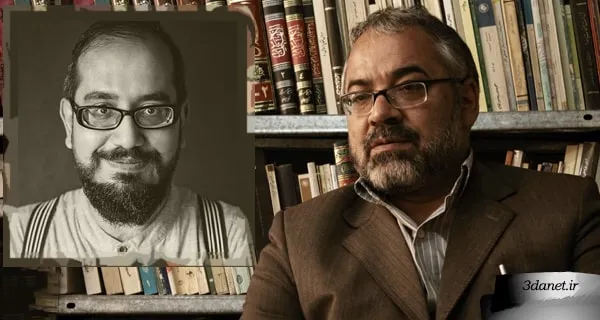
Kaveh Behbahani, philosophy researcher
Fundamentally, there are two desiderata in politics that we want both of: democracy (rule by the people) and meritocracy (rule by the meritorious). Democracy is the desirable form of government compared to other forms of governance. Of course, it has its own drawbacks. As Churchill said, «Democracy is the worst form of government, except for all those other forms that have been tried.» Democracy is a series of procedures, and if all those procedures are realized together and simultaneously in a country's governance, that country is a democratic country; if one of these procedures is absent, we are not dealing with a modern democratic political system. Democracy is desirable in the political sphere; but the second desideratum in politics is meritocracy. We all desire to have meritorious and virtuous rulers; rulers who do not solely pursue their own interests and those of their relatives and associates. Now, the discussion that arises here is that although both of these are desirable, democracy does not necessarily lead to meritocracy. Of course, my discussion is not necessarily about the current situation, namely political governance in Iran; whatever our political system is, it is not democratic. But this discussion is not unrelated to our circumstances either, and we can derive some benefits from it.
Some fall into a fallacy and think that if elections are held somewhere, that country is in a democratic state. Political scientists have named this error and call it the «fallacy of electionism»; elections (and of the free and fair kind) are merely one of the pillars of democracy, and of course, elections themselves have conditions that are more complex than what is prevalent among us. In any case, the main point here is how can we have meritocratic democracy or democratic meritocracy? Or, in the parlance of economists, how can we find an optimal point between democracy and meritocracy and somehow reconcile the two? That is, considering the existing obstacles, how can we have the maximum amount of democracy alongside the maximum amount of meritocracy in a system of governance? In this regard, there are at least three major models, of which I will discuss two in passing, but I will pause on the third model and speak about it at greater length.
Friedrich von Hayek's Proposal for Reconciling Democracy and Meritocracy
The first model is the one defended by Friedrich von Hayek. This libertarian philosopher of the Austrian School, who, as you are aware, has also gained many readers in Iran these days, believes that the optimal way to combine democracy and meritocracy is to create a bicameral legislature. We know that the legislature in some countries is bicameral. In the United States of America, there is both the House of Representatives and the Senate. In Britain and Northern Ireland, a bicameral system also prevails; there is a House of Commons and a House of Lords. Hayek believes that in bicameral systems, one chamber can be responsible for democracy, with its members elected by popular vote, and the other chamber can be responsible for meritocracy, with its members selected based on knowledge, expertise, and merit. For example, in Great Britain, the House of Lords consists of dukes, earls, barons, and officials who attain their positions hereditarily. There are also 20 to 25 representatives from the Church in the House of Lords. The House of Lords can delay the passage of laws and review legislation.
Of course, this model has its drawbacks. In Britain itself, you see that there is always controversy over the House of Lords. Usually, in such bicameral systems, the democratic chamber seizes power and sidelines the meritocratic chamber. Typically, in democratic countries like Britain, meritocratic chambers like the House of Lords are marginalized, and there is much debate over their existence. In my opinion, this model concedes too much of democracy to the other ideal, namely meritocracy.
Chinese Meritocracy
The second model in this regard has been proposed by Daniel A. Bell, a political science thinker. Of course, this Daniel A. Bell should not be confused with the American sociologist Daniel Bell. Daniel A. Bell, born in 1964, is Canadian and the dean of the School of Political Science and Public Administration at Shandong University. Bell has a book titled "The China Model: Political Meritocracy and the Limits of Democracy." Bell's argument in this book is that China's political system is not democratic but an authoritarian system. Nevertheless, Bell sees meritocracy in China's political system, and on this basis, and with a historical review from Confucian governance theory to the present, he defends the meritocratic aspects of the Chinese model and China's political system. It is on this basis that Bell says lessons can be learned from China for democracy.
Bell gives an example from Sun Yat-sen, who is among the founding fathers of the Republic of China. Yat-sen believed that candidates who have won votes should, in the next stage, take examinations, and if they could pass those examinations successfully, the position should be granted to them. But we know that implementing this method creates problems. For example, one candidate wins 80 percent of the vote and another wins 20 percent. Now, if the person with 80 percent of the vote fails the examination and cannot assume the seat of governance, and conversely, the candidate with 20 percent succeeds in the exam, people will ask what kind of democracy this is. In such a situation, people will become dissatisfied and a crisis will arise.
Daniel A. Bell himself defends a model here that he calls the vertical model. In the vertical model, the main axis of the argument is that at the central level, meritocracy should have priority, and at the local level, in local and community decision-making, democracy should take precedence. For instance, whether a bridge or a hospital should be built in this location or street in this city would proceed more on democratic principles, but at the macro level, for example, regarding whether a certain country should enter a war or not, we need meritocracy; because such actions have significant and fatal consequences, and an error in such decision-making would be a fatal error. I do not wish to say more about drawing inspiration from this Chinese model because one of the characteristics of authoritarian systems is that they are very good at propaganda and covering up their flaws. Democracy, however, is fundamentally supposed to show and expose its flaws.
The Third Model: The Necessity of Political Ethics
Now let us turn to the third model and how democracy and meritocracy can be reconciled. The fundamental question is: who selects the competent representatives and rulers? The answer is: competent citizens. So, to make democracy more meritocratic, it is better to focus on the citizens and cultivate an appropriate political ethics. The relationship between ethics and politics is a very complex one, because the sphere of Realpolitik, or real politics, does not align well with ethics. Nevertheless, we know that there is no escaping ethics, and human actions, including political actions, must be measured against ethical standards. According to the third model, we need a kind of political ethics so that, in a democratic system, we have more competent citizens and, consequently, more competent rulers.
Voters do not always vote rationally and ethically
Here, there are two important facts that the social sciences show us. The first fact is that voters vote neither rationally enough nor ethically enough. According to disciplines such as behavioral economics, modern psychology, social psychology, and many other fields, humans are systematically irrational beings. This is contrary to the Platonic and Aristotelian conception that defines man as a rational animal. In fact, the opposite is true; humans have systematic and predictable irrationalities. Humans also make systematic ethical errors. This very irrationality and unethicality finds its way into the sphere of political action. Therefore, the bottom line is that the wholly rational and ethical voter is a fable and a myth. Much has been written on this subject, for example, a book called "The Myth of the Rational Voter: Why Democracies Choose Bad Policies." One way to avoid such a problem is that some have proposed instituting a kind of competency test to somehow assess whether a voter is qualified to make the difficult political choice. Well, this recommendation, of course, has its own difficulties. It requires a large budget, and it is not simple to summon people one by one, test them, and then announce the result that you are qualified or not! Also, democracy would be sacrificed more than necessary in this process.
But instead of legal restrictions, one can turn to ethics. That is, if someone is not competent, it does not mean they should be legally deprived of voting. The discussion here is about moral right. In this context, it should be noted that three types of right can be distinguished. Sometimes the discussion is about epistemic right. For example, someone says, "Two times two equals five." A person making such a claim is saying something epistemically wrong. Sometimes someone might say, "Killing an innocent human being purely for amusement is wrong." Here, the discussion of moral right arises. Such a person's statement is not morally right. Finally, someone who says, "Run the red light!" is violating a legal right. Our discussion here regarding voting is about moral right. According to the third model, one can defend the idea that someone who lacks sufficient knowledge and competence is not morally (and not legally) entitled to vote.
Epistocracy
Some recent thinkers have defended an idea called epistocracy. Epistocracy is not an alternative to democracy but a theory in political ethics for improving the functioning of democracy. An important fact about the issue of democracy is that democracy incentivizes people to be politically ignorant. An incentive is an economic concept. Sometimes in economics, incentives are put in place, and then certain outcomes result from these incentives. For example, in the former Soviet Union, there was great sensitivity to athletes breaking records. Breaking more records was highly valued. They gave prizes and encouragement. The famous runner Sergei Bubka broke his own record 16 times. Therefore, incentivizing, or encouraging and stimulating, produces behavior. Democracy also stimulates people to be ignorant in the political sphere. This is, of course, a heavy claim that I will address further on.
Bad Voting
Suppose someone who wants to vote is told that they must know a great many things about statistics, economics, political philosophy, and other disciplines. The voter will probably say, what kind of demand is this? If there were a guarantee that my vote would bring about a tangible change in people's condition and happiness, then perhaps this amount of learning and effort for a single vote might be justified. But there is no such guarantee, and so the citizen says to themselves, it is not worth going to so much trouble for one vote. It is just one vote, after all. I will vote according to party inclination, or based on what others say, or even by chance. In this situation, the individual will likely resort to a form of voting that, inspired by the modern anti-democratic philosopher Friedrich Nietzsche, has been called herd voting.
Given these interpretations, a kind of moral duty becomes necessary here in order to have meritocracy, or as some philosophers put it, epistocracy, within the heart of democracy. That duty is that we are obligated, in elections and political actions, not to vote badly. Now, what does this bad voting mean? It means that I vote without having sufficient reasons and evidence to support whether a certain candidate's policies are just, democratic, or beneficial. Bad voting means voting based on someone's word, or based on the majority's view, or being influenced by propaganda, instead of relying on solid evidence and reasons. Bad voting has many instances. One example of these bad votes are those that can be called character-based votes. These votes are cast for a candidate based on their personality, and the voter says they liked the candidate's personality or that the person is attractive and beautiful. The reason for these votes has, of course, been discussed in the social sciences. For example, an effect discussed in the social sciences is the halo effect, whereby people say that those who are more beautiful or wealthier than the societal average are probably more cultured individuals, and people usually consider the words of these individuals to be correct.
Another instance of bad voting is voting based on immoral beliefs. For example, voting for a party and candidate who is racist. Another instance of bad voting is ignorant voting. When I, as a voter, cannot read a chart, or lack basic knowledge about economics, or, for instance, do not understand statistical fallacies, and so on. In short, many types of voting are instances of bad voting. All in all, if we are to vote, we have a duty not to vote badly. Note that we do not have a duty to vote. Voting is a right, not a duty. I am free to exercise that right or not. Another point is that we do not even have a duty to vote well. That duty entails too many demands. Simply, if we are to vote, meaning if we decide to exercise our right to vote, we have a duty not to exercise this right—that is, voting—badly.
Collectively Harmful Actions
One might ask, on what grounds are we obliged not to vote badly? Someone might claim that we can vote however we please. In response, it must be said that some human actions are not harmful individually, but when performed collectively and by a significant number of people, they become harmful and damaging. This category of actions is called collectively harmful actions. For example, suppose I have a polluting car and I say, climate change is not going to happen because of my one polluting car. Now consider if many people commit this act and drive their polluting cars. It is clear that this would be a harmful and effective action. Voting badly is similar; if a significant number of people do it, it will have a detrimental outcome. A single vote is never effective, except in the very rare case where both sides have gained exactly 50 percent of the votes and a single vote is needed to determine the winner. Nevertheless, if voting badly becomes a collective and group action, the situation will be different. We have a moral duty not to participate in something that is collectively harmful and leads to bad results. We can even accept such a thing through our moral intuitions. So, I have a duty not to take my polluting car out of the garage, even if this polluting car alone does not cause climate change. Someone might ask, did I create that particular problem that you are now placing the responsibility for solving it on my shoulders? The answer is no, you did not create it, and you are not responsible for solving it, but you have a responsibility not to be part of this problem.
Bad Elitism, Good Elitism
An objection that can be raised against this argument is whether the proposition that we are morally obliged not to vote badly does not foster a kind of elitism? It must be said that elitism is not inherently bad. It is better to say that elitism can be divided into two types: good and bad. For heart surgery, you must go to a heart surgery specialist. Now, if this specialist has Parkinson's and their hand trembles, they are not a good surgeon. This is elitism, but it is correct and appropriate elitism. However, to say that only the wealthy, or only wealthy white men, have the right to vote is a kind of bad elitism. The point is that you have the right to vote, but you have a duty not to vote badly. This, of course, has a precedent and was conventional in the republican tradition. In this tradition, the individual, insofar as they are a citizen of a city, must possess certain civic virtues. Liberal democracies, however, no longer pay much attention to these values and do not value the concept of Telos. Of course, many of these concepts must be revived so that democracy can enjoy a higher quality.
Some might say that, by these accounts, voting becomes a very arduous and difficult task. That is, political action in the form of voting requires knowledge and virtue. Of course, as I said, voting is not a duty, but we merely have a duty not to vote badly. The reality is that living in the modern city has its own difficulties. Look at a not-so-difficult job like driving for Snapp. For this, one needs many skills: map reading, driving, working with a smartphone, etc. The famous sociologist, Georg Simmel, in his classic essay "The Metropolis and Mental Life," says that in the city, the factors one must pay attention to are so numerous that sometimes desensitization must occur, meaning citizens must reduce their sensitivities. Modern life is hard, and one needs various kinds of knowledge to navigate it.
The Problem of the Tyranny of the Majority
I mentioned that one instance of bad voting, especially in conditions where mass media have emerged, is something that can be called herd voting. From the beginning of democracy in ancient Greece, one of the reasons for opposing democracy was that democracy has the potential to turn into an autocratic and despotic system (tyranny). Modern philosophers also speak of the "tyranny of the majority"; a concept coined by Tocqueville and later discussed by John Stuart Mill, one of the fathers of modern liberalism. Here, instead of discussing the tyranny of a dictator, one can speak of the dictatorship of the majority or the "dictatorship of the herd."
Our herd-like political action leads us to the phenomenon of conformism, or following others. Following others means that instead of thinking and deciding autonomously, independently, and freely, I follow others. One of the important virtues and presuppositions of democracy in the Enlightenment era is precisely this autonomy. Autonomy means I choose my own nomos self-legislatively, with my own thought; to be autonomous, not heteronomous. Does this autonomy conflict with consulting experts? No. A person may autonomously, through reasoning, dialogue, and so on, reach the conclusion that a certain individual is an expert on a subject and should be consulted. Thus, one can autonomously listen to the opinions of others as well.
The Contradiction Between Herd Voting and Autonomy
Herd voting contradicts one of the most important and fundamental human intellectual virtues, namely intellectual autonomy. Intellectual autonomy means that it is I who thinks and decides what to do. Eliminating this intellectual autonomy will drive a person toward following the herd and a kind of mediocrity, or even collective baseness. In such a situation, the voice of our individuality is lost in the noise of the crowd, and in our times, marked by the prominent presence of mass media like Instagram, it is crucial not to surrender to the tyranny of the collective. Every human being needs a personal space immune from social pressure. Otherwise, the political actor turns into something akin to a political sleepwalker. If I surrender entirely to the tyranny of the majority, have no personal space, do not act autonomously, and do not vote autonomously, I become a political zombie or a political sleepwalker.
The Importance of Deliberative Democracy
To preserve individuality, one must be in constant dialogue. In this regard, one of the most precise formulations of democracy in Western thought is Jürgen Habermas's conception. According to Habermas, democracy is communication (democracy as communication). Habermas's theory, of course, has complexities drawing on the ideas of Austin and Searle about speech acts and so on, but the essence of his argument is that in a democracy, we are in a state of continuous dialogue, and this, of course, has its own etiquette. There must be the least amount of verbal violence in it. Now, look at some discussions in the virtual space, which show that regardless of the governing system that rules over us, the situation we ourselves are in is not democratic or dialogical. The final point is that no discussion, dialogue, disagreement, or conflict can become a taboo. Talking about nothing in the world is taboo, and if some have forbidden dialogue about certain matters, rest assured they lack a democratic spirit.


Discussion12 comments
با درود جناب ادمینِ صدانت من چندین پاسخ به کاربر طناز دادم و متاسفانه منتشر نکردید ، در صورتیکه رعایت قوانینِ سایتِ شما در کامنت من اتخاذ شده بود ! لطفا دلیل عدمِ انتشار کامنت من را بفرمایید . این رفتار گزینشی با کامنت ها باعثِ کاهشِ مخاطبان شما خواهد شد و عدمِ تمایل به قسمت کامنت ها و نظریات . در واقع تبدیل خواهید شد به یک روزنامه که فقط قابل خواندن هست . با سپاس...
pro monarchist support of democratic US حمایت از سلطنت جلودار دموکراسی ایالات متحده از یک کودتاچی پسر کودتاچی 1932 و 1291 The late Shah Mohammad Reza Pahlavi owed his throne to a Republican president. In 1953, Dwight D. Eisenhower backed a coup against the nationalist Prime Minister Mohammad Mosaddegh, who had presided over the Iranian nationalization of Britain’s Anglo-Persian oil company. Eisenhower’s successor, Republican Richard Nixon, and the Shah enjoyed excellent relations; the American president anointed the Shah as one of two gendarmes of the Persian Gulf, along with Saudi Arabia, and endorsed his buying spree of American military equipment in the 1970s even as popular opposition to the Shah’s autocratic rule mounted https://www.stimson.org/2024/why-iranian-leaders-have-preferred-u-s-republican-presidents/ ساقط کردن صد دموکراسی توسط دموکراسی آمریکا از جمله سالوادور آلنده در شیلی تحقیق در ماهیت موضع غرب در زمینه آزادی
سناتور جمهوری خواه کشور مدعی رای مردم:آمریکا داعش را بوجود آورد و بعد گفت میخواهد گروه این آمریکایی کنترل کند! خاورمیانه را بی ثبات کردیم.... بزرگترین جنایتکاران تاریخ مدعی رای مردم و آزادی مردم. بله مردم را از زندگی و حیات آزاد میکنند
رفتار با تیک تاک و تأکید سناتور آمریکایی بر این که سنای آمریکا نمیتواند بر سر مدیریت اینترنت کوتاه بیاید، برای مردم غیر دانشگاهی بسیار گویاست. حاکمیت بر اینترنت و محتوای تحصیلات در مدرسه و دانشگاه ستون تحکم فکری با ظاهر مسالمت آمیز بر مردم جهان
marriage of Salafids and Democracy at last بالاخره برای مقابله با نهضت مقابله با hegemony قدرت مطلق انگلوساکسونی contnental داعش و آمریکا دست در دست هم گذاردند و hybrid داعشی دموکرات برای روشن شدن layman فرد غیرمتخصص به صحنه سوریه با هدف آشتی عمومی و نهی از صدمه زدن به santuary روحانیون کشور شما آمد.
با تشکر از جناب کاوه بهبهانی نوشتار قابل تامل و خوبی بود . در واقع دموکراسی نوعی " آزادی نهادینه شده " هست . آزادی که در قالب و ساختار نهادهای مدنی و اجتماعی تعریف میشود..
دموکراسی و آزادی، مفاهیمی که بی رحم نرین نسل کشان تاریخ برای اقناع مردم ناآگاه، تسلیم آنان در برابر جنایت و انحراف توجه از اعمال صاحبان نفوذ استفاده می شود. اجماع داعش و دموکراسی در سوریه بهترین شاهد دروغین بودن ادعاهای مضحک اروپا
اسرائيل : ما تنها دموکراسی خاور میانه هستیم. برخی منابع از کشته شدن 200000 دویست هزار نفر در یک منطقه کوچک یعنی نوار غزه می گویند. حدود 15000 هزار کودک کشتند. بله لیبرالیسم یعنی این. انگ زدن ،deamonization و پس از برچسب زدن راست یا دروغ کشتار کردن. چرا این مردم قصابی شده متوجه نیستند که باید آزادی را انتخاب کنند. چرا متوجه نیستند که ارباب آمریکایی لیبرال می گوید موکراسی اگر قبول نکردی بی-2 بمب یک تنی بر روی چادر تو می اندازد. فریب خوبی است. حرف را با انتخاب و رأی بزن اگر مردم قبول کردند اسمش می شه لیبرالیسم اگر قبول نکردند deamonization مرحله اول دیو سازی و جلوه دادن به عنوان تروریست و بعد هم فاتحه باید بخونی. خوب چرا دموکراسی و آزادی رو انتخاب نکردی پسر خوب؟
آیا مفهومِ آزادی در طولِ تاریخ فقط توسطِ لیبرالیسم ، تبیین شده ؟!
در زمانی که نیویورک و واشنگتن دی سی شاهد اعتراضات caucasion و جوان آمریکاییای است که حتا کشور شما را نمیشناسد، در حالی که شیرخوار و neonateهای بیشمار از وحشت بمبهای چند تنی لیبرالیسم و محصول اندیشه به اصطلاح دانشگاهی یونانی نگاه طبیعتگرا و حیوانی غربی از وحشت میایستد، دانشگاهی ایرانی در مورد detail دموکراسی و جامعه مدنی verbiage ارائه میدهد. استاد دانشگاهی ایرانی که درس خود را خوب نخواندهای اگر سروصدای شما را در همراهی با بیگانه و طرفداری از سرمایهداری واقعا باباور در mental makeup خود internalizeکردهای و آن را باور داری، چگونه است که کشتار و قصابی کودکان با واسطهگری و تئوریزاسیون پاکسازی قومی افراد civilized , ultra-modernized را با روبرگرداندن تأیید میکنید؟ دو جور بیگانه پرست و خائن وجود دارند: ایرانی که از تحریم حمایت و آرزوی تشدید آن را می کند تا در آینده شورولت سوار شود! باصطلاح دانشگاهی و pseudo-intellctual شبه متفکر برده غرب برای خودنمایی و تفاخر در جامعه ایرانی که برای social acceptance به دانشجو و جامعه مخاطب خود دروغ میگوید. شریعتی راست میگفت که فلاسفه...
نکته ی جالب در مورد بخشی از این طیف غرب ستیز و ضد روشنفکری در ایران این است که از یک سو انتقاد می کند که چرا طیف روشنفکر و تجدد گرای ما مقلد محض است و به قول دکتر عبدالکریمی هم چنان در حال و هوا و آرمان های قرن هجدهم و عصر روشنگری باقی مانده و مثل طیف روحانیون دچار یک تاخر تاریخی است ؛ اما از سوی دیگر اگر کسی از همین طیف پیدا شود بدون نفی و رد کامل و تمام این ارزش ها مثل دموکراسی و لیبرالیسم و جامعه مدنی ، بیاید آنها را نقد کرده و نقاط ضعف و کاستی آنها را گوشزد کرده و پیشنهادها و راهکارهایی برای اصلاح آنها دهد و نسل جوان را از توهم ایدئال وبی نقص و مدینه فاضله و اتوپیا بودن این ارزش ها مثل دموکراسی در بیاورد ؛ چنان چه تلاش این گفتار همین بوده که نشان دهد اگر چه دموکراسی بدیل استبداد باشد و بدیل دیگری ندارد اما بدون نقص و مشکل نبوده و مدینه فاضله و اتوپیایی نیست و مثلا فقط در نظام های استبدادی نیست که شایسته سالاری عمدتا نقض شده و سفلگان و افراد بی مایه به جایگاههایی که در حدش نیستند می رسند بلکه این مشکل در نظام مبتنی بر دموکراسی هم ممکن است در جاهایی وجود داشته و یا پیش بیاید و راهکارها و نقدهای خود را در این باب و سایر مشکلات و نقص های دموکراسی بیان می کند ؛ باز به وی به بهانه ی های مختلف و واهی مثل سکوت در مقابل جنگ غزه و جنایات ارتکابی توسط اسرائیل حمله و تخطئه می شوند و انواع و اقسام برچسب ها و حتی توهین ها مثل خائن و بیگانه پرست و دروغ گو بودن توسط این طیف مقابل یعنی بخشی از همین طیف غرب ستیز و ضد روشنفکری که بعضا در مواردی حتی ضد مدرنیته هم است ، به این طیف متفکران زده می شود تا به بهترین وجه لگد مالشان کنند . اما چرا چنین است ؟ پاسخ واضح است چون بخشی از این طیف غرب ستیز دغدغه اش واقعا غزه و یا رویکردها و کنش ها و نظرات بعضا غلط و نادرست جریان روشنفکری و متفکران آن و تذکر و نقد آنها به خصوص طیف تجددگرای آن نبوده و نیست بلکه مشکلش با کل این جریان و مبانی و ارزش هایش است و از آنجا که هدفش هم این است که به هر طریقی که شده رقیب خود را از میدان به در کرده و نزد مخاطب بی اعتبار و بی حیثیت کند ؛ لذا به هر قیمت ولو ناجوانمردانه و خلاف اخلاق و آداب مناظره و نقد و حتی زیر پا گذاشتن ارزش های دینی که این طیف غرب ستیز مدعی آن است و با خود به یدک می کشد هم شده باید با مغلطه و دروغ و تحریف و وصله پینه کردن های بی جا و سنخ دعواهای سیاسی و سیاست زده از سر دشمنی کورکورانه و خلاصه به هر نحو و بهانه ای هم که شده این طیف روشنفکری وطنی و هم وطن را لجن مال کرده و علیه آنها عقده گشایی کند !
مقاله روشنگرانه و فوقالعادهای هستش. توصیه میکنم که حتما خوانده شود.