Philosophy
Abdi Kalantari and Soroush Dabbagh Debate: The Right to Free Speech and Insulting Sanctities
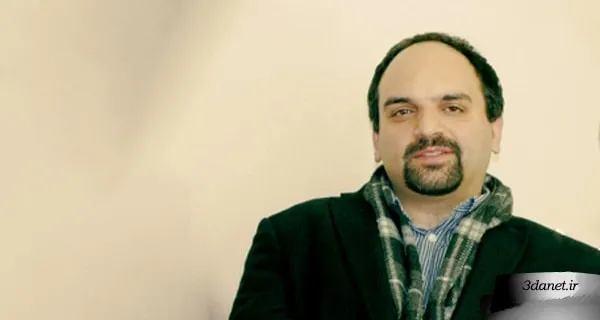
Soroush Dabbagh considers insulting sanctities not 'freedom of speech' but an act of 'conduct'; he deems the dissemination of atheistic ideas permissible and violent behavior against the insulter unjustified. His debate with Abdi Kalantari on this matter.
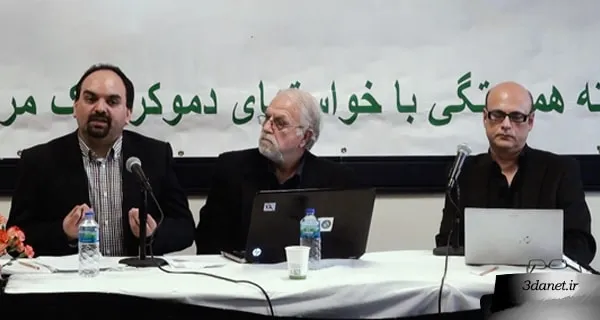
Debate on the Right to Free Speech and the Issue of Insulting Sanctities, with Dr. Soroush Dabbagh and Abdi Kalantari
.
Dr. Soroush Dabbagh's Explanation Regarding This Debate:
As I understand it, the distinction between "freedom of expression" and "freedom of conduct" in the discussion of "freedom of speech and insulting sanctities" is illuminating and worthy of consideration. Insulting others, including religious figures, contrary to what it initially seems, belongs to the category of "conduct" and not "expression." It is true that verbal and spoken insult involves the use of several words; but the person committing the insult is performing an act; in John Searle's terms, insulting falls under "speech acts." It makes no difference whether someone slaps me in the face, or addresses me using offensive and vulgar words; in the latter case, it is as if they are hurling words at me, causing me harm and offense. Thus, the "expressive" appearance of insulting should not mislead us; for insulting is a form of "conduct," even though it has an expressive form. With regard to this distinction, it can be acknowledged that while we have freedom of expression in a democratic society, we do not have absolute freedom of conduct, and the majority of reasonable people consider certain behaviors such as stealing, torturing... to be impermissible and unjustified; insulting is also among human conduct and must be subject to constraints; as indeed emphasized in Article 19 of the International Covenant on Civil and Political Rights, adopted by the UN in 1966, regarding these limitations and constraints. Furthermore, the boundary between "criticism," "satire," and "insult" should not become so blurred that "insulting" becomes a concept without referents. In Persian and other languages, insulting is a natural act among other natural acts and certainly has several referents, and one must be sensitive to it. If the issue is formulated in such a way that "insulting" becomes a concept without referents; this statement seriously contradicts the linguistic intuitions of Persian speakers and speakers of other languages, and is unjustified.
Publishing atheistic and God-disbelieving ideas in a society, whether religious or non-religious, is an instance of "freedom of expression" and, in my view, morally permissible and acceptable, even if some disapprove of it; whereas insulting religious beliefs is an instance of impermissible and unjustified "conduct" and must be renounced, and other normative judgments apply to it. At the same time, violent behavior towards the person committing the insult is also unethical and unjustified, and is by no means acceptable, nor does it solve any of our problems. As a religious intellectual, I defend the fundamental rights of religious minorities, as well as atheists and God-disbelievers, in a religious society, and I consider any fatwa or statement that entails endangering and taking the lives of dissenting individuals to be ethically unjustified, and I do not believe in it.
Several friends have inquired about my view on the relationship between freedom of expression and insulting sanctities in recent days. The truth is, beyond what I have written on this subject in recent years in the articles "This is the Opponent, O Heart, Lest You Measure the Wind" and "Thus You Have Done Until Now, Do Not Do So Now", I have no further point or matter to add. Dear ones can find these two articles in the "Religious Intellectualism" articles section of my website; also, watching my debate with my dear friend, Abdi Kalantari, titled "Freedom of Expression and Insulting Sanctities," which took place about 3 years ago at Georgetown University, is not without merit.
.
.
Abdi Kalantari and Soroush Dabbagh's Debate Entitled: The Right to Free Speech and the Issue of Insulting Sanctities
Download the Audio of the Debate between Abdi Kalantari and Soroush Dabbagh
.
.
Debate: The Right to Free Speech and the Issue of Insulting Sanctities Dr. Soroush Dabbagh, Researcher in Religion, Philosophy, and Literature (PhD in Analytic Philosophy) Abdi Kalantari, Writer, Translator, and Editor-in-Chief of Nilgoon Website George Washington University Washington, DC, May 4, 2013 Video and Editing: Dariush Soltani Session Moderator: Dr. Reza Ghoreishi, Professor at Stockton University Organized by the Solidarity Committee for the Democratic Demands of the Iranian People
.
.


Discussion0 comments
No comments yet; let yours be the first voice.