Religion
Interview with Soroush Dabbagh: “Malekian: Essentialism and the Ahistorical Outlook”
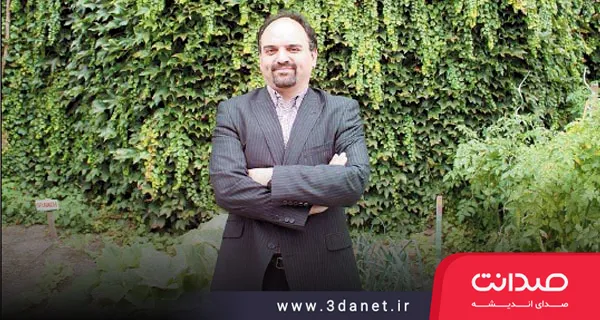
While sympathizing with Mostafa Malekian's critiques of Mehrnameh magazine, Soroush Dabbagh considers his recent approach to religious studies essentialist and ahistorical, and calls the reduction of modernity to rationalism a fallacy.
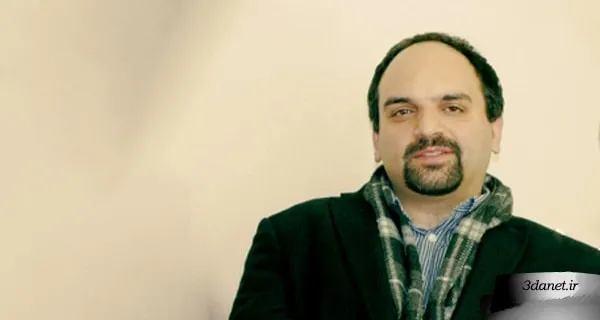
Ehsan Ebrahimi: Religious intellectualism, throughout its life, has not been safe from the taunts of the scornful and the denials of the negators. Concerned and informed critics have also expressed and continue to express their critiques for the sake of enriching religious knowledge. In the meantime, recently, in the period following the emergence and prominence of the Green Movement, the magazine “Mehrnameh,” which initially did not have a confrontational stance toward the religious intellectualism movement, has taken a clear change of direction and now even considers ISIS to be among the products of religious intellectualism! Finding the political reasons for this change of approach is a matter that has been and will be discussed on another occasion. Recently, however, some friends sympathetic to Mr. Mostafa Malekian have arranged an interview examining the approaches of this publication. In the course of the discussion, Mr. Malekian has shared his previously expressed views on religious intellectualism with the audience. I have had a conversation with Dr. Soroush Dabbagh, who is himself among the religious intellectuals and a researcher of theology, philosophy, and mysticism, about these views.
ــــــــــــــــــــــــــــــــــــــــــــــــــــــــــــــــــــــــــ
- I greet Dr. Dabbagh. I am taking this opportunity to have a conversation with you about Mr. Malekian’s recent interview with Hooman Dorandish. He had positions regarding the Mehrnameh magazine. He also put forward positions on religious studies and intra-religious/extra-religious intellectualism. There were various passages and points in this interview. As a first question, several points were raised about the relationship between reason, modernity, and religion. He pointed out that reason plays a tactical role in our religious literature, and that revelation has determined the strategies. In one place, he referred to a hadith. In fact, what we interpret as reason is incapable in religious literature. Also, the attempt to attribute modernism, as a symbol of reason, to religion is a failed scholarly endeavor. His phrase, “this matter contradicts religion,” seems to conceive of and posit a core or essence for religion and measures all issues against it. I wanted to know your opinion on this religious studies approach.
Greetings to you and your esteemed readers. I must first say that I personally have great respect for Mr. Malekian and have had the honor of knowing him closely for many years. During the time I was in Iran, I would visit him frequently, and he would also come to the “Marefat Pajouh Institute” to give lectures and participate in various meetings. I mentioned this point to say that what follows and has a critical tone is an epistemological discussion, nothing more.
نکته دوم؛ مصاحبه مورد اشاره شما را به دقت خواندهام. ناظر به نکاتی که ایشان راجع به نشریه «مهرنامه» گفتهاند، کاملاً همدلی دارم. معتقدم نقدهای ایشان به مشی نشریۀ «مهرنامه» و مجال فراخی که برای هجمه کردن به عمرو و زید به سید جواد طباطبایی داده شده درست است؛ به قول دوست اهل ذوقی،«مهرنامه» را باید «توپخانۀ سید جواد» خواند!! طی 2 سال گذشته، دو مقاله در نقد مشی مهرنامه منتشر کردهام: «به کجا چنین شتابان؟» و «در طریقت ما کافری است رنجیدن». در آن مقالات نیز مشی تخریبی «مهرنامه» نقد شده است؛ علاوه بر این مقالۀ «فردید دوم؟» را در نقد مشی مواجهۀ سید جوادطباطبایی با منقدان فکری خود منتشر کردم که با هجمۀ شدید برخی از حواریون ایشان که مع الاسف از ادب بیبهرهاند و به تعبیر جناب آشوری در زمرۀ «جاهلان فرهنگی»اند، مواجه شدم. این نکات را آوردم تا بگویم علی الاصول با انتقادات جناب ملکیان نسبت به مهرنامه همدلم. سویههای سیاسی و غیرمعرفتی در فعالیتهای اهالی «مهرنامه» موج میزند. خاطرم هست در میزگردی که آقای قوچانی به همراه آقای ابراهیم فیاض در آن شرکت کرده بودند، قوچانی گفته بود قرابتی میان مشی نواندیشان دینی و داعش دیده میشود. آنجا بود که فهمیدم کف گیر به ته دیگ خورده است. بگذریم از آقای فیاض که انصافاً جملاتی که از ایشان منتشر شده بود، به تعبیر فیلسوفان تحلیلیnonsense بود و افاده معنا نمیکرد. صادقانه بگویم، دلم برای دانشجویان ایشان میسوزد؛ نمیدانم با این ذهن و بیان پریشان آقای فیاض، دانشجویان چه بهرهای از کلاسهای ایشان میبرند، اسباب تاسف است که چنین کسانی در برنامهریزی برای علوم انسانی در کشور مدخلیت و مشارکت دارند. آقای قوچانی هوشمندتر از آنست که نداند نکاتی که گفته چه آثار و نتایجی دارد. ولی خوب باید آنرا به حساب محاسبات سیاسی و غیرمعرفتی گذاشت وگرنه به تعبیر مولانا: «از قیاسش خنده آمد خلق را». از این سخن ناموجهتر و غریبتر که نواندیشی دینی را با داعش مقایسه کنند، چرا که داعشیها به خوانش رسمی[1] از دین باور ندارند و نواندیشان دینی هم چنیناند، پس این امر قرابت این دو نحله را نشان میدهد؟!! تو گویی اصحاب داعش نیز مانند نواندیشان دینی با جهان جدید بر سر مهراند و به آموزههایی نظیر «ملّت-دولت»، «تفکیک قوا»، «خود آیینی» باور دارند و از بازخوانی انتقادی سنت دینی سراغ میگیرند، این سخنان، مصداق روشن قیاس مع الفارق است. قوچانی به نیکی میداند که عبدالکریم سروش سالها پیش عَلَم مخالفت با «نابگرایی» و «سلفیگری» را بلند کرد و با نگاشتن مقالات «قبض و بسط تئوریک شریعت»، مفهوم «اسلام ناب» را نقد کرد و از تکثر فهمها از متن مقدس سخن به میان آورد. همچنین به نیکی میداند که امروزه از تریبونهای رسمی حکومت بر موجه بودن «اسلام ناب» تاکید میشود، اما آدرس غلط میدهد و بجای نقد نابگرایان واقعی، حمله بر نواندیشان دینیِ یک قبا میآورد و ایشان را به نابگرایی و سلفیاندیشی متهم میکند. آنچه در ادامه میآید و در نقد سخنان جناب ملکیان است، هیچ نسبتی با نقدهای درست ایشان به مشی نشریۀ «مهرنامه» ندارد.
Having passed through these preliminaries, for some time now an essentialist outlook[2] has become prominent in Mr. Malekian’s works, even though he has said he is not sympathetic to Aristotelian essentialism. I believe several deficiencies have crept into his judgments concerning categories such as religion and modernity and the relationship between them. His perspective is ahistorical. Mr. Malekian is usually engaged in making distinctions and branching out subdivisions, and he does make good classifications, but this is very abstract and lacks a historical view; whether he is discussing religious knowledge or the history of jurisprudence, or when he talks about modernity. His discussions in this interview, and more broadly the discussions he has had about the relationship between rationality and modernity, evoke a narrative of modernity and the Enlightenment that was more prominent in eighteenth-century France, a kind of liberation[3] from heavy metaphysics, a liberation that, in his account, goes hand in hand with rationality and argumentation. But reducing modernity to argumentation is an instance of the “fallacy of essence and aspect.” Modernity and modernization have had different manifestations throughout history. As I have previously mentioned, concepts like modernity are among “socially constructed”[4] concepts, and in Wittgenstein’s terms, the resemblance among the instances of these concepts is of the “family resemblance” type. We have modernities, we have intellectualisms, we have democracies, we have liberalisms, we have secularisms… And his claim that argumentation is the essence and constitutive element of modernity is not the view of all thinkers and intellectuals of recent centuries; it is a kind of “evidentialism”[5] with which not all philosophers in the analytic tradition necessarily sympathize. For instance, the later Wittgenstein, in his book On Certainty, speaks of certain “justified beliefs” for which no reason is available, yet this does not prevent us from considering them justified and knowledge-conferring; the concept of “world-picture” in this book is responsible for explaining this matter; likewise, the manner of following rules, which is discussed in detail under the topic of the “rule-following argument” in Wittgenstein’s Philosophical Investigations. Therefore, if someone reduces the entirety of modernity to Mr. Malekian’s account and subsequently speaks of and seeks out an incompatibility between religion and modernity, they have not made a justified statement. On the other hand, equating religiosity with dogmatic submission is, in my view, an unjustified judgment, an instance of the fallacy of essence and aspect, and entails adopting an essentialist outlook. It is true that he does not use the word essence, but when he speaks of the essence of religiosity or the essence of modernity, or the main constitutive element of modernity and religion, I believe his discussions can be formulated in this way. I wrote about these points roughly 8.5 years ago in an article titled “Dogmatic Submission and Being Modern,” which was published in the journal Madreseh. I believe the points made in that article in critique of him are still valid, and until he provides a response, one cannot accept why, in his view, the relationship between modernity and religiosity is like doors and windows that have no passage to one another. A pronounced ahistorical essentialist outlook is visible in his discussions about “religion” and “modernity.” Historically, one can adduce evidence that the history of modernity is far more colorful than the formulation he has presented; the history of religiosity under the Abrahamic religions, specifically Islam, is also extremely colorful. We have varieties of Islams and, in Wittgenstein’s terms, varieties of Islamic “forms of life.” In Mr. Malekian’s view, this plurality and diversity is entirely reduced to that conventional style of religiosity, or in Abdolkarim Soroush’s terms, “livelihood-minded religiosity,” and other types of religiosity are completely overlooked. I suspect his so-called “Spirituality and Rationality” project suffers from a similar predicament. When one speaks of trans-religious spirituality and emphasizes the psychological aspects of “spirituality,” one can understand and apply these psychological recommendations; but epistemologically and philosophically, until these problems are resolved, I do not think it can be epistemically defended.
- Thank you, Dr. Dabbagh. As I mentioned, the piece by him that was published on the Niloufar website—which you also referred to, and to which Mr. Yousefi Eshkevari, Abdolali Bazargan, and Mahmoud Sadri responded—I too published a response and raised two points. First, that he has become a Tafkiki, which is not necessarily a flaw in itself; and second, that in the epistemology of religion he defends a kind of naïve epistemology devoid of any hermeneutical dimensions. He conceives the relationship between the “reader of the text” and the “sacred text” as one-sided and crude. That is, [according to his view] anyone who refers to the sacred text understands it without the intervention of any presuppositions or background, and the concepts contained in the sacred text take shape automatically and simply in the reader’s mind. It is as if he defends a pre-Kantian epistemology—a knowledge that bears no trace of the complexities of the subject-object relationship. To what extent do you consider this criticism valid? Another point is that in historical discussions he has said that historical propositions and reports do not necessarily convey historical realities to us. He raised this statement in criticism of Mr. Quchani’s views, who had said that the Treaty of Hudaybiyyah could serve as a basis for international law and societal prudence. According to Mr. Malekian’s critique, historical propositions give us only a semblance of reality that may not be identical to reality itself. Yet at the same time, in his discussions of modernity and Islam, he fundamentally lacks a historical outlook. It seems we are faced with a contradiction. He refers others to the unreliability of historical reports, but when theorizing himself, he pays no attention to history. What is your opinion on these two points?
Regarding the first point. We know that he is well acquainted with post-Kantian epistemology and has taught these themes and topics for several semesters. What I understand from his work, particularly the very interview you have in mind—not his recent interview about Mehranameh and Seyyed Javad Tabatabai—is that it has both pronounced Tafkiki strains and, epistemologically, entails a kind of “naïve realism”[6]. You are aware that “naïve” here does not carry a value-laden meaning[7]. In fact, it is a school opposed to “complex realism”[8]. If we wish to speak in the idiom of contemporary religious intellectualism, his epistemology is pre-Contraction and Expansion; prior to the discussions that Abdolkarim Soroush and Mujtahid Shabestari introduced in the late 1980s and early 1990s. Soroush with “The Theoretical Contraction and Expansion of the Sharia” and Shabestari with “The Hermeneutics of the Sacred Text.” I was surprised to see that his discussions are, as you put it, Tafkiki and also pre-Contraction and Expansion. Now, if a discourse is pre-Contraction and Expansion or pre-hermeneutical, that in itself neither justifies nor invalidates it; since those two theories were a turning point[9] in the history of contemporary religious thought, and both raised justified and pathbreaking themes and formulated a cogent move from naïve epistemology toward complex epistemology, I mentioned them. We neither understand the text immediately nor arrive at a justified judgment of it. I agree with you, these discussions of Mr. Malekian carry such Tafkiki and pre-Contraction and Expansion resonances and, in my view, are unjustified.
Regarding your second point. I agree with Mr. Malekian's critique of Mr. Ghouchani. That statement by Ghouchani is a strange one, for the reason I will explain. In a broad classification, we have two discourses: one "pre-modern" [10] and the other "modern" [11]. The error that some make in the field of Islamic studies and, by extension, in the field of engaging with past history, is that they first attempt to understand what happened in that era using today's criteria and standards, and then, in the second stage, proceed to evaluate it; the error of "anachronism" [12]. That is, you use modern criteria and benchmarks to understand and judge what occurred within another discourse. The Treaty of Hudaybiyyah that Ghouchani mentions pertains to the years when the Prophet was in Medina before the conquest of Mecca. All those political and social relations and interactions must be understood within that context [13]. Meaning, that peace was not peace in the modern sense. Rather, it was among the contracts and pacts that tribes made with one another and possessed specific characteristics; if someone violated the pact, they were attacked, and so on... They must be understood with the characteristics of that era. At that time, there was no nation-state, no borders existed, there was no separation of powers, no central government... Those relations and interactions are miles apart from what we today refer to as international treaties. It can be said that morally, as some historians and Islamicists, including Frederick Denny in "An Introduction to Islam" and Karen Armstrong in "Muhammad: A Biography of the Prophet," have stated [14], what the Prophet did after the conquest of Mecca is praiseworthy. He could have, in accordance with the cultural-political characteristics of that era, fought the infidels and idolaters of Mecca, especially since he was militarily dominant. It has been written that he returned to Mecca with ten thousand troops; when Abu Sufyan in Mecca saw this scene, he told one of the Prophet's relatives, come and see with what splendor Muhammad has returned to Mecca. Within that tribal context, this behavior can be understood and evaluated. But if we want to analyze this matter as Mr. Ghouchani has presented it, I believe it is a false analogy and an instance of the error of "anachronism." These two are two discourses, each with its own specific characteristics. Of course, one can understand the spirit governing those relations and take it as a basis, but this is very far removed from a mechanical, literal, and ahistorical engagement.
Moreover, as you pointed out, Mr. Malekian's own discussions are also ahistorical, which is, in fact, a requirement of the essentialist outlook; that is, they are non-empirical. From one perspective, his critique of Ghouchani is correct. On the other hand, his ahistorical essentialist view also seems to me to be open to criticism.
- If I may, let me turn to another part of the discussion. In this recent interview, Mr. Malekian referred to jurisprudence and the efforts of some jurists to reform jurisprudence based on modern rationality. He offered a critique of the late Mr. Montazeri. I will quote his exact words: “In that case, what remains of jurisprudence? What kind of jurisprudence is it that suspends hudud, qisas, diyat, muzara‘ah, musaqat, and mudarabah, and sets aside a major portion of the rules governing sexual relations in favor of modern sexual ethics? In what sense can someone who sets all of these aside be called a jurist?” A few sentences earlier, he said that our jurisprudence has a set of axiomatic tenets. It is as though he regards jurisprudential subject-matters as the axiomatic tenets of jurisprudence, whereas jurisprudential subject-matters are temporally and spatially conditioned. Many jurisprudential subject-matters are neither needed by us today, nor do jurists speak of them in their opinions—such as slavery. There are also many new subject-matters that earlier jurists never addressed, like abortion, cloning, human presence in space, the internet, and so on. I would like to hear your view in light of an anecdote. It is reported that the late Mr. Borujerdi, before his marja‘iyyah, used to say, “The fatwa is from me, the action is from the follower,” but toward the end of his life he said, “How many fatwas I did not wish to issue but issued under pressure from followers, and how many fatwas I issued but followers did not act upon.” It seems that Mr. Malekian lacks a historical perspective on jurisprudence, jurisprudential schools, contradictory jurisprudential rulings within a single jurist or among jurists, and the fact that many rulings and fatwas of jurists were issued based on calculations, conservatisms, their relations with political power, and wars between countries. He imagines that our jurists, at the moment of issuing a jurisprudential opinion, were uninfluenced by any external factor or consideration. It is as if he believes in a kind of perfection, evolution, and essence of jurisprudence prior to the era of the late Mr. Montazeri, against which essence the late Mr. Montazeri, for instance, took action. The conclusion of the discussion is that, in his view, after Mr. Montazeri, no jurist can or has the right to exercise ijtihad in jurisprudence, because, according to Mr. Malekian’s belief, these would contravene those axiomatic tenets. What is your opinion on this matter?
I broadly agree with your statement, with the explanation I will offer. If we take a historical view of jurisprudence (fiqh), jurisprudence is nothing but the sum of legal opinions (fatwas), not only those of the Shi‘a but also of the Sunnis—fatwas that arise from a fluid tradition. We do, of course, have an orthodoxy in jurisprudence; statements that have predominantly been endorsed over many centuries. Mr. Malekian’s point can be formulated thus: on a great many issues, the jurists’ opinions are, for the most part, more or less similar; but this is different from saying that we have unchangeable certainties in jurisprudence. I am not a jurist myself, but as someone who researches and studies in the field of philosophy and religious intellectualism, I submit that this has not been the case. Ayatollah Montazeri, whom you mentioned, issued a fatwa before his passing concerning the Baha’is. He said that Baha’is are entitled to civil rights. In the history of Shi‘i jurisprudence, this fatwa was unprecedented, yet I do not think even his enemies and opponents harbor the slightest doubt about the rank and depth of Ayatollah Montazeri’s juristic knowledge. That this statement was novel and that no one had expressed such a view before is true, but we must not refuse to consider Ayatollah Montazeri’s unprecedented statement a fatwa, or say that this statement must be expelled from the history of juristic activity[15]. A posteriori—empirical—historical examination confirms this matter. Another example is the late Mr. Qabel, who was a student of Ayatollah Montazeri and had attained the degree of ijtihad. As far as I know, he was the first jurist to explicitly issue a fatwa that there is no religious objection to women not covering the hair of their head and neck. He argued that covering the hair of the head and neck in the Prophet’s era had an identity-related aspect. In his view, if the issue was quenching men’s lust, why did slave women not cover the hair of their head and neck during the Prophet’s rule in Medina? Yes, if we say that no one had issued this fatwa before, that is correct. But to say that because of this fatwa, the late Qabel was not a jurist is an unjustified statement. I know, of course, that Mr. Malekian did not say such a thing, but it is a logical consequence of his statement. To believe in a rigid skeleton and framework and to expel and disregard those who step outside this framework is not justified. In my view, one must adopt a thoroughly a posteriori—historical—empirical outlook in these cases. Another instance is Ayatollah Khomeini’s fatwa on chess. Many jurists before him did not hold such an opinion, and the same applies to the Guardianship of the Jurist (wilayat al-faqih). His opinion on Islamic government and that he considered governance to be the right of a fully qualified jurist was contrary to the opinion of the majority of Shi‘i jurists. My point is that the a posteriori, historical view that is applied to all fields and disciplines, including physics, chemistry, and biology, also holds true and applies to the science of jurisprudence. Of course, one can say that someone does not accept this juristic position for a certain reason. That is a different matter; here we have entered the arena of conflicting opinions. It is like a certain scientist in the field of chemistry criticizing another scientist’s view, but this does not detract from either the earlier or the later scientist being a chemist. If certainties can be enumerated, they amount to this: that someone has gone through certain preliminaries, knows the foundations and principles, and that the experts in that art take his statements seriously—that is all, and nothing more. There is no such thing as a priori, indisputable principles on the basis of which one can expel someone from the circle of juristic activity; here, too, Wittgenstein’s concept of “family resemblance” helps us. Moreover, the same applies to the interpretation of the sacred text. Someone like Zamakhshari, who wrote the Kashshaf commentary and was of the Mu‘tazili school, does not accept the Ash‘ari theologian Fakhr al-Din al-Razi’s interpretation of the Qur’an. At the same time, this does not prevent us from regarding both as commentators who have written and contributed within the history of Islamic exegesis.
- If we were to summarize this entire interview, apart from the section criticizing Mehrnameh magazine, we would have to say that he has spoken in criticism of religious intellectualism—the efforts of religious intellectuals to create harmony between religion and modernity. He points out somewhere in the interview that “we must see the role of Arabian culture and geography in the formation of religion.” He presents this proposition as an acceptable historical fact, but if someone wants to introduce modern concepts, which are accepted according to collective reason, into religious literature, in his opinion, that is incorrect. Don't you see a contradiction? He has no problem with the infiltration of Arab culture into religion, but he takes issue with and opposes the infusion of modern concepts into religion.
He could say that the influence of Arab culture on the formation of the revealed word has an explanatory role and is descriptive, indicating the context and era in which the revealed word was formed. Yet, at the same time, the relationship between religion and modernity is one of rationality and devotion, a combination that, in his view, is composed of contradictory elements.
Regarding what you said, I must make two points. First, the sentence you read from him is a point that religious neo-thinkers have also made and believe in, under the title of the “Arabization of Islam”[16], meaning the sacred text being bound to a specific time and place and being strongly influenced by the conceptions and assertions of its era. Years ago, Abdolkarim Soroush addressed this in his article “The Essential and the Accidental in Religions”; Mr. Mojtahed Shabestari has also spoken on this matter in detail in “A Critique of the Official Reading of Religion.” I don't think there is any difference between his view and that of religious neo-thinkers in this respect. However, his critique of this school of thought, which is also presented in this interview, rests on a kind of essentialism; it speaks of the opposition between devotion and rationality.
The further we have come, lived experience has made it increasingly clear to me how much, in practice, we face a colorful spectrum of different interpretations of religion, and that throughout history, there have been multiple and diverse ways of living as a Muslim—something that seems to have escaped Mr. Malekian's attention. One must note that the real world does not necessarily follow our mental distinctions and logical divisions, and in the external world, we encounter a colorful spectrum. The historical unfolding and spread of Islam indicates the existence of various and diverse modes and styles of being a Muslim. Leaving aside the Islamic world and the way of living as a Muslim, I do not know what the stance of Mr. Malekian and those like him is regarding some modern philosophers working in Western academies who consider themselves religious. Should we tell these philosophers that you are not sufficiently rational or not modern?! For example, Richard Swinburne, Alvin Plantinga, William Alston, John Hick, Robert Audi... all are among the top-tier philosophers working in academies. According to Mr. Malekian's interpretation, they are modern. They are proponents of argumentation, they are philosophers, their work is theology and philosophy, and, as it happens, they are also religious. One can say their arguments are not justified, but to claim they fall outside the circle of being modern and to insist that the relationship between religiosity and rationality is one of mutual exclusivity is not a justified statement. In other words, a confusion has occurred here between process[17] and product[18]. One can say that, in my opinion, a certain argument is flawed and does not lead to a particular conclusion. But if we say someone is devoid of reasoning because they are religious, or that someone who is rational and modern is not religious, I think that is an unjustified categorization. There are people who, according to Mr. Malekian's view, are modern, yet their opinion is that providing a rational explanation of the sacred dimension of the world is justified. I grant Mr. Malekian, or anyone else, the right to critique and reject these arguments, but this pertains to the realm of “product,” not the realm of “process.” To say that someone with a certain educational and epistemic background cannot be religious or modern, I think, is not justified.
- Thank you, Dr. If you have any final points, please go ahead; my questions are finished.
Mr. Malekian has, out of kindness, participated in the critique and review of three of my books so far. I had the good fortune to be present in Iran for two of them: Language and the Image of the World and On Religious Intellectualism and Ethics. The book In Sepehri's Sphere was published in Tehran in my absence, and Mr. Malekian spoke at its launch ceremony; this epistemological and, so to speak, scholastic discussion is independent of the respect I hold for him. What I have said is humbly from the position of someone who has been engaged in these matters for years and has tracked, read, and learned from the works of contemporary thinkers, including Mr. Malekian. It seems to me that a historical perspective and historical thinking are absent in Malekian's thought; some of his remarks remind me of eighteenth-century discussions. Discussions that the encyclopedists of that era used to raise. As it happens, these days, on the occasion of teaching "Enlightenment and Kant's Philosophy," I am rereading Ernst Cassirer's book The Philosophy of the Enlightenment; some of Mr. Malekian's statements, with a bit of modification, were also said by the encyclopedists. From the eighteenth century until now, reason has become more humble, and other readings of modernity have emerged and been deemed justified. If these points were to permeate his outlook, I think the discussions he raises would take on a different direction, color, and flavor.
In addition, I wish to briefly critique the epistemological approach of Mehrnameh magazine as well. Economically, Mehrnameh defends a version of liberalism that is aligned with "unbridled capitalism," a version that, in my view, has serious flaws and neglects the important category of "social justice"[19]. As I have stated in the interview "Rereading Iranian Liberalism"[20], it is better to draw upon the version of the later Rawls and some other liberal thinkers, in whose work strong social dimensions are visible, who take the category of justice seriously and have theorized about it, while simultaneously recognizing the "right to be wrong" and the fundamental primary rights of human beings. On the other hand, the custodians of Mehrnameh are politically and epistemologically conservative and defend a kind of conservatism; I do not know how one can consider the concoction of "religious conservatism," "political conservatism," and "economic liberalism"—which resembles a lion without mane, tail, or belly—as a liberal version and present it as an epistemological commodity??! Epistemological liberalism and political liberalism are absent in the version of the Mehrnameh circle and have no standing. Unjustified and unhelpful distinctions such as "intra-religious intellectual" and "extra-religious intellectual" are products of this very conservatism. "Intellectualism" is one of the epistemological products of the new world. Names like "religious intellectualism" and "religious reform" have only one designation and referent, and that is the critical rereading of tradition with regard to the epistemological developments of the new world, a task that is also interpreted as a dialogue between tradition and modernity. The works of figures like the late Motahhari and the late Qabel are of a different kind and belong to the category of valuable revivalist works; in Motahhari's works, the theological and kalami aspect is prominent, in Qabel's works, the jurisprudential aspect. In any case, they do not have an intellectualist character; this distinction also has a descriptive and explanatory character, not a prescriptive and value-laden one, nor does it involve choosing one and discarding or devaluing the other. Therefore, without affectation and without employing and constructing expressions like "intra-religious intellectualism," which does not have much substantive meaning, one can trace the genealogy of intellectual developments and explain them.
.
.
- official
- essentialism
- emancipation
- socially constructed
- evidentialism
- Naïve realism
- evaluative
- complicated realism
- turning point
- pre-modern era
- modern-era
- anachronism
- within the context
- See:
Frederick Mathewson Denny. An Introduction to Islam. third Edition, Pearson, 2005, chapters 3&4.
Karen Armstrong, Muhammad: A Biography of the Prophet, translated by Kianoush Heshmati, Tehran, Hekmat, third edition, 2010, chapters 8 and 9.
[19] social justice
[20] See:
http://www.begin.soroushdabagh.com/pdf/335.pdf
.
.
PDF file of the interview with Soroush Dabbagh titled “Malekian: Essentialism and the Ahistorical Outlook”
.
.
Interview with Soroush Dabbagh titled “Malekian: Essentialism and the Ahistorical Outlook”
Ehsan Ebrahimi’s conversation with Soroush Dabbagh
.
.


Discussion0 comments
No comments yet; let yours be the first voice.