Philosophy
An Essay by Soroush Dabbagh: The Essence of Religion
Soroush Dabbagh, by explicating the concepts of essentialism and nominalism, argues that religion has no essence or core in two distinct senses. Drawing on Wittgenstein's notion of family resemblance, he demonstrates that no common components can be found among different religions.
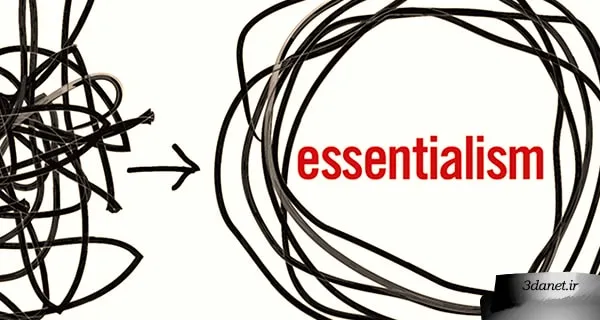
A Note. In recent years, in some of my articles in the field of religious intellectualism, by borrowing the concept of “family resemblance”[1] from Wittgenstein’s philosophy and highlighting nominalist doctrines, I have endeavored to critique the essentialist conception of religion.[2] In the meantime, particularly in recent months, I have been faced with numerous questions about the limits and boundaries of my nominalist position and the reasons why religion has no essence.[3] Some critics of recent religious intellectualists have also, in their works, employed categories such as “the principle of religion” and “religion itself,” which have an essentialist resonance. In this essay, I will attempt, by elucidating the concepts of “essentialism”[4], “nominalism”[5] and its types, as well as highlighting the concept of “historicity,” to articulate my conception of the relationship between religion and essentialism, and to argue that “religion,” in two senses, has no essence or principle.
According to a classification in the philosophy of language, two types of essentialism can be distinguished from one another: “ontological essentialism”[6] and “semantic essentialism.”[7] Ontological essentialism entails the doctrine that a common component or components can be found among all instances of concepts such as tree, mountain, sea, waterfall, river, chair, table, …; components that can be sought and enumerated in the surrounding world. The linguistic formulation of such a reading of essentialism, for example regarding the concept of “table,” could be as follows:
“If phenomenon A possesses characteristics C1, C2, C3…, Cn, then A is a table.”
Suppose C1: having four legs, C2: being flat, and C3: being rectangular. The implication of this statement is that, from the perspective of ontological essentialism, the three aforementioned characteristics are the common denominator of all tables and can be found among all tables. In other words, “table” is a universal concept, possessing several components and constituents that are actualized in the surrounding world. Furthermore, “semantic essentialism” entails that the constitution of meaningfulness and the process of signification depend upon considering and taking into account universal concepts.[8] In other words, when a language user says “tree,” the conveyance of meaning and linguistic communication with other language users occurs through the universal concept of “tree.” In fact, the meaningfulness of the word “tree” for other language users is realized and manifested through the universal concept of “tree.”[9]
On the other hand, nominalism is also divided into two types: “ontological nominalism”[10] and “semantic nominalism.”[11] Ontological nominalism denies the existence of universals and does not grant determination and subsistence to general concepts in the external world; general concepts which, according to the narrative of “ontological essentialism,” include the common components among the multiple instances of concepts and can be formulated in linguistic patterns, such as those mentioned. Furthermore, semantic nominalism entails that meaningfulness and the conveyance of meaning do not depend on the reference of general concepts to their instances in the external world; rather, other matters, such as “seeing resemblances”[12] and “engaging in practice”[13] are central in this regard. The later Wittgenstein is among the philosophers who, in his epoch-making work Philosophical Investigations,[14] defended “ontological nominalism” and “semantic nominalism.”[15] By constructing the concept of “family resemblance,”[16] he criticized the ontological essentialism that has an Aristotelian lineage, as well as semantic essentialism. In his view, by relying on ordinary linguistic intuitions,[17] one can argue that at least concerning matters and categories such as games, war, democracy, ethics… which are among social constructs[18] and whose constitution depends on the presence of human society and language users, we do not have anything called general concepts whose components and constituents are all determinate and pre-existing. Instead, we encounter provisional[19] and indeterminate concepts whose components can, in principle, be reduced or increased. In other words, in this narrative, ontological nominalism, which is in tandem with “emerging and manifesting concepts,”[20] replaces ontological essentialism, which is intertwined with “pre-existing concepts.”[21][22] The famous example in Philosophical Investigations on this matter is the concept of “game.” By mentioning various games in paragraphs 66-71, Wittgenstein aims to show that although no single common component or components[23] can be found among all different games such as: football, ice hockey, basketball, chess, water polo, baseball, wrestling, badminton, tic-tac-toe…; nevertheless, language users employ this word meaningfully in various contexts and easily make their intentions clear with it. The implication of this statement is that the conveyance of the meaning of the concept “game” does not depend on resorting to a pre-existing concept; a pre-existing concept that constitutes “semantic essentialism.” In contrast, the concept of “game” is among the emerging and manifesting concepts, meaning that to the extent that language users engage in “practice” and use the word game in various contexts, its components increasingly emerge and appear. In other words, the list of components constituting the concept of “game,” unlike pre-existing concepts, is open and open-ended.[24] [25]
John Hick, borrowing the concept of "family resemblance" from Wittgenstein's philosophy, argues that there is no such thing as a common component or components among historically institutionalized religions such as Islam, Christianity, Judaism, Buddhism, Hinduism, Taoism...; rather, what is realized are resemblances and differences, resemblances and differences of the kind found among members of a family. The implication of this statement is that we are faced with religions, religions in which one cannot seek out a single component or a set of components.[26] For instance, components such as belief in an anthropomorphic God, belief in the Day of Judgment, the concept of prophethood... are not common to all religions; for some religions possess these components, while others do not. Among the Abrahamic religions (Islam, Christianity, and Judaism), belief in an anthropomorphic God and belief in the Day of Judgment are common, whereas these matters cannot be sought out in Eastern religions. Likewise, among the Abrahamic religions, Islam and Judaism's account of the concept of "prophethood" differs from Orthodox Christianity's understanding of this category;[27] similarly, the concept of "Nirvana," which has a Buddhist lineage, is not found in the Abrahamic religions, and so on. At the same time, the failure to find a common component or components among them, and conversely seeing, highlighting, and recognizing the variegation, diversity, and plurality, has not prevented Islam, Christianity, Buddhism, Hinduism, Zoroastrianism... from being called and considered a "religion." Hick's position on religion can be considered an instance of "semantic nominalism"; for according to him, the language user, without considering or having in mind the universal concept of "religion," can employ this word in various contexts and determine its meaning. The corollary of this statement is that Hick is not sympathetic to the position of "semantic essentialism," at least regarding concepts such as religion, and deems it unjustified.
As I understand it, the position of "semantic nominalism" regarding concepts such as religion is justified and adoptable. The corollary of this statement is that one cannot seek out the universal concept of religion and the "essence of religion," enumerate its components, and formulate them. One of the meanings of religion's "lack of essence," which I have emphasized in some of my writings, is precisely this: borrowing the position of semantic nominalism and setting aside the universal concept of "religion."
Moreover, as I have stated in response to Mohammad Reza Nikfar in the article "Religious New-Thinking, Narrative, and Historicity"[28], by borrowing the concepts of "historicity"[29] and "narrative"[30], and considering the constraints that were at work in the emergence of the sacred text and have sedimented into the sacred text (religion)—matters that were contingent and could in principle have been otherwise—another meaning of religion's "lack of essence" can be considered and formulated.
To clarify this matter, it is well to distinguish two meanings of historicity from one another. One meaning of historicity is attending to the evolution and diversity in different understandings of religion and the types and varieties of religiosity that have emerged under the thick Islamic tradition. According to this understanding of historicity, we are faced with a plurality irreducible to unity, and over the long history of Islam, across fourteen centuries, we have encountered a colorful spectrum of readings of religion and styles of religiosity: jurisprudential Islam, mystical Islam, philosophical Islam, traditional Islam[31], traditionalist Islam[32], fundamentalist Islam[33], reformist Islam[34].... This understanding of historicity has a descriptive character and is concerned with explaining the transformations that have occurred in the course of history; examining each of these readings and narratives and evaluating the truth or falsity of their claims and arguments has a normative[35] and prescriptive character and is of a different kind; at the same time, it does not conflict with the descriptive discussion.
The second meaning of historicity and narrative is oriented toward the context and time of the emergence of the sacred text and the inevitable matters that have sedimented into its formation; categories such as the structure of the Arabic language, the science of the era, the conceptions, assents, and generally accepted notions of the Prophet's audience, and what, broadly speaking, in Abdolkarim Soroush's terms, counts among the "accidentals of religion."[36] By placing the sacred text (the Quran) within its subtext[37] and availing oneself of the method of intertextual study[38] and through inquiry and reflection upon other texts written in the same historical period, one can enumerate and list the accidental matters that have sedimented into the formation of the sacred text.[39] "Religion's lack of an essence" is concomitant with the second meaning of historicity and narrative, and places emphasis on the categories and expedient themes that have sedimented into the sacred text and played a significant role in its emergence.[40]
Based on what has been said, according to the narrative of the author of these lines, religion has no essence or core in two senses. The first meaning pertains to the critique of the general concept of "religion." By borrowing the concept of "family resemblance" and deeming "semantic nominalism" justified, and setting aside "semantic essentialism," one can explain religion's lack of an essence and core. Furthermore, turning one's attention to the context and time of the emergence of the sacred text and taking into account categories that are of the accidental type and have sedimented into its formation constitutes the second meaning of religion's lack of an essence.
[1] family resemblance
[2] For example, see the articles "Religious Intellectualism and Metallic Slop?!", "Islam and Violence", "Religious New-Thinking, the Sacred Text and Violence", as well as the interview "Malekian, Essentialism and the Non-Historical Attitude" at the following links:
http://www.begin.soroushdabagh.com/pdf/526.pdf
http://www.begin.soroushdabagh.com/pdf/413.pdf
http://www.begin.soroushdabagh.com/pdf/163.pdf
http://www.begin.soroushdabagh.com/pdf/341.pdf
[3] In addition to the fine and thought-provoking epistemological questions I have received on this matter, one cleric, who has no proficiency in the field of Western philosophy, referring to one of the author's recent articles, described and dismissed the raising of such discussions and issues as being of the sort of "frivolous talk."
[4] essentialism
[5] nominalism
[6] ontological essentialism
[7] semantic essentialism
[8] Where the realm of these universal concepts lies is beyond the scope of this article. In the history of philosophy, Plato, by proposing the concept of the "World of Forms," spoke of a container that is the abode of universal concepts such as "goodness," "love," "beauty"... In Aristotle's view, the abode of universal concepts is the mind, concepts constructed from the commonalities among the instances of concepts such as "tree," "water," "mountain"... For further acquaintance with ontological essentialism and semantic essentialism from the perspectives of Plato and Aristotle, see, for example:
Étienne Gilson, Being and Some Philosophers, translated by Seyyed Hamid Talebzadeh, Tehran, Hekmat, 1385, chapters 2 and 3. Also, see: Martha Nussbaum, Aristotle, translated by Ezzatollah Fooladvand, Tehran, Tarh-e No, 1374, chapters 4 and 5.
[9] In addition to the philosophers of ancient Greece, among modern philosophers, John Locke believed in "semantic essentialism."
By proposing the concept of "resemblance," he spoke of the similarity between general concepts and their mental images with their referents and instances as the central matter in the genesis of meaningfulness; Locke's view of how the meanings of concepts emerge is aligned with "semantic essentialism."
[10] ontological nominalism
[11] semantic nominalism
[12] seeing the similarities
[13] being engaged in practice
[14] Philosophical Investigations
[15] Wittgenstein, in Philosophical Investigations, did not use the terms "ontological nominalism" and "semantic nominalism"; nevertheless, by considering the constituents of these concepts, as discussed, Wittgenstein's remarks can be formulated and explicated under the concepts of "ontological nominalism" and "semantic nominalism."
[16] family resemblance
[17] linguistic intuitions
[18] socially constructed
[19] tentative
[20] emerging concepts
[21] pre-existing concepts
[22] For an elaboration on the distinction between "pre-existing concepts" and "emerging concepts," see:
Michael Luntley (2002) “ Patterns, Particularism and Seeing the Similarity ”, Philosophical Papers, 31(3), pp. 271-291.
[23] common features
[24] open-ended
[25] For a better understanding of the author's view of the concepts of "game" and "practice" in Wittgenstein's philosophy, see:
"Games and Meanings," Silence and Meaning: Essays on Wittgenstein's Philosophy, Tehran, Serat, 1393, pages 45-62. Also, "Therapy, Practice, and Normativity," Language and the Image of the World: Topics in Wittgenstein's Philosophy, Tehran, Ney, 1393, pages 52-64.
[26] For an elaboration of John Hick's view on this matter, see:
John Hick, Philosophy of Religion, translated by Behzad Saleki, Tehran, 1371
[27] Although Islam, Christianity, and Judaism are counted among the Abrahamic religions, the concept of “prophethood” in Islam and Judaism differs from that in Christianity. In Islam and Judaism, the human and earthly dimension of prophethood takes precedence, and the prophet is a human being sent by God. Whether we are sympathetic to the traditional conception of revelation, or to the conception of later religious modernists articulated under the theories of “the expansion of prophetic experience,” “the prophetic reading of the world,” and “prophetic dreams,” in any case, in all these theories, the prophet is a human being like other human beings, with the difference that he receives revelation. However, for most Christians, Jesus Christ has a divine aspect and is the Son of God.
[28] See:
http://www.begin.soroushdabagh.com/pdf/533.pdf
[29] historicity
[30] narration
[31] traditional Islam
[32] Traditionalist Islam
[33] fundamentalist Islam
[34] reformistic Islam
[35] normative
[36] See the article “The Essential and the Accidental in Religions,” The Expansion of Prophetic Experience, Tehran, Serat, 1999.
In this article, Abdolkarim Soroush speaks of the essentials of religion not in the Aristotelian sense of the word, but as the “essential intentions of the Lawgiver”; as opposed to the “accidental intentions of the Lawgiver,” which are transient and temporary and could, in principle, have been otherwise.
[37] context
[38]inter-textual
[39] Spinoza believed that the mechanism for understanding and interpreting the sacred text is, in principle, no different from how non-sacred texts are interpreted, and that these two categories follow similar rules; in my view, Spinoza’s position is justified and the arguments he presents on this matter are convincing. In the contemporary era, Dariush Ashouri has endeavored, with the aid of the “intertextual study” method, to place the text of Hafez’s Divan in the “subtext” and, by invoking the themes of two important classical mystical works in the Persian language, “Mersad al-Ebad” and “Kashf al-Asrar,” to understand the context and era of the composition of Hafez’s Divan and the manner of its “narration.” In the same vein, by applying the “intertextual study” method, reflecting on the context and era of the emergence of other sacred texts, and taking the doctrine of “historicity” into consideration, one can ascertain and enumerate the accidental aspects of the sacred text. For more on Spinoza’s view on the method of interpreting the sacred text, as well as the manner of the intertextual study of Hafez’s Divan as narrated by Ashouri, see:
Michael Rocca ( 2008) Spinoza ( US: Routledge), chapter 6.
Dariush Ashouri, Hafez and Rendi in Hafez’s Poetry, Tehran, Markaz, 2000.
[40] In some of his works, Mojtahed Shabestari has emphasized borrowing the “historical phenomenology” method for a better understanding of the context and era of the formation of the sacred text and religious tradition. Shabestari’s proposed method is aligned with the second meaning of “historicity” and “historicality.” For more on Shabestari’s view on this matter, see the essays “Three Kinds of Reading of Religious Tradition in the Age of Modernity,” “What Kind of Reading is a Humanistic Reading of Religion?” and “Historical Theology and Faith,” in:
Mohammad Mojtahed Shabestari, Reflections on a Humanistic Reading of Religion, Tehran, Tarh-e No, 2004.
.
.
PDF file of the article by Soroush Dabbagh titled The Essence of Religion
.
.
The Essence of Religion
Soroush Dabbagh
.


Discussion0 comments
No comments yet; let yours be the first voice.