Religion
Do Not Do Now What You Have Done Before! Soroush Dabbagh
Islam has no essence; the diverse interpretations of Muslims share only a family resemblance. Critiquing essentialism, Soroush Dabbagh defends a reformist, tolerance-oriented reading, emphasizes minority rights, and delineates the boundary between criticizing and insulting the sacred.
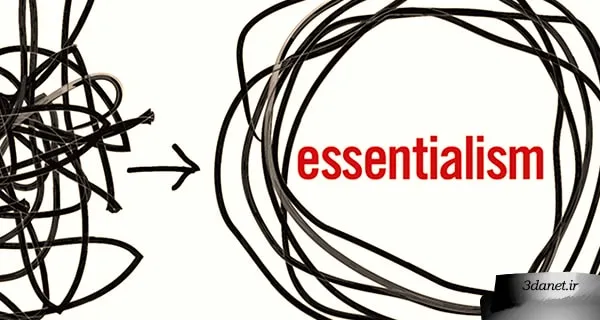
We have often heard that “Islam itself has no flaw; whatever flaw there is comes from our being Muslims.” Some, out of religious zeal, say that the “essence” of Islam is good and that the problems seen in a Muslim society such as Iran are due solely to Muslims’ disregard for and violation of Islamic precepts. On the other hand, some non-believers in religion also hold that Islam possesses an essence and that, apart from that essence, one cannot speak of different readings of Islam and various modes of religiosity, elevating one and dismissing the others. According to their view, in the present day, the official clergy is the only “real” representative of Islam, and others who seek to offer unofficial readings of Islam are beating a dead horse and getting nowhere. In my opinion, the statements of both aforementioned groups are unjustified; to offer a justified, rationally acceptable reading of Islam in the present time, there is no need to presuppose an essence for Islam. On the other hand, critics of religion also mistakenly seek an essence in Islam and set out to explicate and explain it. As I understand it, Islam has no essence, and from a semantic and epistemological perspective, and by keeping in view the diverse modes of life of Muslims, one can speak of an irreducible plurality in the realm of the Islamic religion; by criticizing the essentialist view, a ground is prepared for recognizing the plurality of readings of Islam. By recognizing this plurality, religious intellectuals defend a reformist reading of Islam and deem other readings unjustified—a reformist reading that is tolerance-oriented and defends the fundamental rights of religious minorities and non-believers in a religious society. In this essay, I attempt, by presenting arguments in critique of the essentialist reading of Islam, to defend the reformist reading of Islam and, by distinguishing between “criticism” and “insult,” to explain the moral wrongness of insulting religious sanctities.
In contemporary philosophy of language, those who subscribe to “semantic essentialism”1 believe that “natural kinds”2 such as water, gold, copper… possess an unchangeable necessary essence, and that all the constitutive components of that essence—for instance, all the components that make gold what it is—can be indicated and enumerated. In other words, when we use the concept of gold in language and determine its reference, the meaning of this word corresponds to all the constitutive components of this concept. In contrast, those who are nominalists3 and, in Putnam’s phrase, believe in “linguistic pluralism,”4 hold that ascertaining the meanings of words depends on referring to the multiple “internal properties”5 of instances, not on a pre-determined and specified essence; for such an essence does not exist and should not be sought. It seems to me that one can sympathize with the nominalist position, at least concerning concepts such as liberalism, democracy, secularism, mysticism, religion, ethics, games…; concepts that, unlike concepts such as tree, mountain, river, sea…, arise within human society and whose coherence depends on the coherence of human beings and the interaction of language users with one another in a human community. The components of such concepts cannot be enumerated a priori and prior to experience; rather, the list of their constitutive components can only be obtained a posteriori, by referring to experience—a list that is open and can, in principle, be added to or subtracted from. A corollary of this view is that instead of “secularism,” “liberalism,” “mysticism,” and “game,” we would have “secularisms,” “liberalisms,” “mysticisms,” and “games,” and we would be unable to provide a comprehensive and exhaustive list of all the constitutive components of these concepts. In the same vein, the concept of “religion” does not have an essence in the Aristotelian sense of the word, and no a priori and complete list of all the various religion-making components is available; rather, the various components and constituents that make up religion must be obtained and enumerated in an a posteriori, empirical, and historical manner. If this semantic distinction is justified, a corollary of this view is that one cannot speak of the essence of “religion,” enumerate its unchangeable essential components, and claim that the essence of religion has been grasped. Instead, using the word “religion” and determining its reference corresponds to the constitutive components of the concept of “religion” that have emerged so far—components that have been ascertained historically and empirically, not a priori and non-empirically. For example, many have said that “monotheism” is the most fundamental concept of the religion of Islam; as if one could agree upon this component as an essential component of “Islam.” But a brief review of the history of Islamic civilization indicates how vastly different the understanding and conception of philosophers, mystics, jurists, and theologians have been regarding this fundamental concept, even though they all considered themselves Muslims. The philosophical God of Ibn Sina, based on the “proof of necessity and contingency” and bearing an Aristotelian resonance, differs greatly from the mystical God of Ibn Arabi and Rumi, which possesses a unity of the “true, real unity” kind, is “simple” and “formless,” and whose numerous determinations and manifestations have filled the world. Likewise, the juristic God of Ayatollah Borujerdi and Ayatollah Khoei, a commanding and forbidding God, differs from the God of the mystics and philosophers. As can be seen, different and multiple conceptions and understandings of the most fundamental Islamic doctrine are observed among various schools, and the meaning they intend by the doctrine of monotheism differs from one another. In other words, no common essence or substance is found among the various conceptions of the doctrine of monotheism among Muslims; rather, what is observed is, in Wittgenstein’s phrase, a kind of “family resemblance”6—a resemblance of the kind seen among the members of a family. In a family, all members do not necessarily have the same eye color and eyebrow shape, and a single characteristic is not identical and common among all members; for the eye color of member A may be like the eye color of member B, but the eye color of both may differ from the eye color of member C; yet all these members belong to the same family without a single common characteristic necessarily being found among all family members. However, this does not prevent all these members from being considered as belonging to one family. Moreover, by considering the totality of resemblances and non-resemblances observed among the members of a family, this entire family can be distinguished from another family.7
On the other hand, as we know, modern epistemology has taken shape with an emphasis on the centrality of the subject. In his book Critique of Pure Reason, Kant unveils a Copernican revolution in epistemology; a revolution based on the centrality and involvement of the subject in knowing the surrounding world; a subject that actively (not passively) sets about understanding the world around it. It is clear that the entire diverse epistemic and educational background of the various human beings who approach religious texts (here, the Qur'an and the Prophetic tradition) and sincerely and diligently seek a justified and reasonable understanding of them naturally flows into producing a sincere, coherent, and knowledge-yielding reading of the text. The implication of this statement is that in reading a religious text, we are faced with an irreducible plurality, because the epistemic and educational backgrounds of the readers of the text differ markedly from one another. When such subjects actively set about understanding the Book and the Tradition, multiple and diverse epistemic products will emerge and appear. Hence, "traditional Islam," "fundamentalist Islam," and "reformist Islam" have emerged naturally, and not as a result of conspiracy or prior planning by anyone in Muslim society. Pluralism in religious understanding must be recognized; a pluralism that affirms different readings of religion and does not entertain the impossible desire to produce a single reading of Islam or to reach the essence of Islam. Of course, the implication of this statement is not that all different readings of religion have the same epistemic value. In other words, explaining the fact that we are faced with a plurality of readings of religion has a "descriptive" character, not a "prescriptive" one. After recognizing this actual plurality, to accept any reading, one "must" examine the arguments and evidence of each reading and be concerned with its epistemic evaluation. In fact, the claim here has both a descriptive and a prescriptive character. Recognizing different readings of religion has a descriptive character; examining the arguments and evidence, evaluating them epistemically, deeming one reading justified, and setting aside other readings has a prescriptive character.
Generally, religious intellectuals recognize various readings of religion, while deeming traditional, traditionalist, and fundamentalist readings of Islam unjustified; in contrast, they elevate and endorse the modernist reading. By adopting the criterion and touchstone of “ijtihad in principles,” they separate the eternal moral and spiritual teachings of Islam from the context in which these teachings developed; keeping in view the epistemic achievements of the modern world, they offer a reading of religion that preserves the sanctity of ethics and creates space and a platform for the realization of spiritual and inner experiences in the surrounding world. For instance, as is understood from the verse “Indeed, Allah commands justice, good conduct, and giving to relatives and forbids immorality, bad conduct, and oppression. He admonishes you that perhaps you will be reminded”8, God speaks with regard to the understanding and perception of the addressees of revelation concerning concepts such as “justice,” “good conduct,” “immorality,” and “bad conduct,” and the address and communication took place with regard to the customary conception, perception, and instances of these concepts. Essentially, the addressees of the revealed word did not have an understanding of transhistorical justice and could not have been the addressees of such a message. According to this view, the revered Prophet of Islam, in the social and political sphere, called the addressees from the tyranny and oppression of the time to the justice of the time, not to transhistorical justice. “Justice” here must be considered an important moral concept; this statement also holds true for other moral concepts such as “not harming others,” “kindness,” “faithfulness,” “chastity”... According to the view of religious intellectuals, the general social rulings of Islam fall under the umbrella of justice and are bound by moral constraints. At the same time, since human beings’ conception and perception of the boundaries and limits of moral concepts such as “justice,” “good conduct,” “harming others,” “faithfulness”... are temporally and spatially bound and can, in principle, change from one era to another; therefore, safeguarding the message entrusted within the prophetic tradition entails weighing social rulings on the scales of ethics and reinterpreting them; an ethics that derives its conceptions and affirmations from the custom of the time and the consensus of the wise. Hence, being open to the epistemic achievements of the modern world and organizing one’s set of beliefs around them helps a person, in the current context and time, while safeguarding the spirit governing Quranic teachings, to offer a justified reading of Islam. According to the opinion of most religious intellectuals, traditional and fundamentalist readings of Islam are unjustified and ineffective; because they are indifferent to the epistemic achievements of the modern world, and for interpreting the text on today’s horizon, they do not pay attention to the context in which the sacred text was formed, and they produce an unjustified, mechanical reading that is incongruent with the spirit of the religious text.
The reformist reading of Islam is tolerance-oriented and, by safeguarding and accepting human rights doctrines, recognizes the fundamental rights of religious minorities, disbelievers, and non-believers in a religious society and strongly condemns any violation of these rights from a moral and legal perspective; moreover, it is open to the critique of religion by non-believers and critics and strives to provide a platform for the expression of their views in a religious society. At the same time, proponents of this reading of Islam, such as the author of these lines, emphasize the difference between “critique” and “insult,” and while deeming the prevalence of the former permissible in a religious society and defending it; they consider the latter, as I have previously stated9, impermissible, immoral, and entailing the degradation of “the other.” It is thought-provoking that some expatriate non-believers, instead of warming the market of critiquing religious doctrines and thereby both presenting their claims and arguments before the eyes of the faithful and helping to cleanse religious thought in Iranian society; defend insulting religious doctrines and, by disparaging religious doctrines and the faithful, emphatically state that since the boundary between “critique” and “insult” is not very clear, therefore the faithful must raise their threshold of tolerance and come to terms with this matter. Consider the following quote:
“... nonsense is nonsense in all circumstances, and from within sacred nonsense, violence emerges. And this violence is indigenous and homegrown violence... but our intention is enlightenment, not to provoke the obstinacy of superstitious people, especially those who, in terms of civilizational awareness, as Immanuel Kant put it, still live in ‘immaturity’”10.
It is astonishing that someone, by calling religious teachings “sacred nonsense” and labeling the faithful as “superstitious” and “infantile,” intends to enlighten; he is sawing off the very branch he sits on. Presumably, the author of the above lines expects that by adopting such a hostile and wrathful tone, the religious will hear his words with acceptance, be guided, and emerge from their infancy! I wonder why some become so impatient when addressing the religious and abandon courtesy and fairness. Leaving aside devout Iranians, are contemporary Christian philosophers such as Robert Audi, William Alston, Alvin Plantinga, Roger Trigg, Richard Swinburne, and John Hick, who have been teaching and researching at the world’s most prestigious academic institutions in recent decades, also infantile and superstitious?! Why is one speaking so unfairly and rancorously? Unless it is to be said that anyone who thinks differently from us, is not of our tribe, and in some way believes in a sacred realm and a transcendent matter, is an infantile and superstitious human being; which is a statement born of arrogance and narcissism and carries no weight on the scales of morality. Let us ask, if a religious person were to address a non-believer in the same manner and with this same literature, belittling them, would it be permissible? Does someone who addresses the religious in this way not produce violence? If the harassment and violation of the fundamental rights of non-believers and infidels is morally impermissible, as indeed it is; then this manner of confronting the beliefs of the faithful is also unethical, contributes to the institutionalization of violence, and unties none of our tangled knots. Where will we arrive by employing this hostile literature, and which peak and horizon will we conquer? If some have criticisms and objections to what has occurred under religious rule in recent decades and cannot tolerate the government’s treatment of citizens, why do they belittle the religious, call them infantile and superstitious, and defend the freedom to insult? Why such haste?
If the boundary between “criticism” and “insult” is not clear; firstly, we are morally obliged to refrain from expressing words and performing actions that are considered insulting from the perspective of the “ideal observer”; not to give free rein from that side and invite individuals to desensitization, so that insulting and critical words and actions become intermingled and distinguishing between them becomes impossible. By way of analogy, if someone says something that entails an insult to your father, they have committed an immoral act; at the same time, if this same person speaks sarcastically and with a belittling tone about your father in a gathering, what reaction do you show, or should you show, to them? Do you say, because the boundary between “insult” and “criticism” is ambiguous, they should continue this behavior, or do you protest and ask them to change their tone? If we look from the perspective of the ideal observer, you should ask this person to cease their behavior and adopt another way of speaking; otherwise, your silence would be immoral. So, even assuming that the boundary between criticism and insult is not clear, which in the author’s view it is, this does not grant moral license to non-believers and critics to move within this boundary and utter and perform any word and action; just as the religious should also not engage in belittling the beliefs of non-believers and insulting infidels.
Secondly, the linguistic intuitions11 of us Persian speakers tell us that the concept of "criticism" entails a certain meaning and possesses several instances; the same holds true for the concept of "insult." Now, if in the opinion of some the boundary between "criticism" and "insult" is not clear, the implication of this statement is that the semantic limits and boundaries of the concept of "insult" are not specified, and every insult must be considered criticism. In other words, the concept of "insult" has no definite range of instances and is a concept without referents. But this conclusion contradicts our linguistic intuitions, for any Persian speaker can name certain utterances and actions that are instances of insulting speech and behavior, yet are not instances of criticism; and conversely, certain utterances and actions that are instances of criticism and are not considered insults. In the terminology of logicians, one who makes such a claim commits the fallacy of the "slippery slope argument,"12 for they begin with the concept of "insult" and its range of instances, then proceed gradually, treating anything that a group considers an instance of an insulting matter as non-insulting and setting it aside, until ultimately nothing remains of the insulting matter. Whereas our linguistic intuitions tell us that actions and utterances in the human world can be deemed insulting, referred to in language, and spoken about; just as utterances and actions can be considered critical and pointed to in natural language.
Thirdly, it is a cause for regret that individuals who have lived abroad for years and experienced the free atmosphere there defend the permissibility of insulting sanctities; a statement whose logical corollary is the permissibility of disparaging the leaders of various religions and denominations. If one can attain salvation by insulting the spiritual leaders of a people, then it is necessarily permissible for Shiites to disparage and mock the leaders of the Sunnis, and in the same vein, Sunni Muslims to engage in insulting the leaders of the Shiites; for Christians to ridicule the beliefs of Jews, and so forth. Presumably, if we behave in this manner, our cultural and religious situation will become far better than before, and the culture of tolerance will become institutionalized among us! These statements are made either out of negligence and an incorrect understanding of the current situation of Iranian society, or out of irresponsibility and carelessness, which is harmful in either case.
Whether this group likes it or not, whether they acknowledge it or not; the overwhelming majority of today's inhabitants of the land of Iran are Muslims, believe in the religion of Islam and the Shia denomination, and are genuinely offended by the disparagement of the leaders of this faith. If there is a path to liberation, it consists of the refinement and critical re-reading of the thick religious tradition that has been present in our collective memory for centuries and with which we live. Insulting the sanctities of a great many Iranians is neither morally permissible, nor does it assist us on the difficult path of refining our religious tradition; rather, it is a diversion and unwittingly serves those who believe in and propagate a non-tolerant reading of Islam. Out of sincerity, concern, and humanity, religious intellectuals, by proposing and elaborating a reformist and compassionate reading of Islam, have been engaged for years in the critical re-reading of the religious tradition and have created an influential discourse in this field, and on this path, like other political and cultural activists of this land, have endured many hardships. If we are concerned with reforming the religion, culture, and politics of the people of Iran, this important goal is certainly not achieved by insulting the beliefs of a great many Iranians and deeming it permissible. Moreover, blurring the boundary between "criticism" and "insult," and inviting the faithful to listen, tolerate, and remain silent in the face of insults, instead of distinguishing between the two categories of "criticism" and "insult," fueling the fire of criticism, and setting aside insult, is to step onto a crooked path that leads nowhere:
"My words were bright, like a patch of grass
I told them:
A sun is at your doorstep
Which, if you open the door, will shine upon your conduct."13
.
.
Footnotes
1 semantic essentialism
2 natural kinds
3 nominalists
4 linguistic pluralism
5 Intrinsic properties
6 family resemblance
7 For more on the idea of "family resemblance" in Wittgenstein's philosophy, see: Soroush Dabbagh, "Games and Meanings," Silence and Meaning: Essays on Wittgenstein's Philosophy, Tehran, Serat, 2008, second edition, pp. 47-62
8 Surah An-Nahl, verse 90.
9 See: Soroush Dabbagh, "This Is the Opponent, O Heart, Lest You Measure the Wind," BBC Persian website, July 2012
10 Abdi Kalantari, "Is Insult Permissible?," BBC Persian website, July 2012
11 linguistic intuitions
12 slippery slope argument
13 Sohrab Sepehri, "The Surah of Spectacle," The Green Volume, Eight Books, Tehran, Tahouri,
.
.
Do Not Do Now What You Have Done Before! Soroush Dabbagh
Author: Soroush Dabbagh
.
.


Discussion2 comments
تنها پاراگراف مستدل و سخن درستی که یافتم این پاراگراف بود که نمی دانم از کی هست : «.. یاوه در همه حال یاوه است و از درون یاوه های مقدس خشونت بیرون می آید. و این خشونت، خشونت بومی و خانه زاد است…اما قصد ما روشنگری است نه اینکه لج آدمهای خرافی را در بیاوریم، بویژه کسانی که هنوز از لحاظ اگاهی تمدنی به قول امانوئل کانت، در ” صغارت” به سر می برند» متاسفانه جناب دباغ این پاراگراف را توهین تلقی کرده اند در حالی که واقعا روشنگرانه است یاوه های مقدسی که داعش و روحانیت تند رو دارد از بطن آن خشونت وحشیانه ای را استخراج می نماید را من کجای دل اسلام بگذارم !!! این پاراگراف توهین نیست بلکه واقعیتی سخت دلخراش است که میلیونها قربانی در ایران و سوریه و یمن و عراق تا به امروز داشته است
كلام اقاي محمد عزيز در كنار هم قرار دادن برخي ديدگاههاي روحانيت/ كه البته با نظرات (احتمالا" سياست زده )ايشان هماهنگ نيست/. با داعش، خود مصداقي از خشونت بي رحمانه نيست؟ غالبا علائق سياسي مانند هر كشش ديگري مي تواند ما را در درك و فهم درست ديدگاههاي مخالفين عاجز سازد لذا در بسياري موارد با پنداري خود ساخته در باره موضع ديگران به جدال مي نشينيم سربلند باشيد