Religion
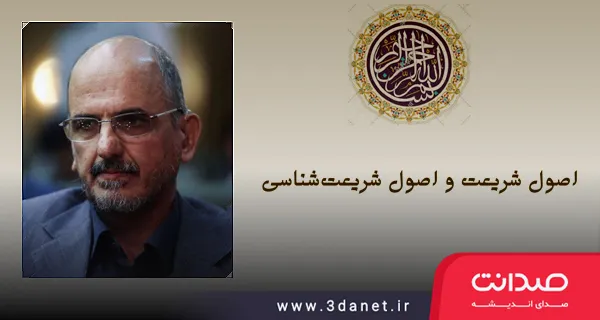
Abolghasem Fanai's Article 'Naturalised Theology, Minimal Metaphysics and Maximal Physics: A Critical Examination of Abdolkarim Soroush's Religious Studies'
Abolghasem Fanai examines Abdolkarim Soroush's views on religious studies and finds his attempt to naturalize theology unjustified; this critique does not deny the necessity of naturalizing theology, but deems Soroush's maximalist reading unacceptable.
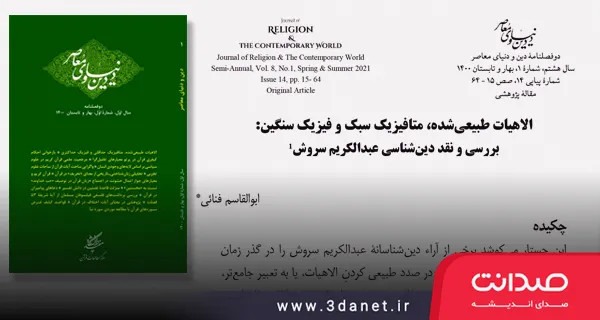
Naturalised Theology, Minimal Metaphysics and Maximal Physics:
A Critical Examination of Abdolkarim Soroush's Religious Studies[1]
Abolghasem Fanai
This essay attempts to examine some of Abdolkarim Soroush's views in religious studies over time and to show that he seeks to naturalise theology, or in a more comprehensive sense, to naturalise religion, religious studies, and religiosity, in an unjustified and indefensible manner. We begin by defining the naturalisation of theology and dividing it into justified and unjustified types; then, by reviewing Soroush's views, we show, firstly, how such a characteristic can in principle be attributed to these views, and secondly, we will argue in favour of the claim that Soroush's naturalised theology is both unjustified and unacceptable, and does not fulfil his aims in naturalising theology. However, the incorrectness of Soroush's naturalised theology does not mean denying the necessity of naturalising theology, nor does it mean the incorrectness of every reading of naturalised theology; rather, it simply means that his maximalist reading of naturalised theology and his particular method of naturalising theology are unjustified...
.
.
PDF file of this article from server One | Two
Published in: Biannual Journal of Religion and the Contemporary World, Volume 8, Issue 1 - Serial Number 14, Spring and Summer 2021, April 2021, Pages 15-64
.
.
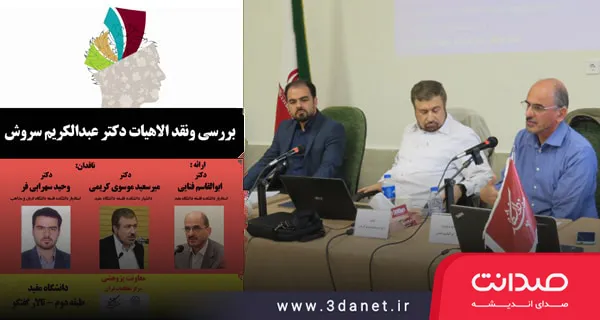
[1]. It has now been about five years since the writing of this article began. The author considers it his duty to thank all the dear ones who have encouraged him during this long period, as well as those who, by reading draft versions of this article and offering their constructive criticisms and suggestions, have added to its precision and richness. Dr. Arash Naraghi, Dr. Javad Heydari, Dr. Mohammad Khoshzaban, Omid Keshmiri, Mohammad Reza Jalaeipour, and Dr. Seyed Amir Hossein Hosseini have helped the author in correcting errors and refining the claims and arguments of this article. My dear friend Mr. Akbar Ganji, by spending considerable time locating some non-written sources, has placed the author in his debt. It goes without saying that the responsibility for any possible errors rests with the author of these lines. One of the previous versions of this article was presented and reviewed by referees in two sessions in April/May 2019 at Mofid University. I sincerely thank the organisers of these sessions, especially my dear friend Dr. Hamed Shivapour, and the respected critics, Dr. Mir Saeed Mousavi Karimi and Dr. Vahid Sohrabifar, who, with their critiques and observations, added depth and richness to the discussion and helped refine the article's claims. I also thank the participants who, with their questions and critiques, provided the opportunity for rethinking, rewriting, and expanding parts of the article, including Dr. Khalil Ghanbari.
.
.

Discussion0 comments
No comments yet; let yours be the first voice.