Art
Ali Varamini in Conversation with Sohrab Daryabandari on The Exquisite Book of Cookery
Sohrab Daryabandari discusses the magnificent cookbook Mostatab-e Ashpazi. Its origins date back to the 1950s, and it was compiled through an unusual method—gathering recipes from various regions and prison notes—though it was not initially well received.
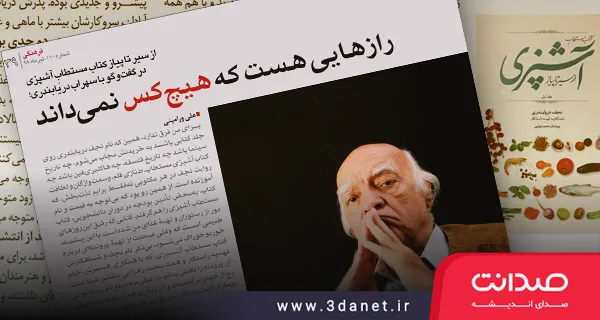
If we were to make a long story out of the genesis of The Exquisite Book of Cookery, its beginning goes back to the 1950s, which, by the time of the book's first printing (2000), makes 50 years. The work of writing and preparing the book perhaps took ten years.
I can say that this book brought my father fame among many people who did not read his other books. In fact, the nature of his fame and its extent changed after the cookbook was published. Of course, it took ten years for this change to be felt. The first time this book was published, it did not have much success with the public. Not even with critics. Some were displeased that Najaf Daryabandari had written a cookbook.
My mother came from a large, old family where, on a quiet day, twenty people would sit at the table, and in short, they had their own particular style and ways. In short, both of them would argue over, say, how ghimeh should be, because each had their own tradition and philosophy.
The notes that were mentioned also existed. Some of these notes dated back to my father's time in prison, because he cooked there as well.
Many tasks were done in parallel. For example, photography, design, illustration, typesetting, and such things proceeded in parallel. This book did not come into being through the usual method of book publishing; it emerged under special circumstances.
People were even invited to cook dishes in our home kitchen, and we would watch to see what their methods were. Sometimes, ingredients or recipes were gathered from different regions of Iran. For instance, someone would say, "My grandmother does this." Another would say, "My aunt lives in such-and-such city and cooks this dish this way."
There were many people who had a Tudeh background, and it seemed as though they were somehow offended by this. In their view, a cookbook was a bourgeois element.
.
.
PDF file of this conversation
.
.
A conversation between Ali Varamini and Sohrab Daryabandari about The Exquisite Book of Cookery;
There are secrets that no one knows
Source: Communication Management Monthly, Issue 110
.
.



Discussion0 comments
No comments yet; let yours be the first voice.