Philosophy
An Espresso with Mostafa Malekian at the Shahr-e Ketab Fereshteh Café
In a conversation about the art of living, Mostafa Malekian reflects on the impact of his father's strictness and inherited traits: from indifference to fame to his mother's optimism and his own melancholic introversion, which as a child drove him to seek refuge in a dark corner.
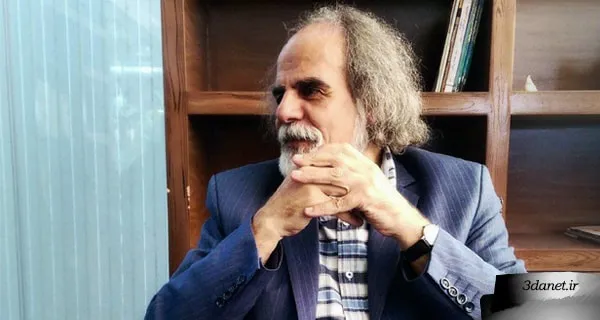
Maryam Shabani / At first glance, his neatness caught my eye; as always, the shirt and shoes he wore were coordinated with his suit, and this time light navy blue was the dominant color. We entered Shahr-e Ketab Fereshteh together. His gaze explored the surroundings of Shahr-e Ketab, but his attention was on me, lest I say something or make a gesture and he miss it. I stepped cautiously; as always, in the presence of Mostafa Malekian, I feel a sense of diffidence. With quiet steps, we entered the Shahr-e Ketab Fereshteh café. We sat at the same table where, a month before, I had sat with Hashem Aghajari and Aghajari was critiquing Malekian. But Mostafa Malekian had not come to answer the criticisms leveled at him lately. He had come to be a guest of “An Espresso.” When he carefully read the café menu front and back, his choice for that gathering was a glass of carrot juice. It was as if he wanted to match his chosen drink with the colors of autumn. I added an apple and sour cherry cake to his order, and for myself, I chose a cup of cappuccino with carrot cake.
An Espresso with Mostafa Malekian at the Shahr-e Ketab Fereshteh Café
Maryam Shabani / At first glance, his neatness caught my eye; as always, the shirt and shoes he wore were coordinated with his suit, and this time light navy blue was the dominant color. We entered Shahr-e Ketab Fereshteh together. His gaze explored the surroundings of Shahr-e Ketab, but his attention was on me, lest I say something or make a gesture and he miss it. I stepped cautiously; as always, in the presence of Mostafa Malekian, I feel a sense of diffidence. With quiet steps, we entered the Shahr-e Ketab Fereshteh café. We sat at the same table where, a month before, I had sat with Hashem Aghajari and Aghajari was critiquing Malekian. But Mostafa Malekian had not come to answer the criticisms leveled at him lately. He had come to be a guest of “An Espresso.” When he carefully read the café menu front and back, his choice for that gathering was a glass of carrot juice. It was as if he wanted to match his chosen drink with the colors of autumn. I added an apple and sour cherry cake to his order, and for myself, I chose a cup of cappuccino with carrot cake.
I told Mostafa Malekian that our conversation today has no pretext, and I want you to speak of your own lived experience, or what he himself calls the “art of living.” That familiar smile, behind which a world of unspoken words seemed hidden, was on his face. I began the discussion without preamble. I delved into the psychoanalysis of the mind, a subject dear to him, and asked, if we go back to your childhood, what do you think from your childhood has remained in you today? He neutralized my speed in asking questions with his long deliberation and silence. He pressed the palms of his two hands together and held them in front of his face, closed his eyes, and as if he went alone into the world of his childhood. When he returned to the Shahr-e Ketab café, he took me with him to the large, old house of his childhood and spoke of his father and mother and the encounter they had with him, the eldest child of the family. He said: “Parents usually watch over the eldest child more and have greater expectations of him, and this causes them to impose a kind of strictness on their child. My parents, and especially my father, were very strict with me during my childhood. Therefore, a kind of seriousness emerged in me because of those strictures. Although these strictures were not bad in some respects, in other respects they left negative effects on me.”
I was about to ask about the negative effects of his parents' strictness in childhood on his personality today when our drinks arrived. Mostafa Malekian exchanged warm, cordial pleasantries with the young man who placed the drinks and cakes on the table, and thanked him heartily—as is always his way, being meticulously courteous. Once everything was on the table, I asked my question, and heard the answer from Mostafa Malekian himself: “Because of my father's strictness, I lost my self-confidence and have always suffered from a lack of self-confidence.” And then, at last, he answered my first question about what he has carried from his past into his present personality: “From my father, I more or less inherited three traits that I consider positive. To what extent these were genetically inherited from my father and to what extent they resulted from his upbringing, I cannot determine.” And then, as always, first classifying and then elaborating, he described the three traits: “The first trait is indifference to the world. My father is utterly indifferent to wealth, power, and fame. I do not wish to claim I am at my father's level, but I have been indifferent to these three social desirables and attractions from childhood until today. The second trait is a love of knowledge solely for the sake of knowledge. My father was always studying, without the slightest motive other than acquiring knowledge and seeking truth. The third trait is my father's simple living, which is unbelievably simple for the twentieth century. I received these three from my father freely, without any ascetic discipline.” Then, whether for the sake of parity or justice, he spoke of three traits inherited from his mother, so that by combining these six traits he could sketch the outline of his personality for me. He said: “One trait is optimism toward others, for my mother was optimistic about everyone, and although I have suffered greatly and incurred much loss in my life from this degree of optimism, it is not something I can rid myself of. The second trait is my mother's diligence. In my entire life, I never saw my mother idle for a second. Even when she appeared to be sitting with the family, she was doing something, cleaning something. The third trait is my obsessive personality, which I got from my mother. I am not saying these six traits have caused me no harm, but on the whole, all six have been beneficial to me.” I had always imagined that Mostafa Malekian, despite the outward extroversion we see in him socially, possesses a particular introversion of his own. I asked him about this, saying I was at a loss as to whether introversion or extroversion better describes him.
He smiled, and with that smile, he drew me into the solitude of his childhood and answered: “In the terms of the ancients, I have a melancholic temperament, and all seven characteristics of melancholic temperaments have been present in me, the greatest of which is this very introversion. I was intensely introverted from childhood. Even in our own home, which was one of the old houses, nearly eight hundred square meters in area with numerous light-filled rooms, I would go to a storeroom in a corner of the house that was dark, light a lamp, and read. And even then! In that storeroom, there was a platform bed, and I would go under that platform bed. Often, when my father came there, he would scold me, asking why I was huddled there.” I asked, why indeed did you go to that dark, out-of-the-way place? And the answer I heard was: “The solitude I achieved there was less likely to be disturbed. Anywhere else in the house, even if I had solitude, there was a possibility of it being violated and disrupted, but no one poked around there. I was very fond of solitude and was not one for the games and friendships of childhood. On the contrary, I enjoyed the company of adults.”
I fell silent for a few moments to give Mostafa Malekian a chance to drink his carrot juice. I knew that as long as I was asking questions and expecting answers, he would not eat or drink anything out of politeness. He took two gulps of his drink and then placed both hands on the table, cradling the glass, as if drawing in its coolness. My mind lingered on his phrase, “a lover of solitude.” This trait seemed to have no place in his life today, which is mostly spent counseling and receiving visitors. I asked about the reason for this contradiction and learned that Mostafa Malekian had sacrificed his love of solitude for three reasons. He told me: “One of the negative traits of my personality is that I lack the power to say no, and this inability to say no stems from a lack of self-confidence that exists within me. Saying no requires high self-confidence. The second reason is my intense emotionality, which means I cannot turn away someone in need empty-handed. And the third reason, which should never be conflated with emotionality, is being ethical. I sometimes feel a moral duty to help someone. As it happens, emotionality and morality often lead you down two different paths and should not be confused. These three have combined, and I am inundated with clients.” I knew that most of these people, or “clients” as Mostafa Malekian put it, came to him to discuss a problem or issue they were facing in life, and I wanted to know how he dealt with the considerable negative energy he receives from hearing about others’ troubles and afflictions. When I asked him, he did not deflect or pretend, for instance, that there was no negative energy involved. He said: “In this state of being inundated with clients, whether I succeed in solving your problem or not, I receive negative energy either way. People come to me to discuss theoretical issues and practical problems, and this naturally gives me negative energy. Because I am an intensely emotional person, this negative energy becomes very destructive. Nevertheless, I give a second-order consent to receiving this negative energy and say that if, through my negative energy, a truth is articulated and a suffering is alleviated, and someone’s pain is lessened, it brings me so much joy that it makes me give second-order consent to receiving this negative energy.” He sat in his chair and spoke with a remarkable calmness, as if he were not talking about the negative energies surrounding him. He had draped one hand over the back of the chair and placed the other on the table, touching his glass. I said I was surprised to hear him say he felt satisfaction in receiving negative energy. He completed his calm demeanor by taking a gulp of his drink and answered me: “I consider this the cost of my two goals in life, and I believe there is no lifestyle without a cost. The greatest cost of a lifestyle based on articulating truth and alleviating suffering—whether sharing a truth with someone in the realm of theory or lessening someone’s pain and suffering in practice—is precisely this negative energy one receives upon understanding what is happening beneath the skin of society, what goes on inside people, and what pains, sufferings, and hardships exist.”
I recalled the severe depression that had afflicted him two or three years ago, sapping his strength for several months and leaving him housebound. I asked, was it the accumulation of these negative energies that drove you to depression? He rejected my presupposition. He said: “I don’t think it can all be attributed to that. I had previously experienced longer, though milder, periods of depression where the cause was exactly what you say, but in the recent period, although people’s pain and suffering were not without influence, they were not the sole cause. I have been subject to bouts of depression since the age of 27.” I said, if it doesn’t bother you, I would like to know the reason for your severe depression three years ago. No change appeared on his face to indicate he disliked my question, but for a moment it crossed my mind that perhaps, for the very reason he had mentioned minutes earlier about his inability to say no, he might feel compelled to answer this question as well. Be that as it may, the deed was done; I had asked my question, and Mostafa Malekian had begun to answer: “I have inner contradictions, conflicts, and struggles with myself that played a large part in this depression. One of the characteristics of melancholic-tempered people is that they are always subject to a kind of guilt feeling that does not necessarily have a religious or denominational hue, but
Those who respond to every criticism in any way hold a presupposition. Namely, that every speaker must always defend their own speech; that is, they harbor a suspicion toward the power of thought and the depth of understanding of their audience. This suspicion is misplaced in many cases. I should not have to act as a bodyguard, always escorting my words lest someone weaken them.
It can arise from a moral error. I have had this feeling, and it has caused me to be in constant inner conflict with myself. I am wrestling with myself, falling, rising, and wrestling again. I engage in a great deal of self-reproach, self-condemnation, and self-blame. If you intend to commit an error, your conscience must somehow have fallen asleep. My problem is that I have neither been able to put my conscience to sleep, nor have I been able to avoid error. When you commit an error and your conscience is also alive and alert, you constantly suffer from a guilty conscience, and this guilty conscience is one of the greatest instances of being in conflict with oneself. I truly have this." As he spoke, he stared at a distant point. I did not follow his gaze, but it seemed fixed on the farthest point visible in the café. I said that it seemed his own psychotherapeutic teachings could not, as much as they should and could, offer him good help to escape a spiritual crisis, and then I asked, isn't finding a solution to depression difficult for you, with this level of psychotherapeutic knowledge? His gaze returned to me. He took a sip of juice, smiled, and said: "Yes, it is difficult. I believe that in many affairs of life, the saying 'the potter drinks from a broken jug' holds true. In other words, you can be a master at others' work but not a master at your own. When the subject and the object become one, the task is not as easy as when the subject is separate from the object. Despite having continuously engaged in psychological and psychotherapeutic studies since my youth, I have never been able to offer myself the help I offer to another." I asked, what specifically is the help you offer to others? I had asked the last part of my question and returned to the beginning of what had crossed my mind, and to clarify my meaning, I said that when your goal is the exposition of truth, you are working on raising awareness and awakening the slumbering conscience. But when someone who is afflicted comes to you, logically, to reduce that person's spiritual crisis, you must try to push their conscience toward sleep, to distance them from the position of an observer regarding their problem so they can forget their pain and suffering. I said you do not do this second thing for yourself, nor are you probably willing to do such a thing for another. I asked, that being the case, in consultations, can you do anything other than offering empathy? The entire time I was asking questions, he had his arms crossed and was listening. When I fell silent, he first corrected the implicit assumption behind my question. He said: "Your question contains an incorrect presupposition, which is that all the people who come to me have a moral problem with themselves. Whereas this is not the case, and some individuals may commit calculative errors in their lives and become afflicted as a result." With surprise, I asked, for example, what help does someone who has gone bankrupt in their economic activities seek from you, and what help can you offer such a person? He had a ready answer for my question: "Every problem has two aspects, objective and subjective. Someone who goes bankrupt or encounters a massive economic problem must both refer to those who can resolve their objective problem and seek out those who have a remedy for their subjective problem. Those who resolve his subjective problem teach him how he can cope with the poverty following bankruptcy. In the consultations I give, I teach the way of reconciliation, or to put it better, the way of accepting an unexpected reality, and of course, it should not cross your mind that I am necessarily successful in this. I tell most of the people who come to me that you must resolve your issue with a psychiatrist or a psychotherapist."
I was watching him, noticing he didn't fidget in his chair at all. He is like a person who has come to terms with himself and passes the time in tranquility. Even the lunchtime clamor of the café couldn't distract his attention. I thought perhaps now was the time to ask Mostafa Malekian an abstract question I had always had in my mind. I voiced what was going through my mind without retouching it and said, in those days when you had severe depression, I always wondered with whom Mostafa Malekian's psychological burden might be lightened through conversation, and now I want to ask you yourself: a conversation with whom—whether living or dead—might help alleviate your spiritual troubles? He thought for a few seconds; he pressed the palms of his hands together, placed his hands vertically under his chin, and thought. When he was done thinking, he said: "All those I will name are unfortunately no longer alive now. I believe that to resolve this kind of problem, one must turn to the likes of Buddha, Lao Tzu, Socrates, Marcus Aurelius, Seneca, Cicero, Francis of Assisi, Spinoza, Pascal, Wittgenstein, Emerson, and Walt Whitman. These are not in our time." After naming these names, he fell silent and then drank the rest of his juice. It was as if he wanted to conceal this regret within himself. Then, before I could ask anything, he placed his right hand under his chin, so that his index finger rested on his lips, and answered me: "I deeply sympathize with this statement by Dr. Shayegan, who says that what today's societies suffer from severely compared to traditional societies is the absence of a group and class of wise human beings. Wise human beings, perhaps the very act of meeting them solves the problem. They might change your entire life with one or two principles they make you understand. These are called the wise, but they can also be called spiritual and moral physicians. The place of these people is empty in our lives today." And he fixed his eyes on me, waiting for the next question. That very look of his, which bore a trace of regret, drew my mind toward one of Mostafa Malekian's constant themes, which considers the goal of human life to be living happily and meaningfully. I said, in your personal life, the meaningful aspect of life is prominent, but what I see is that the aspect of living happily seems absent in your personal life. I said you yourself are a contradiction of your own words; instead of being a happy person with a meaningful life, I know you as a sorrowful person with a life full of meaning. I asked, why aren't you happy? Without hesitation or reflection, he answered me. He said: "Yes, I am not happy, and what's more, if I hadn't become acquainted with the teachings of psychotherapy, I would have been far unhappier." And then he explained the philosophy of this unhappiness to me: "Happiness, whether in the sense of joy or well-being, are two social matters. That is, in an unhappy society, an individual who intends to live joyfully can only live joyfully to a certain extent, and in an unwell society, an individual who intends to live a life of well-being is only successful to a certain extent. It is impossible for an individual to reach the ultimate joy in a society where everyone is unhappy. I believe that both my happiness-joy and my happiness-well-being have a social aspect, so I cannot live joyfully and well." And then, to solidify his point in my mind, he gave an example: "Is it possible for a Kant to emerge in a society where everyone possesses a very weak and decadent culture? It is not possible. It is true that thinkers are sometimes distant from the general public of their society, but that does not mean one can expect any thinker to emerge in any society. In a society where everyone is at an elementary level of knowledge, you cannot have a great philosopher." My mind went to Mostafa Malekian's constant notion and belief, which is precisely prioritizing culture, and I asked him, with this statement and these examples, do you mean to emphasize that you attach more importance to structures? He did not agree. He said: "Here, I attach importance to the other 'individuals' with whom I associate. If you live in a society where all individuals are unhappy, no matter how hard you try, you cannot keep yourself immune from the effects of others' unhappiness."
I invited him for tea or another drink, which he declined with a wave of his hand and a shake of his head. Without preamble, I asked him what, more than anything else in life, causes him suffering. I thought he would mention one or two social reasons, but he turned inward to answer and said: “More than anything, the distance between my own ideals and the realities of my own life causes me suffering. I have always said that two groups of people can be happy to the extent possible in this world. One is those who have lowered the flame of their ideals and act in accordance with that lowered flame of their ideals; and another group is those who have raised the flame of their ideals very high, but the flame of their action is also very high, possessing lofty ambition and strong will. But woe, or better to say, unhappy is the state of those who have raised the flame of their ideals very high but the flame of their action is very low, of whom I am one instance. If I could lower the flame of my ideals, or if I could raise the flame of my action, it would be better.” I asked whether these ideals he speaks of are moral ideals or are they considered among his aspirations. He said: “In my own case, they are moral ideals.” I had to ask what moral expectation he had of himself that he now thinks he has not met, and I asked. Again
One of the main strategic errors of my life is that, although after finishing my studies at the faculty of theology I was awarded a scholarship to go abroad for further study, I did not do so.
He fixed his gaze on a distant point in the café and answered me: “I think the greatest moral blight is for a person to squander their life, inner talents, and external opportunities. I have truly wasted my life, my inner talents, and my external opportunities to a great extent. Furthermore, I do not see in myself honesty in the very sense I intend, which is the congruence of the five existential realms, and I suffer greatly from this perspective.” He turned his gaze back toward me and added another reason for his suffering to the other two. He said: “The third reason, which I myself consider very significant, is what psychologists refer to as discerning the relative weight of matters in comparison with one another, and lest we sometimes sacrifice the more important for the important, and prefer something of lesser importance over something of greater importance. Unfortunately, this calibration of matters is not strong in me and has drawn me into a series of affairs that, in my own view, are unimportant. These are moral errors. And of course, I also have calculative errors that do not let go of me. Therefore, I have wasted my life, opportunities, and talents because I did not know where I should invest.” I very much wanted to know where in his life Mostafa Malekian had miscalculated and erred in his computations, so I asked him. He said: “One of my main strategic errors is that, although after finishing my studies at the faculty of theology I was awarded a scholarship to go abroad for further study, I did not do so.” Again, a trace of regret settled in his gaze as he looked at me. I asked about the reason for not accepting the scholarship and heard his answer: “I did not go for two reasons. First, it seemed to me that I had not yet come to know our own religious-cultural tradition as I should and must, and I needed to first understand our own religious culture. The second reason was an incorrect perception I had of certain aspects of social life in the West. Now I understand that I had a calculative error and I feel a great sense of regret for not going abroad to study. My words do not mean that I am interested in living outside Iran, but rather that I was in early youth at that time and could have benefited from the rich philosophical culture in the West.” I was mischievous and asked why he never decided to compensate for this strategic error and go abroad to study. He smiled, one of those smiles that means the time for that has passed. He said just that: “I was in Qom for eighteen years. I was gradually realizing that I had made a mistake, but not with the intensity and severity necessary for decision-making. By the time I realized it, I was past 35. And whether I have judged myself correctly or incorrectly, it seemed to me that even if I were to go, I would no longer derive that intellectual enjoyment I could have derived from the West.”
I offered him some cake as well. He accepted my offer with a smile and ate a small piece of the cake. I brought him from the past to the present. I spoke about the critiques he has lately leveled against our political elite from his own particular culturalist perspective, and said that your remarks have created an intellectual atmosphere against you. Based on the comments and criticisms I had heard, I asked, if you suddenly saw that sociologists and political analysts have distanced themselves from you, wouldn't you feel lonely, and wouldn't this feeling bother you? I saw him gently and minutely shaking his feet under the table. He thought for a few seconds and then said: "If I say I am not troubled by the feeling of loneliness, that is a falsehood and a lie. I too suffer from the feeling of loneliness. But my suffering is far less than what you imagine. From childhood, I was intertwined with solitude and I enjoyed solitude. I am very accustomed to solitude. If you pay attention, I am not established anywhere. I never became an established cleric, nor an established academic, nor an established researcher, nor an established translator. I did not even become an established writer or an established intellectual."
He ran his hand over his mustache and continued his speech. Perhaps he gave the core of the answer he wanted to give to my question. "If the matter is between abandoning a truth or preferring to consent to solitude, I do not want to abandon a truth I have understood just to eliminate and dispel loneliness from myself. For me, companionship with truth is more important than companionship with the crowd. If a reason is presented that truly shows me I was mistaken, I will certainly return, and in that way, that loneliness might also diminish, but as long as no reason has been presented, there is no necessity to abandon the truth."
I thought it would be good to ask Mostafa Malekian why he generally has no interest in responding to his critics either. I said you do not answer the criticisms made of your words and ideas, and sometimes, by promising a better explanation of your view in the future, you leave the path open for subsequent sharp criticisms. I asked why you are not inclined to sometimes close the file on a discussion that opens up around you by responding? To answer the question I had posed, he offered three reasons and said: "I suppose we should imagine our audience possesses such depth of understanding and power of thought that we should not always have to be the bodyguard of our own opinion. Those who respond to every criticism in any way – whose work may, in some respects, be very correct – have a presupposition, and that is as if every speaker must always defend their own speech; meaning they harbor a kind of suspicion towards the power of thought and deep understanding of their audience. I think this suspicion is misplaced in many cases. I should not have to always escort my speech as a protector and bodyguard, lest someone weaken this speech."
Before he could state the other two reasons, I jumped into the middle of his speech and said that there are always authorities and powers that pump an idea, and it is not the case that public opinion always stands on the side of truth. I said sometimes not speaking causes criticism to turn into accusation after a certain point, and I asked, can one always be as optimistic about public opinion as you are? Whether I am convinced or not, Mostafa Malekian is optimistic about the judgment of public opinion. In response to me, he said: "For people who possess a lower level of understanding and power of thought, not speaking might cause criticism to turn into accusation. In my opinion, they are not very important. You should always seek to increase the understanding and power of thought of your followers, not to increase the number of your followers and supporters. It is good if a person's speech attracts those who possess high mental quality, rather than a greater number of people." And then he told me the second reason for his not responding to criticisms: "Very often, if you want to answer that criticism, you will no longer be free, and once you have answered, your answer will be answered in turn, and so on. A person cannot spend a lifetime spending time and energy on just two of their own statements; rather, they must pursue learning new things."
But the third reason Mostafa Malekian leaves the criticisms directed at him unanswered is perhaps his main, and arguably his most compelling, reason for not responding, when he said: “I believe many critiques stem not from the critic’s negligence but from feigned negligence. That is, the critic commits a fallacy that in logic we call the straw man fallacy. He first weakens your strong argument in order to then be able to knock it down. If they looked at its antecedents, consequents, and a hundred footnotes, they would realize the claim is not this flimsy.” And then, indirectly and implicitly in his words, he also voiced a grievance against some of his critics. He said: “Sometimes I see certain critics teaching me something that I myself first introduced in Iran in my classes. Well, I never respond to such an action because I understand that their criticism is not truth-seeking. Since they themselves learned this point from me, and now, in order to attract a number of unwitting followers, they tell me, ‘Malekian, be aware that you subscribe to essentialism or that you do not subscribe to essentialism.’” I referred to Seyyed Javad Tabatabai’s recent article, the entirety of which is a sharp critique and, in a sense, a fierce indictment against Mostafa Malekian. I asked, don’t you want to respond to this article? Without a moment’s hesitation, Mostafa Malekian replied: “Especially to Mr. Tabatabai’s critique, I will not respond at all, absolutely not, because this critique is more scandalous than to even warrant my intention to address it.”
He fell silent, and so did I. Mostafa Malekian used the opportunity of silence to eat a piece of cake. I also used this silence to change the subject of our conversation. Everyone who knows Mostafa Malekian knows that one of his skills in speaking is the classification of issues. He classifies any question asked of him in his mind before answering, and then presents it to his audience in the form of several propositions or reasons. I asked him about this skill. I wanted to know how much of it is acquired and how much is genetic, and what the story behind these classifications really is. I asked, have you classified various matters in your mind over the years, or, for instance, when you are faced with my question now, do you quickly classify your answer and then respond? A satisfied smile settled on his face. He said: “While I was very interested in mathematics and studied it with enthusiasm during high school, I cannot say that the interest in mathematics itself gave me this ability, because I remember even as a child, for memorization and later recall, I would classify every subject. It was as if from childhood I had realized that my memory was weak and if I did not classify, I would run into trouble with recall and even memorization. In any case, it seems genetically—although neither my father nor my mother had this ability—I had received it ready-made, but I consciously strengthened it over time, and it is all to compensate for the weakness of my memory.”
I said, can you teach this ability, which might be called the ability to strengthen mental power, to others? He paused for a few moments before answering. As if he were weighing his thoughts. Then he said: “Whenever I encounter a subject, issue, or problem, I first turn it into a concept. As soon as it takes the form of a concept, I do three things with it: first, I see what concepts are close to it. Second, I see what things are incompatible with that concept. The third task is to see to what attributes this concept can be applied. For example, if I want to think about the concept of hope, I first see what the boundaries close to hope are, and then whether hope contains anything of its own negation or its opposites, and finally, in what contexts hope can or cannot be used. These three are among the methods that help me a great deal.”
I said, is that all of it? He said: “There is more.” And like a student who wants to learn this lesson from his teacher very well, I fell silent so I could learn more of Mostafa Malekian’s particular skills in classification. He told me: “Another point that is very important to me is that when an adjective is brought for a substantive, or a genitive for a noun, it always piques my sensitivity. For example, I ask why the adjective ‘earth’ is used for an apple. This adjective separates the substantive from other apples. Then I go and see what commonalities and differences those other apples have with this earth-apple. It is with this method and technique that everything can be filed in the mind.”
I thought for a moment and said, acquiring and practicing this skill is not very easy either. He laughed. I asked, do you classify extemporaneously? He answered me with a smile: “The truth is that in my speech and writing, classification happens both extemporaneously and premeditatedly. You now ask a sudden question, and in my answer I might use premeditated ones, and it is also possible that I think of it right now. But the truth is that the older I have gotten, the more cases I can handle instantly.”
I knew that Mostafa Malekian pays special attention to the lived experience of individuals, especially thinkers and those who are a source of contemplation. Now it was I who wanted to know about his lived experience. I said, if you were to state a few principles based on your own lived experience for us to pay attention to in order to better cope with problems and enjoy life, what would you recommend? He placed both hands on the table and rested his chin on them. He fixed his gaze on a distant point and thought. It was clear he was engaged with that same technique of classification. His thinking did not take a minute. He turned his gaze back toward me, freed his hands, and said: “If I am to express only the most fundamental and general ones, I think there are seven very fundamental and general points.” Before he could continue, I asked with a laugh, did you just count these seven? He said with particular seriousness that he had just counted them. And then he explained the seven principles to me one by one: “First, we must know our own psychological type. Many of our unhappinesses and displeasures are because we are involved in a field of study or a job, profession, and social roles that are not compatible with our psychological type. The second point is that we must learn that satisfaction is not always compatible with success. We must settle this matter with ourselves: whether we want to sacrifice success for satisfaction, or satisfaction for success. So that if, for example, we attain wealth, political power, and social fame, we no longer lament that we are not happy. Third, as long as they are not indifferent to the value judgments of others, they will not see a happy face. To the extent that a person is indifferent to the value judgments of others about themselves, they can go their own way.”
Mostafa Malekian paused to apologize to a lady who was leaving the table next to us, for having disturbed her solitude with our conversation. Our neighbor was taken aback by this unexpected apology, smiled, and assured him that our voices and talk had not bothered her solitude at all, and I thought to myself that from the moment we began speaking, I had barely been able to hear Mostafa Malekian’s voice. We looked at each other and he continued: “I think we must become indifferent to the value judgments of others in order to be able to walk our own unique path. I believe that each of us has an alley in the world that is our own sanctuary, but our sanctuaries remain empty and we have all crowded into the street, where you trample my foot and I trample yours. Why do we crowd into the square? Because the value judgments of others matter to us.” This time I interrupted him to ask whether, in social life, this statement could not be interpreted as self-opinionatedness and selfishness. He corrected the impression I had taken from his words and said: “A value judgment is different from a factual judgment. I never said we should be indifferent to the factual judgments of others. We are unfortunately dwellers in the ashes because we give weight to the value judgments of others. That is, we do not remain true to ourselves in order to remain true to others.” He then enumerated the four remaining principles that have guided Mostafa Malekian’s actions in his lived experience: “The fourth point is establishing a balance between our psychological type and the activity we pursue in life. Depending on your psychological type and whether you are a person of contentment or a person of success, it becomes clear how to strike a balance in your life and how much of your time and energy you should devote to earning an income and how much to your inner calling. The fifth point is that we must root out perfectionism, in its negative sense, from our being. We must accept that it is by starting with imperfect work and reducing its flaws day by day that we approach the boundary of perfection. Perfectionism stems from self-conceit. It means that other people do imperfect work, but I should not. Therefore, instead of perfectionism, we should embrace betterment.”
He shifted in his chair. It seemed he wanted to take a fresh breath and state the two remaining principles. He fixed his gaze on me and said: “The sixth point, which is very important, is that we must be sensitive to the internal coherence of our opinions and theories. We hold opinions that are incompatible with one another. When the contradictions, inconsistencies, and conflicts among our opinions are pointed out, we suddenly feel defeated, oblivious to the fact that this defeat has not been dealt to us by reality. Therefore, we must always try, if our opinions and components are incompatible, to eliminate one in favor of the other, or eliminate both and bring in a third thing in their place.” And the final, seventh principle that Mostafa Malekian mentioned seemed to me to be one of the most fundamental daily struggles of life in human society. He said: “We are always hurt by things that are not among the laws governing the world, because we had assumed them to be laws governing the world. When we assume something that is a pseudo-law or quasi-law to be a law, we are hurt by it. Your mind must become subordinate to reality. Someone who says, ‘I am depressed because my friend of twenty years betrayed me,’ acts as if one of the laws in their mind was that no friend ever betrays their friend. No social psychologist and no sociologist has ever considered this to be among the laws governing human relations. When these laws strike the rock of reality, they shatter like a crystal vessel, and then we feel unwellness, unhappiness, and suffering.”
ظهر شده بود. می دانستم که اگر مصطفی ملکیان را دعوت به ناهار بکنم نخواهد پذیرفت که ترجیحش ناهار خوردن در خانه است. فکر کردم یک سوال دیگر بپرسم و دفتر این گپ و گفت را جمع کنم. گفتم از تجربه زیسته خودتان هفت اصل برایم گفتید، حالا دوست دارم پنج کتاب تأثیرگذاری را که به نظر شما خواندنش مفید است معرفی کنید. همان اول هم گفتم که مقصودم کتاب های عمومی است و نه کتاب های تخصصی که او با آن ها سر و کار دارد. برای پاسخ دادن به این سوال خیلی فکر کرد، شاید دو یا سه دقیقه. انگار داشت همه کتاب هایی را که در طول زندگی اش خوانده یک بار از قفسه کتابخانه بیرون می آورد و ورق می زد. چشم هایش را بسته بود و فکر می کرد. بعد که چشم هایش را باز کرد، کتاب های تأثیرگذار مورد نظرش را این طور برایم فهرست کرد: «اول از همه مائده های زمینی آندره ژید با ترجمه خانم مهستی بحرینی است.» برای نام بردن کتاب دوم باز هم چند لحظه فکر کرد و بعد گفت: «دوم کتاب سیذارتا نوشته هرمان هسه با ترجمه سروش حبیبی است. کتاب سوم جان شیفته رومن رولان با ترجمه محمود اعتمادزاده (به آذین) است. کتاب چهارم هم گزارش به خاک یونان نوشته کازانتزاکیس با ترجمه صالح حسینی است.» برای نام بردن کتاب پنجم هم فکر کرد و بعد گفت: «و کتاب پنجم خانواده تیبو از روژه مارتین دوگار با ترجمه مرحوم ابوالحسن نجفی.» و هر پنج کتاب که نام برد، رمان بود.
با این که داشتم وسایلم را که روی میز پهن شده بود جمع می کردم تا برای رفتن آماده شویم، دلم نیامد یک سوال دیگر از مصطفی ملکیان نپرسم. دیده بودم که این اواخر بسیار پرکار شده. در دو موسسه سروش مولانا و پرسش کلاس هفتگی دارد. برای سخنرانی به شهرستان های مختلف می رود و در مراسم های مختلفی در تهران سخنرانی می کند. گفتم اتفاق خاصی در روحیه شما افتاده که این قدر پرکار شده اید؟ خندید. با مهربانی نگاهم کرد و گفت: «از من خیلی بیشتر از این چیزی که می پذیرم دعوت می شود. باور کنید الان که در اوج فعالیت هستم از هر بیست دعوت یکی را می پذیرم. آن یکی را هم که می پذیرم خیلی به اوضاع و احوالم بستگی دارد. مثلا کسی از من تقاضایی می کند که حقی بر گردن من دارد و نمی توانم نپذیرم. و یک جا هم می بینم که اگر نپذیرم عقب نشینی از موضع حقی است. خلاصه اوضاع و احوال خاص مشخص می کند که چرا یک بیستم دعوت ها را می پذیرم.»
پرسیدم این تعداد فعالیت ها خسته و کلافه تان نمی کند؟ لبخند زد؛ آن لبخندها که دعوتت می کند به گوش دادن. گفت: «دعوت ها را می پذیرم تا حالم بهتر شود. این اواخر هرچه کمتر فعالیت کردم حالم بدتر شد. با این کار یک نوع مداواگری می کنم و واقعا هم بی اثر نیست ولو اثرش تسکین دهنده است نه علاج کننده موقت است نه مستمر.»
گفتم با این وصف که می گویید اصلا وقت و زمانی خاص خودتان باقی می ماند؟ گفت که می ماند؛ در واقع یک جور گفت که حس کردم با چنگ و دندان برای خودش زمان نگه می دارد. گفت: «من واقعا و البته با کمال تأسف به زندگی مادی خود هیچ وقتی اختصاص نداده ام و این خودش یک صرفه جویی در وقت من محسوب می شود. می گویم متأسفانه چون فشار این را همسر من متحمل می شود. علاوه بر این، جون زندگی باتجملی ندارم چندان هم نیاز ندارم که وقت صرف کسب و بعد خرج مادیات بکنم. اما هیچ وقت نمی توانم همه وقتم را صرف دیگران کنم و حتی گاهی که به ضرورتی در شبانه روز بیش از حد مجاز وقت صرف دیگران می کنم از خواب خودم می کاهم چون معتقدم که اگر شما در شبانه روز نتوانید بین شش تا هشت ساعت مطالعه کنید دیگر روزآمد نیستید. من بین شش تا هشت ساعت را حتما برای مطالعه خودم می گذارم.»
صحبتش که تمام شد، گفتم می خواهم بدانم امرار معاش شما از چه راهی تأمین می شود. پرسیدم ارثیه خانوادگی دارید؟ خنده ای کرد و گفت: «ثروت خانوادگی که ندارم. من اتفاقا از آن نسل خانواده هستم که دیگر ثروتی هم نداشتند. پدران و اجداد من خیلی ثروتمند بودند اما خودم نه. تمام درآمدی که دارم منحصر می شود به دو چیز؛ یکی تدریس هایی که می کنم و یکی هم وقتی که به موسسات پژوهشی و انتشارتی مشاوره می دهم اگر به من مبلغی بپردازند، می پذیرم. این را به حقوق بازنشستگی همسرم منضم کنید.»
تا من وسایلم را جمع کنم و آماده رفتن شویم، مصطفی ملکیان هم باقی مانده کیکش را خورد. از پشت میز بلند شدیم، صمیمانه از پسر جوانی که از ما پذیرایی کرده بود تشکر کرد و از شهر کتاب فرشته بیرون آمدیم.
.
.
pdf file of An Espresso with Mostafa Malekian
.
.
An Espresso with Mostafa Malekian at the Shahr-e Ketab Fereshteh Café
Source: Andisheh Pouya Monthly, Issue 38
.
.


Discussion7 comments
سلام اول تشکر میکنم از "صدانت" که برای من کمنظیر است. دوم ممنون بهخاطر "یک فنجان اسپرسو". راستش آنچه برایم اهمیت داشت از این گفتگو برداشتم و زوائد آن برایم اهمیتی نداشت. درست شبیه آدمی که در باغی به نیت خوردن انگور، قدم میزند و هرازگاهی دانه انگوری میخورد، بدون آنکه درختان دیگر، شاخهها و علفها و حتی حشرات و کلوخها توجهاش را کم کنند.
ُسلام و عرض ادب به دوستان گرامی ی صدا نت. سپاس از این که متنی منقح و مرتب از مصاحبه را نشر دادید. ___________________ در مجموع مصاحبه ای نو و زنده از آقای ملکیان را شاهد شدیم، آن هم در سال 1395 اما بی آن که در مقام تعریض باشم، جای شگفتی دارد کسی که این همه ادبیات و فرهنگ ایرانی و اسلامی را بلعیده و خووب درک کرده، در فهرستی از کتاب های تنهایی و آدم های تنهایی اش، هیچ اثری از ایران و اسلام نمی بینیم. و این برای ما ایرانیان، مایه ی نگرانی می تواند باشد که هیچ اسمی از این طرفی ها را در فهرست سنجیدهی یشان ندیدیم. یعنی تا این قدر چنته ها خالی است.
گزارش بسیار خوب،گیرا و تاثیر گذاری بود. بسیاری از سوالاتی که دوست داشتم از آقای ملکیان بپرسم در این گزارش پاسخ داده شده بود. متاسفم که در افراد زنده حال حاضر کسی نیست که همنشینی اوبتواند از افسردگی استاد بکاهد.آیا واقعا اینگونه است ؟؟؟
اتفاقا شاید چندان هم بد نباشد که جزییات و عکس العمل های در حین مصاحبه نیز گفته آید تا با شخصیت واقعی فردی بیشتر آشنا شد. ممکنه بعضی جاها افراط جزییاتی کسل کننده و تصنعی فانتزی بشه اما بجای خودش لازمه، مثل اینکه در کدام سوالات بیشترین مکث و تغییر حالات هیجانی را داشته و ..... بهرحال از شگردها و وظایف یه خبرنگار دقیق و ماهر، ثبت تمام لحظات مهم ست تا بعدا بعنوان مواد خامی مورد استناد مورخین و تحلیل گران و روانکاوان و .... قرار گیرد. بودن جزییات بهتر از نبودنش هست.
این ها درست! قبول! اما گرایش به سلبریتی نمایی ی شخص مصاحبه شونده، بخصوص فردی مثل ایشون سکه ای است که نباید اصلا خرج بشه. متن طوری نوشته شده بود انگار که تقریبا یکی از دوستداران فرد مصاحبه شونده داره حرف می زنه. در حالی که بهتر می بود خانم شبانی با وجود تحسین و احترامی که برای شخص ایشون دارند، بی طرفی حقیقت جویانه ی خبرنگاری ی خودشون رو حفظ می کردند و لحن شون رو کاملا بی احساس مثبت یا منفی نشون می دادند. این جا، تنها جایی است که خودسانسوری جایز است. چرا که همه ممکن است ملکیان را نشناسند و بعضی هم ممکن است از او و افکارش بدشان بیاید. ااما وقتی خبرنگار را بی طرف ببینند، می نشینند پای صحبت و همه را گوش می کنند.
گزارش لوس خانم شبانی مصاحبه را در حد گفتگو با یک سلبریتی پایین آورده است. مدل نیست ایشان که انقدر به ست بودن لباس و لبخندش پرداخته اید. احساساتتان را کنترل کنید تا از بت سازی و مرید و مرادبازی که از آفت های مهم ماست و مورد نقد شدید خود استاد ملکیان، پرهیز شود.
اتفاقا اصلا هم لوس نیست. البته درک هنر این گفتگو برای کسانی که عادت دارند به خواندن سوال و جواب کتبی عاری از هنر نویسندگی، کمی سخت است.