Philosophy
Anil Seth: How Your Brain Hallucinates Your Conscious Reality
Neuroscientist Anil Seth argues that we are constantly hallucinating, and that the reality we agree upon is merely a shared hallucination. Conscious experience of the world and the self is a controlled hallucination constructed by the predictive brain.
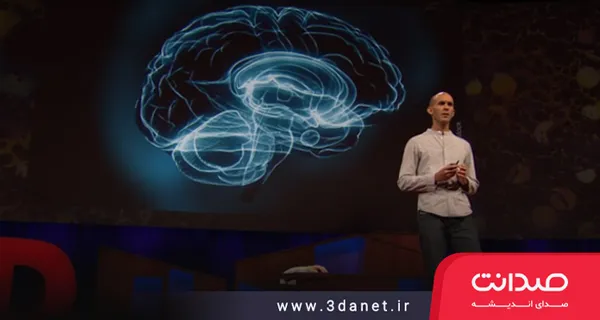
Right now, billions of neurons in your brain are working together to generate your conscious experience—and not just any conscious experience, but your conscious experience of the world around you and of yourself within it. How does this happen? According to neuroscientist Anil Seth, we are hallucinating all the time; when we agree about our hallucinations, we call it “reality.” Join Seth for a mind-bending yet captivating talk that will leave you questioning the very nature of your existence.
Just over a year ago, for the third time in my life, I ceased to exist. I was having a small operation, and my brain was filling with anesthetic. I remember a sense of detachment, of falling apart, and a coldness. And then I was back, drowsy and disoriented, but definitely there. Now, when you wake from a deep sleep, you might be confused about the time or anxious about oversleeping, but there is always a basic sense of time having passed, of a continuity between then and now. Coming round from anesthesia is very different. I could have been under for five minutes, five hours, five years, or even 50 years. The truth is I simply wasn't there. It was total oblivion. Anesthesia—it's a modern kind of magic. It turns people into objects, and then, we hope, back into people again. And in this process lies one of the greatest unsolved mysteries of science and philosophy.
Answering this question is very important because consciousness is, for each of us, our most precious possession. Without it, there is no world, no self has any meaning, there is nothing at all. And when we suffer, we suffer consciously, whether due to mental problems or arising from pain. And if we can experience pleasure and pain, what about other animals? Might they also be conscious? Do they also have a first-person feeling? And as computers become faster and smarter, perhaps, in the not-too-distant future, we will reach a point where my iPhone develops a sense of personal experience.
Of course, I think this view of conscious artificial intelligence is quite far-fetched. And the reason is that my research tells me that consciousness is not merely dependent on intelligence and is more related to our nature as living, breathing organisms. Consciousness and intelligence are very different things. You don't have to be smart to suffer, but you probably have to be alive.
Now, you may have heard that we know nothing about how the brain and body give rise to consciousness. Some people even believe this subject is entirely beyond the scope of science. But in fact, the last 25 years have seen an explosion of scientific research in this area. If you come to my lab at the University of Sussex, you can see scientists from all sorts of disciplines and even philosophers. All of us together are trying to understand how consciousness happens and what happens when it goes wrong. And our strategy is very simple. I'd like to think about consciousness in the same way that we learned to think about life. At one time, people thought the essential property of being alive could not be explained by physics and chemistry -- that is, the definition of life was beyond mechanisms. But this belief is no longer common. As biologists began to explain the properties of living systems with the help of physics and chemistry -- things like metabolism, reproduction, survival -- the mysteriousness of what life is gradually began to fade, and people no longer gave magical answers to this question, like a life force. Just like life, consciousness is defined. As soon as we start explaining its properties in terms of things happening inside the brain and body, the seemingly unsolvable mystery of what consciousness is begins to fade. At least, that is our plan.
So let's begin. What are the characteristics of consciousness? What does the science of consciousness need to explain? Well, for today, I'd like to consider consciousness in two different ways. There are experiences of the world around us, full of sights, sounds, and smells, there is a multisensory, panoramic, 3D, fully immersive inner movie. And then there is the conscious self, that specific experience of being "you" or being "me." The main character in this inner movie, and probably the aspect of consciousness we all cling to most tightly. Let's start with experiences of the world around us, and with the important idea that the brain is a prediction engine.
Imagine you are a brain. You are locked inside a bony skull, trying to figure out what is out there in the world. There is no light inside the skull, there is no sound either. Your only clues are streams of electrical impulses which are only indirectly related to things in the outside world, whatever they may be. So perception—figuring out what is out there— has to be a process of informed guesswork in which the brain combines sensory signals with its prior expectations or beliefs about the outside world to make its best guess about the source of those signals. The brain doesn't hear sound or see light. What we perceive is the brain's best guess about what exists in the world.
Let me give you a few examples of this. You may have seen this visual illusion before, but I want you to think about it in a new way. If you look at the two squares, A and B, they should appear to you as two different shades of gray, right? But in fact, they are exactly the same color. And I can demonstrate this if I put another version of this image here and connect these two squares with a gray rectangle, you can see that the squares are the same color. They are both the exact same shade of gray. And if you still don't believe me, I'll connect them with the same-colored rectangle. This is a single, uniform gray shape, and there is no difference in it. This is not a magic trick. They were both the same color, but they look different when we remove it. What is happening here is that the brain is using prior expectations deeply embedded in the circuits of its visual cortex whereby a cast shadow darkens the appearance of a surface, so that we see B as lighter than it really is.
Okay, what is happening? The remarkable point is that the sensory information arriving at the brain has not changed at all. The only thing that has changed is your brain's best guess about the source and origin of that sensory information. And that changes what you consciously hear. Now, all of this makes the basis of brain perception a little different for us. Instead of our perception being mainly dependent on signals entering the brain from the outside world, it depends, if not more, at least as much on perceptual predictions generated in the opposite direction. We do not passively perceive the world; rather, we actively construct it. The world we experience arises as much from within us as it does from the outside.
Let me give you another example of perception as an active, constructive process. Here we have combined immersive virtual reality with image processing to simulate the effects of overly strong perceptual predictions on experience. In this panoramic video, we have transformed the world—which is the Sussex campus here— into a psychedelic playground. We processed the footage using an algorithm based on Google's Deep Dream to simulate the effects of very strong perceptual predictions. In this case, the prediction is seeing dogs. And you can see this is a very strange thing. When perceptual predictions are too strong, as they are here, the result looks very much like the kind of hallucinations people report in altered states of mind, or perhaps even in psychosis.
Now, think about this for a minute. If hallucination is a kind of uncontrolled perception, then perception right here and right now is also a kind of hallucination, but a controlled hallucination in which the brain's predictions are reined in by sensory information from the world. In fact, we are all hallucinating all the time, including right now. It's just that when we agree about our hallucinations, we call that "reality."
Now I want to tell you that your experience of your "self," that specific experience of "being you" is a controlled hallucination generated by your brain. Now, this might seem very strange, right? Yes, visual illusions can deceive our eyes, but how could I possibly be deceived about the meaning of "being me"? For most of us, our individual experience is so familiar, unified, and continuous that it is hard not to take it for granted. But we should not take it for granted. In fact, there are many different ways we experience ourselves. One is the experience of having a body and another is of being a body. There is the experience of perceiving the world from a first-person point of view. There is the experience of intending to do things, and of being the cause of events that happen in the world. And there are other experiences of being a continuous yet distinct personality over time, shaped by a rich set of memories and social interactions.
Much research shows, and psychiatrists and neurologists know very well, that these different ways we have of experiencing our "self" can all be separated from one another. This means that the primary, background experience of a unified self is a fragile construct generated by the brain. Another experience, just like all the others, that requires explanation.
So let's return to the bodily self. How does the brain generate the experience of being a body and having a body? The same principles apply here. The brain makes its best guess about what is part of the body and what is not. And there's a beautiful experiment in neuroscience that addresses this. And unlike most neuroscience experiments, you can do this one at home. All you need is one of these.
In the rubber hand illusion, the person's real hand is hidden from view, and a rubber hand is placed in front of them. Then both hands are simultaneously stroked with a paintbrush while the person looks at the fake hand. Now, for most people, after a while, this leads to the uncanny feeling that the fake hand is part of their body. And the idea is that the congruence between seeing touch and feeling it on an object that looks like a hand and is roughly where a hand should be, is enough evidence for the brain to make its best guess that the fake hand is in fact part of the body.
So you can measure all kinds of clever things. You can measure skin conductance and startle responses, but there's no need. It's obvious the man in blue has assimilated the fake hand. This means that even experiences of what our body is is a kind of best guessing -- a kind of controlled hallucination by the brain.
There's one more thing. We don't just experience our bodies as objects in the world from the outside, we also experience them from within. We all experience the sense of being a body from the inside. And sensory signals coming from the inside of the body are continually telling the brain about the state of the internal organs, how the heart is doing, what the blood pressure is like, lots of things. This kind of perception, which we call interoception, is rather overlooked. But it's critically important because perception and regulation of the internal state of the body -- well, that's what keeps us alive.
This is another form of the rubber hand illusion. This is from our lab in Sussex. And here, people see a virtual reality version of their hand, which flashes red and black either in time with their heartbeat or out of time. And when it's in time with their heartbeat, people feel more strongly that this is part of their body. So the experience of having a body is deeply rooted in our interoceptive perception of our body.
There is one last thing I want to draw your attention to, which is that the experience of the body from the inside is very different from the experience of the world around us. When I look around, the world seems full of objects —tables, chairs, rubber hands, people, many spectators, even my own body in the world, I can perceive these as objects from the outside. But my experience of my body from the inside, these are not alike at all. I don't feel my kidneys here, my liver here, my spleen... I don't know where my spleen is, but it's somewhere. I don't perceive my insides as objects. In fact, I don't have much experience of my insides unless something goes wrong. And I think this is important. Having perception of the body's internal state is not about figuring out what is there, but rather about control and regulation— keeping physiological variables within specific bounds that are compatible with our survival. When the brain uses predictions to figure out what is there, we perceive objects as the causes of our sensations. When the brain uses predictions to control and regulate them, we experience how well or badly that control is going.
So our most basic experience of ourselves, as an embodied organism, is deeply rooted in the biological mechanisms that keep us alive. And when we follow this idea all the way through, we start to see that all of our conscious experiences, since they all depend on the same mechanisms of predictive perception, all stem from this primal drive to stay alive. We experience the world and ourselves with, through, and because of our living bodies.
Let me bring this together step by step. What we consciously see depends on our best guess of what is out there. The world we experience comes from the inside out, not just the outside in. The rubber hand illusion shows that this is true for our experience of what is and is not our body. And these self-related predictions depend critically on sensory signals coming from deep within the body. And finally, experiences of an embodied self are more about control and regulation than figuring out what is out there. So our experience of the world around us and ourselves within it — well, they are kinds of controlled hallucinations that have been shaped over millions of years of evolution to keep us alive in worlds full of danger and opportunity. We predict ourselves into existence.
I want to leave you with three takeaways from all of this. First, just as we can misperceive the world, we can also misperceive ourselves when the mechanisms of prediction go wrong. Understanding this opens up countless opportunities in psychiatry and neurology, because we can finally get at the mechanisms rather than just treating the symptoms in conditions like depression and schizophrenia.
Second: what I am cannot be reduced to or uploaded onto a computer program running on a robot, however smart or sophisticated. We are biological, flesh-and-blood creatures whose conscious experience is shaped at every level by the biological mechanisms that keep us alive. Just making computers smarter is not going to make them sentient.
Finally, our individual inner universe, our way of being conscious, is just one way of being conscious. And even human consciousness in general — it is only a tiny region in a vast space of possible consciousnesses. Our individual self and world are unique to each of us, but they are all grounded in biological mechanisms shared with many other living creatures.
Now, these are fundamental changes in how we understand ourselves, but I think they are good changes, because as seen in science from the time of Copernicus — we are not the center of the universe — to the time of Darwin — we are related to all other creatures — to the present day. With a deeper understanding comes a deeper sense of wonder, and we gain a better realization that we are a part of the rest of nature and not separate from it. And ... when our consciousness comes to an end, there is nothing to be afraid of. Nothing at all.
Watch this talk with simultaneous Persian and English subtitles on Aparat
.
.





Discussion0 comments
No comments yet; let yours be the first voice.