Philosophy
Arash Naraghi: Joy and the Lightness of Spirit
Arash Naraghi sees joy and lightness of spirit in those rare moments when desire is suspended. To turn this fleeting state into a lasting station, two paths exist: the Buddhist way of renouncing desire, or the experience of love, whose deep fulfillment quiets all other wants.

Sometimes there are very rare moments in a person’s inner state, brimming with a kind of peace and a very deep pleasure and joy—like when you are lounging lazily in the pleasant warmth of the sun shining into your room, leaning back and gazing out the window at the clear, delightful vista of a day after rain. No particular thought stirs in your soul, but your being is overflowing with a kind of peace, an extraordinarily profound pleasure. In that very specific moment, you desire nothing, as if all the yearnings of your soul have packed up and left. All at once, you become like a balloon whose string has been released. You float. In the pleasant warmth of this day after rain. And you surrender your body to the breeze blowing from every direction, drifting this way and that, a kind of joyful lightness. It seems to me that the deep pleasure and peace present in these rare moments direct our minds to the phenomenon of happiness. That is, it is on the basis of such pure and rare moments in one’s personal states and life that we form a more precise conception, a deeper experience, of what has been called happiness. And it is for this reason that the longing for happiness becomes the principal longing of our lives, and all our striving is to transform this state into a station. To turn this drop of nectar into a space in whose sweetness we can immerse ourselves and experience it more continuously. In religious and spiritual traditions, two important methods have been proposed for transforming this state into a station, for tasting the nectar of this happiness: In the experience just described, the principal element that is the source of that lightness, that deep peace, and profound pleasure is that moment of 'abandoning desires.' That is, as soon as no desire stirs within your being, that joy suddenly emerges. That peace suddenly blossoms. I am not saying that in that moment, if someone like the genie of Aladdin’s magic lamp were to appear before me and ask whether I have a wish or not, nothing would come to my mind—no! A thousand and one desires exist in the back of my mind. But in that specific moment, all those desires have been suspended. They have become inactive. And all at once, it is as if all the threads that bound my soul to the earth in a very tense and harsh manner have been severed. And therefore, a kind of freedom, a kind of lightness, has come into being for me. Precisely that moment when these desires do not claw at my soul, when the itch of these wishes does not prick my soul, is the moment you feel that peace and deep spiritual pleasure. And it seems to me this is the most important foundation of our personal experiences in understanding happiness. The concept of happiness and the desirability of happiness is based on experiences of this kind. In religious traditions, two important methods have been proposed for making these moments endure: In the Buddhist tradition, in fact, the most important teaching given to us is to learn how to abandon desire and, fundamentally, to want nothing. Abandon the body so you will not want a shirt: They tell us how we should strike at the root of these desires so that we no longer want anything and do not get caught up in the endless race of acquiring blessings and fulfilling wishes in this world... This is one method, a method that makes us light and teaches us how to strike at the root of wishes and attain the station of desirelessness. But there is also another method, which seems to me equally effective. One of the most important reasons our soul cannot experience this lightness with great frequency is the multitude of attachments that have occupied our lives. Let me mention that even in our mystical tradition, the concept of dying before death (mootoo qabla an tamootoo), voluntary death, is not unrelated to the Buddhist teaching. In fact, in dying before death, what happens is that we actually try to set aside many of the desires, many of the attachments that connect us to this worldly life. This is an experience of death before the compulsory death that comes to us. But the second method that our mystics have proposed for attaining happiness is the 'experience of love.' In fact, it is so that you can free yourself from the clutches of the thousand and one claimants that have bound your soul to this earth and are the source of your soul’s heaviness.
Another way is for a very deep, profound, and enchanting passion to enter your being. When that sun shines upon your soul, these candles lose their glow—that is, the experience of love brings with it a kind of lightness, a kind of not-wanting. Something becomes so prominent, desirable, and exciting in your mind and consciousness that, upon reaching it, you want nothing else. The moment you attain union, you reach your beloved, it is a moment of suspension. As if all ties are severed; you arrive precisely at that moment you were experiencing in that particular state (when you were lazily basking in the sun)—that is, in that moment, you want nothing else. It seems to me that the experience of such moments, in which the individual feels a kind of saturation, a kind of deep self-sufficiency, you see that moment as complete; nothing more is needed to be added to that whole. That moment, just as it is, possesses perfection. This is the most important characteristic that we call happiness. And in experiences of love, in fact, the presence of the beloved, their excitement and desirability, and the intensity of the passion they arouse in us is such that when it enters the realm of our existence, it is as if our existence reaches perfection. In the sense that in that moment, we seek nothing else. This perfection and this powerful presence, in fact, quells all other desires, all other concerns, and creates a kind of lightness in the individual. And perhaps this experience is among those that can transform a pleasant state into the station of happiness.
.
.
Arash Naraghi: Joy and the Lightness of Spirit | How Does the Spirit Become Joyful and Light?
Download Audio from Server 1 | Download Audio from Server 2
.
.





Discussion1 comments
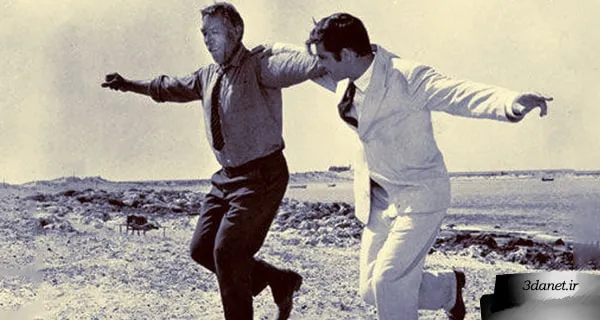
می خواهم آب شوم در گستره ی افق آنجا که دریا به آخر می رسد و آسمان آغاز می شود می خواهم با هر آنچه مرا در بر گرفته یکی شوم "مارگوت بیگل"