Philosophy
Arash Naraghi Lecture: “Consciousness, Revelatory Experience, and the Dream Narrative”
In “Consciousness, Revelatory Experience, and the Dream Narrative,” Arash Naraghi examines the theory of revelation of al-Farabi and Avicenna, critiques its Neoplatonic foundations, and proposes a rereading through the lens of contemporary philosophy of mind. He terms the expression of this experience the “dream narrative.”
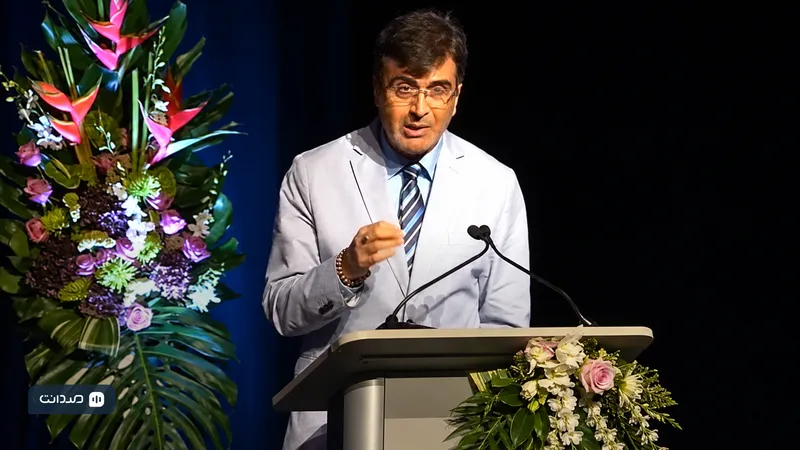
Arash Naraghi: “Consciousness, Revelatory Experience, and the Dream Narrative” is the title of my recent lecture, delivered on September 16, 2016, at the invitation of the Iranian Cultural Foundation in Houston, Texas (Audio of the lecture “Consciousness, Revelatory Experience, and the Dream Narrative”).
This lecture is in three parts: In the first part, I have briefly explained the theory of revelation from the perspective of al-Farabi and Avicenna. From their perspective, revelation is the result of the connection of the human acquired intellect with the Active Intellect (specifically, its aspect as the Holy Spirit). And, of course, the imaginative faculty plays an important role in giving form to the content of this experience. Here, two important points must be noted: First, these philosophers believe that in many cases, the imaginative faculty gives form to the content of revelation in sleep, but (more importantly) in their view, in the case of prophets, the imaginative faculty is so strong that it can give form to the content of their revelatory experience in a waking state. That is, the revelatory experience of prophets is not an experience in sleep. Second, from their perspective, revelatory experience is contact with something objective, in the sense of being independent of the person of the prophet. Although the prophet's acquired intellect has the capacity to receive sacred truths, the agency belongs to the Active Intellect; that is, revelatory experience is not a wholly subjective experience of the kind where one aspect of the prophet's personality communicates with another aspect of his being. In revelatory experience, according to this analysis, an entity independent of the prophet (i.e., God) reveals objective truths (i.e., independent of the person of the prophet) to him. In other words, their conception of revelation and its content is entirely and clearly realistic, not anti-realistic. Of course, according to these philosophers, revelatory truths take on “form” through the channel of the prophets' imaginative faculty. It seems to me that Avicenna considers those imagined entities to be born of the prophet's imagination (entities that do not necessarily have an existence and identity independent of the prophet's imagination), but al-Farabi attributes an independent identity and existence to them. This theory of revelation is built upon Neoplatonic cosmology and Aristotelian psychology.
In the second part, I have explained that the Muslim philosophers' theory of revelation has one important weakness and one important strength. Its weakness is that the Neoplatonic metaphysics and Aristotelian psychology it presupposes face significant challenges today. But its strength is that they (in my opinion) have correctly linked revelatory experience deeply with the category of consciousness. My proposal in this section is to replace the worn-out Neoplatonic metaphysics with a new metaphysics in the realm of contemporary philosophy of mind, in which mental properties (especially consciousness) are fundamental and irreducible properties of the world (a theory known in the philosophy of mind as “Property Dualism,” with versions defended by figures such as Chalmers and Thomas Nagel), and to replace its Aristotelian psychology with a theory in contemporary cognitive and neural sciences that speaks of two types of consciousness (conceptual consciousness and meta-conceptual consciousness) in the human cognitive system. In this case, revelatory experience would consist of human contact with transcendent consciousness through meta-conceptual consciousness.
In the third part, I have explained that the appropriate language for expressing revelatory experiences is metaphorical language—a language I have called the “Dream Narrative.”* The “Dream Narrative” is a language particularly suited for expressing the core nucleus of the revelatory experience, and not all aspects of that experience. It is important to note that the language of revelation in the text of sacred scriptures absolutely cannot and should not be reduced entirely and everywhere to metaphorical language or the dream narrative. The language of revelation in the text of sacred scriptures has a historical identity, and it is only in expressing the core nucleus of the revelatory experience, i.e., the “experience of contact,” that it adopts the structure of the dream narrative. The best place to find this style of narration is the language of stories in sacred scriptures. In modern fictional literature—especially in the works of authors like Kafka—this style, i.e., the dream narrative, has been recreated, inspired by the narration of stories in sacred scriptures, and the structure of this narrative style is well described, particularly in Erich Auerbach's famous essay, “Odysseus' Scar.” In this section, I have briefly explained two prominent examples of the “Dream Narrative” in religious and mystical literature: the story of Daquqi in the Masnavi, and the Quran's story of the journey of Moses and a young man to find Khidr.
*(For background on my discussions of the dream narrative and the role of sleep and memory in religious experiences, see, for example, my lecture on July 15, 2012, at the seminar “Religion, Faith, and Spirituality” at the University of Texas at Dallas, and also, the lecture “Mysticism and Modern Art: An Introduction to the Theology of Hope” in August 2012 in London).


Discussion2 comments
آن نوع وحی که پیامبران دریافت میکنند ، تجربه نیست که هر کسی بتواند انجام دهد ، بلکه ویژه بر گزیدگان خدا است و دلیل این بر گزیدگی ودلیل اینکه آنان فرستادگان خدا هستند معجزات است که ویژه آنان است. به راحتی میتوان نیاز انسانها به پیامبران را نشان داد.
ایمان به وحی و نبوت از توحید و آثار و شواهد ماندگار پیامبر(ص) سر چشمه میگیرد. ادعای تبیین وحی با بهم بافتن اصطلاحات چند معنی وذهنی ثابت نمی شود همچنانکه در یکی-دو گفتار اخیر نیز هیچ تبیین مشخصی وجود ندارد. این مدعیان خواب و خیال های خود را در قالب ترکیبات بی مفهومی مانند « تجربه وحیانی» ،« روایت رویا »،« قوه خیال در خواب» ، وترکیبات بی مفهوم دیگر ، در بازار آشفته عرضه میکنند.شاید خریداری پیدا شود که فریب آب و رنگ این ترکیبات را بخورد.