Psychology
Baran Foundation Interview with Sasan Habibvand on Modern Life and the Crisis of Identity
Sasan Habibvand argues that capitalism and the mental disorders of our age are the effects of 'identity-worship', not its cause. Identity—seeing oneself through the eyes of others and seeking society's approval—drives human beings into the servitude of wealth and power.
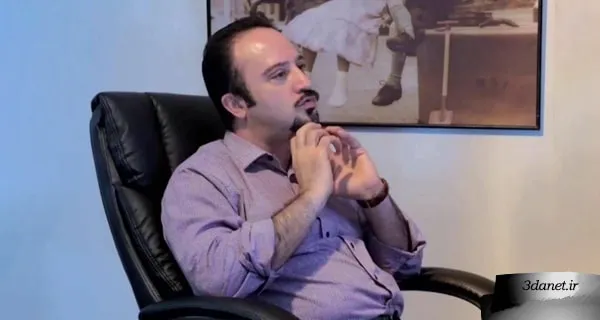
Sasan Habibvand: What you read below is the text of an interview recently conducted with the “Baran Foundation.” The subject of this conversation is the relationship between modern life and the phenomenon we frequently hear referred to as the “identity crisis.” In this discussion, I have briefly deconstructed the two concepts of “identity” and “identity crisis” and explained their connection to the predicaments of human life, particularly modern life.
Preface:
One of the predicaments of life in the shadow of technological giants and in the service of capital is the issue of identity. Many believe that the suicide, depression, and psychological and mental problems of our era are issues arising from problems culminating in the question of identity—that we do not know who we are and what we want. In conversation with Sasan Habibvand, we have examined the psychological crises of the present age in relation to self-knowledge. Habibvand is a lecturer, writer, and researcher in the humanities, whose particular area of interest and research is the issue of self-knowledge.
1. To what extent can the increasing problem of depression and mental and psychological disorders in modern humans be linked to their identity crisis?
Undoubtedly, problems such as depression, aggression, and mental disorders are, to a very large extent, rooted in the issue of identity. However, I do not think this matter is exclusive to modern humans. The issue of identity and its crisis has always existed throughout history, and many miseries and sufferings have been born from it. There is much to say on this matter, and I will elaborate if necessary.
2. What is the relationship between this identity crisis and the macro-policies of life? The fact that we are forced to align our lives with the plans and policies of capitalist giants, or that we are compelled to submit to the atmosphere of liberalist policies in the economy, work, and the market. Can such policies be a cause for this?
That is precisely the point. Firstly, I have a problem with the phrase “identity crisis.” I will explain this, but in my opinion, this question starts from a wrong premise. Capitalism is not the cause of the identity problem; it is the identity problem that causes numerous predicaments, including capitalism. Identity and identity-worship have always been the cause of division, hatred, war, exploitation, hunger, and the miseries of history, and they still are today. One of these ugly manifestations is slavery, a phenomenon that has always existed and, of course, has taken a specific form in every era, and its contemporary form is unbridled capitalism.
3. How do you define this relationship?
Well, first we must ask what identity is. I believe identity is seeing oneself through the eyes of others. My identity means what view the environment, society, and the world have of me, what they think of me, and how they evaluate me. This is the definition of identity. In contrast to it stands my essence, meaning my authentic reality with all its characteristics, capabilities, and values. But why, instead of paying attention to our essence, have we clung so much to our identity? Why are we so sensitive about our identity? In my view, the reason is self-loss. The issue is that, through the indoctrination of our environment, we have come to believe that our worth is determined by others. Due to the inculcation of upbringing and culture, we imagine that how others see us is who we are. In other words, we have conflated our real and authentic self with our external identity and outward appearance. (I have, of course, elaborated on these points in my works). It is clear that this situation creates a feeling of inferiority and weakness in you towards society, which is the authority for valuation and judgment. And it is natural that to feel worthy, you must always prove yourself to society and seek validation from this person and that, always worrying that this validation might not be achieved and you might fall into the abyss of emptiness and meaninglessness, or as you say, crisis. Crisis means a state of suspension, meaning indecision. Identity crisis means that we are not sure what our identity is and who we are. In this sense, identity is a phenomenon that is always in crisis. In fact, crisis is an inseparable part of identity and cannot be separated from it. Saying the phrase “identity crisis” is like saying “wet water”! Wetness is part of the essence of water and is inseparable from it. If you swim in water, you will certainly get wet. Just as clinging to identity naturally results in experiencing crisis.
4. So you believe that capitalism feeds and grows on the issue of identity?
Yes, both capitalism and countless other afflictions. As I said, the birth of various cultural, economic, and social fungi is the result of a notion called identity-worship, and one of these poisonous fungi is, of course, the system of exploitation and wealth accumulation called capitalism. Why is capitalism born? In an atmosphere where my identity and worth depend on society's approval, and society always stands over me like a master to evaluate me, I am compelled to prove myself by any means and gain approval from my environment. I know very well that one of the most sensitive values promoted by society is power and wealth. In society, poverty and lack are a source of worthlessness and shame, and conversely, possession and wealth bring pride, greatness, and admiration. Therefore, an important tool for escaping humiliation and gaining worth is to grasp as much power and wealth as possible. A humiliated person has no qualms about humiliating and exploiting others. To quench the unquenchable thirst of my identity, I strive to accumulate money and wealth by any means, and for this goal, I engage in various forms of physical and intellectual exploitation and the stupefaction of others, and of course, I have no qualms about plundering nature, polluting the environment, and destroying the world. Exploitation in ancient times was carried out with the tools of the whip and excessive hunger; today, with the tools of "caresses" and excessive satiety! But the nature of the matter is the same. In fact, the idea that worth, greatness, and respect depend on having money and wealth has been instilled in my brain by society, and with this ignorance, it has turned me into a wolf that has turned on it. I think capitalism is the point at which a society that, like a master, evaluates people by wealth and status, itself becomes the victim of its own slave. In truth, before the capitalist enslaves society, society has enslaved him. I think it is clear that what we are saying does not mean absolving capitalism, but having a correct and real picture of this toxic relationship. The goal is to become aware of the true nature of our behaviors and to see their inevitable results. Until we correctly recognize the root of our problems and afflictions, solving them is impossible, and any effort yields nothing but going around in circles.
When one looks at such ridiculous relationships and sees the superficial analyses whose nature is nothing but making people more confused and providing a narcotic absolution, one recalls Rumi's poem where he said:
No one places a thorn under a donkey's tail; the donkey, not knowing how to repel it, leaps up.
It leaps, and the thorn strikes more firmly; a wise one is needed to extract the thorn!
5. In today's world, tools like the media and cyberspace dictate everything from our style of dress and appearance to specific behaviors. Large commercial corporations define our life goals under their own objectives. As a person who needs to be free, how can I have an independent identity in a society that pressures me to adopt a specific identity?
I have already stated my view on identity. Fundamentally, the preoccupation with identity is a hollow and destructive concern. Engaging with one's authentic and true essence and striving for personal growth and flourishing is, of course, another matter. Regarding freedom, however, one must know that the path to freedom passes through awareness. The first step in liberating oneself from these sick and corrosive relations is to become aware of them. No one can shackle a wakeful and wise human being. The most important driving force of any society is its public culture. Public culture is the most powerful force shaping a society and determining its destiny. All external phenomena (such as law, government, industry, art, wealth, science, freedom, etc.), whether good or bad, are external manifestations of this culture and its values. The power and might of the corporations and giants you mention lie in our ignorance and unawareness. If we do not tie our identity to branded clothes, eight-cylinder cars, luxurious houses, and surgically altered noses, and do not evaluate one another based on these hollow things, the giant corporations will have no market for their insane products. They too will be forced to close up shop and, instead of exploitation, profiteering, and warmongering, seek useful work.
6. To what extent do the emergence of mental and psychological problems depend on the individual, and to what extent does their resolution?
Mental and psychological problems fall within the realm of the individual's own treatment and remedy under two conditions; beyond that, they require the help and sometimes even the intervention of others. The first condition is that these problems have not crossed the threshold of the individual's own awareness and consciousness, meaning the person themselves is aware that they are afflicted with a problem and has grasped the severity or gravity of the issue. The second is that the person is not afflicted with self-deception and the delusion of being flawless, and does not seek to lull themselves to sleep through various forms and means. In these two cases, the individual can take action and seek a remedy for their problem, and essentially, they will naturally do so. Of course, seeking help and guidance in the form of counseling, psychotherapy, and the like is also part of this very remedy-seeking.
.
.
Modern Life and the Crisis of Identity
Sasan Habibvand
Ways to contact Sasan Habibvand:
telegram.me/sasanhabibbvand
email: sasan.habibvand@yahoo.com
.
.




Discussion0 comments
No comments yet; let yours be the first voice.