Philosophy
Lecture by Mostafa Malekian at the 107th Specialised Session of the Baran Foundation
Mostafa Malekian told a Baran Foundation gathering that society can only free itself from violence and deceit through dialogue. Drawing on the theory of the non-obviousness of truth, he presented dialogue as a cultural necessity in the face of ideologies that claim to possess obvious truth.
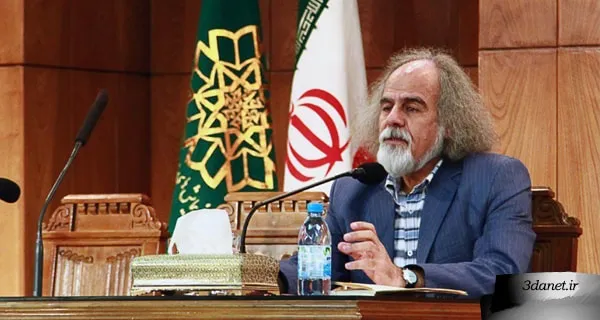
Mostafa Malekian: We can only free ourselves from violence and deceit through dialogue. In society, every problem is resolved in one of three ways: one is dialogue, another is violence, and the third is deceit. If dialogue is suspended in society, the two rivals that take its place are violence and deceit.
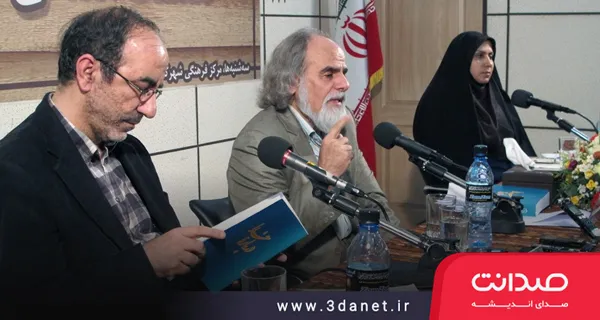
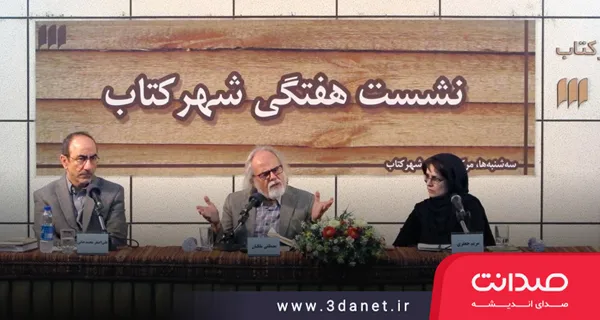
The 107th specialised monthly session of the Baran Foundation, on the topic of “Dialogue as a Cultural Necessity” and featuring a lecture by Mostafa Malekian, was held at the Rayzan International Conference Centre. The text of his speech follows:
The issues that can be raised about dialogue, or that have been raised by thinkers, are so diverse and numerous that it is certainly beyond my capacity here even to list them. I will try to address five issues concerning dialogue and to present these five issues clearly from my own perspective.
The first discussion concerns the nature of dialogue and the conceptual clarification of dialogue: what dialogue essentially means and how it differs from similar phenomena. The second point is why dialogue has become so important in the world around us, why it has gained such significance in our country and the world, and why so much discussion has arisen about it. The third point concerns the necessity of dialogue: what benefit it has, and whether this benefit is such that we can speak of the necessity of dialogue, or whether dialogue has benefits but one cannot speak of its necessity. The fourth point concerns the conditions of dialogue: under what conditions dialogue should take place and what conditions the parties must meet in dialogue. The final discussion concerns the pitfalls of dialogue that can divert it from its goals.
Firstly, regarding the conceptual clarification of dialogue, I must say that in any science, anyone engaged in that science is engaged in one or more of these eight activities: learning, teaching, research, critique, defence, collaboration, negotiation, and creativity. The entire system of science is formed from the combination of these eight activities, and once the seed of science is conceived, it gradually grows through these eight activities. Of these eight, one is negotiation, and dialogue. When we engage in dialogue, we are collaborating with one another to solve a problem or difficulty—what is broadly called dialogue—in the social and cultural sphere. The scope of dialogue becomes somewhat narrower than this broad definition, and since this narrower meaning is the subject of our discussion, I will address it.
In our personal lives, we sometimes do things that we mistakenly interpret as dialogue. For example, we sometimes interpret our daily chats as dialogue, or we even call our quarrels dialogue. But dialogue is a form of collaboration aimed at knowledge, and it only becomes meaningful when we attach certain qualifications to it.
Dialogue is a way of addressing theoretical issues or practical problems. In the realm of theory, we want to see what the state of a particular phenomenon is, to gain knowledge. To have gained that knowledge, in the domain of an issue we are dealing with theory, but in the domain of a problem we are dealing with practice. There, knowledge is not for its own sake; there, knowledge is for transformation. We understand Tehran’s traffic in order to transform it; we understand the phenomenon of poverty in order to intervene in it humanely, to intervene in a way that serves human interests and conforms to ethical and legal standards. In such cases, we are faced with a problem, not an issue. According to philosophers of science, “issue” refers to the world of theory, and “problem” to the world of practice. If we address a theoretical issue or a practical problem accompanied by these three qualifications, it becomes the subject that is now our focus, and it is also what was raised in Iran by Mr. Khatami in the political sphere. This addressing must, firstly, have a collective and shared aspect; more precisely, it must take on a collective character. The second point is that this collective addressing should not be addressing in the realm of practice, but addressing in the realm of theory. That is, instead of going directly to our practical problem, we address the theoretical issues as the unavoidable prelude to those practical problems. Of course, as a result of our theoretical work, some people will go and carry out the practical work. The third point is that the theoretical addressing must be argumentative, because it can also be done in other forms, such as emotional or polemical addressing, which are no longer called dialogue. Usually, the subject of this dialogue must be a theoretical subject or a social practical problem for dialogue to take place.
But why has dialogue become so important today? It seems that in the modern world, four factors have brought about the function of dialogue. The first thing that gave importance to the discussion of dialogue was the theory of the non-obviousness of truth. If the truth of matters were obvious, if, as the ancients said, truth were something that could be attained through clear and manifest reason, there would be no need for dialogue.
The theory of the non-obviousness of truth is a very important theory in contemporary epistemology. It holds that truth is elusive, not easy to attain; it is not the case that a person with a little knowledge, a modest power of thought and understanding, and limited experience can find the truth about a subject, issue, or problem. Truth is something rare, scarce, and elusive, and this is the exact opposite of ideologies, because, in my view, the definition of ideology is this: a school, tradition, movement, or tendency that believes truth is obvious, and that truth resides with us. To the extent that I distance myself from the theory of the obviousness of truth, I distance myself from ideological thinking and turn toward ideas instead of ideology—that is, toward beliefs that compete with one another in their proximity to the truth. The theory of the non-obviousness of truth is a theory that, although it matured slowly and gradually throughout human culture, was stated explicitly in the West roughly from the second half of the nineteenth century onward: that we are not dealing with the obviousness of truth; truth is a very elusive and rare matter, and if, under these conditions, fortune favors us and we attain a truth, it is only possible through collaborative effort; otherwise, we alone do not have such a capacity. This theory itself is life-giving—the theory of the non-obviousness of truth. Those who consider truth to be obvious, when you disagree with them about their obvious truth, say that there is doubt in your very essence or in your morsel of food, or that your divine and human primordial nature has been corrupted. If someone believes that truth is plainly and clearly manifest, there is no doubt that those who do not accept this truth are considered obstinate. They say, how can some reject what is clear and not accept the explicit truth? If truth were like 2+2=4 in everything, then if someone did not accept this truth, they would say he is hostile to right and truth. But if we accept that human beings, in complete honesty and seriousness, have arrived at a certain point yet cannot discover the truth about it, then we have turned to the theory of the non-obviousness of truth, and all those who have not attained that truth bear no moral fault or flaw in their work, and no legal or social violation can be attributed to them. This theory is the primary opinion that makes dialogue a necessity, because, on this basis, truth does not fall into my net alone or your net alone, but when we all cast a net into the water together, perhaps we may attain the truth.\n\nAnother point that exists is the discussion of specialization, which has made dialogue necessary. The more the division of scientific labor increased, the more we arrived at the necessity of the division of social labor. This caused each of us to pay attention to one point and remain heedless and ignorant of other points because they are not within our specialty. Now, because a subject is not within our specialty, or we are dealing with an issue or problem that has various dimensions, different individuals with different specializations are needed, each to look at this subject from one dimension. The division of social labor was a necessity of human life, and there was no escape from it, yet at the same time, it has caused each person to see one point clearly but to see no other point at all, even unclearly.\n\nBut the third point is that human society, due to the dynamism that, according to sociologists, is among the exigencies of our era, has, in every instance, emerged from uniformity, and the result of social dynamism is that we no longer have a homogeneous society; there is no society except one in which different colors, different races, different ethnicities and tribes, different religions, denominations, persuasions, and isms have found membership. That is, the citizens of a society, while being citizens of one society, have no uniformity with one another, and because they lack uniformity, they also lack a shared viewpoint regarding the resolution of their common problems, and each has interests and benefits that are not necessarily aligned. In this society, common problems must be resolved through cooperation, and this is the very social dynamism that, although it has had many merits, one of its difficulties is that one cannot easily give one opinion supremacy over other opinions and give it practical effect, unless the citizens who stand to gain or lose from the practical prevalence of this opinion have themselves been involved.\n\nThe fourth reason is that two concepts have gained value in our era that had never gained such value in the past. In social ethics, one is the concept of tolerance and the other is the concept of democracy.Tolerance means not only enduring the lifestyles and thoughts of others but also being content with other lifestyles and thoughts. When this becomes valued in our society, and democracy, in parallel, also becomes valued—meaning that the final word should be spoken by those who stand to gain or lose from it—then both rationality and ethics dictate that we should have a role in approving a given law, regulation, and so on. If one looks at it from an ethical and rational perspective, one cannot oppose the idea that if the benefits and harms of social arrangements and regulations end up in our pockets, then we must say whether we accept this law or not. To do this, we must engage in dialogue and see, on the whole, which arrangement will cause us the least harm. The rise in the value of tolerance and democracy—tolerance having more of a social and cultural aspect, and democracy more of a political one—has created the requirement for dialogue to expand as much as possible, because tolerance and democracy are meaningless without dialogue.
The third point I wanted to make concerns the benefit and necessity of dialogue. There has been extensive discussion on the benefit and necessity of dialogue, and I will only refer to the most important views. The first thing that can be said about the benefit of dialogue relates to the act of dialogue itself, not its content. As communication experts know, "speaking" has certain effects and functions, and "what is spoken" has other effects and functions, and these two cannot be identified by a single judgment. Suppose a friend who feels close to you comes and tells you about the pains and sufferings of their life. You are, of course, pained by what they say, but you are happy that they spoke to you, and you say to yourself, it is still good that they said such things to me and not to others, meaning they feel a sense of intimacy with me.
In dialogue, the first positive effect and result is the dialogue itself, not the outcome of what is being discussed. This is that those engaged in dialogue usually become closer to one another emotionally and socially, regardless of what they are discussing.
The second point is that when I engage in dialogue, I truly understand with whom I agree and with whom I disagree. In other words, many of the friendships we have with one another stem from not knowing each other's views, and many of the enmities we have with one another also stem from not knowing each other's views; we agree or disagree based on an illusion we hold in our minds about each other's opinions.
When dialogue takes place, at the very least, our proximities and distances, our disagreements and agreements, become real. The second benefit of dialogue is that we become aware of each other's beliefs, so that if social alignments exist, they are not in a foggy atmosphere, and we are truly friends or enemies with one another.
The third benefit is that I understand my points of disagreement with you. Every human being may disagree with another on three grounds: sometimes we disagree about facts, sometimes about values, and sometimes about duties. Unfortunately, in countries like our own, where there is no space for dialogue, we often do not know on which of these three grounds we disagree with our counterpart, because the methods for resolving disagreements in these three areas are also very different from one another. Sometimes our disagreement is over whether a certain presidential candidate is wealthy or not; you say their assets amount to n tomans, and I say their assets amount to m tomans—here the disagreement is over a fact. But sometimes we do not disagree over the fact; we both believe their income and wealth are a certain amount, and we both say that candidate is wealthy. However, we disagree on a value level about whether it is good for a presidential candidate to be wealthy or not—here the disagreement is over a value; the discussion here is whether this fact we agree upon should be considered good or bad. And sometimes we do not disagree about the value either; that is, we both believe they are wealthy, and we both believe it is good that they are wealthy or bad that they are wealthy, but we do not know what we should do about the fact that the presidential candidate is wealthy. In all social issues that arise—whether in the institutions of family, education, economics, politics, science and technology, art, law, ethics, or religion—we must know whether the disagreement that arises is about facts, values, or duties, because resolving each of these requires a specific methodology.
The fourth point is that I understand my own weaknesses in dialogue; it is impossible for me not to realize my own weaknesses in dialogue. If a person enters into a dialogue with honesty, they will certainly become aware of their own weaknesses.
The fifth point is that I also become aware of the strengths of others. When I become aware of the strengths of others, the degree of my stubbornness and insistence on the position I hold diminishes.
These two points I mentioned cause the various forms of intellectual narcissism in me to weaken, as well as prejudice; dogmatism, rigidity, superstition, wishful thinking, and intolerance weaken in me. Because I understand that my own position is not as strong as I thought, and the position of others is not as weak as I imagined.
The sixth characteristic is that only through dialogue can we find liberation from violence and deception. In society, every issue is resolved through one of three ways: one is dialogue, one is violence, and the other is deception. If dialogue is suspended in society, the two rivals that take its place are violence and deception. Those who want to advance their work in a space devoid of dialogue, when dealing with the broader masses of people, advance their work through deception, because the broad masses of people usually lack the sufficient knowledge, experience, and power of thought and deep understanding not to be deceived. Therefore, the broad masses of people in that space lacking dialogue can be pulled in whatever direction they want. But there is another segment of the people who are more thoughtful and experienced than to be deceived; we remove them from the path through violence. The only thing that saves us from this deception of the general public and the victimization of the elite by violence is the opening of the door to dialogue. With the opening of this door, both the susceptibility of the common people to deception decreases, and the elite can no longer be treated with violence. Dialogue leads the common people towards becoming elite and increases the number of the elite, and they can no longer be subjected to violence. In a society where there are a thousand elite individuals, one can deal with them, but when the number of the elite exceeds, say, 2 or 3 thousand, the sharpness of the blade of violence diminishes.
Before I mention the final benefit of dialogue, I will raise a question that perhaps many of you have also pondered, and that is: if you and I engage in dialogue, will this dialogue lead to a reduction in our differences of opinion or an increase?
Suppose we have entered into dialogue sincerely and seriously so that a truth may be revealed to us, and suppose we have set aside our personal and group interests. If we engage in dialogue with each other with utmost seriousness for a full day and night, compared to if we engage in dialogue for a week, will the instances of our disagreement become fewer or more? Two types of answers have been given to this question. Some say that the more people engage in dialogue with each other, the more convergent they become, and some have said that the more we engage in dialogue, the more divergent we become. Both of these positions have their own arguments. If our convergence increases, we reach social consensus, and if our divergence increases, our social humility increases; we understand that we too cannot impose our views, and many opponents will be found for them. So, when everyone understands that we are all equally strong or weak, then a humility emerges that is also beneficial for social solidarity. Therefore, in the direction of social solidarity, whether dialogue leads to divergence or convergence, it is beneficial.
The fourth discussion concerns the conditions of dialogue. The first point that exists is that as soon as you accept dialogue, we must believe in a kind of egalitarianism. Accepting dialogue is accepting that just as I may be right in some positions and possibly wrong in others, my counterpart is also right in some positions and possibly wrong in others. The difference between dialogue and what we refer to as polemics is that in polemical writing and polemics, I consider myself right and have come to defend my own righteousness and to prove your falsehood; this is what is called arguing in common parlance. Dialogue is that I am ready to learn something from you, and in return, you must also be ready to learn something from me, and this means that we have both accepted that both sides may also be afflicted with falsehood while at the same time being right in some instances. Therefore, this inner parity is a condition for any dialogue; if it does not occur, we are not dealing with dialogue.
The second point is that in dialogue we must rely solely on reasoning; nothing else should substitute for reasoning, and we cannot use motivating or coercive forces—we can only use the force of persuasion.
It is our power of persuasion and reasoning that must be effective, and it is precisely here that the initial egalitarianism we must assume in dialogue gives way: if one party to the dialogue possesses argumentative strength, that gives them superiority over us. Therefore, I fully accept what you say only because there is reasoning behind it; in a dialogue, I can never accept what you say simply because you are a particular person.
Rationalism means that the statements of all parties to the dialogue must, through one, two, or several intermediaries, lead to those things we have accepted as sources of knowledge and that connect us to, or bring us closer to, reality.
The next condition in dialogue is that one cannot appeal to an authority that is not acceptable to both parties. Suppose I am a Shiite Muslim and I enter into dialogue with another Shiite Muslim; here, if I can support my statement by referring to one of the fourteen Infallibles recognized by Shiites, it is in principle acceptable to the other party, because I have referred to an authority that is acceptable to them. But if I am a Shiite and the other party is a Sunni, I can no longer refer to any Infallible except the Prophet. Now, when I, as a Muslim, sit down to dialogue with a Christian, even the Prophet and the Quran are no longer an authority acceptable to both sides, just as Jesus and his scripture are not necessarily acceptable to both sides.
Thus, saying "your statement is false because it is incompatible with my religion"—when the two parties to the dialogue do not share a common religion—is not a statement worth listening to.
Another condition of dialogue is that it takes place only in an atmosphere of complete freedom. Those who, for any reason, are afraid to express their opinions cannot engage in dialogue with anyone. There is a difference between someone who says something in a dialogue and then receives a reward from somewhere, and someone who says something and, from the moment they utter it, expects to be arrested. In dialogue, I must know that nothing but the other party's argument should stand in my way. Contexts that merely resemble freedom are only useful for those who speak in agreement with these conditions. Such people cannot be said to be engaging in dialogue freely.
The final point I wish to make concerns the pathology of dialogue. The first affliction of dialogue is that the participants fail to distinguish between a "problem" and a "pseudo-problem," and they address issues that are not the problems of society but pseudo-problems. The late Dr. Ali Shariati says in one of his remarks that very often, people say a great many things in meetings so that the thing that ought to be said finds no opportunity to be raised.
In a society where problems rain down from every wall and door, it is contrary to ethics for the dialogues that take place in that society to revolve around pseudo-problems. The people's problem is something else, but instead of addressing that problem, I say, "Let us talk together about such-and-such a topic."
The duty of the intellectual, whether in the German, English, or French intellectual tradition, was not to distract people with pseudo-problems. In a society where the stones of strife rain down from the catapult of the heavens, one cannot pursue issues and adopt an intellectual, even reformist, appearance that are not the problem and issue of our society. The outcome of dialogue in a society must be something that all members of society deal with. Unfortunately, we sometimes fall into the trap of speaking about other topics while society is anxious and worried about something else.
Another point is that we must also prioritize among problems—whether according to Maslow's hierarchy or what social psychologists have proposed. The final point I wish to raise is that we must always remember that dialogue is not an end in itself but a means; dialogue is important because of its effects and outcomes, and we should not be in love with dialogue itself, for mere dialogue is only becoming aware of others' opinions, and there are other ways to become aware of those opinions.
.
.
Lecture by Mostafa Malekian at the 107th Specialised Session of the Baran Foundation
Source: Baran Foundation
.
.

Discussion1 comments
سلام.نمی دانم چگونه می شود به دور از تعارفات معمول،سپاس عمیق خودم را به شما چوانان برومند و فرزانه ی کشورم ابراز کنم.دوستان بسیار عزیزی چون آقایان رضا ایرانمنش ،علی کاشانی و عزیزان دیگری که نامشان را نمی دانم،ولی می دانم اداره و پربار کردن چنین سایتی چه مایه نیرو می طلبد.همینجا از نویسندگان فرهمند سایت همچون عزیزان :صدیق قطبی ،مسعود زنجانی و....نیز سپاسگزاری کنم که با مطالب و مقالات ارزنده شان بنده را مدیون خود کرده اند.