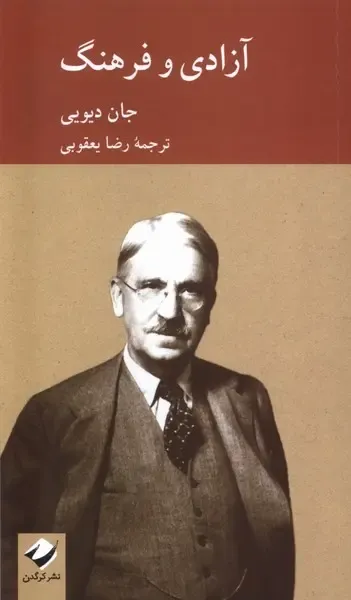
Why this book?
- To understand freedom in relation to culture, education, and social institutions.
- To become familiar with John Dewey’s view of democracy as a way of life.
- To read a philosophical critique of abstract individualism and merely legal freedom.
- For readers interested in political philosophy, liberalism, democracy, and social reform.
About the book
Freedom and Culture is one of John Dewey’s important works in political and social philosophy. In this book, Dewey understands freedom not as a concept detached from the real world, but as something dependent on institutions, habits, education, economy, and public culture. For him, freedom has meaning only when people can actually think, choose, and participate effectively in social life.
The book looks historically at the development of the concept of freedom in the liberal tradition and then shows that freedom in modern society faces new obstacles. Economic inequality, concentration of power, organized propaganda, and weak critical education can empty freedom from within, even when the language of rights and liberty remains present in society.
The place of this work in Dewey’s thought comes from its connection with pragmatism, democracy, and philosophy of education. Dewey does not regard democracy merely as a form of government, but as a way of collective life that requires dialogue, education, participation, and living institutions. The book is suitable for readers who want to understand freedom not only as a slogan, but in relation to culture and the real structures of society.