Why this book?
- Offers a fictional narrative of violence and societal fragmentation during the Greek Civil War.
- Follows the clash between political loyalty and moral responsibility through the eyes of Father Yanaros.
- Shows how political fanaticism turns neighbors and brothers into enemies.
- Examines themes of freedom, God, faith, and human dignity within a political crisis.
- Suitable for understanding the political and moral dimension of Nikos Kazantzakis's works.
About the book
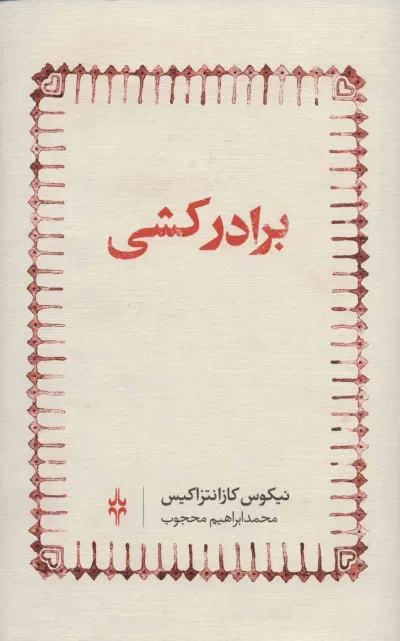
"Fratricide" is one of Nikos Kazantzakis's later novels and is set against the backdrop of the Greek Civil War. The story depicts a small community divided into two hostile camps, where people who once lived side by side now stand against one another.
At the center of the story is Father Yanaros, the village priest. He cannot easily align himself with either side of the conflict and tries to find a path to reconciliation between the warring parties. This very position confronts him with a difficult question: in a world where both sides consider themselves the bearers of truth, what is the moral responsibility of the individual?
Kazantzakis does not narrate the civil war merely as a political event. The novel is about the mechanism of fanaticism, hatred, and violence that tears society apart from within and drives people to kill those who were once their friends, neighbors, or brothers.
"Fratricide" aligns with Kazantzakis's well-known concerns about freedom, faith, and human dignity. The character of Father Yanaros also allows for the exploration of the tension between Christian faith, the institution of religion, and individual responsibility; themes that connect with some of Kazantzakis's other works.