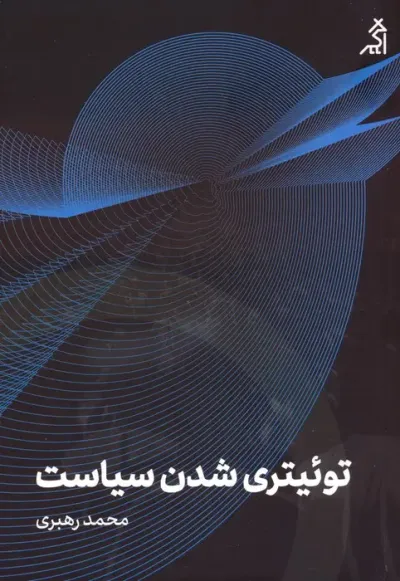
Why this book?
- Examines the role of Persian Twitter in Iranian politics through a research-based approach.
- Explains the link between social networks, democracy, and polarization.
- Serves as a practical Persian-language resource for understanding digital tribes and online radicalism.
- Shows policymakers and media activists why filtering makes the problem more complex.
- Establishes a connection between communication theories and social network data mining.
About the book
"The Twitterization of Politics" addresses one of the most significant transformations of politics in the digital age: the conversion of social networks, particularly Twitter, into an arena for meaning-making, political conflict, mobilizing public opinion, and shaping political discourses. The book focuses on Persian Twitter and seeks to show how this space affects the political culture of Iranian users.
In this work, Mohammad Rahbari draws on theories of communication, political sociology, and social network studies, linking them with data from Persian Twitter. The theoretical backdrop of the book involves the issues of the public sphere, dialogue, and democracy; however, the author demonstrates that Twitter does not always lead to democratic dialogue and sometimes contributes to polarization, identity-based conflicts, symbolic violence, and populism.
One of the book's key axes is the analysis of the formation of "digital tribes": clusters of users who primarily interact with like-minded individuals and adopt a hostile stance toward other groups. The constraints of Twitter's format, such as text brevity and the speed of reposting, are also examined in the book as factors that can make deep dialogue difficult and reward sharp, emotional expressions.