Political Science
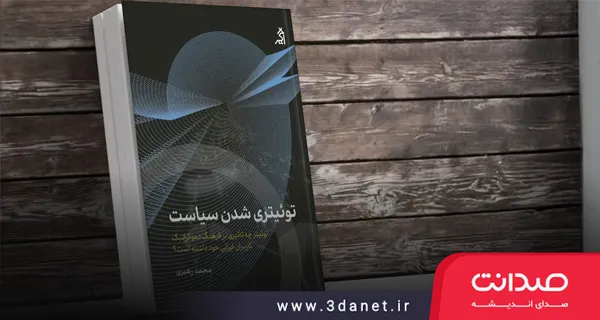
Introducing the Book “The Twitterization of Politics” by Mohammad Rahbari
Mohammad Rahbari's book The Twitterization of Politics mines Persian Twitter data to examine its impact on political activism. The book launch addressed media monopolies, content polarization, and the challenges of dialogue on Twitter.


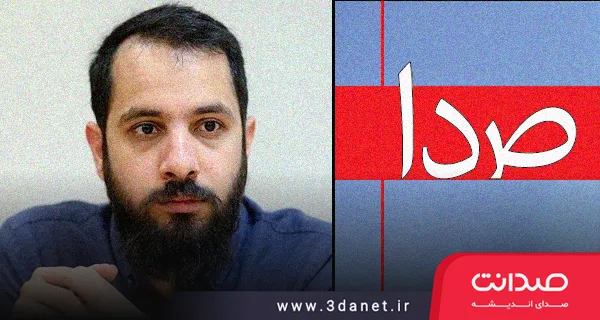
Mohammad Rahbari: My new book, titled “The Twitterization of Politics,” has finally been published after much back and forth. Combining theories related to social networks with data from Persian Twitter, this book is a rich resource for the study of social network theories in Persian and provides useful information on the effects of Twitter on society and politics in Iran.
Social media such as Twitter have had a significant impact on the socialization process of the new generation and on the type of activism of civil and political actors. However, no coherent study on this subject has yet been conducted in Iranian society. I am pleased that by creating this work, I have studied this transformation and change in Iran and the world in the Persian language.
If you are interested in the fields of political science, sociology, communications, computational social sciences, big data, and the relationship between technology, politics, and society, I suggest you read this book, which will be available in bookstores starting tomorrow.
This book, which emerged from my doctoral dissertation, has been published by “Agar” Publications with a foreword by Dr. Khaniki. I would like to thank my esteemed professors, Dr. Abolfazl Delavari, Dr. Hadi Khaniki, and Dr. Hamidreza Rahmanizadeh Dehkordi, who, with their guidance and advice during the course of my doctoral dissertation, helped to create a better work.
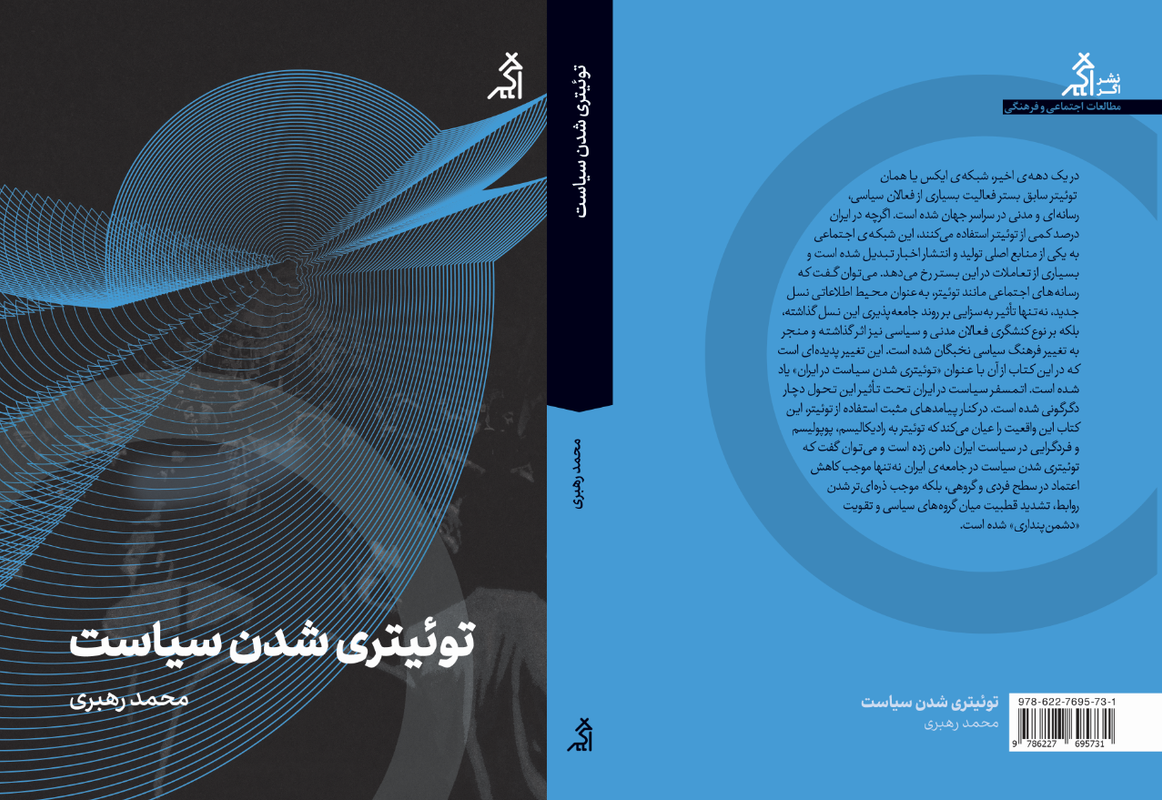
The text on the back cover of the book, which appears in the image, provides a good picture of this book.
.
.
Book Launch for “The Twitterization of Politics” at the House of Humanities Thinkers

According to the public relations office of the House of Humanities Thinkers, quoting the IRNA news agency, the book launch for “The Twitterization of Politics” was held on Monday, November 18, 2024, in the Ferdowsi Hall of the House of Humanities Thinkers, organized by Nashr-e Agar in collaboration with the Iranian Association of Cultural and Communication Studies, the House of Humanities Thinkers, and the Karzar social platform.
Mohammad Javad Zarif, the President's Strategic Deputy, speaking as one of the panelists at this event, addressed the widespread effects of Twitter in the world and stated: In the international arena, communication knows no borders, and in this context, Twitter is a tool for achieving borderless communication. Referring to Twitter's role in conveying the message of the people of Gaza against the Zionist regime, he continued: In the past, government propaganda could maintain control because Gaza is not the only example of Israel's behavior, but rather an example of this behavior. However, today, Twitter has broken this monopoly of mainstream media, and you saw how the voice of the oppressed people of Gaza reached the ears of the world, with Twitter playing a prominent role in this. Emphasizing that in today's world, individuals are activists, Zarif said: Governments have lost the monopoly on international activism, and we cannot understand the world based on the concepts of nation-states. Rather, we have entered a world where the individual is an activist; that Pakistani girl, that Swedish girl can engage in activism, and this is in a world where Western governments are reluctant to hear these voices. He acknowledged: International media are compelled to chase after Twitter. In the past, media created the news, but today they cannot remain indifferent to the publication of news on Twitter. The President's Strategic Deputy stressed: One of the tools for individual activism in the world is Twitter. In response to the question of how he identifies the audience for his tweets, Zarif said: Today, it is not possible to conduct audience analysis in the Twitter space. You can simultaneously engage in dialogue with American statesmen or citizens of that country, and on the other hand, the audience for your tweet could be the Islamic Resistance. The Twitterization of politics is a world of threats and opportunities Hadi Khaniki, a university professor, also speaking as another panelist at the event, addressed the importance of the subject discussed in the book "The Twitterization of Politics" and said: I consider it my duty to say that those who enter this field bear an important responsibility, as they bring theory from society into the university and transfer understanding from the university to society. This book is a doctoral dissertation that has been published with some changes, and we must thank 'Agar' Publishing for making a very good entry into this topic and the issue afflicting Iran. This communications professor added: The main concern is that we have passed through stages called the medialization, networkization, and virtualization of politics and have entered the arena of the Twitterization of politics. In the book "The Twitterization of Politics," both the discussion of social networks and the issues that arise in a networked and platform-based society are pursued, as well as the topics we face in the field of consensus engineering on Twitter. Khaniki said: From a communications perspective, the Twitterization of politics is a process in which the tweet becomes central to shaping political discourses and turns into a factor for communication between politicians and the people. This phenomenon challenges traditional methods of communication, and of course, the character limit leads to the conciseness and polarization of content and the power of rapid dissemination and virality through retweeting. This media veteran continued: The Twitterization of politics forms a transformation in the political arena that creates a world full of fear and also a world brimming with hope. The world of the Twitterization of politics is a world of threats and opportunities; direct and unmediated access creates an opportunity for politicians to have unfiltered communication with their audiences, which has created a new phenomenon we call the culture of sound bites, forming as a short and concise phenomenon in place of existing discourse. The book "The Twitterization of Politics" has been published at the right time Mohammad Fazeli, an author and researcher, also stated at this event that the book begins with detailed theories, adding: When media can operate extensively, a democratic space is created in society. The development of media leads to the development of democracy. Stating that the book says Twitter, as a medium, expands political culture, he said: This is a culture that existed in the 70s and 80s (Persian calendar). Jürgen Habermas says that the more dialogue increases in a society, the more democracy grows in that society. Despite the expectation that Twitter would contribute to a culture of democracy, because dialogue makes us accept differences, and the avoidance of violence is a part of democratic society, and solidarity is strengthened among societies. Media solidarity always creates this space.
According to Fazeli, evidence on Twitter shows that tribes have formed on Twitter that only reinforce their own members and do not talk to other tribes but fight them. Fazeli, emphasizing that Twitter not only fails to create a space for dialogue but also leads to the formation of "centrists," continued: On Twitter, in the most critical situations, what trends is "centrist, shut up." According to this researcher, statistics show that only three percent of Iran's population is on Twitter, and among them, 140,000 are active. But the one who is active on Twitter grapples with such an atmosphere. Stating that users want to get news about the country's situation through media, he said: Twitter users feel bad after using it and become dissatisfied with life, and users leave Twitter after staying on it for a while because Twitter emphasizes building a dark society. This shows that individuals who are more extreme and take on a hue of anti-rationalism receive more likes than others. Fazeli, assuming that society yearns for democracy, continued: Twitter users are entangled in radicalism, individualism, and fragmentation. Policymaking in Iran also takes its cues from this space and may base a policy on this atmosphere. This researcher, stating that this book is timely, added: If the people who are on Twitter want to be present in the real space, they bring their legacy into the public sphere. Fazeli, stating that it is necessary to conduct a comparative study of the Twitter space, said: If a society is allowed to have political action outside, all the hostility will not be poured into Twitter; of course, the limitation of characters can also contribute to the harshness of posts. Generation Z uses Twitter more than previous generations Mohammad Rahbari, author of the book "The Twitterization of Politics," also explained a few points about the book, stating: The weaknesses and the points raised about the book's content are accurate and correct. I wrote this book at a time when many researchers believe that one should study national surveys and that what happens in the virtual space is a reflection of society. This researcher, stating that developments within social networks influence societal changes, continued: In post-industrial society, the way people are socialized is affected by the internal atmosphere of social networks. It can be said that only three percent of society are members of Twitter, but it should be noted that 25 percent of students use Twitter, which shows that the new generation uses this space much more, and the new generation is influenced by the prevailing atmosphere. He continued: These people build our future, and therefore more people will be active on Twitter in the future, and everyone, directly and indirectly, feeds on its content, and this trend has a positive or negative effect on society, and because of the effects it has, Twitter must be studied. According to this author, Twitter fuels populism and increases populist activities. People say things on Twitter to receive more likes and followers. Populism gradually engulfs the elite and political space. He added: Users feel that activity on Twitter is effective, and the individual does not feel the need for collective activism. Also, radicalism spreads in form and content. The prevailing spirit of Twitter's content and literature is radical. Rahbari, declaring that he has a critical and pessimistic view of Twitter, continued: The filtering of Twitter has amplified all these effects, and when we filter a space, we prevent critical perspectives. The space must be left open and free so that a critical view can be taken of it. If the Twitter space is free, radicalism decreases, and people look at it with a more critical eye.
.
.
Watch the book launch for “The Twitterization of Politics” on YouTube | Aparat
Listen to the audio of Mohammad Javad Zarif's speech at this event
Listen to the audio of Hadi Khaniki's speech at this event
Listen to the audio of Mohammad Rahbari's speech at this event
Listen to the audio of Mohammad Fazeli's speech at this event
.
.
Shargh newspaper's report on the unveiling of the book “The Twitterization of Politics”
.
.
Ham-Mihan newspaper's report on the unveiling of the book “The Twitterization of Politics”
.
.
The Twitterization of Politics
Author: Mohammad Rahbari
Edition and year of publication: First/2024
Number of pages: 379
Binding and format: Paperback, octavo
.
.

Discussion0 comments
No comments yet; let yours be the first voice.