Political Science
Introducing Issues in Political Theory by Catriona McKinnon
In Issues in Political Theory, Catriona McKinnon systematically examines foundational concepts of political theory—from freedom to justice—by integrating theory and practice. Covering contemporary topics, the book strengthens critical thinking.
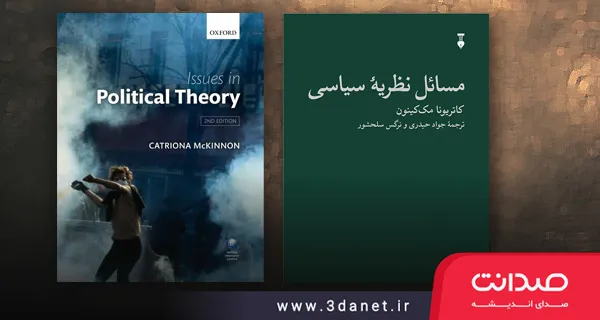
Introducing the Book "Issues in Political Theory by Catriona McKinnon" Translated by Javad Heydari and Narges Salahshour
Javad Heydari
We have translated a book called "Issues in Political Theory," which has recently been published. This book is one of the best written in this field and addresses all our political concerns in a clear, lucid, and systematic manner.
1- Comprehensive Coverage of Fundamental Concepts This book addresses all the essential topics of political theory, including freedom, democracy, equality and justice, and more. Each chapter is written by a leading scholar in that area, offering authoritative and profound perspectives.
2- Combining Theory with Practice One of the outstanding features of this book is the use of extensive case studies at the end of each chapter. These case studies demonstrate how theoretical concepts are applied to contemporary political issues, bridging the gap between abstract theory and real political phenomena.
3- Accessibility and Engagement for Readers This book is designed with the needs of concerned readers in mind and presents complex theories in a simple and understandable way. It also includes pedagogical features such as glossaries and discussion questions, key points, important thinkers, and influential books, which facilitate understanding and stimulate critical analysis.
4- Coverage of Contemporary Topics and Diverse Perspectives In addition to long-standing debates, this book also addresses emerging topics in political theory such as multiculturalism and environmentalism. This breadth ensures that readers become familiar with a wide range of issues relevant to modern political theories.
5- Strengthening Critical Thinking By presenting various perspectives and encouraging the application of theory to practice, this book strengthens critical thinking skills. It calls upon readers to analyze and evaluate political arguments, preparing them for advanced studies or informed citizenship.
Now the question arises: what are these issues?
1- Political Authority and the Obligation to Obey
Why should we obey the law? Should we always follow it regardless of its content, or only when it is just? Can states legitimately claim authority, and if so, on what basis? This chapter examines various theoretical perspectives on political authority and the obligation to obey. It also addresses arguments that defend state authority and those that reject it (such as anarchist views).
2- Nation and State
Nation-states are the fundamental building blocks of modern political life. The world is often seen as a mosaic of separate countries, each defined by national borders. These political units have a profound impact on the lives of their inhabitants and their neighbors. But why is the world divided into separate political units in this way and not another? After examining the key features of the modern nation-state, it addresses three main questions: (a) Why have nations been so influential in modern politics? (b) What is a nation, and how is it distinguished from other forms of community? (c) Do nations have a right to their own state?
3- War and Intervention
War poses a profound moral dilemma. This phenomenon involves mass killing, even of civilians, and inflicts serious damage on social, cultural, and environmental structures. Reactions to war range from outright condemnation to a view that considers morality irrelevant in war. There is also a third approach that permits war under certain conditions, but subject to strict ethical principles—referred to as "just war." This chapter examines these moral constraints and permissions and analyzes their complexities. Military intervention, particularly in humanitarian and preemptive cases, will also be examined as a form of war.
4- Democracy
Democracy is widely recognized as a successful and morally attractive form of political organization, and many consider it the pinnacle of political development. However, not everyone agrees with this view. Some argue that democratic institutions can be instruments of domination by powerful countries over less developed regions. In this chapter, various ways of justifying democracy are examined. We first address the instrumental reasons for and against democracy, then point to its intrinsic value, and confront the fundamental challenge—how to cultivate citizens capable of sustaining democratic ideals. Finally, we will also discuss democratic principles in global institutions.
5- Freedom
Freedom is one of the central ideals of advanced societies, but a distinction must be drawn between "freedom as doing whatever one wants" (a descriptive idea of freedom) and freedom as a normative ideal that defines specific spheres of conduct for free individuals. Civil liberty can be seen as a set of protected rights, yet disagreement persists over the importance of these rights and how to balance them with other values. Following the view of John Stuart Mill, some believe there should be a basic right to personal conduct without interference from others.
6- Toleration
Toleration has re-emerged as a key concept in political theory. Although it is often praised, it poses a moral paradox: is it truly good to permit actions we believe are wrong? In diverse, multicultural democracies, toleration is essential for managing deep cultural and moral disagreements. Two main approaches have been proposed: a "negative" view focused on non-interference and a "positive" view emphasizing recognition and acknowledgment. However, toleration must be limited to ensure the survival of democratic society. Determining these limits requires striking a balance between the right to freedom and necessary security measures.
7- Equality and Social Justice
Political debates often refer to social justice, but what exactly does this concept mean? Should social justice eliminate all inequalities, or is guaranteeing equal opportunities sufficient? Or perhaps its goal is to eradicate extreme poverty? Does the realization of social justice require a particular kind of social structure? While a just society clearly rejects discrimination based on race, gender, or class, should we acknowledge everyone as equal individuals? Theories of social justice disagree on these matters.
8- Human Rights
The idea that all human beings, regardless of where they live, possess fundamental rights has roots in various philosophical, legal, and religious traditions. In the past, this idea was used to justify and limit the authority of states. Today, human rights are presented as moral claims that take precedence over other considerations. This discussion addresses key issues in the field: the nature, content, and scope of human rights; arguments for and against their existence; how to determine the limits and boundaries of these rights; and the challenges of implementing them in a global context.
9- Multiculturalism
Many people support the promotion of peaceful coexistence among different cultural groups and the condemnation of discrimination based on culture, religion, or ethnicity. Multiculturalism, as a policy and social ideal, seeks to address these inequalities. This idea seems straightforward when all groups adhere to liberal values, such as freedom of expression and gender equality. But what should be done if a group's values conflict with those of liberal democracy? This discussion examines the debates on multiculturalism in political theory, including "thick" versus "thin" multiculturalism, cultural rights, oppression, and the politics of recognition.
10- Citizenship
Modern life is organized around the institution of citizenship within the framework of nation-states. For most people, citizenship in a particular nation-state shapes their opportunities, rights, and obligations. This discussion addresses the moral significance of citizenship: What obligations do citizens have to one another? Who should be accepted as citizens? And how should new citizens be created? Here, we examine the concept of citizenship beyond a mere legal status and analyze its profound moral implications for political society and individual life.
11- Gender
Feminism has had a profound impact on theory and practice, challenging existing norms and bringing about widespread legal and social reforms. Yet, despite advocating for equality between women and men, some refuse the label "feminist," considering it unnecessary or misguided. This discussion addresses the central themes of feminism and demonstrates why this movement continues to play a vital role in political theory. Topics in this chapter include defining feminism, the impact of family life and the distinction between the public and private spheres on equality, and an examination of how issues of gender and violence influence the feminist agenda.
12- Global Justice
What would a just global order look like? How can we move towards it? These questions are at the heart of the discussion of the principles that should guide global interactions. Should we seek greater equality among the world's people, or should our focus be on ensuring a decent life for all? This discussion examines John Rawls's views on these issues and the critical responses to them. We discuss pathways for global improvements, from strengthening international governance to systematic collective strategies for advancing global justice.
13- Environment
In the late 1960s and early 1970s, academic attention turned to whether democracies were capable of dealing with serious environmental threats. The answers varied: some were hopeful about utopian green theories, some trusted in ecological modernization, and others were pessimistic. Today, global environmental challenges such as climate change pose urgent problems for current democratic systems. Proposed solutions include deliberative democracy, ecological citizenship, and green virtues.
.
.
To purchase the book "Issues in Political Theory" by Catriona McKinnon from Nashrenow Publications, click here.
.
.

Discussion0 comments
No comments yet; let yours be the first voice.