Philosophy
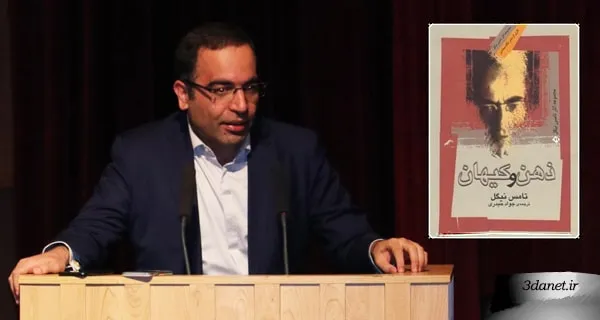
Equality and Partiality by Thomas Nagel, translated by Javad Heydari
Thomas Nagel sees the morality of political systems as a movement from partiality toward equality. He distinguishes three conceptions of equality: one based on rights, one on utility, and one on well-being grounded in the priority of needs.

Thomas Nagel believes that living morally in the individual sphere is a movement from self-interest and selfishness toward other-regardingness and altruism, and to the extent that we move from self-interest to other-regardingness, we are moral to that same extent. There is no doubt that all of us human beings pursue our own individual interests, regardless of what conception of interests we hold. Our natural human tendency is to prioritize the interests of ourselves and our families, our friends, our fellow citizens, and our compatriots. But in Nagel's view, we human beings, in addition to being self-interested and selfish, can also be other-regarding and altruistic and take the interests of others into account in our calculations. Nagel believes that living morally in the political sphere is a movement from partiality toward equality. Just as the conflict between self-interest and other-regardingness is the most important conflict in individual ethics, in Nagel's view, the conflict between equality and partiality is the most important conflict in the political arena. "Equality" is our most important ideal both in ethics and in ethical politics. Political systems are moral to the extent that they move from partiality toward equality. Therefore, for Nagel, equality is the plumb line for assessing the degree to which political systems are moral. In his view, a kind of blind "partiality" lies at the very core of autocratic and tyrannical systems, and a kind of "equality" lies at the very core of legitimate and moral systems. The reformist movement is a movement toward the ideal of equality. But both "partiality" and "equality" are ambiguous terms and must be clarified.
A) Partiality
Hobbes believes that we human beings pursue only and exclusively our own interests, and therefore partiality is rooted in our nature. One of the greatest questions concerning ethics is whether morality requires us to subordinate our personal interest to the good of people in general or not. And if so, to what extent? Hobbes's answer is that morality and self-interest do not conflict, because moral obligations arise indirectly from self-interest. Hobbes's argument is that certain rules of conduct are necessary for living peacefully with one another and enjoying the benefits of civilization, because if human beings do not adhere to these rules, they will fall into a wretched state of insecurity and violence. Now, what are these rules? The prohibition of murder, rape, theft, fraud, breach of contract, and so on. Therefore, it is in every individual's interest to live in a society where people follow these rules. Universal adherence to morality serves the collective interest of each and every member of any society. So, in Hobbes's conception, the moral system is a movement from individual self-interest toward collective self-interest. A problem arises here. If an opportunity arises for someone to sacrifice collective self-interest for their individual self-interest, what should be done in this case? In Hobbes's view, in order to bring collective self-interest into line with individual self-interest, and thereby make it motivationally possible to achieve, it is necessary to change the external circumstances by creating an enforcer of moral rules, that is, a sovereign. Only in this way can individuals be assured of following rules that each of them has a reason to demand that everyone follow.
B) Equality
We said that the moral political system is a movement from partiality to equality. Nagel identifies three very important conceptions of equality, and on this basis, three types of ethics can be distinguished from one another. So, if our criterion for moralizing the political system is the pursuit of "equality," then equality is our most important criterion both for evaluation and for decision-making in the realm of individual and institutional behavior. These three conceptions of equality are:
1_ Rights or the politics of liberty: based on non-interference
2_ Utility: based on maximizing the happiness of the greatest number
3_ Well-being: based on a system of prioritizing needs.
Now we will examine these three conceptions of equality more closely.
1- Rights, or the politics of liberty, or the politics of non-interference: Rights are constraints on action. That is, every individual has the right to perform certain actions or to refrain from certain actions. Every individual has the right to be treated in a particular way or not to be treated in particular ways. Rights are universal, and a human being possesses these rights by virtue of being human. In Nagel's view, having a right means "non-interference." Non-interference means that we must regard every person as immune to subjugation by others. In other words, each of us is a fully autonomous being whose boundaries of autonomy must not be violated. Autonomy here is the opposite of human tutelage. Now the question arises as to what things are considered "rights." There is considerable disagreement among thinkers of this school on this matter. But in brief, these rights include: the right to self-preservation, the right to property, the right to freedom of expression, the right to freedom of association, the right to a personal and private sphere, the right to choose one's religion, the right to vote, and so on. In fact, the idea of immunity from aggression, or liberty, originates from this conception of equality, namely rights, and everyone enjoys these rights equally. Thus, this conception of equality pursues one of our greatest ideals in politics, namely liberty. The most important thinkers of this school among the classics is John Locke, and among contemporaries, Robert Nozick and Friedrich Hayek. In our country, Mousa Ghaninejad is a prominent defender of this conception of equality. His defense of the free market and the ideas of Hayek is a clear example of this thought.
2- Utility: Utilitarianism imagines a sympathetic and impartial observer who is equally and uniformly concerned with everyone's happiness and misery, and with everyone's satisfaction and dissatisfaction. The goal of this impartial sympathetic observer is nothing but maximizing the sum total of happiness over misery. In other words, the goal of utilitarianism is to bring about the greatest happiness for the greatest number. Here, happiness means pleasure and misery means pain. And in this decision-making system, every individual is equally of unit value and has equal status and dignity, but ultimately, these are aggregated and the final net result is calculated. Thus, this conception of equality pursues another of our greatest ideals in politics, namely welfare. The most important thinkers of this school among the classics are David Hume, Jeremy Bentham, and John Stuart Mill, and among contemporaries, Peter Singer and Derek Parfit. In our country, Mr. Morteza Mardiha is a full-fledged defender of utilitarianism, pursuing this conception of equality in both his authored works and his translations.
3- Well-being, or the politics of the priority of needs, or egalitarianism: This conception of equality pursues multiple and symmetrical identification. That is, it is not like an impartial sympathetic observer who decides "from the outside," but rather identifies "from the inside" with persons. This conception opposes the blending of everyone's happiness and misery by an impartial sympathetic observer. This model of individual identification takes the distinction between persons seriously. The method proposed by this model, as an alternative and substitute for maximizing happiness, is the method of a "system of priorities": meeting the most urgent and immediate needs of the most deprived members of society. Thus, this method states that among needs, interests, and benefits, and harms and losses, an order and system of priorities must be established, where more urgent and immediate needs take precedence in cases of conflict. The urgent and immediate needs of a few take precedence over the less urgent and immediate needs of the many. Urgent and immediate needs are the basic needs for leading a minimally dignified life. This conception of equality opposes the aggregative method of utilitarianism. This aggregative method allows a large number of people who do not have urgent and immediate needs to consign the urgent and immediate needs of a deprived minority to oblivion. For example, from a utilitarian perspective, covering the heavy costs of education and providing financial assistance to a disabled person is difficult to justify. Thus, this conception of equality pursues one of our most important ideals in politics, namely justice. The most important thinkers of this school among the classics is Kant, and among contemporaries, Rawls, Nagel, Dworkin, and Scanlon. In our country, unfortunately, this tradition has no serious defender. But perhaps it can be said that this type of political thinking is derivable from the political implications of Malekian's project of Rationality and Spirituality.
Considering what has been said, it can be concluded that based on these three conceptions of equality, we have three ways of realizing equality:
1_ Rights-based reforms: (Priority of political development)
2_ Utility-seeking reforms: (Priority of economic development)
3_ Egalitarian reforms: (Priority of equitable development).
.
.
Book: Equality and Partiality
Author: Thomas Nagel
Translator: Javad Heydari
Edition: First Printing
Publication Date: 2020
Number of Pages: 350
ISBN: 978-600-490-082-9
Publisher: Farhang-e Nashr-e No
.
.





Discussion0 comments
No comments yet; let yours be the first voice.