Philosophy
A Response to an Aggressive Critic
The translator of Nagel's works responds to a hostile critique of his translation of Mind and Cosmos, enumerating the critic's gross linguistic and philosophical errors. By examining the critic's mistakes, he demonstrates that the critic lacked the requisite knowledge for such a review.
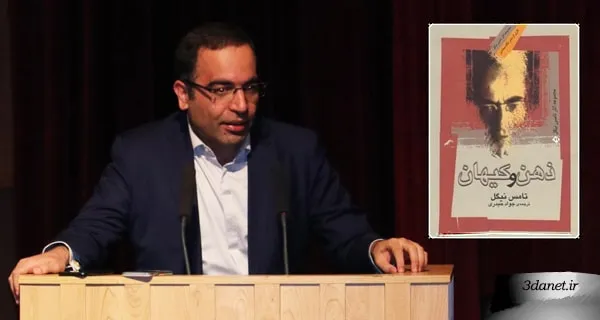
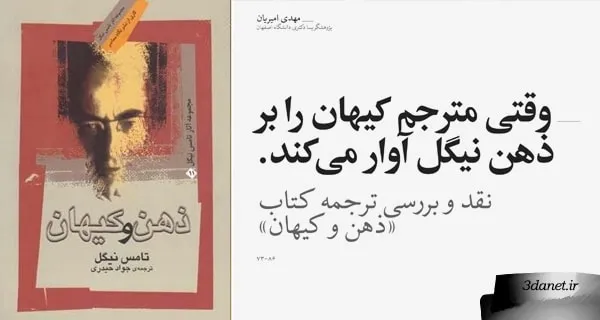
Since 2013, when I began translating Nagel's works, many respected critics have started critiquing my translations of Nagel's works, and in fairness, I have greatly benefited from all the critiques of my friends and am indebted to all those dear critics. Recently, a dear and unseen friend named Mehdi Amirian has written a critique of the translation of the book "Mind and Cosmos", and I had intended, as before, to use the critiques that I find correct in the next edition of the book. Friends insisted that I respond to this respected critic. I, too, will offer a response to this critique on several points.
The critiques Mr. Amirian has leveled against the book Mind and Cosmos fall into four categories (I will, of course, overlook the critic's negative sentiment and the emotionally charged negative words directed at the translator). 1. In many instances, the critic himself has made gross errors. 2. In only five cases is Mr. Amirian correct, and I thank him infinitely for these five cases. 3. In six cases, both Mr. Amirian and I have erred. 4. In some cases, Mr. Amirian has exercised personal taste. I will mainly address the first category and, by citing a few examples, will show that our dear critic does not know English well and has committed gross errors in this 14-page article of his, only a few of which I will mention. The respected critic has said, "We hope this critique has been able, to a negligible extent, to reduce the audacity and recklessness of translators like Mr. Heydari and that they test their knowledge of a book's subject before translating a work." I also hope that with this short critique, I can, to a negligible extent, reduce the audacity and recklessness of critics like Mr. Amiri and that they test their linguistic knowledge before critiquing a work.
The respected critic has stated, "Perhaps the translator's main weakness, for which his academic background also serves as evidence, can be considered unfamiliarity with analytic philosophy." Of course, I accept that my primary specialization is in political philosophy and I do not have much expertise in the philosophy of mind. Perhaps this unfamiliarity with the philosophy of mind, or in the respected critic's imprecise phrasing, "analytic philosophy," may affect my accuracy in translation, and of course, I do not deny it.
1. The respected critic has stated, "At least in the area of the philosophy of mind, in which this writer has negligible expertise, [Nagel] was able, with the publication of the article 'What It Is Like to Be a Bat' (1974), to breathe new life into the body of the philosophy of mind in the current scientific and objective world." Right at the outset, our dear critic, who has "negligible expertise" in the philosophy of mind, has mistranslated the title of Nagel's classic article. The original title of Nagel's article is:
what is it like to be a bat?
The dear critic has translated the title of this article as "What sort of thing is it to be a bat?" which is a completely incorrect translation. After this article, the title "what is it like to be X" became an established term in the philosophy of mind, and its precise meaning is "What is it like to be X?" In other words, this phrase seeks to emphasize "what it is like," which has a subjective and internal aspect, not "what sort of thing it is."
2. In translating the subtitle of Nagel's book, the respected critic has omitted an important adverb. The title of Nagel's book is:
MIND AND COSMOS: Why the Materialist Neo-Darwinian Conception of Nature Is Almost Certainly False
The respected critic has translated it as: "Why the Materialist Neo-Darwinian Conception of Nature Is Certainly False." He has omitted the important adverb "Almost." "Almost" can be translated as "taqriban" or "mishavad goft." So the precise translation of the subtitle becomes: "Mind and Cosmos: Why the Materialist Neo-Darwinian Conception of Nature Is, One Might Say, Certainly False." Not to mention that some meticulous thinkers believe that for "conception," the adjective "incorrect" (nādorost) should be used rather than "false" (kāzeb).
3. Perhaps it can be said that the respected critic's most important objection lies in this passage:
I suspect that the appearance of contingency in the relation between mind and brain is probably an illusion, and that it is in fact a necessary but nonconceptual connection, concealed from us by the inadequacy of our present concepts.
My translation: My suspicion is that the contingency of the connection between mind and brain is probably an illusion, and that this connection is, in reality, a necessary but non-conceptual link, and the inadequacy of our current concepts hides this connection from us.
The esteemed critic's translation: I am suspicious that the appearance of possibility in the mind-body relationship is probably an illusion and that it is in fact a necessary connection, though not a conceptual link, which has remained hidden from us due to the inadequacy of our current concepts.
Explanation: The esteemed critic has said that "this part should be considered one of the masterpieces of translation. Unfortunately, the translator has completely changed the meaning of the sentence by incorrectly translating the word 'suspect'." This part is precisely a masterpiece of the dear critic's linguistics and philosophical knowledge. Firstly, they have not noticed that "suspect that" is translated as "my suspicion/my conjecture/my guess is that." Secondly, the verb suspect itself originally means "suspicion" and "conjecture." Nagel wants to say that the relationship between mind and brain exists in two forms: contingent and necessary. Nagel wants to reject contingency and emphasize necessity. In other words, Nagel says: 1. "My suspicion is that the contingency [or appearance of possibility] in the mind-brain relationship is probably an illusion." 2. "And my suspicion is that there is, in reality, a kind of necessary but non-conceptual link that the inadequacy of our current concepts hides from us." Thirdly; both here and in other instances, the esteemed critic has not been careful in typing my translations and has translated "contingency" as "possibility of being." Of course, if I were as suspicious as they are, I would say this was intentional, but no, I am sure it was inadvertent.
4. Another instance that once again displays the esteemed critic's weakness in English and even philosophical knowledge is this critique:
This attempt to overcome the division from the direction of the mental extends from Berkeley…to the logical positivists, who analyzed the physical world as a construction out of sense data.
My translation: The above attempt to overcome this division from the direction of mental affairs extends from Berkeley…to the logical positivists who analyzed the physical world as a construction within sense data.
The esteemed critic's translation: The attempt to overcome the separation begins from Berkeley and in the direction of the mind….and extends to the logical positivists who analyzed the physical world as a building outside of sense data.
Explanation: Our dear critic says: "How, according to the positivists, is the physical world within sense data? Basically, which dictionary has defined the word 'out' as 'within' that we are not aware of?" Firstly, one of the meanings of "out of" is "from within," "from among," "from inside." They have asked, "which dictionary has defined the word 'out' as 'within' that we are not aware of?" In response, I say all reputable English-to-English dictionaries like Oxford, Collins, Webster, and the English-to-Persian dictionaries Sokhan and Pouya have translated it this way. Secondly; the phrase
»who analyzed the physical world as a construction out of sense data.«
is stated in describing the positivists. Now the question arises: how did the positivists, who have always emphasized sense data, analyze the external world as a building or construction outside of sense data?
5. Consider this sentence:
The existence of consciousness seems to imply that the physical description of the universe, in spite of its richness and explanatory power, is only part of the truth, and that the natural order is far less austere than it would be if physics and chemistry accounted for everything. If we take this problem seriously, and follow out its implications, it threatens to unravel the entire naturalistic world picture. Yet it is very difficult to imagine viable alternatives.
My translation: Apparently the existence of consciousness entails that the physical description of the universe, despite its richness and explanatory power, is only part of the truth, and if physics and chemistry are to explain everything, the natural order must be far less simple and unadorned than this. If we take this problem seriously and draw out its implications, then the possibility of explaining the entire naturalistic world-picture disappears. Even so, conceiving of possible alternatives is very difficult.
The esteemed critic’s translation: If we take this problem seriously and follow its implications, it is a threat to the demystification of the entire naturalistic picture of the world.
Explanation: In the original, Nagel wants to say that “if physics and chemistry are to explain everything, the natural order must be far less simple and unadorned than this.” So “if we take this problem seriously and draw out its implications, then the possibility of explaining the entire naturalistic world-picture disappears. Even so, conceiving of possible alternatives is very difficult.” But the esteemed critic has stated: “Perhaps it can be said that the most important reason for the mistranslation of this sentence is that the word ‘threatens’ is used in two senses: ‘to pose a threat to…’ and ‘to give the possibility of… occurring,’ and the translator chose the second meaning. Whereas if he had paid attention to the context of the sentence, he probably would not have made such a major error.” But this gentleman himself has not noticed that the context of the sentence pushes us toward the second meaning of threatens; otherwise, threatens is not always used in the first sense.
6. The esteemed critic suggested “physical science” as an equivalent for physical science, and I used “the science of physics,” but both of our translations are wrong. In a subsequent revision of this book that I was doing, I realized this error. The precise and correct equivalent for physical science is “the natural sciences.”
7. The esteemed critic has said that translating relationally as “in a relative manner” is incorrect and that its precise translation is “in a relational manner.” He has not noticed that in metaphysical discussions, when the topic of “patterns of being” arises, scholars of this discipline say these patterns consist of: substances (like a stone, a table), relations (the relation of distance or proximity, the relation of father and son), and so on. Here, too, relation refers to this pattern.
8. The esteemed critic has said that dispositions means “aptitudes,” not my translation of “inclinations.” I chose this equivalent from the psychology dictionary of the late Mohammad-Taqi Brahani, and by the admission of many specialists, it is the most authoritative psychology dictionary.
9. He has stated that the precise translation of argued is “argued” and not “held the view,” and went on to say that “this is another place that shows the translator has not paid attention to the specific terminology of philosophy.” But the dear critic has not noticed that if argue is used for a claim, it is translated as “to hold the view,” and if it is used for a reason, it is translated as “to argue.”
10. The esteemed critic has said that translating evidence as “indications and evidence” is wrong and that I should have translated it as “evidence.” He has not noticed that evidence is an uncountable noun and therefore does not have a plural form, and in translation, depending on the context of the text, we can translate it into the plural.
11. The esteemed critic has said that in translating the phrase Let me begin with a brief history of, I omitted the word Let me in the translation; once again, due to weak linguistic knowledge, he has not noticed that the most commonplace translation of Let me is “allow me,” so he has translated it as “allow me to begin my work with a brief history of….” Professional translators say it is better in Persian to translate Let me by rendering the verb following Let me in the subjunctive mood. Therefore, its translation becomes: “I shall begin my work with a brief history of….”
12. And as for the accusation of “plagiarism.” The book Mind and Cosmos was my first collaboration with Negah-e Moaser Publishing. The introduction that appears at the beginning of the book as the translator’s introduction was entirely the publisher’s error. This article, along with critiques by Alvin Plantinga and Elliott Sober, was also published in the journal Andisheh-ye Pouya. It was planned that these three critiques would appear at the end of the book, but the esteemed publisher, due to their usual sloppiness, published neither my introduction nor those other two critiques. Instead, they published one of the critiques under the name of the translator’s introduction. The acknowledgment that appears at the end of the introduction was sent by me via text message in the final stages to them. The publisher did not show me the final version at all, and even for the second printing of the book, despite my telling them to hold off, they printed it again without my permission. In the introductions I write for Nagel’s books, my name and signature are always seen at the end of the introduction, such as in the books The Possibility of Altruism, Ethics, and Mortal Questions. In this very book, Mortal Questions, the esteemed publisher, in addition to my introduction to the book, has also presented Nagel’s own introduction under my name—provided, of course, that Mr. Amirian does not accuse me of plagiarism for a second time. The subtitle of the book was removed by the publisher themselves, and even the title “For the Iranian Reader” was added by the publisher themselves. Of course, none of these matters justify my negligence and error, and part of the responsibility lies with me. All these issues led me to cease my collaboration with this publisher and sign a contract with a more professional publisher. The book Mind and Cosmos is scheduled to be published with a new edition in the near future.
13. In closing, I thank Mr. Amirian for devoting his time and energy to critiquing the translation of this book. Although his criticisms were barbed and stinging, I welcome such critiques with all my heart and soul, and I declare my readiness for this response to be an overture for continuing the dialogue and discussion regarding each and every one of his criticisms.
.
.
A Response to an Aggressive Critic
Author: Javad Heydari
.
.




Discussion21 comments
ترجمه آقای حیدری یک فاجعه مطلق است. ایشان به بدیهی ترین اصول زبان انگلیسی هم تسلطی ندارند. کسی از دوستان بوه است چیزی از ترجمه ایشان دستگیرش شود؟؟
جالب است که آدم این قدر با نادانسته هایش چنین تهورآمیز یک مترجم را نقد کند البته نقد کردن مترجم اشکالی ندارد اما از طرف ناقدی توانمند تا مترجم را در راه پیش رویش کوشا و دلگرم کند
سلام پنج مورد منتقد درست گفته و شش مورد مترجم و منتقد باهم اشتباه کرده اند, همین کافی ست که پول مان برای خرید اینطور کتاب ها حرام نکنیم. از صداقت هردوی آن ها متشکریم, همین
در ضمن من شخصا نسخه ی انگلیسی کتاب «ذهن و کیهان » را مطالعه کرده ام و فحوای فلسفی کتاب را آنچنان دشوار ندیدم. البته پروژه ی نیگل در این کتاب--طرح دیدگاهی ارسطویی از کیهان و آکاهی در آن در قالب «موجبیت غایت شناختی» teleological causation--انقلابی و در نوع خود جدید و برای بسیاری پادشهودی است.
آقای ایمانی، نخست ترجمه: (بنابراین نمی توان درباره ی هر نتیجه ای ، حال هر چه قدر هم تصادفی یا دلخواه، چنین ادعا کرد که آن [نتیجه] شاهدی ایست بر اینکه فرآیندی که منجر به [حصول] آن [نتیجه] شده است تعمداً سوگیرانه بوده است، آن هم تنها به این دلیل که [نتیجه ی مذکور] بنا بر این فرضیه که محصول موجودی است که اراده کرده است دقیقا همان [نتیجه] روی دهد، محتمل به نظر می رسد. هر گونه استدلالی مبتنی بر نظم به پیش فرض ها ی کلی مقید کننده ی بیشتری در مورد آن نوع اموری که یک ناظم (طراح) ممکن است خواستار ایجادشان باشد وابسته است.) نکته: عبارت "intentionaly biased" را، با توجه به ایهامی که در واژه ی intention وجود دارد--قصد، نیت، عمد-- می توان به «به طرز قصدمندی سوگیرانه» هم ترجمه کرد. لازم به ذکر است که دشواری خاصی که در این قسمت از متن نیگل محسوس است ریشه در تسلسل افسارگسیخته ی جمله واره ها دارد؛ در واقع، نه معنای فلسفی متن، که نگارش متن انگلیسی کمی دیریاب است. ابتدایی ترین کتاب های writing انگلیسی هم نویسنده را از به کار بردن پی در پی جمله واره ای اسمی حاوی that بر حذر می دارند. متن منقول نه دشوار که شلخته است. اما، این باز هم مترجم کتاب را تبرئه نمی کند؛ ایشان تسلط کافی به زبان انگلیسی ندارند و کاملا آشکار است که تر جمه را صرفا از راه سعی و خطا فرا گرفته اند. معادل یابی واژگان ایشان البته تحسین برانگیز است ، اما در زمینه ی افعال دو وجهی، هم آیند ها، اصطلاحات و ساختار ها هنوز جای کار دارند. استاد ملکیان اما اهتمام جدی به یادگیری انگلیسی داشته اند و دانش زبانی ایشان حتی در مواردی بیشتر از یک دکتری زبان انگلیسی است. اگر متون نیگل برای شما «دشوار» به نظر می رسد، پس شما متون دشوار ندیده اید! پیشنهاد می کنم نیم نگاهی به یکی از متون بنیادی فلسفه ی پست مدرن به نام Postmodernism or the Cultural Logical of Late Capitalism اثر fredric Jameson بیاندازید؛ با اینکه این کتاب ،در کنار دو اثر دیگر از فرانسوا لیوتار و دیود هاروی، از مهم ترین و دوران ساز ترین کتاب های فلسفه ی پست مدرن (از نگاه سنت قاره ای) است، تا کنون هیچ مترجمی اقدام به تر جمه ی آن نکرده است--تنها مقاله ی ابتدایی کتاب ترجمه شده که آن هم تعریفی ندارد. و در آخر، لحن کلام شما شایسته ی بحث فلسفی نبود؛ مطمئن باشید که کسی که در این چنین سایتی که همه ی فلسفه دوستان ایران در آن به بحث و تبادل نظر مشغول اند هیچ گاه به قصد «لاف زدن» چیزی نمی نویسد. البته من، ضمن عذر خواهی از ابهام و تعمیمی که در کامنت قبلی ام وجود دارد، حرفم را اینگونه تصحیح می کنم که : برای افرادی که پیش تر در خواندن متون فلسفی انگلیسی تجربه ای ، هر چند کلی، دارند و به علاوه پی گیر مسلئه ی «ذهن» و «آگاهی» هستند، متن انگلیسی نیگل بس بسیار فهم پذیر تر و سودمند تر خواهد بود.
خواهش میکنم این ترجمهتان را یکبار دیگر بخوانید، ببیند اصلاً مفهوم هست، باز هزار رحمت به مترجم کتاب! مترجم کتاب به بنده دفتری را نشان داد که برای ترجمه این کتاب حدود ۵۰ جمله بسیار دشوار نیگل را با استاد ملکیان که قبولش دارید مشورت کرده بود. از جمله این عبارت بسیار دشوار نیگل را. به نظرم به جای خصومت بیجا با مترجم دلسوزانه نقدش کنید و بهش راهکار نشان دهید. مترجم این کتاب سختکوشترین و متواضعترین انسانی هست که بنده به عمرم دیدهام. مطمئنم که از انتقادات شما استقبال خواهد کرد. از عبارت «لافزنی» هم معذرت میخواهم! البته کاش به جای اسم مستعار اسم واقعی تان را میگفتید تا گفتگوی راحت تر میشد. اسم مستعار در مباحث فلسفی یعنی محافظه کاری، یعنی نداشتن شهامت اظهار نظر
نسخه ی انگلیسی کتاب ذهن و کیهان به مراتب فهم پذیر تر و سرراست تر از متن ترجمه ی آقای حیدری است. من خواندن متن انگلیسی این کتاب را به همه ی کسانی که به جایگاه «آگاهی» در کیهان علاقه دارند توصیه می کنم. کافیست یک دانش پایه از متون و کلید واژه های فلسفی انگلیسی داشته باشید.
برخلاف ادعای شما، نیگل متفکری دشوارنویس است، میتوانید به همین مقالههای ترجمه شده ی استاد ملکیان از نیگل رجوع کنید. اگر اینقدر ساده بود که خیلیها میرفتند سراغ نیگل و از آثارش چندتا ترجمه میامد بیرون. قبول دارم ترجمه آقای حیدری کمی دشوار است. اما دشواری مربوط به متن است. خیلی خوشحال میشم از این جمله نیگل در کتاب ذهن و کیهان ترجمه سرراست و فهم پذیر بدید، وگرنه فقط لاف میزنید. ( us one cannot claim about just any outcome S, however random or arbitrary, that it gives evidence that the process that led to it was intentionally biased, simply on the ground that it is rendered likely by the hypothesis that it was produced by a being who wanted precisely S to occur. Any argument from design depends on more restrictive general assump- tions about what kinds of things a designer might want to produce.)
سلام عزیز قبول دارم که هرکس بتونه متن اصلی رو بخونه بسیار بسیار بهتر از ترجمهی بنده است.
سلام. متخصص فلسفه و ترجمه نیستم. و این متن رو که می خوندم اذیت شدم که چرا اینقدر فعل هست رو اشتباه به جای است استفاده کرده اند ایشان. ....معتبرترین فرهنگ رواشناسی است و نه (هست ). معادل دقیق این کلمه.......علوم طبیعی است و نه (هست ). و خیلی خیلی خیلی موارد دیگر متاسفانه
سلام آقا محسن عزیز قبول دارم که است برای «ربط» به کار میره مثل رنگ این میز آبی است و هست برای «وجود داشتن» مثل غذا روی میز هست. اما گاهی وقتها «هست» برای «تأکید بر» «است» به کار میره باز هم از دقت نظر عالی شما ممنونم
من با خودم فکر میکردم که وقتی در یک متن معاصر اینهمه اختلاف وجود دارد ، در مورد ترجمه کتابی مثل قرآن ، تکلیف غیر عرب زبانان چیست ؟ البته خود عرب زبانان هم درک درستی از قرآن نخواهند داشت ، چرا که واژه ها در طول تاریخ دچار تحول معنایی میشوند و شاید هیچگاه یک عرب بومی به درستی نفهمد که " معنا و کاربرد "فلان واژه در هزار و چهارصد سال پیش چه بوده است . حال خود حدیث مفصل بخوان در باب فارسی زبان و انگلیسی زبان و روس و غیره . - اگر خدایی وجود داشته باشد تنها یک زبان و یک کتاب دارد : زبان و کتاب وجدان ( وجدان اخلاقی ) . همین و بس .
به نظرم شما قبول دارید که آتئیست ها هم با اخلاق هستند. حالا چرا کتاب خدا باید فقط اخلاق باشد ، آیا بندگان مومن در این صورت فرقی با آتئیست ها خواهند داشت ؟ امر قدسی جدای از امر اخلاقیست. و البته خوشبختانه تا حدود زیادی فهم اعراب صدراسلام در قالب سنت صحابه و ائمه و احادیث و تفاسیر اولیه به ما رسیده. پوزش می خواهم اگر کامنت من با مقاله ربطی نداشت.
وقتی الکاپون رو دستگیر کرده بودن گفت در پس این چهره خشن (من) قلبی از طلا وجود داره چندی پیش از بیان این حرف قلب یک افسر پلیس را فقط بخاطر سئوالی سوراخ سوراخ کرده بود. تمامی مجرمین و قاتلان بالفطره پدرانی مهربان در خانه هستند و معتقدند از وجدان تبعیت می کنند. نگاه قاتلان و جنگ افروزان به اخلاق و حق درست مثل شماست.
قربان کتاب 156 صفحه است، و در نقدی که به شما وارد شده، پذیرفتید که پنج مورد اشتباه از شما بوده و شش مورد هم، هم شما و هم ناقد. در حالی که فقط 8 صفحه از کتاب نقد شده. یعنی حضرت عالی میپذیرید که 11 خطا در 8 صفحه داشتهاید. یعنی در حدود 5 درصد از ترجمهی شما که بررسی شده، 11 مورد. به طور آماری در کل کتاب شما بیشتر از 200 خطا موجوده. خود شما کتابی با این حجم از خطا رو قابل استناد میدونید؟
سلام آقا مهران عزیز ذهن و کیهان اولین کار بنده بود که اصلا در این حوزه به قول ناقد محترم تبحری نداشتم و این البته روی کیفیت ترجمه حتما تأثیر میذاره. خطای بنده بوده که با کسی که در این حوزه کار کرده مشورت نکردم. همیشه در عالم ترجمه میگویند صفحه یک غلط متعارف است. گاهی وقتها یک کلمه رو اشتباهی میبینی، گاهی وقتها یک کلمه رو جا میاندازی، گاهی وقت خطا میکنی و ..... اگه آثار مترجمان بزرگ رو هم مقابله کنی از دست موارد خیلی پیدا میکنی. همهی اینها رو قبول دارم. اما این موارد در ترجمههای بعدی به حداقل رسیده و در این ویراست جدید هم کاملاً برطرف شده.
آقای حیدری مشکل انتحال را به گردن ناشر انداخته اند و گفته اند که به همین دلیل با ناشر قطع همکاری کرده اند. اما باید از ایشان پرسید که چرا بعد از کتاب ذهن و کیهان، چرا چهار کتاب دیگر هم به همین ناشر دادید برای انتشار. و حالا که چنین نقدی نوشته شده و ماجرا افشا شده اعلان می کنید که با ناشر قطع همکاری می کنید! اگر صادق بودید، بهتر نبود همان سال 92 با ناشر قطع همکاری می کردید، نه امروز یعنی پنج سال پس از آن ماجرا؟!
سلام علی آقای عزیز ذهن و کیهان اولین همکاری من با ناشر بود، و چون رفاقت دیرینهای با ناشر داشتم طبعاً با اولین خطا نمیشد قطع همکاری کرد. اما وقتی که باز بدون اجازه در زمستان ۹۶ تجدید چاپ کرد بنده همکاریام رو قطع کردم و با ناشر حرفهای تر کار رو ادامه میدم. اما قبول دارم که این حرف به هیچ وجه کمکاری بنده رو توجیه نمیکنه. امیدوارم با ویراست تجدید نظر شده از خجالت شما دربیام و چهرهی واقعی کتاب رو ببینید.
جنابان مترجم و ناقد سلام. دوستان ارجمندم پیشنهاد این حقیر که سالها از عمرش را صرف ترجمه متون فلسفی و غیرفلسفی کرده است آن است که اندکی بیشتر مطالعه داشته باشید تا کمتر به این خطاهای فاحش درافتید. گاه هر دو شما دو عزیز خام دست به خطا رفته اید. مثال واضحش در ترجمه عبارت زیر است: who analyzed the physical world as a construction out of sense data ترجمه مترجم:...که جهان فیزیکی را به مثابه ساختمانی در دل دادههای حسی تحلیل میکردند. ترجمه ناقد:...که جهان فیزیکی را به عنوان بنایی خارج از دادههای حسی تحلیل کردند. ترجمه درست: ... که جهان فیزیکی را همچون سازه ای برآمده از داده های حسی تحلیل می کردند. به امید دیدن مترجمان و ناقدان کم ادعاتر و البته فاضلتر.
این مورد که ذکر کردید جزو بهترین مثالهای زبان ندانی مترجم است. ساختمانی در دل داده های حسی!!
با عرض سلام، به نظر بنده، دلیلی نمیبینم که همدیگر را متهم به ضعف زبانی کنید، چون که بیشتر ترجمهها، به گونهای تفسیر نیز هست تا اینکه بتواند مترجم اصلا مطلب را به خواننده فارسیزبان را منتقل کند. و همچنین بسیای از این عبارتها و واژگان یا معادل فارسی ندارند یا اینکه اختلاف در معیارهای معادل گزاری وجود دارد. نکتهای دیگر ، مواردی که مؤلف دوپهلوگویی تو حرفش هست و مترجم سعی میکند بر اساس قرائن درونمتنی و برونمتنی معنای مدنظر مؤلف تعیین کند، اینجا دارد فهم و تفسیر خودش از "مقصود مؤلف" عرض میکند. *عذر میخواهم اگر خطایی نوشتاری یا املائی داشتم، بنده ایرانی نیستم.