Philosophy
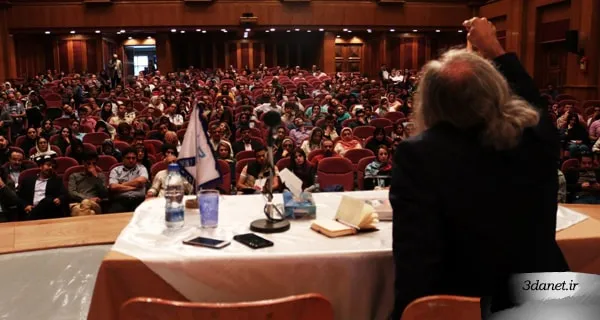
Mostafa Malekian's Speech at the Unveiling of the Translation of The Possibility of Altruism
In his exposition of Thomas Nagel's The Possibility of Altruism, Mostafa Malekian defines the ideal life as a flawless one in which morality is a core component. The question is whether human beings pursue only their own interests or also the interests of others.

I offer greetings and respect to all the ladies and gentlemen present. I have been asked to clarify the gist of what Thomas Nagel, the American moral philosopher, has said in his book The Possibility of Altruism. Thomas Nagel's book is an extremely concise and dense work, and naturally, due to this very conciseness and density, it is extremely difficult. Everyone who has spoken about this book since its publication has emphasized its richness despite its brevity. Because of this conciseness, speaking about the contents of this book would truly take hours and hours, and naturally, it is beyond my capacity. However, I can explain to you, friends, what novelty there is in Thomas Nagel's argument. In this book, Thomas Nagel directs much criticism at the moral philosophers before him, and in this respect, the book has drawn attention for the critique and questioning it contains. Nagel poses many questions to the moral philosophers before him in order to show that a new argument must be made on this subject and that the arguments previously made are not rationally defensible. Naturally, I will not address the moral philosophers Nagel critiques either. That is, I wish to set aside the negative aspect of this book for now and not speak of what Nagel negates in this book, nor, for example, what arguments he has made in negating Hume, or John Stuart Mill, or Hobbes, or Kant, or in negating the great moral philosophers of the West. I will address the positive aspect of his arguments; that is, I will address what he himself has expressed as a solution to the problem.
1
Perhaps it would be good to start from here: that for philosophers, mystics, founders of religions and sects, theologians, and the sages of history, the desirable life or the ideal life has been the most important issue. It is true that the way these thinkers confronted this issue differed greatly, but they were all focused on this very issue: what is the desirable/ideal/perfect life? The ideal life means a life in which nothing remains to be wished for. This question, in my opinion, is not, strictly speaking, a philosophical question. Rather, it is a question for which each person must refer to their own intuition and see what kind of life theirs would have to be for them to truly have nothing left to wish for, to see no flaw or defect in their life, and not to envy another's life. These three characteristics—namely, having no further wishes, seeing no flaw or defect in life, and not envying the life of another—are the signs of an ideal life and a life of perfect good. Naturally, each person must refer to their own consciousness and answer [this question]; but philosophers have sought to critique the answers that we humans give to this question. Therefore, while this issue is one that goes back to the psychological consciousness of each one of us, the help that philosophers give us is that they show us that in the conception we have had of the ideal life, if we intervene and reflect more, we see things of a deficient nature, and it still has flaws and defects, there is still something to wish for in this life, and one can still envy another's life.
Now, while the answers that human beings have given to this question throughout history have been enumerated and classified, these answers are not the subject of today's discussion; just as they are not the subject of Thomas Nagel's discussion in the book The Possibility of Altruism. But there is one point, and that point is that most of those who have imagined their ideal life throughout history have considered the moral quality of life to be at least one of the components of an ideal life. Even if they have not considered it the sole component—which they mostly have not—they have at least said that the ideal life, in our view, is a moral life; meaning that we desire not to inflict unnecessary pain and suffering on anyone. Well, this very non-imposition of unnecessary pain and suffering on another is the essence of the moral life. The gem of the moral life is that I do not impose unnecessary pain and suffering on another. Even the most evil of human beings, if they were to imagine their ideal life, would say, 'I wish I had a life in which I obtained all those things I gained through oppression without oppression.' This indicates the point that many thinkers throughout history have interpreted as meaning that human beings have a moral nature. The reason we do not live morally is that it seems to us that if we live morally, we cannot attain many of our other desires. Otherwise, if someone were told, 'All your desires will be fulfilled to exactly the same extent in an oppressive life and in a non-oppressive life,' they would certainly say, 'Well, then it is better that my life not be oppressive.' Because this is so, all those who have spoken about the ideal life have said that at least one of the components of the ideal life is the moral life.
2
But the question is: what does the moral life mean? It is from this point that Nagel enters the discussion in this book. If I were to express Nagel's argument with a logical sequence, I should actually begin in this way: there has been a long-standing discussion in psychology, in the study of the soul, and fundamentally in philosophy, and that is whether the human being is constituted in such a way that they only pursue their own personal interests, or whether the human being is constituted in such a way that they sometimes think of their own personal interests and sometimes think of the interests of other beings or humans besides themselves? This has been a very deep difference of opinion throughout history. Some thinkers believed that the human being is constituted in such a way that in life, solely and exclusively, whether they want to or not, whether they know it or not, consciously or unconsciously, willingly or unwillingly, they think of their own personal interests in everything and have no thought other than the pursuit of their own personal interests, and whatever they do, ultimately and in the final analysis, it can be shown that they were pursuing the trace of their own interests. But there were also thinkers who said that the human being's physical, mental, and psychological structure is such that they can both pursue their own personal interests in life and can pursue the interests of others. This discussion is a psychological discussion and has not yet become related to ethics. Because the question is a psychological question; meaning we want to say what this structure necessitates.
If you give the first answer to this question and say that human beings are so constituted that they can only think of their own interests, then in that case either morality will be destroyed and will no longer have any meaning, or a morality must emerge that can show that living morally is ultimately in your own interest, and since it is ultimately and finally in your own interest, then live morally. But if you give the second answer to the question, that is, you say that human beings are so constituted that they can think both of their own personal interests and of the interests of others, then morality will certainly not disappear; but two types of morality emerge: the first group consists of ethical schools, ethical systems, and ethical theories that say your moral living is secured by the very pursuit of your own interests, and there is no need to think of the interests of others in order to live morally, and if you want to live morally, you must, as it happens, think of yourself, and a human being lives morally when they think of themselves. The second group consists of ethical systems, ethical schools, and ethical theories that say if you want to live morally, you must think of the interests of others, and morality is applied, and you have a moral life, when you think of the interests of others.
Thomas Nagel's answer to the first question is that human beings are so constituted that they can be both self-interested and other-interested, and in terms of their structure, they are not compelled to be self-interested. And his answer to the second question is that being moral consists solely in a person pursuing their other-interestedness, and as long as a person is self-interested, they are not moral. Not that they are anti-moral; they are not moral; [that is,] they pursue pleasure, not goodness; and goodness means being moral. If I pursue my own personal interests, I have not committed a crime; but I have not yet stepped into the realm of morality, and [in fact] I am pursuing another component of the desirable life, and that component is the pleasure of my life. If I want the component of the goodness of life, that is, the moral-being of life, to be secured, there is no alternative but to be other-interested. So being moral is only possible through other-interestedness, and you are not moral through self-interestedness. In this respect, Nagel is in complete agreement with Kant. Kant also believed, and was the first thinker to seriously defend, that as long as a human being is in the realm of self-interestedness, they are in the realm of pleasure, and if they want to enter the realm of goodness, there is no alternative but to be other-interested.
3
Now the question is, if a human being must be other-interested in morality, how can they become other-interested? After all, a human being always has self-love, and if they have self-love and are self-loving, the result of their self-love, as the ancients said, is self-preservation; that is, they want to preserve and protect themselves, and from self-preservation two offspring are born: attracting benefits to oneself and repelling and removing harms from oneself. Well, how can a human being who is self-loving be other-interested? Nagel's innovation lies here, and this was an innovation that no one in history had been able to achieve before Nagel: how, while we are self-loving, we can be other-interested in morality, and must be other-interested.
Now, if we want to give Nagel's answer, we must first pay attention to how voluntary action issues from us in life, so that we can then see how voluntary moral action issues from us. For about a hundred years now, we have known in psychology that the motivational system in humans is the belief-desire system. That is, for any voluntary action a human performs, from blinking an eye to the greatest social and political activities and spiritual and inner activities, if that action is voluntary, a desire in him must combine with several beliefs. If at least one desire and several beliefs do not arise in you, it is impossible for you to perform a voluntary action, even if that voluntary action is merely lifting a glass. This is called the desire-belief or belief-desire motivational system (of course, belief-desire has a subtle difference from desire-belief, but for now we are concerned with what they share). Suppose I now feel warm here. So, because I consider the temperature of this space to be warmer than my agreeable and desirable limit, and my physical, mental, and psychological constitution is such that I suffer from heat above a certain level, therefore a desire to lower the temperature of this space arises in me. But this desire still does not impel me to voluntary action, and in addition to this desire, several, and often many, beliefs must work together. For example, I must believe that the temperature of this room can be lowered, I must believe that the temperature of this space can be lowered by opening the windows, I must believe that I have the ability to go to the windows, and so on. When all these beliefs come together with that desire, then I will to open the window, and then the voluntary action of opening the window is performed by my hand. There is no voluntary action except that in that action one desire has combined with n number of beliefs.
Now the question is this: if our motivational system is such that when we want to perform a voluntary action, belief and desire must work together, is the weight of desire greater or the weight of belief? (This is why I said the belief-desire system differs from the desire-belief system. If you say the motivational system is belief-desire, it means that while it is true that belief and desire must work together, the strength of belief is greater than the strength of desire, and if you say the motivational system is desire-belief, it means the strength of desire is greater than belief.) Thinkers like Hobbes and Hume in moral philosophy and moral psychology believed that between belief and desire, the strength of desire is greater than that of belief. But Kant said the strength of belief is greater than desire. Nagel says that in this respect Kant is right. That is, while desire and belief must work together, belief is more important than desire. Do you know what this means? It means that if you want us humans to perform voluntary moral actions, instead of strengthening the desire for altruism in us, certain beliefs must be strengthened in us. Because it has been established that voluntary moral action is voluntary altruistic action. Well, now, since desire and will are effective in voluntary action, should we attend to our own desire and change our desire in order to perform voluntary moral action, or change our belief? Hume said you must change your desire. Hobbes also said you must change your desire. But Nagel shows that changing desire is in no way morally explicable or justifiable, to say that desire must be changed, and he wants to conclude that we must change belief. Well, now, why?
Nagel has several arguments for why, in ethics, desire does not have the value it believes it has. His first is that when you want to give your student and pupil moral education and training, you then say to them, for example, “Tell the truth!” They ask, “Why should I tell the truth?” You say, “Because when you tell the truth, you create security, trust, and peace in the hearts of others, and if you lie, others feel insecurity, distrust, and anxiety.” They say, “Well, why should I create security, peace, and trust in the hearts of others?” If you say, “Because you desire not to hurt others,” then if they come and say, “I have no such desire,” what will you say?! And suppose they honestly do not see this desire in themselves; for instance, they are a hard-hearted person and have no desire at all not to hurt others. In that case, your speech stops right there, and you can no longer advance your method of reasoning, because they say this desire is not in them. Nagel has a second argument, and that is that [perhaps] someone might come and say, “You are right! The desire not to hurt others is in me, but why should a person be subject to their own desires? I also have a desire to steal, and if a person is to be subject to their desires, why should I only satisfy the desire not to hurt others?!” And if you say, “No! One should not be subject to all desires,” then they will say, “What criterion is there for which desire one should be subject to and which desire one should not be subject to?!” The desire for “sympathy with others,” as some have said, or the desire for “empathy with others,” as others have said, or the desire for a “moral sense,” as Hume said, or what Joseph Butler, the seventeenth-century philosopher and theologian, termed the “human sense”—whatever name we put on them, they are a set of desires, and if someone does not have that desire, or if someone has that desire but says that no decree has come that I must practically attend to, heed, and care for my desires, it seems they are no longer obligated to live morally. Nagel has two other arguments as well; but these two arguments of his seem to me to be his strongest. It seems one can answer his other two arguments. But in any case, on this basis, he concludes that if I want to become more moral myself, that is, to perform voluntary other-regarding actions, or if I want my student and pupil to become more moral, it seems one cannot go and constantly focus on one’s own desires or on the desires of that student and pupil. Therefore, one must intervene in and modify beliefs.
4
In order to intervene in and modify our beliefs, we must pay attention to an innovative point, which is the most profound inventive insight of Nagel in the world of philosophy and throughout all the works of his entire life, and that is that every person, in their life from birth until death, has two roles: sometimes we are agents, and sometimes we are spectators. In other words, sometimes we are actors, and sometimes we are observers; sometimes we are subjects, and sometimes we are witnesses. To use a very simple sporting metaphor, which incidentally is used both in books on the philosophy of science and in books on moral philosophy, sometimes a person is a player on the field of life, and sometimes they are seated in the spectators' chair, observing and looking at their own life and the lives of others. All of us, in life, are like this at every moment. Example: suppose, as in olden times, people in a caravan are traveling along the twists and turns of a road. There is a time when I myself am one of the caravan members and am traveling along with the rest, riding an animal in this caravan. At another time, no, I go and sit on a mountain peak and from that height, I watch the path of these caravan members, their twists and turns, where they came from and where they are arriving, and the state and condition of these caravan members. At that moment, I am no longer one of the people on the journey; I have set myself apart and am observing this process of the journey of these caravan members. We have these two states in life. If you have the first state and are in the mode of agency, then you have a subjective viewpoint, which the book's translator, Dr. Heydari, has translated as the mental viewpoint, and that is also a correct translation. But if you are an observer, then Nagel calls your viewpoint the objective viewpoint, that is, according to Dr. Heydari's translation, the external viewpoint. So, in life, we sometimes have a subjective viewpoint and sometimes an objective viewpoint. When we ourselves are playing on the field of life, whatever we find, our findings are subjective/mental findings, and when we are looking, whether at our own life, or at our own life and the lives of others, or at the lives of others, whatever we find is called objective/external findings.
I will give an example: Regret arises when a person adopts the observer's viewpoint. For instance, yesterday I acted arrogantly somewhere, I was dishonest, I betrayed a trust, and now I feel regret. When do I feel regret? When I am looking at what I did yesterday from above. Regret is one of the phenomena indicative of a person's spectatorship. Longing is the same: if I look at my past life relying on my memory or relying on my daily diary, then I might be overcome with longing for the opportunities I have lost. Longing arises in a person because a person sometimes looks at their own life from above. If we were always in a state of action, we would never have regret or longing. Regret and longing are two phenomena resulting from the fact that we are observers and spectators of our own life.
Neither of these two viewpoints can be dispensed with. You cannot be merely a spectator throughout your entire life – and in the poet's beautiful phrase, "we are nothing, we are a gaze" – nor can you always be an agent. Therefore, neither a perpetually spectatorial life is within human capacity, nor is a perpetually pragmatic and agential life always within human capacity. A human being in life is constantly oscillating between agency and spectatorship. In each of these two perspectives, one perceives things that one does not perceive in the other perspective. There are truths that can only be understood with the viewpoint of agency and cannot be understood with the viewpoint of spectatorship, and there are also truths that can only be understood with the viewpoint of spectatorship and cannot be understood with the viewpoint of agency.
For example, suppose you are doing your monthly income and expense accounting. A person, at least in the accounting of their own life's income and expenses, does not knowingly and intentionally write seven times seven as fifty. They will certainly write seven times seven as forty-nine. Therefore, when I am doing my monthly income and expense accounting, I am certain that all the additions, subtractions, multiplications, and divisions I perform are correct. So, when it is finished, I say with absolute conviction that my income this month was this much and my expenses were that much. But if I look at myself from above for a moment and remember that I have done accounting many times in my life and later saw that those calculations were wrong, then now, as an agent, I have no doubt that my accounting is correct; but because as an observer I am seeing not only this accounting, [but] I also see my previous accountings, now from the observer's perspective, I have a doubt. When I look from the higher perspective at myself, I say to myself: from the agent's perspective, your calculation has no error, but from the observer's perspective, there is room for doubt. [Of course,] do not think that when there is room for doubt, we destroy our agent's certainty; no! Because now, no matter how many times I redo the addition and subtraction, I still see the result is the same. But this doubt has some effects. [For example,] if tomorrow my spouse says I made a mistake, at least I am not shocked. Because I remember that sometimes before, I have done accountings that were incorrect. Very often, being an observer in life does not change the work I have done in the agency of my life, but it is beneficial for me. All of life is like this. If we understand this point from Nagel, I think a very serious difference will be made in our lives, and it is no small thing that a thinker like Nagel has paid attention to it. That is why I am emphasizing it so much.
5
We said that the observer's perspective and the agent's perspective give us two sets of cognitions, and these two sets of cognitions are not such that the cognitions of this one can be obtained with that one, and the cognitions of that one can be obtained with this one. You find one series of cognitions here and another series of cognitions there. Now, let us see, regarding the observer of life and the agent of life, with what belief the issue of altruism becomes possible:
First, suppose you are the agent of life. If you are the agent of life and are in the process of living, and I ask you, "How much capital of a lifetime is in your hands?", you say, "It is in my hands right now." [But] when you look from above, you remember that you also lived twenty years ago and may live another fifty years hence. If a human is an agent, the length of their life for themselves is always just that moment. Because you look at the past from above, you say, for example, you are 25 years old. Suppose you were given an injection that made you lose your observer's perspective, and you could no longer look to the past nor look to the future, and I asked you, "How old are you?", you would say, "I am just this moment."
[Now,] if you do not remember the past and the future, what do you do in each moment? You will say, I only have this [moment]! And you will do something that brings you benefit in that very moment or removes or repels a harm from you in that very moment. If I am only an agent, then in life I must pursue actions that give me pleasure right in that moment and distance pain and suffering from me right in that moment. Therefore, if you are the agent of life, you must become an immediate/instantaneous pleasure-seeker; what moral psychologists and moral philosophers call unbridled hedonism. Why is it unbridled? Because this pleasure-seeking is not bound by the future. That is, you say I must enjoy myself now. So, the first effect of being an agent is that since you only have that moment at your disposal, you say, therefore I will do something that gives me the most pleasure or the least pain and suffering in that very moment.
But we often fail to do this. Because for a moment we step back and look at our life from above and say, there is an action that gives me the most pleasure right now, but when I reckon with the pains and sufferings it will bring me later, I see that, on the whole, it is not worth doing. If you are the spectator of your life, at every moment you will do something that, from the moment it is performed until the end of your life, on the whole, its pleasure is greater than its pain and suffering, and you will always say, I must not look only at the present moment. So the first point Nagel makes to us is that when a person is the agent of life, they are pleasure-seeking, but when they are the spectator of life, they are expediency-seeking. Pleasure means that which gives you the most pleasure or the least pain and suffering in this instant. But expediency means that which, on the whole, gives you the most pleasure or the least pain and suffering until the end.
But there is also a second difference: if I am the agent of life, I only consider my own profit and loss. Because when a person is the agent of life, their attention is solely on what befalls me or what is withheld from me. But when they look from above, they see that they are no different from others. If I have a father and my heart aches for my father's illness, others too, when their father falls ill, their hearts ache. If I am distressed when my spouse is harmed, others too are distressed when their spouse is harmed. If I become depressed when I go bankrupt, others too become depressed when they go bankrupt. That is, when a person adopts the spectator's viewpoint, they see all human beings as sharing the same fate, because they share the same nature. We share the same fate because we share the same nature. In other words, we have a single physical, mental, and psychological structure, and naturally, we have a single physical, mental, and psychological function. It is not the case, for instance, that one of us grieves over the loss of a child and another rejoices over the loss of a child. I will give another example: when a person looks at their own beliefs, they see their own beliefs as clearly true and the opposing beliefs as clearly false, and they say, it is obvious that this belief is wrong. But come, look from above. You see that the other person is just the same. They too see their own beliefs as clearly true and my beliefs as clearly false. So we see that we have a similar nature and, in this respect, a similar fate. Therefore, when I look from above, instead of seeing myself as different from others, I see myself as one among the multitude and equal to others. So the second difference that exists between the spectator's viewpoint and the agent's viewpoint is that in the agent's viewpoint, I am different from others, I am a breed apart, the interest of "me" must be considered, the happiness of "my" spouse must be considered, the security of "my" neighborhood must be considered, the education of my child must be considered, mosquitoes must not enter "my" room, and there must be no stench around "my" house, but when I look from above, I see that there must be no stench around anyone's house. Why? Because when I look from above, I am no different from others. This was the second effect.
Now, these two are two "beliefs." The first belief is that you are not just a single moment; you began thirty years ago and may well continue for another forty years. This is no longer a desire. This is, in fact, a belief obtained through the spectator's view. So if it is the case that you are a person who continues to exist, then be mindful of the continuation of your own existence and do not do something that benefits you only in this moment; do something that, on the whole, benefits you until the end. The second belief is that you are like everyone else. So do something whose benefit for you is the same as for everyone else.
I truly, because no other example comes to my mind, always repeat this example on such occasions: if you want your two little daughters not to fight over dividing a cake, give the knife to one of them and tell her, “You cut the cake into two pieces, but the other one gets to choose whichever piece she wants first from the two pieces.” Well, so this child, if she does not want to lose out from this division, must do something so that whichever piece her sister takes, she has not suffered a loss. Therefore, she must cut the cake exactly into two equal pieces. Why did your little daughter arrive at fairness? Because she saw herself in the same situation as her sister. Now, you and I are just the same. From the standpoint of agency, we arrive at this standpoint.
Now, put these two standpoints side by side: firstly, from the standpoint of spectatorship, you do not look at “the moment,” because you do not consider your life to be [just] a moment. So you do something that will benefit you in the long run. Well, if you want to do something that benefits you in the long run, your action must not be hedonistic. I will give an example from Russell: Russell said, suppose I have ten horses in my stable, and you are my neighbor on the adjacent farm, and you also have ten horses in your stable. If I steal your ten horses, my horses become twenty. But I must think that if I allow myself to steal your ten horses, tomorrow you will also allow yourself to take back your own ten horses and also take those ten horses that were mine. And if this back-and-forth continues, all the horses will belong to the most bullying person in the region. Therefore, in a single moment, my pleasure lies in having twenty horses instead of ten. But my life is not just that moment, and I must see what will happen in the long run. Secondly, when I look from the standpoint of spectatorship, I see that all human beings are like me. So whatever behavior I engage in must be a behavior such that [like the cake-cutting example, if the other party] takes this piece, I have not suffered a loss, and if they take that piece too, I have not suffered a loss; and this, in fact, becomes altruistic behavior. In fact, Nagel wants to say that the reason we could not be altruists was because we always wanted [to look] from the standpoint of agency, and the standpoint of agency is a standpoint that, firstly, confines you to the moment, and secondly, considers you a separate, exceptional entity. Well, these two standpoints are two beliefs, and instead of going and interfering in the desires of others, we must give them these two beliefs, and train ourselves to pay attention to the standpoint of spectatorship and, from the standpoint of spectatorship, discover these two facts.
This was regarding facts. Now I will say a word about values. When you look from the standpoint of agency, a [series of] values appear great in your eyes, and when you look from the standpoint of spectatorship, a [series of] other values appear great in your eyes. From the standpoint of agency, your children’s obedience to you is the best of deeds. But from the standpoint of spectatorship, this is not the best deed. Because from the standpoint of agency, you see that action as valuable whose benefit for me is greater, and of course, the greater benefit for me lies in my children being completely obedient to me. But when I look from the standpoint of spectatorship, I say, if this child now becomes accustomed to obeying me, tomorrow they will become accustomed to obeying anyone else, and the very act of obedience will ultimately be to my child’s detriment and ultimately to my detriment.
This was Nagel’s view. Therefore, the possibility of altruism arises from here: that we abandon desires and move towards beliefs, and replace the beliefs of agency with the beliefs of spectatorship. And that is all.
Questions and Answers:
It seems your view differs from the views of Rawls and Nagel in that they, unlike you, believe in the ethics of institutions. Please explain.
I believe that the ethics of institutions means the ethics of the individuals who constitute those institutions; not that I do not believe in the ethics of institutions. Therefore, institutions also have ethics; the institution of economics, the institution of law, the institution of politics, the institution of the family, the institution of education, the institution of religion—all of these social institutions must be ethical. But I reduce the ethics of institutions to the ethics of each and every individual who makes up those institutions. Thus, I have never said that institutions lack ethics; I say that the ethics of institutions is the very ethics of the individuals who constitute the institutions, and in this respect, I have a difference of perspective with Rawls and even with Nagel, especially with Rawls.
How can the perspective of impartiality be strengthened?
This truly requires that the institution of education, from the very beginning (the institution of education, not just the Ministry of Education; meaning all those who, consciously and unconsciously, willingly and unwillingly, are educating and nurturing us), cultivate the perspective of impartiality in children as well. That is, one can always tell a child in daycare, and one can teach them in kindergarten, that we must have both perspectives in life. These are not things I should want to learn at the age of sixty. Of course, if I learn it at the age of sixty and live only one more day, I will live that one day better. But fundamentally, for someone like me, it is late, and they should have taught me from childhood to have the perspective of impartiality. In the religious and spiritual texts of all the world's religions and denominations, this perspective of impartiality is emphasized. The sages of history, the founders of religions and denominations, theologians, philosophers, mystics, psychotherapists, and scholars and philosophers of ethics all emphasize that this perspective, which is in a sense self-forgetful, a perspective in which there is no egoism or self-centeredness, must emerge within us. But truly, the method for this and the way to implement this process have never been taught to us. Nor can I state it now. I neither have the knowledge of it, nor, for the little I do know, is there the time to say it now.
Is Nagel's view similar to the Golden Rule of ethics, which says, do not wish for others what you do not wish for yourself?
It is only similar. Why? Because that rule says, do not wish for others what you do not wish for yourself. "Do not wish" pertains to the desire of the agent; whereas Nagel was not meant to interfere with our desires; he was meant to give us a belief that would lead us to consider the circumstances of others.
Does this altruism include only humankind, or does this "other" also include beings such as animals?
Here, views differ greatly. For example, Kant believed that we have ethical duties only and exclusively toward human beings. Other moral philosophers believe that, no, we have ethical duties toward more than just human beings. I myself believe that we have an ethical duty toward any being whose physical structure is such that it feels pain and suffers, even if it is a worm. For a being to feel pain and suffering, it must have both consciousness and desire. If a being lacks consciousness or lacks desire, or lacks both, it will not feel pain and suffering. [Of course,] inanimate objects and plants do not feel pain and suffering, yet even so, I must act in a certain way in my behavior toward inanimate objects and plants; for instance, in my behavior toward inanimate objects and plants, I must not be wasteful, squander, or destroy natural resources; but this is not because of an ethical duty toward these things themselves. It is because if these are destroyed, I will have failed to fulfill my ethical duty toward those pain-and-suffering-bearing beings who wish to use these natural resources.
Psychologically speaking, are there different types regarding the intensity and strength of agency and impartiality?
Yes. Psychological, personality, and character types differ in terms of how much they can be agents and impartial observers. For example, introverts, compared to extroverts, have greater agency and less impartiality. Extroverts are more capable of impartiality. But there is no psychological type in which the capacity for one of these two perspectives reaches zero; they possess them to a greater or lesser degree.
Is being an impartial observer not in conflict with living in the here and now?
Sages, mystics, and some psychotherapists—these three groups—always emphasize to us that we should live a here-and-now life. The question wants to ask: does a here-and-now life not conflict with spectatorship? I submit: never! The meaning of a here-and-now life is that if, for example, you must do something for tomorrow, go and do that task, but in that moment, let your entire being be occupied with that task. Suppose I have an exam tomorrow, and because I must prepare myself for tomorrow, my decision is to study for ten hours from now until tomorrow. The here-and-now life says: when you begin to study, let your entire being dwell in this moment, meaning let your entire being have presence of heart in studying. You may recall that when Buddha was criticized by the Hindu theologians—because he had branched off from Hinduism—the theologians, ascetics, and groups of Hindu gurus came to him to demonstrate the virtue of Hinduism, which was the ancestral faith. Then one of them said, for instance, 'I can see through walls,' another said, 'I walk on water,' one said, 'I can traverse the earth,' another said, 'I can go six months without sleep,' and each of them said something. Then they said to Buddha, 'Master, what do you do?' They wanted to belittle him, to show that he could do none of these things. He said, 'I do something more important than all of these: when I eat, I just eat; when I sleep, I just sleep; and when I speak, I just speak.' The meaning of being here-and-now is not that I do nothing for the future; its meaning is that when I am doing something whose result will be known the day after tomorrow, I have presence of heart during the work. We lack presence of heart. Presence of heart means that just as our body is neither one second behind time nor one second ahead, our mind must also live in that moment, and our psyche must also live in that moment. This is called the here-and-now life; that is, as you young people say, mindfulness, which I translate as 'presence of heart.' Presence of heart means the here-and-now life, meaning if I now want to study my lesson for tomorrow, I am now completely, with my entire being, engaged in studying, not that the book is open before me and my mind is either wandering in the past or in the future.
Is there a balance and equilibrium between being an agent and being a spectator in life, in the form of an evaluable rule?
Yes. It is true that this balance varies with our circumstances. This balance depends on age, on one's psychological type, personality, and character, and on education and upbringing. Therefore, there is no doubt that this balance or equilibrium varies. But as to whether it has a criterion, yes. There are at least two practices we have learned from the sages that are very beneficial for this method that Nagel proposes. One is silence. Silence elevates the capacity for spectatorship in a person. The more talkative a person is, the greater their agency. That is, the more talkative one is, the less one can look at oneself from above. Thus, the fourfold silences that have been mentioned, or in any case, the various kinds of silence, elevate the capacity for spectatorship. The other is what is called by various names: concentration, contemplation, reflection, meditation. The commonality among all of these, despite their differences, is that they demand a kind of focus on one's own states from us. In the ethics of us Muslims, if you recall, they used to say: practice self-examination (hadith al-nafs), self-vigilance (muraqabat al-nafs), and self-conditioning (musharatah al-nafs). They mentioned these three. These, too, are in fact a kind of reflection. A kind of concentration, contemplation, reflection, meditation, and in any case, a kind of focus. Both silence and focus, these two, are two methods that greatly elevate spectatorship. From this perspective, sages have always practiced silence and appreciated the value of silence. Why is our mental model and image of a sage a person of serenity? Because this very serenity and this very silence elevate spectatorship in life. Sages do not live more than once, but because of their spectatorship, they have lived twice. They, like us, live only once, but because they are so much spectators, they live twice.
I see a critique to be made of Thomas Nagel's meta-ethical foundation. Philosophers like Nagel, Rawls, and Parfit seem, in meta-ethics, to be norm-burdened philosophers and consider meta-ethical questions merely as products of relations existing in normative ethics. Their view appears to lack ethical richness, and the non-cognitivism of a new ethics seems more successful in this area. What is your opinion on this?
That is a very good question. In fact, the critique of figures like Rawls and his student Nagel, and some other philosophers, against the moral philosophers before them is that they said you are constantly analyzing moral concepts, you want to do conceptual clarification, and you are constantly pursuing whether cognition is fundamentally possible in ethics or not, and you engage in these meta-ethical discussions, it is useless; go and address normative ethics. Now, our friend here turns this objection back on Nagel and others, saying that you, who have gone to normative ethics, are being very unkind to meta-ethics. I have great sympathy with this statement of our friend. I believe we are not without need of meta-ethics either. It is true that before these philosophers, other philosophers all dealt with meta-ethics and analytical and critical ethics, and dealt less with normative ethics. But the right path is not that we now address normative ethics and not address analytical and critical ethics. I truly still believe that normative ethics is sorely in need of analytical and critical ethics.
Regarding the priority of belief over desire, what answer does Nagel have to the view of Nietzsche and also existentialist philosophers concerning human beings as rationalizers?
Nagel does not address these objections themselves. But he critiques the foundations of these philosophers so that the turn for this objection never even arrives. Because there is a difference between me answering an objection you raise and me saying that this objection of yours has a presupposition that is entirely erroneous, and therefore I leave the question without actually answering it. Nagel does not accept Nietzsche's view at all; at least in the sense that Nietzsche's view is portrayed. I am not concerned now with how much this portrayed meaning was really Nietzsche's own view and how much it was not. But Nagel truly does not accept this point that the will to power is the greatest desire existing in humans and that all human actions, conscious and unconscious, willingly or unwillingly, are for the satisfaction of the desire for power. This statement is not at all accepted by Nagel for that objection to be answered. Of course, this statement is actually more in Freud's theory than in Nietzsche's theory, and well, of course, Freud's view is also not accepted by him.
How should one convince someone whose desires are all negative regarding altruistic ethics?
I do not know whether the case of all desires being negative even has an instance. I myself have not yet seen anyone whose desires are all negative; but Nagel does not want to cure all our psychological illnesses! Nagel only wants to say that for living ethically, strengthening two items of belief is very important. I mean to say that Nagel is not a psychotherapist. If there is someone whose desires are all negative, well, they must certainly consult a psychotherapist, but psychotherapy is different from ethics. Psychotherapy gives us psychological health, ethics gives us moral virtue; these two are two categories, although they have transactions with each other.
Does what you introduced from Nagel as altruism have a descriptive aspect or a prescriptive aspect?
Yes, it has a descriptive aspect. Because Nagel's presupposition is that humans can also have impartiality. If he did not believe that a person could have impartiality, he would not say have impartiality. Because every command is subordinate to a presupposition of capability. If I command you to pick up this glass, its meaning is that I have this presupposition that you have the power to pick it up. Therefore, from this aspect that it presupposes capability, it is descriptive. But from the perspective that he says if we want to grow in ethics, we must strengthen these two beliefs arising from impartiality within ourselves, well, of course, it has a recommendatory aspect.
The End
.
.
Audio file of Mostafa Malekian's speech at the unveiling ceremony of the translation of the book The Possibility of Altruism
PDF file of Mostafa Malekian's speech at the unveiling ceremony of the translation of the book The Possibility of Altruism
.
.
Speech by Mostafa Malekian at the unveiling ceremony of the translation of the book The Possibility of Altruism, by Thomas Nagel, translated by Javad Heydari, published by Negah-e Mo'aser / Delivered in Mashhad, 22 November 2016
Transcription by: Ehsan Beykzadeh
.
.





Discussion0 comments
No comments yet; let yours be the first voice.