Philosophy
Unveiling of Mortal Questions with Lectures by Mostafa Malekian and Javad Heydari
At a book event on Thomas Nagel's Mortal Questions, Mostafa Malekian and Javad Heydari explored the distinction between the absurd and nihilism, and Nagel's three intellectual currents: existentialism, political ethics, and the mind-body problem; Malekian focused on the irrationality of the world.
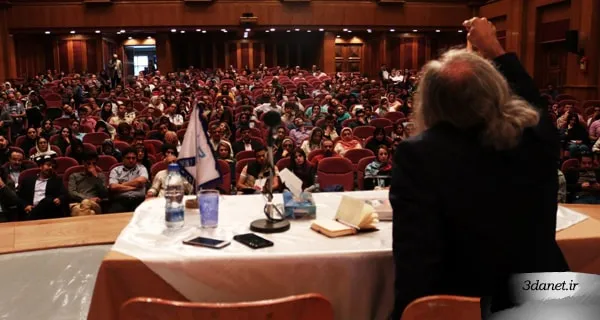
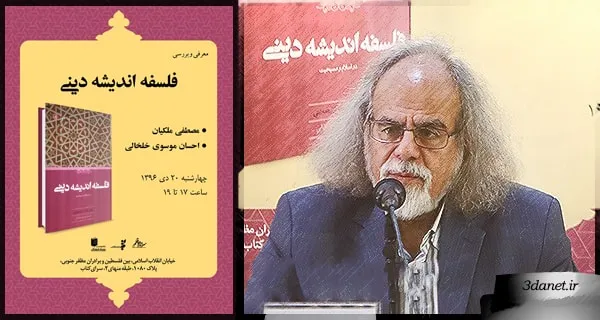
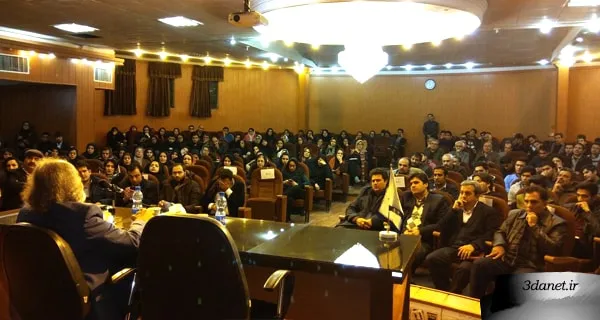
The review and introduction session for the book Mortal Questions by Thomas Nagel was held on Thursday, April 19, 2018, organized by the Islamic Iran Solidarity Party (Shiraz branch). This book is the sixth work by Thomas Nagel to be translated into Persian. At this session, Mostafa Malekian and Javad Heydari, the book's translators, delivered lectures. Malekian, noting in this session that one of the articles in Mortal Questions is about absurdity and, since this discussion is a predicament of our society, I will devote my talk to it, said: In translations of Western works, the two concepts of the absurd and nihilism have been conflated, and both have been translated as meaning futility. Although these two categories share commonalities, they are entirely distinct, and their paths diverge.
He continued: In the book Mortal Questions, absurdity has been translated as irrationality, meaning unreasonableness and lack of rationality. Albert Camus is the greatest philosopher who popularized this term. He said this world is not rational, meaning that if you try to examine what you observe in the world with reason, you will see that either reason has no answer for it, or it has several equally weighted answers, making it difficult to choose among them.

This researcher in the field of ethics added: Humans have no choice but to act in life, whether through affirmative or negative action, but one can only act when an issue is more or less important to you, or, in Camus's terms, unless we assign different values to matters, we do not act. But the irrationality of the world lies in the fact that it only tells us about facts and remains silent about values, leaving reason bewildered.
According to Malekian, Camus states that values do not exist in the world and we must invent them. Up to this point, nihilists and absurdists agree, but from here on, the paths of the two lines of thought diverge, because nihilists believe all values are equal and cannot be judged, whereas absurdists believe values are not equal. Nagel believes that the absurdity in life is that, on the one hand, one must take life seriously, and on the other hand, if we look at life from above, we see that our whole life is not serious either; in other words, we are everything to ourselves and nothing to the world.
Stating that these two perspectives are in conflict, he noted: This thought is nascent in the world of philosophy, and its lineage traces back to Camus or, ultimately, to Nietzsche but traces of this perspective can also be observed elsewhere; one is in mysticism, where mystics viewed the world from the perspective of love instead of the rational perspective, though only in this aspect does the mystics' view resemble that of Nagel and Camus. Apophatic theologians also believe in the irrationality of the world, which is why they attribute only negative attributes to God, so that reason does not issue a contradictory judgment; likewise, fideist theologians, who believe in non-rational matters, and agnostic theology, or "I don't know"-ism, which held that questioning is only permissible in worldly affairs and one should not ask questions about the afterlife.
Malekian, pointing out that voluntarist theology also believes in religiously determined good and evil, meaning no rationality prevails, added: It can be said that believers in the view of the world's irrationality have been revived, since reason is a power that contends with the world and has not made the world rational. But while one can maintain that values do not exist in the world, one cannot say that values are equal. It seems the thought of the world's irrationality is a promising one, and the philosophical current of the world will increasingly believe in this thought day by day.
Heydari, continuing the session, stated that in the book *Mortal Questions*, three schools of thought can be observed in Nagel: First, the school of existentialism; one might say Nagel was the first analytic philosopher to introduce existentialist issues into analytic philosophy. He considers the meaning of existentialism to be the engagement with four categories: death, freedom, the meaning of life, and connection. The issue is political ethics, because Nagel is considered one of the most important students of John Rawls (the most important political philosopher of the twentieth century and the most spiritual political philosopher in the entire history of the West) and has played an important role in the evolution and expansion of discussions on political ethics. Third is the issue of the mind. Nagel has been the greatest opponent of materialism and has leveled serious criticisms against it, and is considered one of the most important figures in this field.
He continued: If we set aside the first and third discussions, we must see what achievement Nagel, as a student of John Rawls, has had for us in political ethics? Nagel believes that humans are inevitably involved in political issues and two important elements within them: decision-making (for those at the top or middle of the power hierarchy) and evaluation (for observers and the public). In the political arena, we encounter institutional behavior and individual behavior, but since individual behavior has less manifestation in politics, Nagel focuses on institutions. According to Nagel, in the political arena, whether for decision-making or evaluation, we are faced with two criteria: equality or partiality.
 According to Heydari, if personal interest is set aside, based on Nagel's classification, there are three conceptions of equality according to which political institutions can be evaluated or these institutions can make decisions: First is rights, which are constraints on action that allow a person to do or not do something. All human beings, insofar as they are human, possess these rights, and they draw a boundary around the individual that the government is not permitted to enter. This thought brings the idea of immunity from encroachment for humans and seeks to safeguard freedom, from which what is termed the politics of freedom arises.
Pointing to the second case, utility, this translator stated: This case, in decision-making, is based on the action that produces the greatest happiness for the greatest number of people in society, and is referred to as the politics of happiness. Egalitarianism is the third case, where the most immediate and urgent needs of the most deprived strata of society are the criterion for policymaking and evaluation, and it brings about the politics of well-being.
At the end of his speech, Heydari said: Malekian, by proposing the project of Rationality and Spirituality, laid the groundwork for the third conception of equality in society, so that the politics of well-being might find an opportunity to emerge and manifest in the socio-political arena of Iran.

.
.
Audio of Mostafa Malekian's speech at the unveiling of Mortal Questions
Audio of Javad Heydari's speech at the unveiling of Mortal Questions
.
.
Shiraz . The Twenty-First Gathering of Speech and Thought
Union of the People of Islamic Iran Party (Fars)
April 19, 2018
Text source: Iran Book News Agency (IBNA)
.
.

Discussion3 comments
پرسشهای نهایی تامس نایجل
ایراد را که علم دوست وارد کرده است، به جاست. من هم وقت عنوان کتاب را خواندم، به این فکر افتادم که کتاب در باره نقد اندیشه یا مسایل تفکر نقدی باشد. به هر صورت امید که بتوانم بخوانم.
اولاً، ترجمۀ فارسی عنوان این کتاب به دو خوانش راه میدهد: پرسشهای کُشنده (مهلک) و پرسشهای کِشنده (جالب / جلب کننده / جذاب). و حداقل، روی جلد کتاب هم مشخص نشده که منظور کدام است! و حتماً باید به عنوان اصلی کتاب نگاه کنیم تا بفهمیم: Mortal questions پس، عنوان کتاب کژتابی دارد. ثانیاً، نکتۀ جالب توجه اینکه ترجمۀ صفت Mortal به کُشنده کاملاً تحت اللفظی است و چندان مناسب به نظر نمیرسد. ببینید! مثلاً عبارت Mortal sin ترجمه میشود به «گناه کبیره یا بزرگ» و نه گناه کُشنده! به همین قیاس، عنوان این کتاب را میتوان «پرسشهای بزرگ» ترجمه کرد. با احترام.