Religion
Mostafa Malekian's Speech at the Unveiling of the Book 'The Philosophy of Religious Thought'
At a book-review session on The Philosophy of Religious Thought, Mostafa Malekian examined the stagnation of Islamic theology through the lens of comparative theology, contrasting Ashʿari and Catholic scholasticism. He distinguished philosophy—the rational study of all existence—from theology, which he defined as the study of sacred scriptures.
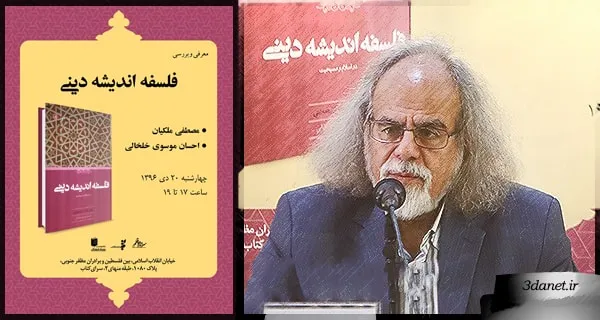
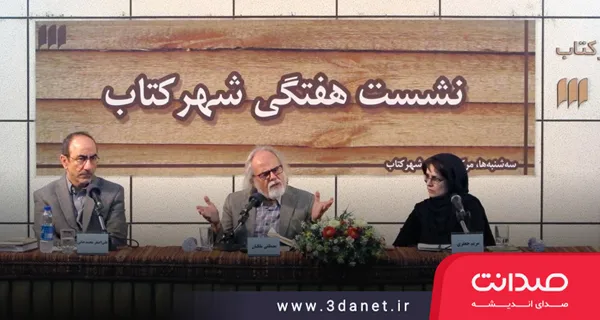
Islamic theology, as one of the principal sciences that emerged in Islamic culture and civilization from the earliest centuries, has, in the words of Mostafa Malekian, confined itself to questions whose context and time have passed, and is in need of rethinking, reform, and repair. Of course, in recent decades, some Muslim reformists in Iran and the Arab world have endeavored, by reflecting on this tradition and taking into account contemporary issues and discussions, to overcome this predicament. As far as the present speech is concerned, Mostafa Malekian, in the following talk, seeks to address this pathology by comparing Islamic theology with Christian theology and to present some of the most significant problems that have led to the stagnation of Islamic theology. The impetus for the discussion is, of course, the publication of the book *The Philosophy of Religious Thought in Islam and Christianity* by Louis Gardet and Georges Anawati, translated by Ehsan Mousavi Khalkhali and published by Hekmat Publications, a book which, in Malekian's judgment, has been well translated despite its large volume and the difficulty of its content. At the review session for this book, held on the afternoon of Wednesday, January 10th at the Book House, Mostafa Malekian, the renowned philosophy scholar, delivered a speech comparing Islamic and Christian theology, which is presented below:
Comparing Ash'ari Theology and Catholic Theology
The book *The Philosophy of Religious Thought in Islam and Christianity* is a valuable work in the field of comparative theology, or as it has become common, comparative theology. The book contains a vast amount of information, analyses, and critiques and cannot be summarized. I will dedicate my discussion to the main points intended by the authors. Firstly, in terms of its field of knowledge, the book is dedicated to comparative theology and compares Christian theology and Islamic theology. However, comprehensiveness has not been achieved in either area. In the area of Islamic theology, only Ash'ari theology is considered, and Mu'tazili theology and Shi'a theology, including Twelver, Zaydi, and Ismaili, are not addressed. The reason is clear: the book was published 70 years ago (1948), and at that time, most sources of Mu'tazili theology had not yet transitioned from manuscript to printed and published form; this statement also holds true for Shi'a theology. Therefore, this book only compares Ash'ari theology with Christian theology. But in the area of Christian theology, this book is also not comprehensive, because it only deals with Catholic Christian theology, and Protestant Christian theology and Eastern Orthodox Christian theology are not considered. The reason for this is also evident: first, both authors are Thomist Catholics (followers of Thomas Aquinas), and consequently, their interest and expertise lie in this field; second, as stated in the book, in the authors' opinion (which is correct, and Izutsu also affirms it), Islamic theology reached its end in the ninth century AH, and from the 9th century onwards, no innovative work appeared in Islamic theology (with one exception). The ninth century coincides with the beginning of the Protestant movement in Christianity. Therefore, since the comparison is up to the ninth century AH (sixteenth century AD), there is no necessity to make a comparison between Islamic theology and Protestant and Eastern Orthodox Christian theology. Of course, there are references to Barth, Kierkegaard, and others.
Secondly, this book is not easy to understand, but if one is patient and reads it with deliberation, they will make noticeable progress in understanding Ash'ari Islamic theology and Catholic Christian theology, because the book, despite being written 70 years ago, is full of novel and profound points. Thirdly, the authors are Catholic and naturally, without doubt, have an affinity and attachment to Catholicism, and particularly to Thomas Aquinas, but in fairness, this affinity has not affected their judgment. Fourthly, after the publication of this book, numerous works have been written in the field of comparative theology, even on this specific topic, but as far as I know, no one has offered a serious critique of this work.
What Philosophy Discusses
My discussion, however, is devoted to the result of the comparison that the two authors have made between Islamic Ash'ari theology and Christian Catholic theology. Before this, it is necessary to provide an explanation regarding theology and philosophy. In our culture, unfortunately, the difference and distinction between theology and philosophy is not clear, even though these two are two sciences with different subjects, methods, and ends. First, I will address philosophy. In terms of its subject, philosophy is the most universal science in the world, because every science other than philosophy speaks about a category of the existents of the universe, but philosophy speaks about all the existents of the universe. Therefore, in philosophy, one can speak about all existents, including human beings, God, nature, inanimate objects, plants, the past, the future, and so on, and in terms of its subject, no science has the comprehensive scope of philosophy's subject. Despite this characteristic, the reason philosophy does not overlap with other sciences such as physics, chemistry, theology, and so on, is that philosophy speaks about everything using only one method, namely the a priori method, or in the terminology of the ancients, the rational method. Other sciences speak about their narrow and restricted subjects using their own specific methods, such as the empirical method, the method of mathematical logic, the historical method, the intuitive method, and so on. Therefore, philosophy can only speak rationally and does not say anything that can be proven by other methods. For this same reason, philosophy has various branches and speaks about the various existents and phenomena of the universe, albeit through the rational method. Currently, in philosophy departments around the world, there are 90 branches, in each of which a category of the existents of the universe is discussed. Therefore, in terms of its subject, the entire universe is the subject of philosophical discussion, but in terms of method, the philosopher discusses only through the rational method.
The Difference Between Philosophy and Theology
However, the subject of theological discussion is not the entire universe; rather, its subject of discussion is the sacred texts of a particular religion or denomination. It is from this perspective that, unlike philosophy, which has no modifier or attribute, it must always have an attribute; that is, we must say Christian theology, or Islamic theology, or Hindu theology, and so on. That is, depending on which sacred texts, or the sacred texts of which religion or denomination, theology takes as its subject of examination, we speak of the theology of that religion or denomination. Therefore, if something is not mentioned in the sacred texts, the theologian, insofar as they are a theologian, does not speak about that subject and only addresses the discussions that appear in the religion or denomination under their consideration.
The question that arises here is: what is the theologian's goal in engaging with these sacred texts? In response to this question, six tasks come to mind. Of course, if a theologian performs one of these six tasks, it can be said that they are a theologian, but theology as a whole must perform all six tasks. That is, we expect theology to perform all six tasks, just as doctors in various medical specialties each have their own specific expertise, but from the discipline of medicine as a whole, we expect it to cure all the body's illnesses. The first task of theology is to systematize the contents of the sacred texts of its own religion or denomination, in which the material is not organized. This is especially so because the greatest apparent disorder is found in the Quran, for one of the differences between the Quran and other sacred texts is that it was gradually revealed over the course of events that occurred over 23 years. But apart from the Quran, even if we consider the sacred texts of other religions and denominations, they still do not possess the order of human books. Therefore, the first task of a theologian is to systematize the contents of religious texts and scriptures, that is, a disordered and scattered collection, even if this collection, in Hafez's words, possesses a disordered order.
The second task of the theologian is that, after systematizing, they must state what the sacred text meant by each and every sentence. For merely knowing Sanskrit does not suffice for understanding the sacred texts of Hinduism, nor does merely knowing Hebrew suffice for understanding Judaism. That is, to understand the sacred text, besides knowing the language, a great deal of information is necessary, such as morphology, syntax, lexicology, semantics, rhetoric, philology, history, and the occasion of revelation, or in modern terms, the context of the text. The theologian's third task is to say why these matters were stated. That is, after stating what was said, they must clarify what defect or shortcoming existed in our lives that these matters came to remedy. The fourth task is to state the presuppositions of these matters, meaning the theologian must say what conception the speaker or writer of the text had of humanity, the world, and existence that led them to utter these words. This task we call the analysis of the sacred text. For example, in the view of many theologians, one of the presuppositions of the Lawgiver is that human reason, even if necessary for managing one's life, is not sufficient. This is a presupposition and is not stated anywhere in the sacred text, but it emerges from its general tenor that it holds this presupposition in view. The fifth task of the theologian is to provide arguments for each and every one of these sentences and to demonstrate that these sentences are true, that is, to show that the matter corresponds to reality if it is declarative, and corresponds to expediency if it is performative, because truth in declarative statements means correspondence with reality, and in performative statements, correspondence with expediency. The sixth task of a theologian is to defend the sacred text against the attacks made upon it. If someone performs these six tasks concerning the raw materials found in the sacred texts of a religion or denomination, they can be called a theologian of that religion or denomination.
We thus observe that philosophy differs from theology in terms of subject matter. The subject matter of philosophy is all the existents of the universe, whereas the subject matter of theology is solely the raw materials found in the sacred texts of a religion or denomination. In terms of method, too, philosophy uses only the rational method, but theologians can use all methods known to humankind. That is, if an empirical claim is presented in the sacred text, the theologian can defend this claim using the empirical method or offer empirical reasoning in its favor, or if a historical claim is made, they can defend it using the methodology of the historical sciences, and so on. Therefore, theology, unlike philosophy, is not mono-methodic. Philosophy and theology also differ in terms of their end. The end of philosophy is to show the real world as it is. But the end of theology is to show, firstly, what God has said to us humans (declarative statements) and, secondly, what He has asked of us (performative statements).
The Problems of Conflating Theology and Philosophy
The authors' first comparison between Islamic theology and Christian theology is that Islamic theology was very quickly mixed with philosophy, and this in the Islamic world proved detrimental to both philosophy and theology. In Christianity, this process did not occur. When philosophy and theology are conflated, justice is done to neither philosophy nor theology. For philosophy is supposed to speak solely through the rational method, but when it is mixed with theology, we see the philosopher in question, in the midst of a rational discussion, citing a sentence from a sacred book, disregarding the mono-methodic nature of philosophy and failing to consider that philosophy must only follow autonomous reason and must be subject to reason alone, and not say, for instance, that such-and-such is stated in the Upanishads. Therefore, the first objection to mixing philosophy with theology is that the rational character of philosophy will be lost. The second problem is self-censorship, because the philosopher, after reaching a conclusion, must see whether this conclusion is compatible with each and every proposition of the sacred text. This matter occurred frequently in philosophy in the Islamic world, for the philosopher reached a conclusion through the rational method, but upon seeing that their claim was incompatible with the sacred text, was compelled to alter their statement in various ways.
اما کلام یا الهیات نیز وقتی فلسفی شود، دو ایراد پیدا می کند. ایراد نخست این است که الهی دان وقتی می فهمد، متن مقدس چیزی می گوید، به جای شنیدن درست این سخن، می کوشد آن سخن را با فلسفه هماهنگ کند. بنابراین اجازه نمی دهد که متن مقدس حرف خودش را بزند و مثلا آن را تاویل می کند. ایراد دوم آمیختن الهیات با فلسفه از منظر کار الهی دان این است که این کار باعث می شود که متون مقدس سرشار از ناسازگاری های درونی شود و در آن تناقض و تضاد و تعارض می بیند.
این که در جهان اسلام چه کسی فلسفه را با کلام آمیخته سه قول وجود دارد، برخی امام فخر رازی(544-606 ه.ق.)، گروهی امام محمد غزالی(450-505ه.ق.) و عده ای خواجه نصیرالدین طوسی(597-672 ه.ق.) را مقصر دانسته اند. رای اول و دوم یعنی امام فخر رازی و امام محمد غزالی بیشتر طرفدار دارد، اما مهم این است که از زمانی که کسی گفت فلسفه ما باید الهیاتی شود و الهیات ما باید فلسفی شود، هم جلوی رشد الهیات گرفته شد، هم فلسفه. نویسندگان کتاب حاضر می گویند الهیات مسیحی به این جهت رشد کرد که فلسفه و الهیات می دانستند دو علم متفاوت هستند و دو وظیفه و دو روش و دو هدف و دو دسته موضوعات مختلف وجود دارد.
ضرورت کلام تاملی
دومین تفاوت الهیات کاتولیک با الهیات اشعری(البته این سخن قابل تعمیم است)، این است که در الهیات اسلامی از شش کاری که به عنوان وظیفه الهی دان برشمرده شد، تنها کار دفاع جدی گرفته شد. یعنی تنها هم و غم الهی دانان اسلامی دفاع از متن مقدس شد و 5 کار دیگر را کنار گذاشتند. این امر باعث شد که رشد معنوی ای که جهان اسلام می توانست از اسلام داشته باشد، متوقف شود. یعنی الهیات اسلامی تنها منحصر در این شد که بگوید آنچه ما می گوییم حق است و آنچه سایر ادیان و مذاهب یا سایر ملل و نحل می گویند، باطل است. یعنی الهی دان اسلامی بعد از اثبات حقانیت دیدگاهش کار دیگری نکرد. سورن کرکگور(1813-1855) فیلسوف دانمارکی در مقاله ای خطاب به الهی دانان پروتستان اروپا و دانمارک گفت، شما اثبات می کنید که مسیحیت دین بر حق است. فرض می کنم در اثبات خودتان کاملا بر حق باشید، اما بعد از آن باید ثابت کنید که شما مسیحی هستید. بنابراین او این شعار مهم را اظهار کرد و گفت که ای روحانیان مسیحی، به جای اثبات این که مسیحیت بر حق است، اثبات کنید که خودتان مسیحی هستید. عین این داستان برای کلام اسلامی پدید آمد. یعنی متکلمان ما بعد از آن که اثبات کردند، اسلام کاملترین دین است، به این نپرداختند که آیا ما متدین به این دین هستیم یا خیر.
نویسندگان کتاب فلسفه اندیشی دینی می گویند در مسیحیت الهیات تاملی پدید آمد. الهیات تاملی(contemplative or reflexive) یعنی بعد از اثبات حقانیت دین، باید به این پرداخت که آیا خود فرد به این دین متدین هست یا خیر. این امر نیازمند آن است که فرد بفهمد پیام جمله به جمله این متن مقدس برای زندگی او چیست و اثر آن در زندگی او چیست. کار الهیات تاملی در مسیحیت این بود که با تامل(reflection or contemplation)دریابد پیام تک تک جملات کتاب مقدس مسیحی چطور بی واسطه یا با واسطه به درد زندگی فرد مسیحی می خورد. هر جمله ای از کتاب مقدس، خواه اخباری باشد یا انشایی، باید یک دلالت انشایی داشته باشد، یعنی به مشکلی عینی و انضمامی در زندگی افراد ارتباط داشته باشد. متاسفانه در کلام اسلامی به این امر توجه نشده است و به همین خاطر متکلمان بزرگ اسلامی، هیچ کدام شخصیت های معنوی بزرگی نبودند. در حالی که در مسیحیت به دلیل توجه جدی به الهیات تاملی، متکلمان معنوی بزرگی را می بینیم
For example, Thomas Aquinas holds a position for the Catholic Christian world in a specific sense, and for the entire Christian world in a general sense, similar to that of Ghazali for Ash'arism in a specific sense, and for the entire world of Islamic theology in a general sense. His life is not comparable to Ghazali's life. More than three-quarters of his main work in theology, namely the Summa Theologica, is devoted to contemplative theology. Therefore, from this perspective, as Marshall Hodgson has shown in his book The Venture of Islam, the spiritual potential of Islam was lost due to the emergence of theology (kalam) on the one hand and jurisprudence (fiqh) on the other, because both of these great sciences of the Islamic world were exoteric. Theology sought to demonstrate its dominance over other rivals and concerned itself with the external, and jurisprudence also dealt with external behavior. Neither of these two concerned themselves with inner behavior or turned inward. In the Islamic world, this task was undertaken by the mystics. Whereas in the West, theologians, due to the dominance of contemplative theology, have been individuals of purity.
Kicking an Empty Grave
The third distinguishing feature of Christian theology and Islamic theology is that in Christian theology, unlike our theology, the entire theology is integrated. The theology of the Islamic world became divided, and three pieces of it came to dominate the rest; of those three pieces, two dominated one, and of those two, one dominated the other. That is, first it became three pieces: jurisprudence, theology, and Quranic exegesis. Of course, Quranic exegesis received less attention compared to theology and jurisprudence. Later, between theology and jurisprudence, jurisprudence received more attention. Thus, what a whole could have given us became limited to what a part of the parts could give us. Whereas Christian theology is integrated, meaning there are not several different sciences, and it possesses a comprehensiveness that was lost in the Islamic world. According to writers on ethics, which is the most important part of a religion, it was first excluded from theology, and it was said that the jurists should address ethics. The jurists also said from the beginning that they deal with external behavior. This compartmentalization of sciences occurred in the Islamic world. Whereas Christian theology preserved its integration.
But the fourth point of difference between the theology of Muslims and the theology of Christians is that Muslim theology became defensive and limited itself to defense. But the issue is that without an attack, defense is meaningless. If theologians confine their efforts to attacks that were made centuries ago, and the attackers have rotted in their graves, and they do not pay attention to today's attacks, then it is no longer defense. According to the authors, from the 9th century AH onwards, Islamic theology no longer paid attention to the objections raised against it and was solely devoted to objections that had been made in the early centuries, whereas if they had looked around them in their own time, they would have seen the new objections. Therefore, in my interpretation, Islamic theology was like Don Quixote, meaning it fought an enemy that did not exist. In other words, when you consider the books of Islamic theology up to the time of Muhammad Abduh (1849-1905 CE), you see that Islamic theology answered questions whose questioners were dead and did not answer the questions of the next generation. That is, it still dealt with issues such as the createdness or uncreatedness of the Quran, the Quran being the internal speech of God, the finitude or infinitude of the dimensions of the universe, the indivisible particle, the individual substance, and so on, while no one was raising these objections anymore. In fact, it was as if our theology was stomping on a grave that had no one in it. But there were a thousand questions and objections that were no longer being answered. Even now, if you look at theological books, you see they are devoted to objections that no one raises, issues that are considered settled and, in William James's phrase, have gone cold.
For this reason, the authors of the present book say that from the 9th century AH onwards, Islamic theology lost its contact with the real world: "I am anxious for Husayn's sake / You speak to me of Abbas in reply." Today, the world poses questions, and our theologians answer questions that no one is asking. According to Paul Tillich, the great Christian theologian, one does not answer the unasked question, or in other words, one should not scratch where it does not itch, because it will become a wound. This has caused the stagnation of Islamic theology. But Catholic theology still has dynamism and, with all its flaws and shortcomings, still listens attentively for the questions that audiences ask today.
.
.
Audio of Mostafa Malekian's Speech at the Unveiling of the Book 'The Philosophy of Religious Thought'
PDF file of Mostafa Malekian's Speech at the Unveiling of the Book 'The Philosophy of Religious Thought'
.
.
Mostafa Malekian's Speech at the Unveiling of the Book 'The Philosophy of Religious Thought'
Authors: Georges Qanawati | Louis Gardet / Translator: Ehsan Mousavi Khalkhali
Transcription and Report: Mohsen Azmoudeh
.
.

Discussion1 comments
یکی از بهترین سخنرانیهای ملکیان در باب فلسفه و الهیات و لزوم شناخت این دو موضوع بود.