Philosophy
Mostafa Malekian's Speech at the Unveiling of Linda Zagzebski's Virtues of the Mind
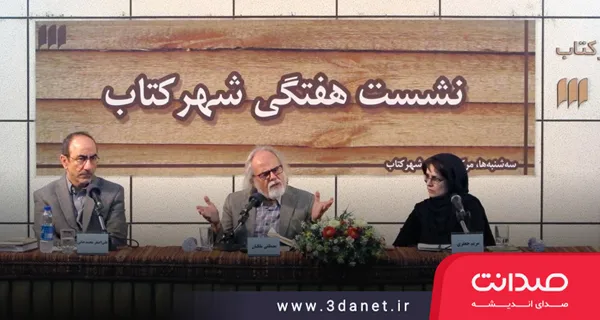
Mostafa Malekian described Linda Zagzebski's Virtues of the Mind as a book that makes one a better person. Explaining the three schools of deontology, consequentialism, and virtue ethics, he examined the arguments in favor of virtue ethics and the distinction between moral and legal judgment.
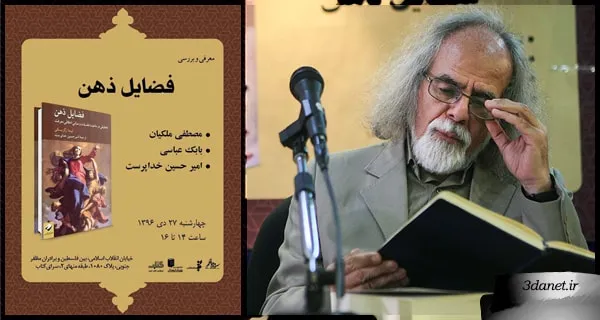
One of the 50 books I have studied in my lifetime
Mostafa Malekian began his talk by noting the importance of Linda Zagzebski's *Virtues of the Mind*, calling it one of the 50 most important books he has studied in his life, and said: “I read it in 1997, two years after the original text was published, and I always wished to translate it into Persian, which unfortunately I never had the chance to do. Now, seeing its translation has made me very happy. Yet I was reminded of a poem that says: O desires gone with the wind / You have departed and left only the dust of old age upon my face and hair.”
He continued: Books can be divided into two categories: first, works that make us more learned, more thoughtful, and more philosophical, meaning we become mentally richer and fuller; second, works that, when we read them, make us better human beings, just as Wittgenstein wished his books to be such that reading them would make the reader better. The book *Virtues of the Mind*, while being strong scientifically and intellectually, also makes one a better person. In the words of our poet, it is a book in which the wind blows. In this respect, although studying it seems difficult at first glance, reading it causes us to sense a spiritual atmosphere within ourselves, and moreover, this spiritual atmosphere is supported by academic endorsements.
This researcher and professor of philosophy and ethics described his discussion of this book as a segmentation, not a summary, meaning he would express certain salient points from it, and said: Some points in *Virtues of the Mind* require expansion, elaboration, and deepening, and some criticisms can also be leveled against it, but there is no opportunity to address them now.
The rational exclusivity of the three great schools of ethics: deontology, consequentialism, and virtue ethics
Malekian then pointed to the distinction between the three great schools or theories in moral philosophy—namely, deontology, consequentialism, and virtue ethics—and said: Contrary to the view of historians of moral philosophy, in my opinion, the confinement of ethical schools to these three is a rational exclusivity, and a fourth or fifth school is inconceivable. Because when we want to judge an action, this judgment is either about the action itself, or about its effects in the universe, or about the cause or causes of that action. If this judgment is solely about the action or deed itself, the approach is deontological, like Kant's; if the judgment is about its outcomes and results, our approach is consequentialist or holds the primacy of results, whose greatest proponents include James Mill, John Stuart Mill, and Jeremy Bentham; and if the moral judgment of an action is devoted to the cause or causes of that action's realization, our approach is virtue-ethical. A fourth approach is not rationally conceivable.
This ethics professor emphasized: If our moral approach in judging the praiseworthiness or blameworthiness of an action is with regard to the action itself (the deontological approach), that is, the rightness or wrongness of the action is considered; but if the judgment about an action is based on its outcomes and results, then the main concept is the goodness or badness of the action; and if our approach in judging an action is virtue-ethical, meaning the personality and character of the person who performed the deed is considered, then the rightness or wrongness of the action is considered based on the virtue and vice of its agent. Therefore, the difference between these three schools is that deontology considers rightness and wrongness the mother of all other moral concepts, consequentialism emphasizes goodness and badness, and virtue ethics considers virtue and vice the mother of moral concepts.
The fact that human beings' moral intuitions initially confirm all three great ethical schools was the next point of Malekian's discussion, and he said: Humans have intuitions that, at least at first glance, confirm all three schools; that is, for instance, our intuition tells us it is right for a person to treat another as they would like another to treat them, and this aligns with deontology. Just as humility, at first glance, seems right to everyone, meaning we should behave with the blessings we have in life as if they were in the lives of others.
On the other hand, we have intuitions that align with consequentialism, such as the wrongness of a truth that causes strife between two tribes or peoples, or that interpretation of Jesus (PBUH) who said that man was not created for the Sabbath, but the Sabbath was created for man. We also have intuitions that align with virtue ethics; for example, we all consider the criticism of a benevolent person to be moral, while we deem the criticism of an envious person or a rival a vice and feel offended by their action. It is for this reason that, at first glance, none of these schools can drive the others from the field, and it is for this reason that every human being acts according to all three schools in daily life.
Ethics differs from law
Malekian identified the book's third point as Zagzebski's arguments in favor of virtue ethics and said: Of course, one must bear in mind that the assertion in virtue ethics that what issues from a virtuous person is morally right should not be conflated with a legal judgment of an act. That is, it is not the case that Hitler, Pol Pot, Stalin, and Saddam could invoke virtue ethics to say that their actions cannot be judged. Because, firstly, the characteristics that make an individual morally virtuous or morally vicious are specific and observable, and secondly, we stand against these criminals in the name of law. All legal schools are consequentialist. That is, the validity of law rests solely on its effects and outcomes, and anyone who stands against the law is punished in proportion to the degree of their transgression.
In other words, legal punishment and reward have nothing to do with inner virtues and vices. Of course, if one is a virtue ethicist, they must accept that merely because someone is a legal criminal, one cannot call them morally vicious and reproach them, just as from the virtue ethicist's perspective, someone who is completely law-abiding is not necessarily virtuous. Therefore, law is not suspended by virtue ethics, and every despot, oppressor, and totalitarian must receive legal punishment proportionate to the crime they have committed. The only difference between the ethical schools in this discussion is that if we are consequentialists or deontologists, we might perhaps more easily make moral judgments about those who carry out legal punishment, but if we are proponents of virtue ethics, we punish the individual legally, but moral judgment is largely suspended or becomes cautious and circumspect.
Moral judgment in all spheres of human existence
This professor of moral philosophy, emphasizing Zagzebski's well-reasoned defense of virtue ethics, said: Zagzebski, on the one hand, critiques deontology and consequentialism, and on the other hand, presents arguments in favor of virtue ethics. This is one of the strongest parts of this book. But another important discussion is that our moral judgment, according to any of the above ethical schools, especially virtue ethics, relates to all five spheres of human existence. Every human being has three inner spheres—namely, first, beliefs; second, feelings, emotions, and affects; and third, desires—and two outer spheres—namely, first, speech, and second, action. Moral philosophers have a consensus that one can make moral judgments about speech and action, but virtue ethicists emphasize that one can also make moral judgments about the inner spheres, that is, beliefs, feelings, and desires. Ms. Zagzebski, both for other reasons and because she is a virtue ethicist, believes that all five spheres of human existence can be subject to moral judgment.
But why do some moral philosophers say that one can only make moral judgments in the realm of action and speech? Malekian, in response to this question, said: The reason is that these thinkers imagine that only human action and speech are voluntary, and the inner spheres of the human being are not voluntary. Whereas Zagzebski, in a profound discussion the like of which I have not seen, shows that all spheres of human existence are voluntary, although, firstly, their degrees of voluntariness differ, and secondly, the type of their voluntariness differs, and none of these five spheres is entirely deterministic and involuntary. That is, just as a human being has completely involuntary speech and actions (like the things a person does in their sleep), they also have involuntary beliefs, feelings, and desires, but they also have voluntary beliefs, feelings, and desires, and for this reason, one can also make moral judgments about these inner spheres.
Therefore, in psychological terms, since speech and action are collectively referred to as behavior and the inner domains as the mind, we can say in the language of psychology that ethics can judge both behavior (speech and action) and the mind (the three inner domains). Of course, ethical judgment regarding beliefs does not mean judging the content of those beliefs or the proposition to which the belief is attached; rather, the morality or immorality of a belief relates to the process of acquiring beliefs. More precisely, ethical judgment about beliefs concerns the process of arriving at a belief, not the product of that belief. That is, in the ethics of belief, the products of belief are not the object of judgment; rather, the process of attaining belief is what matters. That is, the processes of belief formation are the object of judgment in the ethics of belief.
Epistemology as Ethics
Malekian then turned to the discussion of epistemology and said: Zagzebski believes that epistemology has a structure similar to ethics, except that in epistemology, instead of action (which is the subject of discussion in ethics), knowledge is the subject of discussion. He divided the human sciences into two types: descriptive sciences and prescriptive sciences, or descriptive-prescriptive sciences, which can be briefly called descriptive sciences (description, explanation, and prediction) and normative sciences (sciences that both describe and prescribe, or only prescribe). For example, psychology, sociology, and economics—that is, the empirical human sciences—and physics, mathematics, and chemistry—that is, the basic sciences—are descriptive, whereas a science like ethics is prescriptive, meaning it does not say what humans do, but rather what humans ought to do and ought not to do.
Jurisprudence and law are also like this; they are prescriptive sciences. But a science like logic, whose subject is thinking or reasoning, is both descriptive and prescriptive. That is, it both shows how humans think or reason and prescribes how they ought to think or reason. For this reason, in logic, we have valid and invalid arguments and we make value judgments about them.
He pointed out: Generally, until the early twentieth century, epistemologists believed that epistemology is a descriptive science, meaning it deals with what knowledge is. But from the early twentieth century, insights emerged and some said that epistemology is like logic, that is, a prescriptive science. However, logic prescribed the manner of thinking or reasoning, whereas epistemology says you should or should not consider these things as knowledge. Quine is one of the prominent philosophers who believes epistemology is only a descriptive science, while Linda Zagzebski believes that epistemology is a prescriptive science, and therefore value judgments can be made within it, and for this reason, epistemology is like ethics and law.
Malekian said: The important point of the discussion, however, is that the value judgments that occur in epistemology are very similar to ethical value judgments. That is, a group like the deontologists, when they want to judge knowledge, look at the belief itself, just as deontologists in ethics looked at the act itself to make a value judgment about it. Another group, like the consequentialists, emphasizes the effects and consequences resulting from that belief for making a value judgment about it, meaning, for example, in judging intuition, feeling, or testimony, they emphasize the results obtained from these.
But there is a third group among epistemologists who say that for epistemological value judgments about beliefs, one can neither focus on the belief itself nor on the effects and consequences of the belief-forming process; rather, one must look at who has acquired this belief. This approach to epistemology is like virtue ethics in morality, and Linda Zagzebski is a virtue epistemologist, meaning she says that to grant a belief the title of knowledge, one must see whose belief it is. In virtue ethics, we asked what characteristics, character, and personality the agent has, and here we ask what characteristics, character, and personality the believer has.
The Difference Between Epistemological Virtue Ethics and the Ethics of Belief
The philosophy professor continued by emphasizing: just as in ethics we called the traits that characterize a virtuous person moral virtues, in epistemology we can also posit the existence of intellectual virtues. That is, virtues which, when a believing person is characterized by them, elevate their belief to the level of knowledge. Some of these intellectual virtues include open-mindedness, being reason-oriented, lacking prejudice, lacking dogmatism and rigidity, not being wishful-thinking, having intellectual openness, having precision of thought, and so on. According to a tally I have made, one can enumerate 51 intellectual virtues. Zagzebski's point is that if someone possesses these intellectual virtues, what they say is epistemologically reliable. Of course, it must be emphasized that intellectual virtuousness is different from the ethics of belief.
The ethics of belief, which arose from a dispute between William James and the mathematician and logician Clifford, concerned the moral judgment of beliefs in terms of the process of arriving at belief, and in this respect is a branch of ethics, whereas the discussion of intellectual virtue deals with the belief itself and is a branch of epistemology, because it says a person's belief is epistemologically acceptable if intellectual virtues are realized in that person. In other words, the ethics of belief deals with the process, and virtue epistemology deals with the product. It is also necessary to emphasize that the ethics of belief, as one of the five branches of ethics dealing with beliefs, should not be conflated with intellectual virtues. Whereas intellectual virtues validate a person's belief.
Malekian said: On this basis, Zagzebski believes that just as among ethical schools, virtue ethics is defensible, in epistemology one should not look at the beliefs themselves or their outcomes, but rather one should look at the believing person. Therefore, the difference between moral virtues and intellectual virtues is that moral virtues are virtues of the realm of action, while intellectual virtues are virtues of the realm of thought. Another point is that some moral virtues and intellectual virtues are shared. For example, courage is both a practical virtue and an intellectual virtue. That is, both the person who shows bravery on the battlefield is courageous, and the individual who, despite the propaganda of the ruling regime in a country, discovers the truth, because this person also puts themselves in danger. That is, intellectual courage is necessary to attain truth. Of course, some virtues are not exclusively moral or exclusively intellectual.
He said: When Zagzebski, in ethics, wants to defend virtue ethics against consequentialism and deontology, she confronts consequentialists and deontologists with certain realities and says you cannot talk about them. For example, she says that deontologists and consequentialists cannot talk about love and friendship, because love, friendship, and kinship do not conform to a moral criterion according to the conception of consequentialists and deontologists, whereas according to the conception of virtue ethicists, one can make moral judgments about love, friendship, and kinship as well. Of course, in my opinion, kinship can be subsumed under friendship, while some believe in their distinction.
Knowledge is different from wisdom and understanding
He then pointed to three issues that, from Zagzebski's view, proponents of deontology and consequentialism cannot justify; first, wisdom, and second, knowledge: We humans believe that science, understanding, and wisdom are three different values. It very often happens that someone is very learned but lacks wisdom. That is, there are many who have a low level of knowledge but possess wisdom, meaning they manage their lives better than a university "full professor," because they are both happier and better, people love them more, and they derive more pleasure from life. Someone who lacks wisdom cannot make use of abundant data. Accumulating data, even if it takes on the aspect of knowledge, does not lead to wisdom.
Wisdom means that a person can use the totality of data for a good and happy life. Zagzebski believes that those in epistemology who hold views similar to consequentialists and deontologists cannot demonstrate the value of wisdom. Moreover, from her perspective, in virtue epistemology we also arrive at the meaning of understanding, and understanding is also different from wisdom and knowledge. Understanding means penetrating from the surface to the depth. It often happens that people remain at the surface in understanding sacred texts or philosophical texts. The Prophet (PBUH) said that he fears for people the sharp-wittedness of the clipped tail, meaning knowledge that does not penetrate to the depth. Zagzebski believes that a person in the realm of the mind must have three important qualities: knowledge, understanding, and wisdom. If we take a virtue-oriented approach to epistemology, all three of these are explicable, but in other approaches, knowledge may be explicable, while understanding and wisdom are not.
At the end, this professor of philosophy and ethics praised the translation of the book and said: This translation is truly very precise. I have, of course, also read other translated works by Mr. Khodaparast, and they are also precise. But this translation is very delightful, precise, and with a remarkable consistency of approach.
.
.
Audio of Mostafa Malekian's Speech at the Unveiling of the Book *Virtues of the Mind*
PDF file of Mostafa Malekian's Speech at the Unveiling of the Book *Virtues of the Mind*
.
.
Mostafa Malekian's Speech at the Unveiling of the Book *Virtues of the Mind*
Author: Linda Zagzebski / Translator: Amirhossein Khodaparast
January 17, 2018 - Saray-e Ketab - Published on the IBNA website
Transcription and Report: Mohsen Azmoudeh
.
.

Discussion2 comments
کسی این ۵۱ ویژگی را میدونه؟ لطفا شاگردان آقای ملکیان از ایشان بخواهند این ویژگیها بیان کنند.
این متن به نظرم اشتباهاتی در پیاده گذاری دارد مثلا بند زیر را واقعا استاد ملکیان به زبان آوردهاند؟ «زیرا عشق و دوستی و خویشاوندی طبق تلقی نتیجه گرایان و وظیفه گرایان ضابطه اخلاقی بر نمیتابد، در حالی که طبق تلقی فضیلت گرایان میتوان راجع به عشق و دوستی و خویشاوندی نیز داوری اخلاقی داشت» به نظرم کاملا اشتباه است و احتمالا ژورنالیست گزارشنویس اشتباه کرده است.