Philosophy
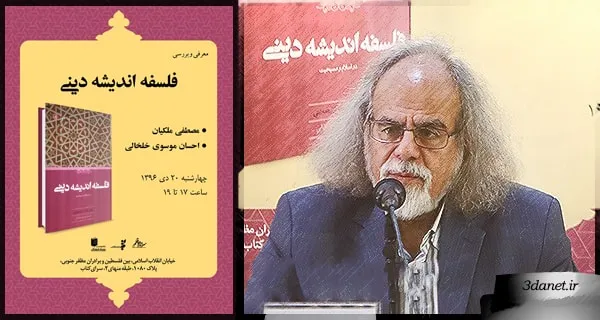
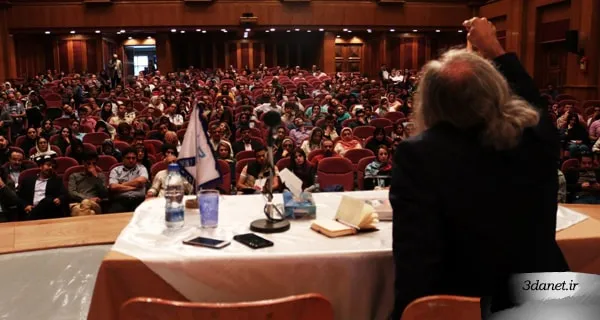
Mostafa Malekian's Speech at the Unveiling of The Politics of Happiness
At the launch of The Politics of Happiness, Mostafa Malekian distinguishes three interpretations of the good life: the fatalistic, which is fortune; the hedonistic, which is pleasure; and the humanistic, which is well-being.

To properly understand the book The Politics of Happiness and to determine its place among treatises, articles, and other books, we need a distinction. Even in the Persian language, where the number of books is very, very small, there are over two hundred books whose understanding depends on knowing this distinction that will be presented. In fact, what is presented provides the means for understanding many texts and also makes understanding The Politics of Happiness possible.
The terms, words, and translations used for this matter may not be to everyone's liking, but what is of greater importance is the presentation of the concepts behind these words, and the attempt is to elucidate these concepts as clearly as possible.
First, we will address the definition of the flourishing life. A flourishing life, or the ideal life, or the life of the highest perfection, is the life that everyone truly, in the deepest recesses of their heart, wishes for, and we call the person whose life is flourishing a flourishing person. Thus, we call a person who has realized their wishes and fulfilled their inner desires a flourishing person, meaning a person whose desire has been fulfilled. In English, to address this flourishing person, roots of "Happy" are used. They say that he lives Happily and his life has Happiness.
Those who write texts about flourishing and the flourishing person can have three different conceptions of this concept. Therefore, sometimes two authors write about happiness, and the reader's impression is that both authors are talking about the same thing, whereas this is not the case.
For example, suppose that in Persian, three people write on the three subjects of zoology, diet, and household plumbing fixtures, and a reader reads the writings of all three and thinks that all three are talking about the same thing. Of course, the reader would have to be very much a beginner to confuse these three!
Authors who write in European languages, and especially in English, say in words that the ideal life or the life of the highest perfection is a Happy life, but there are three different meanings of Happy for them, and we must discern which meaning the author is talking about in order to then be able to critique and examine differences of opinion.
There are three interpretations of the flourishing life:
1) The Fatalistic Interpretation
The fatalistic interpretation says that having a flourishing life depends on a person's fortune and luck. If a person is flourishing, it is because they have been fortunate. There were many thinkers in ancient Greece and especially Rome who said that the discussion of being flourishing or not is, in fact, a discussion of good fortune and misfortune. These thinkers tell the human being: O human, your good fortune and misfortune do not depend on you, but rather on what circumstances existence creates for you. Fatalists say that existence has considered a bundle-package for every human being, which for some is very pleasant and desirable, and for others very foul and unpleasant. With the fatalistic interpretation, flourishing or Happiness should be translated as good fortune, because it is only the individual's fortune and luck that determines their flourishing or lack thereof.
Therefore, in the fatalistic interpretation, the best translation for flourishing is good fortune, and the best interpretation for lack of flourishing is misfortune. This theory had many proponents among the ancient Greeks and Romans. Among contemporary thinkers, Robert C. Solomon, who was an existentialist philosopher, is a proponent of fatalism. In his works, not everything can be attributed so much to the person themselves, with the notion that everyone's destiny is in their own hands. He believed that the circumstances of the world create individuals' lives for them.
Another thinker who is among the fatalists is Bernard Williams, who also emphasized the prominent role of luck in human flourishing.
2) The Hedonistic Interpretation
This interpretation holds that the amount of pleasure accruing to each individual is the determining factor of well-being, and ill-being stems from the amount of pain and suffering that befalls a person. A fulfilled person is one who has experienced the greatest possible pleasure in life, and an unfulfilled person is one who has experienced the greatest possible pain in life.
Why is this theory hedonistic? Because its proponents believe that human life revolves around pleasure and pain, and they consider well-being and ill-being to be contingent upon the volume and quantity of pleasure and pain. According to this theory, the best translation for Happiness is Khoshi (Pleasure/Delight).
In this interpretation, a fulfilled person is someone who is experiencing pleasure in their life.
3) The Humanistic Interpretation
This interpretation states that a fulfilled human being is someone who has lived a life worthy of a human. According to this interpretation, if we live in a way that befits a human being, we will achieve fulfillment. For fulfillment, we must bring into our lives that which only a human being deserves. In other words, if there is a gift or gifts specific to humans, we must incorporate it/them into our lives to become fulfilled.
Jeremy Bentham established nine criteria for measuring pleasure (Khoshi) and introduced them as a measure for the good life. John Stuart Mill, while accepting Bentham's general view, had one fundamental critique that partly set him apart from his teacher, leading to his famous statement:
"It is better to be a human being dissatisfied than a pig satisfied."
If Bentham's words were correct, a satisfied pig would certainly be preferable to a dissatisfied Socrates. For a satisfied pig has a life full of pleasure, whereas a dissatisfied Socrates has a life devoid of pleasure. Stuart Mill says that a Socrates, even if dissatisfied, possesses the specific human gift, but a pig, no matter how satisfied, lacks that specific human gift; and since the specific human gift is superior to the specific porcine gift, a dissatisfied Socrates is better than a satisfied pig.
Therefore, if a human being could live like Socrates but be dissatisfied and their life lack pleasure, it is preferable to living like a pig, even if that life were entirely full of pleasure. John Stuart Mill says that the problem of human beings is not merely a problem of pleasure and pain; rather, their problem is the extent to which they are human. Of course, if that humanity can be accompanied by pleasure, that is excellent, but if a conflict arises between humanity and pleasure, a person must pursue that humanity, not pleasure.
This interpretation considers destiny and pleasure to have no role in fulfillment; rather, it views living humanely as the criterion for fulfillment.
In this interpretation, I translate Happiness as Behrouzi (Well-being).
In the following, the two interpretations of Khoshi (the Hedonistic Interpretation) and Behrouzi (the Humanistic Interpretation) will be discussed.
The book "The Politics of Happiness" was written by a philosopher whose view is the hedonistic view (Khoshi). In fact, the author deals with the politics of pleasure.
The first contrast between Khoshi and Behrouzi is that Khoshi depends on our satisfaction with life, whereas Behrouzi depends on our worthiness to be called human.
Pleasure attends to human desires, but well-being attends to our needs, and desires and needs do not correspond in many cases. The more a person attains maturity, the closer their desires come to their needs. In other words, with increasing maturity, a person more than before wants those things they need and does not want what they do not need, and what they want is something they need and what they do not want is something they do not need. In most human beings, this is not the case. In infancy and childhood, desires and needs are in opposite directions and desires do not correspond to needs. But even with increasing age, the majority of human beings still remain in their childhood, and their desires and needs differ vastly from one another.
In other words, those who seek pleasure are pursuing their desires. But those who seek well-being are pursuing their needs.
Need is something which, if an organism (plant, animal, or human) is deprived of it, the quantitative and qualitative survival of that organism is endangered. For example, a plant needs water, suitable soil, fertilizer, sunlight, solar heat, and oxygen, and this means that if one of these does not reach the plant, the plant will head toward withering, death, and destruction.
For human beings too, there are things (needs) which, if they do not reach them, they will be placed on a downward slope, and the end of this downward slope is annihilation.
A child with a cold truly needs medicine, but will absolutely refuse to take pills, capsules, or syrup, yet on the other hand, desires ice cream, which is not only not a need, but is also contrary to their needs.
Because it is evident in children that a deep gap exists between desires and needs, in all cultures and civilizations, fathers, mothers, teachers, and educators have been permitted to control and restrain children. A child would certainly be willing to give a piece of gold and take three chocolates in exchange for it!
But when a person reaches older ages, cultures and civilizations say, for instance, leave your child to their own devices and let them decide for themselves. Of course, this releasing of the child is not because they no longer need a guardian to distinguish and separate needs from desires, but for another reason.
So, a need is something which, if it does not reach the being, its quantitative and qualitative survival is endangered. But a desire is something which, if it does not reach the being, they merely do not experience pleasure or experience pain, and their quantitative and qualitative survival is not endangered.
* Everyone, if they have a desire, is aware of it, but this is not the case with need, and how many needs there are of which we are unaware!
In philosophy, there is a division that classifies beings into two categories:
1) Beings whose existence is identical to their being perceived.
2) Beings whose existence is not identical to their being perceived.
There are beings that, as soon as they come into existence, are perceived, and if they are not perceived, it means they do not exist at all. The existence of these beings is identical to their being perceived, like a toothache. If a person does not feel a toothache, it means there is no toothache at all.
The other category of beings can exist and not be perceived, or not exist and be perceived. Dental disease belongs to this category. A person might have had dental disease for two years but be unaware of it. Disease is among the beings whose existence is not identical to its being perceived. Or another example: a fish might have existed in one of the oceans for many years, but we have only recently discovered it. The existence of this fish is not dependent on its being perceived, because for many years this fish existed in the oceans, but we were unaware of it, and this unawareness of ours has no effect on the existence of this fish. In fact, the existence of a fish is not identical to its being perceived. Or another example: fatigue is among the beings whose existence is identical to its being perceived. If we do not feel tired, it means we are not tired.
Pleasure and pain are among those entities whose existence is identical to their being perceived. If pleasure or pain exists, a person feels pleasure or pain, and if it does not exist, there is no feeling or perception of it either. But need is not like this. It is possible for a person to need something, yet be unaware of this need. It is also possible for a person not to need something at all, but to think that they need it. For example, a person goes to a doctor and tells them, "My ear hurts." If the doctor says, "No! It is your ankle that hurts." In this case, everyone sides with the person who went to the doctor. Because pain is among those things whose existence brings about its perception. When a person does not perceive pain in their ankle, it means they do not have pain in their ankle.
In this example, regarding determining where in the patient's body it hurts, the patient's word is authoritative, but in determining the type of illness and the cause of this pain, it is the doctor's word that is authoritative.
Illness and need are of the same kind, and diagnosing them requires a specialist, but the pain resulting from illness and desire are of another kind, and diagnosing them does not require a specialist.
So the point that exists is that in diagnosing need, there is a requirement for a specialist, but in diagnosing desire, there is no requirement for a specialist. Therefore, expertness or specialization is irrelevant for diagnosing desire, and everyone knows better than others what they want.
Of course, it should be noted that when it is said that diagnosing human needs requires a specialist, this does not mean that all specialists agree on determining needs. 6000 years of written history have passed, and still, no consensus has been reached among specialists on determining human needs. Of course, theories exist, and we will address some of them.
Those who seek pleasure (not well-being) imagine that if their desires in life are fulfilled, they will be happy. Therefore, they always want to live in a society where their desires are fulfilled in the best possible way.
Desires are fulfilled in two ways.
The book "The Politics of Happiness" deals with one of the two ways of fulfilling desires.
It is possible for a person to want something they do not have in life, or to have something in life that they do not want to have. In this state, the person's desires are not fulfilled. Because they either want something they lack in life, or they happen to have something in their life that they do not want at all. In this state, the person has a desired thing that is absent and an undesired thing that is present. According to the interpretation of happiness as meaning pleasure, the person is not happy in this situation.
To exit this situation, there are two ways:
1) Changing the external world (to conform to our desires)
2) Changing desires (to conform to the external world)
Or in the language of the ancients, when affairs are not in accordance with one's wish, either make the affairs in accordance with one's wish, or make one's wish in accordance with the affairs.
For example, suppose someone is sitting here whose presence is not desirable to me. According to what was stated, there are two ways:
Either I tell them to leave the room (making affairs in accordance with one's wish), or I ask myself, "Why am I suffering from this person's presence here?" and then make some interventions within myself so that the person does not move from their place and does not leave, but I enjoy their presence (making one's wish in accordance with the affairs).
The second way is the way proposed by the Stoics. They said that when affairs are not in accordance with your wish, make your wish in accordance with the affairs. That is, create changes within yourself so that not only does this situation become tolerable for you, but you also become desirous of this situation.
When a situation is not desirable for a person, they initially tolerate that situation, then submit to it, subsequently become content with it, and finally become desirous of it.
Both approaches are ways to achieve fulfillment through the interpretation of pleasure (satisfying desires).
Derek Bok is not of the same persuasion as the Stoics. He says that we must change our external world in order to attain fulfillment (pleasure). Hence, he adopts a politics of happiness or a politics of pleasure. This external change is carried out by various groups, one of which is statesmen, political figures, and practitioners of politics. Of course, this group is not solely responsible for changing the external world for the sake of happiness, but in this book, only this group is addressed. For example, a part of this change in the external world is carried out by teachers, fathers, and mothers.
Regarding the issue of needs, as stated, we require specialists. In the book The Politics of Happiness, Derek Bok does not address needs.
If someone reads this book without paying attention to the existing interpretations of fulfillment, they will say that the book names seven factors for human happiness (fulfillment through a hedonistic interpretation) but makes no mention of ethics, and will draw the incorrect conclusion that ethics are not needed for fulfillment.
According to the third theory, fulfillment depends on satisfying needs, and if these needs are not met, annihilation will befall us. In determining these needs, there is no consensus among specialists.
The most famous view is the Platonic view. In this regard, Plato deduces based on three presuppositions. After him, thinkers examined Plato's opinion and concluded that even if these three presuppositions were false, his conclusion would still be correct.
Plato's three presuppositions were as follows:
First presupposition:
Every individual is composed of a body and a soul. He believed in a kind of Dualism and considered us to be composed of a body and a psyche or soul. In other words, he was not a materialist.
Second presupposition:
Plato said that since each individual is no more than one entity, and since this entity has two parts, one of these two parts is our self, and the other is our possessions. That is, one of these two realms is predicated of us with the verb "to be," and the other with the verb "to have." Is a human a body that has a soul, or a soul that has a body?
Plato said that you should predicate the soul of yourself with the verb "to be," and the body with the verb "to have." He said that every individual is a psyche that possesses a body, and whenever a conflict arises between the body (our possessions) and the soul (our self), choose the soul (the self) and abandon the body (the possession).
Third presupposition:
Now that the soul of each individual is that person's self, how many parts does this soul have? He believed that this soul is composed of three parts: beliefs, feelings, emotions, and excitements, and will.
Plato said that the cognitive part of our being wants truth. The part of our feelings, emotions, and excitements wants only beauty, and Plato did not consider this beauty to be merely visual beauty; for example, he considered delicious food beautiful to our taste and a pleasant scent beautiful to our sense of smell. The third part of our being is the will, which is in love with the good, and the will cannot be satisfied by anything other than living ethically.
Plato said that human beings need truth, beauty, and the good. From Plato's time until today, these three presuppositions of Plato have had many opponents, but Plato's claim has found no opposition. This is because Plato's view, which was a philosophical view, was confirmed by empirical methods. From the mid-nineteenth century onward, when scientific psychology became independent, laboratory psychologists saw that human tranquility is provided by truth, beauty, and the good. Therefore, the tripartite view is a view that has been accepted by many scholars, although opponents also exist.
Plato's point was that by bringing together truth, beauty, and the good, our human needs (the humanistic view) are met, and every human individual becomes a person in the fullest sense, and fulfillment is the fruit of bringing these three things together.
In recent years of research, a fourth factor has been added, one which Plato seems to have overlooked. The fourth factor is friendship and love, which Aristotle, as Plato's student, had indeed paid attention to, but under the heavy shadow of Plato, this view of Aristotle's received little attention.
Therefore, today it is said that truth, beauty, goodness, and friendship and love are four needs that must be fulfilled for an individual to be well-being (flourishing from a humanistic perspective). Thus, the need for a beloved and a friend also exists within the human being.
It now becomes clear that for well-being, we also need ethics. A happy person can be unethical and still be happy, but a person with well-being cannot be unethical and still have well-being.
In the discussion about happiness, each individual understood their own desires and would refer to a specialist to learn the ways to fulfill those desires. For example, to satisfy desires, one would consult a doctor (a physician of the body, a physician of the mind, or a psychiatrist), an engineer, a manager, and so on.
In the realm of needs, not only for fulfilling needs (as in the realm of desires), but also for recognizing needs, we require a specialist.
Here, some people are quick to appear and, by relying on needs in opposition to happiness, seek to direct people to a place where the people do not consider them specialists and do not wish to refer to their authority for identifying their needs. In this sense, the reliance on need over happiness serves the purposes of ideological regimes. When people say their desires are not being met, they respond by saying that they are in the process of fulfilling your needs! You did not understand your needs; we understand your needs and are fulfilling them.
Therefore, ideological regimes can very well abuse this division, but this does not mean the division itself is incorrect. The potential for abuse of this division is high. If people say they lack welfare, security, health, and freedom, ideological regimes respond by saying they have nothing to do with these fleeting pleasures of yours! Rather, we have come to fulfill your human needs! One must be careful that ideological regimes do not abuse this division. And it should be noted that these ideological regimes can be Stalinist, religious, or even liberal.
Spinoza has a famous saying:
But if our perspective is not Stoic and we look at the issue, for example, from the standpoint of Utilitarianism, which has figures like Jeremy Bentham, James Mill, John Stuart Mill, and Russell, we should expect political regimes to at least provide the indispensable prerequisites for a good life. In the words of La Rochefoucauld, no situation is so good that a fool cannot ruin it. Therefore, even if a political regime provides all the necessary prerequisites for a pleasant life, individuals can still act foolishly and turn it to their own detriment. Thus, from the utilitarian perspective, the political regime must provide the indispensable prerequisites for a good life for the people; whether people then make use of these provided conditions is up to the citizens themselves.
The final point is that one can argue in favor of all three types of well-being. The fatalistic interpretation of well-being is wrong, but this does not mean that fortune and luck have no effect on our well-being. Humans have no control whatsoever in determining their parents, but depending on fortune, each person's parents can be good and healthy, or bad and unhealthy.
If we say that it is not all about merely experiencing pleasure (rejecting the hedonistic interpretation of well-being), we must not forget that a life without pleasure, a bitter life, is not an interesting life. In his Ihya' 'Ulum al-Din, Al-Ghazali, with a series of presuppositions, concludes that we must only care for our bodies to the extent that God has commanded us, and God has said not to do anything with this body that would cause it to die. Hence, we must drink water so as not to die. But he goes on to say that both cold water and lukewarm water quench thirst, and we should only drink lukewarm water so that we do not enjoy the pleasure of cool water and take care not to become attached to this world! A Christian mystic said that whenever he inadvertently ate a delicious dinner, he would hold his hand over a candle flame at home to, so to speak, restore balance!
The third perspective defines well-being based on the pursuit of truth, the love of beauty, benevolence, and the love and friendship that each individual bestows upon others. This theory, in my opinion, is correct, but we must note that even in this theory, every individual must consider their own capacity. It is true that humans are lovers of these four things, but in some cases, we are forced to neglect one in order to attain another. Therefore, we should not create a taklif-e ma la yutaq (a duty beyond one's capacity) for ourselves and make our lives bitter. In cases where we are forced to neglect one of these four things, we should not blame ourselves for our choice, because our capacity is no greater than this.
I recommend reading the book The Politics of Happiness. I myself learned a great deal from this book. This book helps us with our individual decision-making and also helps us understand what kind of society we live in and what environment our politicians are in. However, what must be kept in mind when reading this book is that Derek Bok uses well-being with a hedonistic interpretation and also seeks the fulfillment of well-being through changing the external world, and he rightly places part of what must change externally on the shoulders of politicians, which is, of course, a heavy responsibility.
Apart from the duty that Derek Bok places on politicians, there appear to be two other paths to happiness. The role that teachers and educators play, and the role that each individual's reflections play.
.
.
Audio of Mostafa Malekian's Speech at the Unveiling of The Politics of Happiness
PDF of Mostafa Malekian's Speech at the Unveiling of The Politics of Happiness
.
.
Speech
At the Unveiling of the Book The Politics of Happiness
Author: Derek Bok / Translator: Narges Salahshour
Professor Mostafa Malekian
26 December 2017 - House of Humanities Thinkers
- Transcription and Report: Seyed Masoud Nejad Hosseini
.
.




Discussion1 comments
ضمن عرض سلام به استاد عزیز جناب آقای ملکیان و خسته نباشی به تمامی دستدرکاران.