Sociology
Lectures on “Why Does Inequality Matter?” by Javad Heydari
Inequality is problematic because of poverty, status differences, and the domination of the wealthy; T. M. Scanlon enumerates these reasons in his recent book, and Javad Heydari analyzes them in a series of lectures.
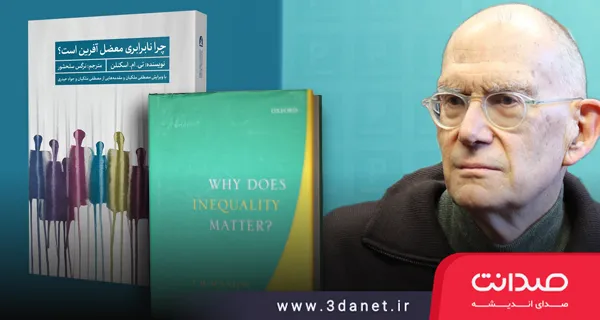
T. M. Scanlon is one of the most important political philosophers of our time. The translation of his recent book, Why Does Inequality Matter?, was published last year by the Soroush-e Mowlana Institute. In these ten lectures, an attempt has been made to analyze and examine one chapter of the book in each session. Many merits have been enumerated for this book, among which the following two can be mentioned: first, this book addresses one of the most serious issues of our time. According to reliable statistics, inequality is a reality that has both engulfed the entire world and taken deep root in our own country. Addressing this very bitter and destructive reality is among the duties of the political theorist. Second, this book is a brilliant example of analytical thinking in political theory and political philosophy. In analytical thinking, clarity of claim and the provision of reasons are of great importance. Scanlon presents his claims with astonishing clarity and provides robust reasons for each of his claims. Thus, it can be said that in this book, Scanlon addresses one of the most urgent issues of the contemporary world using an analytical method.
Session One: According to Scanlon, a serious moral objection can be raised against the pervasive inequality throughout the world (including in the United States and our own country, Iran). There are two general types of reasons for objecting to inequality: a) The first type states that one form of inequality is poverty. We have good reason to take resources from the wealthy and distribute them among the poor. Many people throughout the world and in our own country are immersed in severe poverty, lacking access to sufficient food, sanitary drinking water, basic health care, and the basic necessities of life. These are good reasons for us to be concerned about the poor. This view is called "prioritarianism." Derek Parfit and Peter Singer adhere to this theory. b) The second type states that the difference itself between the possessions of some and the possessions of others is subject to objection. Scanlon adheres to this theory but does not give it a single name. He says his theory is, firstly, "relational"; that is, it deals with the relation of difference between the possessions or well-being of some and others. Secondly, his theory is "pluralistic"; that is, we have multiple and various reasons for objecting to inequality, not a single reason. Therefore, we have reason to eliminate this difference if we can, or at least reduce it, even if doing so does not improve anyone's situation or at least worsens the situation of the wealthy.
Session Two: When an institution, such as the government, or a human agent, such as a father or mother, owes benefits to all members of a specific group but provides these benefits only to a certain few or provides these benefits in full to a certain few, the objection of a lack of equal concern is instantiated. Inequality can be objected to because it leads to a violation of the condition of equal concern for the interests of those whom the government is obligated to provide with those benefits.
Session Three: Caste, racial, and gender systems create differences in status. In these systems, some are considered superior and some inferior. Inferior and lower-status individuals are treated in a humiliating and demeaning manner compared to others. Inequalities based on the caste system, race, or gender violate basic moral equality in two ways. a) It is sometimes said that members of certain races or a specific caste, or women, are not fully human (humiliating sentiments). b) It is sometimes said that members of certain races or a specific caste, or women, are not worthy of certain political roles (undermining self-esteem). Severe inequality in income and wealth may mean that the poor must live in a way that is more or less humiliating. Therefore, inequality can be objected to because it creates humiliating differences in status.
Session Four: When there is vast inequality in family wealth and income, individuals' hopes for success in a fiercely competitive market are influenced by the family into which they are born. Inequality can be objected to because it undermines the very foundation of equal economic opportunity. In Scanlon's view, equality of opportunity is not a justification for inequality, but an independent requirement that must be met to render inequalities justifiable, and hence just. Therefore, equality of opportunity is part of a three-tiered response to the objection to inequality. For example, suppose someone economically objects to the fact that their situation is not as good as that of others. According to Scanlon, a convincing response to this grievance must satisfy three conditions: 1_ Institutional Justification: It is justifiable to have an institution that generates these types of inequalities. 2_ Procedural Fairness: The process resulting in others receiving advantages (high salaries, wages, and bonuses) is such that, even if the person still complains, their complaint is not procedurally fair. 3_ Substantive Opportunity: If it is said that the complainants lacked the necessary conditions to perform better in this process, there must be no falsehood in this statement.
Session Five: Procedural fairness concerns the process through which individuals are selected for privileged positions. Substantive opportunity, however, concerns the education and other conditions necessary to become a good candidate and be selected for such a process. This requirement is met when a candidate has no grievance; in other words, this candidate does not complain that they cannot compete for privileged positions because they lacked adequate access to these types of conditions. So, firstly; privileged positions exist, but the benefits these positions bring justify their special compensation. Secondly; candidates for these positions must be selected based on their capacity to produce such benefits, and not on irrelevant factors like race, gender, religion, etc. Thirdly; in this part, we want to go beyond the first and second steps and argue that we must help children develop the capacity to attain those positions.
Session Six: Inequality enables the wealthy to dominate the lives of the poor in two ways: a) Inequality grants the wealthy an unacceptable degree of control over the lives of the poor: control over where and how others can work, what is available for them to buy, and what their lives are like. b) If public media is in the hands of a small number of wealthy individuals, it grants them an unacceptable degree of control: control over how others view themselves and their lives in society. Inequality can be objected to because it grants the wealthy unacceptable forms of control and domination over the poor.
Session Seven: One objection to equality is that creating it requires unacceptable interference with individual liberty. Interference with a person's liberty prevents that person from doing what they want. Consequently, interference with liberty is in itself a phenomenon for which every person has a justified reason to object and take issue. Interference with individual liberty requires justification, whereas non-interference does not. Scanlon then addresses the question of whether, as Hayek believed, addressing inequality truly necessitates interference with liberty.
Session Eight: Sometimes inequality is justified in this way: those who have more deserve these vast benefits. Consider these two arguments for and against “desert”: a) The high salaries of CEOs are defended on the grounds that these executives deserve such rewards because of their productivity. b) The high salaries of CEOs can be criticized on the grounds that even if these high salary levels provide incentives that increase productivity, these rewards are still unfair because no one deserves such high pay for performing those tasks. These two arguments, for and against, appeal to the idea of desert. The word “desert” is used for various kinds of claims. When these different claims are carefully distinguished and examined, it then becomes clear when it is correct to say that a person does or does not deserve a particular economic reward.
Session Nine: In 1965, the pay of executives at 350 of the largest American companies was 20 times the pay of the workers at those companies. In the final decades of the twentieth century, this ratio was 376 times. Inequality can be objected to because it indicates the unfairness of institutions.
Session Ten: Scanlon presents his summary of all the book’s arguments and says that this book’s view of equality is relational and pluralistic. There are many reasons to object to inequality. These reasons are either based on the ways inequality has its effects or arise from the relations between individuals.
.
.
Lectures on “Why Does Inequality Matter?” by Javad Heydari
Download audio of Session Three
Download audio of Session Four
Download audio of Session Five
Download audio of Session Seven
Download audio of Session Eight
Download audio of Session Nine
.
.
Author: T. M. Scanlon
Translator: Narges Salahshour
First Printing: Summer 2022
Number of Pages: 360
Format: Octavo
Binding: Hardcover
Publisher: Soroush-e Molana
Series: Uehiro Series in Practical Ethics
ISBN: 978-600-95766-9-2
.
.





Discussion1 comments
خیلی ممنون ار بارگزاری این درسگفتار