Political Science
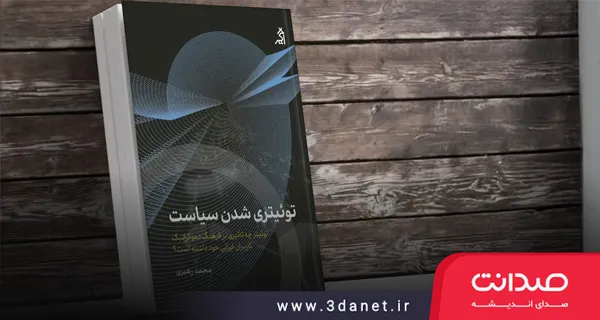
Transition to Democracy: Possible or Impossible
The transition to democracy in Iran requires an examination of its conditions and theoretical foundations; these notes assess the possibility of realizing democracy by analyzing structure-oriented and agent-oriented theories. Neglecting these conditions squanders the resources of democracy advocates.
Mohammad Rahbari
AuthorTransition to Democracy: Possible or Impossible
A Collection of Published Articles on the Transition to Democracy
Download the PDF of this collection
Note:
The collection of articles that follows consists of pieces published in the weekly Sedanet in the spring and summer of 1401 (2022), before the onset of the protests following the death of Mahsa Amini, concerning the transition to democracy. Therefore, what is presented in these articles must first be read and evaluated with the social and political conditions of that time in mind. Nevertheless, I believe the general idea presented in each article remains defensible despite the passage of time, and perhaps for some of them, even more evidence can be provided after these 19 months since those protests. I believe that discussing the possibility or impossibility of a transition to democracy under the existing economic, cultural, social, and international conditions is an essential matter that can pave the way for the future. Without attention to these conditions and the necessities arising from the theoretical foundations of this subject, what will occur is the waste of the material and spiritual resources of Iran's pro-development and pro-democracy forces, and for this reason, discussing the relationship between current conditions and democratization is a necessary task.
Mohammad Rahbari
Table of Contents
How is Democracy Realized in a Society? First Note.. 2
Sanctions Against Iran as an Obstacle to the Transition to Democracy.. 5
Democracy is Not Born from Violence. 8
Can Political Elites Be Agents of the Transition to Democracy in Iran?. 11
Can Social and International Conditions Encourage the Transition to Democracy in Iran?. 14
The Alternative to an Authoritarian Government is Not Necessarily a Democratic Government... 17
Oil: A Major Barrier to the Transition to Democracy.. 20
How is Democracy Realized in a Society? First Note
Mohammad Rahbari - PhD in Political Sociology
With the increase in social and economic problems, the intensification of public protests within the country, and the continuation of sanctions and foreign policy issues, some imagine that the conditions in Iranian society today are ripe for a transition to democracy and that such a transition is now more possible. But does the increase in the problems of the political system in the country mean that the conditions for a transition to democracy have been met? To answer this question, it is necessary to study the conditions for the realization of democracy in a society, as outlined in various theories of democratic transition. For this reason, I intend to address, in a series of notes, by examining various theories of democratic transition, including structure-oriented and agent-oriented theories, the question of to what extent the conditions in Iranian society are ripe for a transition to democracy based on these theories and considering the experiences of societies that have achieved democracy. This note is the first of this series.
For more than six decades, theories concerning the transition to democracy have been proposed, and throughout these six decades, these theories have been constantly evolving and being revised. By examining these theories, from the earliest to the most recent, we will attempt to explore the dimensions of the transition to democracy. Today, it is said that for a transition to democracy, it is essential that a strong and capable state and society exist simultaneously, and this is the central proposition of the book The Narrow Corridor by Robinson and Acemoglu (1399 [2020]) and the book Sociology of Historical Transformations by Charles Tilly (1392 [2013]). However, many cast doubt on this proposition and consider the role of agents, elites, and political leaders to be more important in this matter. Furthermore, the indicators of state and societal capability are also a point of contention, and it is from here that various theories of democratic transition take shape. For this reason, in this series of notes, all these theories will be examined so that different perspectives on the capability of the state and society are reviewed, and from the standpoint of all these perspectives, the possibility of realizing democracy in Iranian society is assessed.
But what is democracy? This is a question that will be briefly answered in this note. Democracy literally means rule by the people, a term coined in the mid-fifth century BC to denote the systems existing in some Greek city-states, notably Athens. From then until now, for 25 centuries, the concept of democracy has been continuously debated, and its meaning has undergone transformations over the centuries.
Today, two types of definitions of democracy are given: minimalist and maximalist. The definition of democracy, overall, is either based on "institutions," that is, institutions that characterize democratic governance, or relies on "principles," that is, principles by which democracy can be distinguished from what is not democracy. The minimalist definition of democracy is based on institutions; such as electoral institutions like the legislature or civil society institutions. The maximalist definition of democracy relies on an emphasis on principles; principles such as: equality, participation, autonomy, etc. (Ghazimoghaddam, 1400: 23-24).
The earlier or primary meaning of minimalist democracy comes from Joseph Schumpeter. He offered a definition of minimalist democracy based on the principle of free elections. For this reason, his minimalist democracy is also called "electoral democracy." Schumpeter says: "the democratic method is that institutional arrangement for arriving at political decisions in which individuals acquire the power to decide by means of a competitive struggle for the people's vote" (Schumpeter, 1354: 340-341). In this definition, democracy arises from the interaction of two groups of "individuals": individuals who compete with one another to hold political office, and individuals who, through their vote in public elections, select political officials from among the individuals of the first group (Ghazimoghaddam, 1400: 24). In Schumpeter's view, the competition of political elites—albeit mediated by the people through their selection to govern—is the core of electoral democracy (ibid: 26).
But Tilly's view on the concept of democracy, which is a more recent perspective, is different. He believes a regime is democratic to the extent that political relations between the state and its citizens feature broad, equal, protected and mutually binding consultation. Precise descriptions of these four dimensions are provided below:
- Breadth: encompasses a continuum from a small segment of society enjoying extensive rights and the exclusion of other segments from public politics, to the very broad political inclusion of individuals present within the state's territory.
- Equality: a continuum from profound inequality among groups of citizens to complete equality in both categories.
Overall, increases in breadth and equality are signs of the defining attachments of citizenship. Instead of a variable and partial relationship based on membership in specific groups, all citizens fall into various groups whose members have similar rights and obligations in their interactions with the state.
- Protection: encompasses a continuum from little protection to extensive protection against arbitrary state action.
- Mutual Obligation: This encompasses a continuum from non-commitment to mutual obligation. At one end of the spectrum, seekers of state benefits must bribe, flatter, threaten, or use the influence of powerful individuals to obtain benefits; at the other end, state agents have an explicit commitment to allocate benefits to beneficiary groups.
The systematic movement of regimes toward the upper end of this four-dimensional spectrum is interpreted as democratization (Tilly, 1392: 29-31).
Therefore, unlike Schumpeter, who has an institutional view of democracy and reduces it to the institution of elections, Tilly has a relational view of democracy and defines it based on the type of relationship between the state and society, thus offering a deeper and more conceptual definition of it.
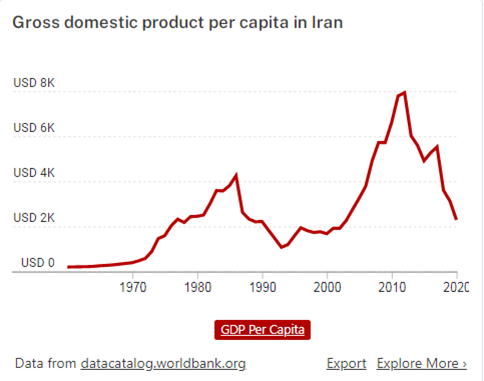
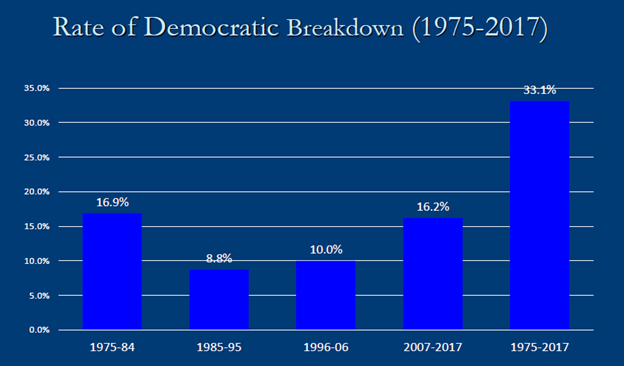
If we wish to express Tilly's intended components in simpler language, it must be said that by These days, in political circles more than ever and on social media such as Twitter, the debate about democracy and the conditions for its realization has heated up. Some say democracy is not "playing at elections" and that what brings democracy about is something else. What really is democracy? In the first note of the series of notes on how democracy is realized in a society, a minimal definition of democracy was presented, quoting Joseph Schumpeter, which is based on institutions; that is, electoral institutions such as a legislative assembly must exist for a minimal democracy to be realized. It was also pointed out that "one" of the components of democracy in Tilly's theory is "inclusiveness," meaning that individuals within the territory of the state have a role in public politics and the relationship between the state and the people is such that this inclusiveness is accepted within it. As Adam Przeworski says, "The decisive step toward democracy is the devolution of power from a group of people to a set of rules." Therefore, whenever we want to talk about democracy, we must not forget that minimal democracy is the same as electoral democracy, and any system that lacks free, fair, and meaningful elections and where power is solely in the hands of a group of people is not democratic. But how and through what process does democracy become established in a political system? This is a question we will address in more detail from this note onward. Seymour Martin Lipset first attempted to offer a theory on this matter in 1959. What Lipset meant by democracy was precisely electoral democracy. He measures democracy by the level of economic development and believes: "Perhaps the most widespread generalization linking political systems to other aspects of society has been that democracy is related to the state of economic development. Concretely, this means that the more well-to-do a nation, the greater the chances that it will sustain democracy" (Lipset, 1959: 75). He measured wealth using indicators of per capita income, industrialization, urbanization, and public education. Lipset's theory later became known as modernization theory. To prove his view, he identified four categories of countries including 1- stable European and English-speaking democracies, 2- unstable European democracies and non-democratic governments, 3- unstable democracies and dictatorships in Latin America, and 4- stable dictatorships in Latin America (ibid, 75-77) and applied his intended quantitative indicators to those countries to show that without economic development, democracy is not realized. Later, criticisms were leveled at Lipset's theories, including that this theory is linear and deterministic and merely prescribes a model derived from a few Western countries to all the countries of the world. In response to these criticisms, Larry Diamond, a current professor at Stanford University, reconstructed and updated modernization theory several decades later. Instead of the indicators of gross national product and per capita income, he considers the Human Development Index as the criterion for development (Diamond, 1992: 460). According to the United Nations, the human development indicators are: While presenting a novel version of modernization theory and rejecting any causal relationship between democracy and economic development, Diamond considers a kind of correlation between the two and simultaneously pays attention to the issue of "equality," saying, "economic development promotes or facilitates democracy only to the extent that it alters and improves four vital, interwoven variables: political culture, class structure, international influence, state-nation relations, and civil society" (ibid, 476-483). Nevertheless, he still places greater emphasis on economic development and believes that without economic development, no society will achieve democracy, and there is a strong correlation between development and freedom. In this regard, in his classes, he presents the following table based on data available up to 2017 in defense of his theories to show that the higher the human development, and especially the gross national income, the greater the likelihood of democracy being realized. Modernization Theories and the Transition to Democracy in Iranian Society Much more could be said regarding the theories of Lipset and Diamond. Diamond continues to teach his theories at Stanford University and has updated them in light of global developments. But even this brief presentation of his theoretical perspective, which is derived from Lipset's theories, helps us reflect on the possibility of a transition to democracy in Iran based on modernization theory. According to global statistics, Iran's rank up to 2019, before the coronavirus pandemic, in terms of the Human Development Index, was jointly 70th alongside Cuba. However, what is clear in these global statistics is that Iran's Human Development Index score and Gross National Income have been on a downward trend since 2018, concurrent with US sanctions. In 2020, Iran's Gross National Income was less than half of Turkey's, and this downward trend has likely continued into the current calendar year, i.e., 2022, and it is conceivable that Iran's rank in terms of the Human Development Index has also fallen compared to three years ago, i.e., 2019. These figures clearly show that by the standard of economic development considered by Lipset and Diamond, Iran's conditions are not ready for a transition to democracy, and sanctions have played a prominent role in this. In other words, those who have defended the sanctions against Iran under the claim of advocating for democracy have, according to modernization theories and Larry Diamond's views, wittingly or unwittingly acted to the detriment of the realization of democracy in Iran. The continuation of the current trend, i.e., the continuation of sanctions, will continue to lead to a decrease in Gross National Income and a decline in the Human Development Index score, and this will delay the realization of democracy in Iran. Therefore, based on the theories of Lipset and Diamond, not only is Iran not currently in a position to transition to democracy, but as long as sanctions exist, such a transition will not be realized. References: Diamond, Larry. (1992), Economic Development and Democracy Reconsidered, American Behavioral Scientist, Vol. 35, No. 4-5. Lipset, Seymour Martin, (1959), Some Social Requisites of Democracy: Economic Development and Political Legitimacy, The American Political Science Review, Vol. 53, No.1 (Third note from the series of notes: How is democracy realized in a society?) Theories of transition to democracy examine various economic, social, and cultural dimensions alongside political conditions both domestically and internationally. In the previous note, theories that considered economic conditions as the determining factor for the transition to democracy were discussed, and it was shown that if such theories were the criterion, Iran is not economically positioned to enable a transition to democracy. However, in this note, the subject of transition to democracy is addressed from a cultural perspective, and the questions of what the political culture of a society must be like for a transition to democracy and whether such a transition is possible without this culture are explored. Cultural theory is among the structural theories of transition to democracy that explains the transition to democracy by emphasizing the cultural structure of society and its transformations. In this theory, the cultural structure of any society, in general, and the structure of the dominant political culture in society, in particular, are considered the foundational element of the transition process to democracy (Ghazimoradi, 1400: 119). The Theories of Almond and Verba According to Almond and Verba, success in political orientation for advancing the transition to democracy requires a certain level of civic culture. From Almond and Verba's explanation, it is concluded that: democracy is not established without a political culture suited to it (ibid: 124-125). In their theory, they grant political culture the status of an independent variable in the transition to democracy. They also emphasize a pluralistic culture based on verbal communication[1] and persuasion, a culture based on agreement and disagreement, and a culture that allows for change while keeping it moderate, meaning without revolutionary movements. Hence, the main proposition of Almond and Verba can be written as: "A nation with a more sublime civic culture has better chances for the continuity of democracy" (Ghazimoradi, 1400: 126). Therefore, in their view, a tolerant culture that recognizes the opposition and is moderate is a necessary condition for the transition to democracy, and if a society lacks such a culture, democracy will not be realized in it. Many criticisms were leveled at Almond and Verba's theory; among them is that this theory is based on the political culture of two countries, America and England, and emphasizes modeling the norms and beliefs of Western civic culture. In response to these criticisms, a few decades later, Ronald Inglehart attempted to present a new cultural theory through the study of democratic societies, using the theories of Almond and Verba and addressing the critiques made of them. In his study, he was also not indifferent to economic conditions and their impact on culture, and overall, he considers the three components of socio-economic development, changing cultural values, and the transition to democracy essential for creating genuine democracy (Ghazimoradi, 1400: 135). Emphasizing that "economic, cultural, and political transformations proceed in coordination with one another according to a coherent pattern" (Inglehart, 1377, 11), he sought to offer an integrated theory by combining modernization and cultural theories, taking into account global conditions. Regarding the role of economic development in the transition to democracy, he points to the particularly important insight of "Weber" that "culture is not merely a secondary phenomenon determined by the economy, but is an independent set of factors that sometimes shape economic (and perhaps political) events, just as it is influenced by them" (Inglehart, 1400: 53) and, rejecting the determinative role of the economy in the transition to democracy, writes: "Although mass democracy is not possible without a certain degree of economic development, economic development by itself does not lead to democracy: unless certain changes occur in the social and cultural structure. [...] Economic development itself is influenced by cultural variables" (ibid: 71). Endorsing Almond and Verba’s view, and especially their emphasis on “interpersonal trust” for achieving democracy, Inglehart seeks to demonstrate that “democracy requires a democratic culture.” He states: “The emergence of a strong middle class and the spread of participatory skills lead to the establishment of democratic political processes among elites and consequently become a factor that expands the sphere of political activity. But the evolution of stable mass democracy requires yet another transformation: the emergence of norms and attitudes among the general public that guarantee democracy. One of the most important of these attitudes is a sense of trust in one another. Interpersonal trust is a prerequisite for forming secondary relationships, which in turn are necessary for effective political participation in any large-scale democracy. A sense of trust is also necessary for the functioning of democratic rules. One must view opponents as ‘loyal’ opponents” (Inglehart, 1400: 24-25). He believes that “life satisfaction, political satisfaction, interpersonal trust, a high level of political discussion, and support for the existing social order all go together: they constitute a syndrome of positive attitudes toward the world in which one lives. Most interesting of all is the fact that this syndrome appears to be related to the survival of democratic institutions” (Inglehart, 1400: 44). Later, in another article, he also emphasized the cultural indicators of “gender equality, an index of autonomy, and tolerance toward others” as necessary cultural conditions for the transition to democracy (Inglehart and Welzel, 2009: 132). Thus, according to Inglehart, interpersonal trust is a necessary condition for effective political participation and, consequently, for the transition to democracy, and this, alongside tolerance toward others—which was also prominent in the theories of Almond and Verba—is among the necessary conditions for the transition to democracy. Cultural Theories and the Transition to Democracy in Iranian Society The two components of trust and tolerance are among the cultural factors that have been identified as necessary cultural components for the transition to democracy, not only in the theories of Almond and Verba and Inglehart, but also in the theories of other researchers. According to these researchers, a society lacking these two components does not possess the conditions for a transition to democracy, and should major changes occur in that society, those transformations will be violent and will likely lead to another form of authoritarianism. The question now is: to what extent do interpersonal trust and tolerance exist in Iranian society? Answering this question is not difficult for those who observe Iranian society. Research shows that the level of interpersonal and institutional trust in Iranian society has declined. According to the third wave of the Survey of Iranians’ Values and Attitudes in 2016, respondents believed that 68 percent of people “cheat” in their behavior and 64.8 percent are “two-faced” in their conduct, and these figures clearly indicate the level of trust in society. Given the bitter years that have passed and the increase in social, economic, and political crises, these numbers are probably far higher today, indicating that the level of trust in society is very low. On the other hand, trust in institutions and organizations has also been declining. The lowest voter turnout in parliamentary and presidential elections in the last two years, and the low level of participation in parties, institutions, and NGOs, show that many people have become distrustful of these institutions and organizations. The dominance of “scandal politics” on social media has further fueled this distrust and has caused people to be more distrustful than ever of elites and political institutions. The low level of tolerance and forbearance in society, especially on social media, is no secret. Today, under the influence of media and social networks that fuel greater polarization in societies, the level of tolerance for opinions and viewpoints has declined. Many social media users typically follow their friends and like-minded individuals and prefer not to be exposed to opposing views and opinions, using tools such as blocking, unfollowing, and muting to this end. In this way, they can ignore voices that contradict their beliefs and convictions and only hear voices on their virtual pages that affirm their beliefs and convictions. Moreover, verbal violence against opposing viewpoints has also been on the rise. The use of keywords such as "opportunist," "sycophant," and "destructionist" against political opponents, along with organized attacks against them on social media, is one of the signs of this very situation, indicating a very low level of tolerance in society. Under such circumstances, where the level of individual and institutional trust in society has declined and, under the influence of social media, various political forces cannot even engage in dialogue with one another and crush the slightest disagreement, it must be said that if a major transformation were to occur in this society, we would likely witness violence among the people and political groups. Democracy will not be born from such violence, and the transition to democracy will not be realized. For the conditions for a transition to democracy to be met in Iranian society, it is first and foremost necessary for a degree of trust and tolerance to develop among different groups. (The fourth note from the series of notes on How is Democracy Realized in a Society?) The issue of transition to democracy is increasingly being raised these days among some political elites. Some believe that this very inclination of elites toward democracy can be considered an important factor for the transition to democracy. Previously, in earlier notes, by examining structural theories of democratic transition, the question was addressed as to whether the economic structures and social conditions of Iranian society are ready for a transition to democracy or not; an examination of economic and social realities shows that the structural conditions for a transition to democracy are not present in Iran. However, some, by highlighting agency-centered theories, emphasize the role of political actors and believe that the very fact that a proper understanding of democracy and its necessities has now taken shape among political elites favored by the people is sufficient for a transition to democracy. Agency-Centered Theories In agency-centered theories, political agents—the people and their leaders—are considered, by virtue of their "historical choice," the primary cause for initiating the process of democratization and establishing democracy in any country. According to Rustow, as one of these theorists, in a pre-democratic situation where democratic institutions and attitudes have not yet gained public acceptance, it is political agents who choose the establishment of democratic values, attitudes, and institutions. Therefore, during periods of democratization upsurge, political agents rapidly—genuinely or even more or less feignedly—gravitate toward becoming democrats. According to Rustow, the prerequisite or precondition for democratization is "national unity"; meaning that the overwhelming majority of citizens in any actually existing democracy must have no doubts or mental reservations about which political community they belong to. This occurs when neither public institutions nor values are democratic, and it is for this reason that agents play a prominent role in the movement toward democracy. In his view, if the issue of national unity is not resolved before the start of the democratization process, the struggle of segments of the population, when the opportunity for a democratic struggle arises, will focus on resolving ethnic, racial, and religious tensions... rather than on the goal of establishing democracy, and perhaps, for instance, separatism will take precedence over democratization. اما سرآمدان رویکرد افراطی گرایش نخبهگرایانه، جان هیگلی و میکائیل برتون هستند ک معتقدند اصلا نخبگان عامل اصلی روند دموکراسیسازی هستند و گذار به دموکراسی توسط اینان شروع و رهبری میشود(همان: 191). آنها معتقدند تا زمانی که نخبگان از وضعیت گسیختگی به انسجام نرسند، گذار به دموکراسی محقق نمیشود. اما منظور آنها از گسختگی و انسجام اجتماعی چیست؟ گسیختگی: یکپارچگی ساختاری و اجماع ارزشی در این معنا، حداقلی است و بخشهای نخبگان درباره قواعد و آداب و سلوک سیاسی و نیز ارزش نهادهای سیاسی موجود توافق ندارند. بر این اساس، نخبگان احتمالا نسبت به یکدیگر عمیقا بیاعتماد شوند و نتایج سیاسی را با مفاهیم «با جمع صفر» «یا سیاست به مثابه جنگ» بفهمند و در مبارزات نامحدود و اغلب خشن برای کسب سلطه با یکدیگر درگیر شوند (همان: 194). انسجام اجتماعی: در این وضعیت یکپارچگی ساختاری در این معنا فراگیر است که شبکههای ارتباطات و تأثیرگذاری در ارتباط متقابل و در عین همپوشانی همهی بخشهای نخبگان را احاطه کنند و هیچ بخشی به تنهایی بر این شبکهها مسلط نباشد و ]...[ نخبگان درباره قواعد بازی و ارزش نهادهای سیاسی موجود اجماع اساسی دارند. اینان پیامدهای قطعی و تأثیرگذار را در مفهوم بازی با جمع مثبت و سیاست به مثابه چانهزنی درک میکنند (همان). از نظر جان هیگلی و میکائیل برتون تا زمانی که گسیختگی میان نخبگان تبدیل به انسجام اجتماعی نشود و همه نخبگان درباره قواعد بازی و ارزش نهادهای سیاسی به اجماع نرسند، امکان گذار به دموکراسی وجود ندارد. نظریه عاملیتمحور و امکان گذار به دموکراسی در جامعه ایران نظریهپردازان گذار به دموکراسی که بر نخبگان سیاسی بیش از ساختارها تأکید میکنند، بر مقوله وحدت و یا انجسام میان نخبگان تأکید دارند. روستو به درستی معتقد است که اگر مسئله وحدت و انسجام میان نخبگان حل نشده باشد، مبارزات مردم به جای آن که معطوف به استقرار دموکراسی باشد، به حل تنشهای قومی یا دینی یا ... معطوف میشود. این موضوعی است که امروز در جامعه ایران به وضوح دیده میشود. اجماع و وحدت آمرانه و از بالا شکل نمیگیرد بلکه از فرایند گفتگو ایجاد میشود. حال آن که امروز مسیر گفتگو در میان نخبگان سیاسی ایران اعم از داخلی و خارجی بسته است و نتیجه آن همین امر است که موضوع دموکراسیخواهی به حاشیه رفته و گروههای مختلف سیاسی که ادعای دموکراسیخواهی دارند بر سر موضوعات دیگری مناقشه میکنند. نتیجهی این وضعیت را هیگلی و برتون به خوبی تشریح کردهاند. در نتیجهی عدم اجماع و وحدت، نخبگان سیاسی به یکدیگر بیاعتماد میشوند و نتایج سیاسی را با مفاهیم «با حاصل جمع صفر» میفهمند. این امر به وضوح در سیاست ایران رخ داده است. نخبگانی که هنوز بر سر قدرت نیامدهاند، پرچم حذف مخالفان خود را بلند کردهاند و خواهان حذف آنها در آینده هستند. این امر نتیجه تلاش برای ایجاد وحدت از بالاست که اتفاقا عاملیت افراد را نادیده میگیرد و همگان را در خدمت یک فرد و اندیشه میخواهد. در نتیجه چنین وضعیتی، بدیهی است که در صورت هر گونه تحول بزرگ در جامعه ایران، آنچه متولد میشود دموکراسی نخواهد بود. In general, the underlying assumption of agency-centered theories of democratic transition is that political elites desire the realization of democracy. Yet those who have today raised the banner of fundamental change essentially show no practical sign of wanting democracy to be realized. Not only are they unwilling to engage in dialogue with others, but they are in practice supported by the reactionary and undemocratic regimes present in the region. The outcome of this is already clear: any change that occurs in society centered on these individuals, since it has relied solely on foreign support without a process of dialogue within Iranian society and the creation of unity among elites, will not lead to democracy. These individuals even express their views recklessly in condemning elections and eliminating opponents. Therefore, not only do the economic and social conditions for a transition to democracy not exist in Iranian society, but the claimants of democracy, especially figures abroad who lay claim to it, do not adhere in practice to the conditions for realizing democracy, and for this reason, the possibility of a transition to democracy based on agency-centered theories also does not exist in Iran. A Series of Notes on How Democracy is Realized in a Society / Note Five In previous notes, theories of democratic transition with economic, cultural, and elitist approaches were discussed and examined, and the question was answered whether, from the perspective of each of these theories, the possibility of a transition to democracy exists in Iranian society. Based on what was mentioned in those notes, it appears that the economic and cultural conditions of Iranian society are not currently ready for a transition to democracy, and the characteristics of the present political elites and the degree of solidarity among them are not such that, from an elitist perspective, the possibility of a transition to democracy is available. In this note, the theories of one of the most famous and well-known theorists of democratic transition, namely Samuel Huntington, are examined. By studying the various waves of democratic transition, especially its third wave, Huntington has a comprehensive theory of democratic transition that simultaneously attends to its economic, international, and elite dimensions. The primary reason Huntington cites for democratization is economic development. He finds modernization linked to politics from two perspectives: first, social mobilization, meaning that "people abandon the attitudes, values, and expectations tied to the former traditional world and turn to the values specific to the modern world. This transformation arises as a result of literacy, broader communications, education, increasing use of mass media, and urbanization." Second, "economic development, which relates to the growth of the total economic activity of society and its output" (Qazi-Moqaddam, 1400: 228). Huntington considers modernization as distinct from development, and specifically economic development. In his view, modernization includes both social mobilization and economic development (ibid: 229). From his perspective, modernization is a complex process composed of many components. At minimum, these components include "industrialization, urbanization, social mobilization, differentiation, secularization, the expansion of mass media, the spread of literacy and education, and the expansion of political participation." In Huntington's view, the middle class plays a prominent role in the transition to democracy, and he sees the importance of modernization and economic development as strengthening the middle class. Regarding the position of political elites in the process of democratic transition, he believes: "The two key factors affecting the stability and future expansion of democracy are economic development and political leadership" (Huntington, 1991: 315). He says in all successful cases of democratic transition, the leaders of political forces and social groups negotiated and compromised, overtly or covertly. The spread of a spirit of tolerance and moderation has everywhere been a prerequisite for compromise and coalition between the government and the opposition (Bashiriyeh, 1384: 49). Of course, Huntington also considers transnational factors for the transition to democracy. He takes two transnational factors into account: “change in the policies of foreign actors” and “the demonstration effect of earlier transitions in triggering the democratization process in other countries” (Qazi-Moqaddam, 1400: 238). The possibility of transition to democracy in Iran according to Huntington’s theory In his previous notes, it was discussed in detail that the conditions of economic development, human development, and gross national product are such that the possibility of transition to democracy in Iran is not available. Economic conditions in Iran are such that the middle class, as the driving force of the transition to democracy, not only does not become more capable, but becomes weaker and thinner day by day, and its capacity for agency diminishes. If we also take into account the other components of modernization considered by Huntington, conditions are not favorable for a transition to democracy. Laws and social structures allow for less social mobility than in the past, and for example, the opportunity to enter universities through the entrance exam, which was one of the important opportunities for social mobility, is now almost exclusively available to a specific class, and the few remaining opportunities for social mobility have also been blocked. Political participation in these years has been at its lowest level, and a kind of isolation and withdrawal from any kind of political activism is observed, because serious doubts have arisen about its effectiveness in society. Of course, in the meantime, people’s inclination towards universal values and away from traditional values has strengthened, based on various surveys, including the Survey of Iranians’ Values and Attitudes, as well as the analysis of people’s behavior on social networks. But in the absence of a strong middle class, high social mobility, and political participation of citizens, the openings for transition to democracy that were seen in previous decades are now fainter than ever. If we want to examine the conditions for transition to democracy in Iran from an international perspective, it must be said that Iran’s situation has changed dramatically compared to the first decade of the new century. Global data shows that after three broad waves of democratization, we are facing a kind of political recession, and since 2006, the number of democratic countries has been decreasing. The democratic recession is such that it is even said that the United States is no longer among the countries with high-quality democracy. This is more pronounced in the Middle East region, where Iran is located. The rulers of the countries surrounding Iran are mostly lifelong rulers, and democratic countries are not making any effort or insistence to change their policies. The governance model of China and Russia has influenced the rulers of the Middle East, the Russia-Ukraine war has increased international economic crises, and under these conditions, the transition to democracy has fallen off the priority list of many countries and societies. All of this shows that neither are the policies of foreign state actors such that they seek to change the political direction of countries towards becoming more democratic, nor has any country transitioned to democracy whose effect could have rubbed off on other countries. Therefore, international conditions are also different from the years of the seventies and eighties, indicating that not only from the perspective of modernization and economic development, but also from an international perspective, the conditions for transition to democracy in Iranian society are not available. The series of notes on How is democracy realized in a society? Note six In the previous notes, the possibility of transition to democracy was examined based on theories that emphasized economic, cultural, social, international factors, or the situation of political elites, and it was concluded that according to none of these theories is today’s Iran ready for a transition to democracy. In this note, by looking at theories that emphasize “civil society,” the possibility of transition to democracy in Iran will be examined. Graeme Gill is among the theorists of transition to democracy centered on civil society. He considers the people and elites as political agents. In his view, the people and elites, individually or collectively, realize their political agency in the struggle against authoritarian rule and the effort to establish and consolidate democratic rule when they are organized in civil society. [...] He believes that structural factors such as economic and social crises or crises in transnational relations can lead to liberalization in an authoritarian regime, but this does not result in a transition to democracy unless a strong civil society exists. Because even if internal and external crises lead to the fall of an authoritarian regime, in the absence of a broad and effective civil society, another authoritarian regime may well replace it. Thus, for the establishment of democracy, there must be organized, pro-democracy political agents who fight for democracy. Regarding the role of civil society forces in the transition to democracy, Gill writes: "These forces are vital to the democratic transition process. Such forces provide the key elements in the dynamic of democratic transition... These are powerful interest groups in society with which the regime must reach an agreement. They are, therefore, the appropriate negotiating partners with the regime's elites... Civil society is not created from above, but must be formed through the activity of society itself. This is the essence of democracy." Aware that the sphere of action for civil society institutions is limited as much as possible in authoritarian regimes, he considers the establishment of these institutions—civil society forces—as fundamentally part of the liberalization process at the beginning of the democratization process. He writes: "Civil society takes three things for granted: [first] autonomous or self-governing groups independent of the state, through which people organize their interests and affairs and plan [for the realization of] them (politically as well); [second] a public sphere in which issues are discussed and those interests are pursued; [third] the recognition by the state of the legitimacy of the activity of these organizations and the public sphere in which they are active. In order to theoretically explain democratic political transition, he considers the nature of the state and society each in two different forms, and thus specifies the relationship between state and society in relation to democratic political transition in four options: "1- The Nature of the State a) Unified Regime: A regime in which a high degree of unity has been created and the mechanisms for restoring unity in a situation where unity has decayed are rapid and effective. b) Fragmented Regime: A regime in which unity is fragile and is characterized by fundamental disagreements among its different constituent parts. 2- The Nature of Society a) Atomized Society: A society in which no independent public organizations exist to empower citizens to pursue their interests and affairs independently of the regime and even against it. Hence, state-created organizations primarily acquire the character of mobilizing the people in favor of the regime. There is no popular oversight over the rulers. b) Civil Society: That part of society in which independent public organizations function that empower citizens to pursue their interests and affairs independently of the regime and even against it. The activity of these organizations is recognized as legitimate by the regime. Civil society is the instrument through which popular oversight over political life is created and exercised." But the four situations created in the political relationship between state and society are as follows: A: If a regime fractures and there is no pressure for democracy within society, it is possible that another authoritarian regime—possibly violently—will replace the existing one. B: Another alternative is that the regime and state collapse and a state of anarchy emerges. C: Popular mobilization is likely to intensify chaos unless it is organized by groups and organizations that possess the capacity for effective leadership. Thus, the re-establishment of authoritarian rule—either the previous regime or a new replacement—becomes probable." The Possibility of Transition to Democracy in Iranian Society Based on Civil Society Theories Graeme Gill's theories on democratic transition provide important insight in this regard. According to these theories, the replacement for an authoritarian government is not necessarily a democratic one; rather, depending on the condition of the state and society, a new authoritarian state or even an anarchic situation with a collapsed state may be born. This is something many advocates of democracy in Iran overlook. Graeme Gill emphasizes civil society and the forces of civil society as a key factor in the transition to democracy. He believes, of course, that alongside a strong society, a strong state is also essential for democratic transition. However, today neither the state nor civil society in Iran is strong. The state's inefficiency and the economic and environmental crises it faces have placed it in a weak position, unable to fully exercise its authority. But more important than the state is the condition of society. Under sanctions and with the continuation of economic crises, the forces of Iranian civil society are becoming weaker and more emaciated day by day. In practice, many of them either cannot pursue their demands due to economic conditions, become disillusioned and passive and turn to emigration, or, if they continue their activities under these difficult circumstances, are restricted by the state. Therefore, few doubt under these conditions that Iranian civil society is in one of its weakest states in recent decades, and various factors, from foreign sanctions to internal pressure, have contributed to this weakness. In such circumstances, the possibility of a transition to democracy essentially does not exist, and if a fundamental change does occur, according to Gill, it will either lead to the emergence of a new authoritarian state or to collapse and anarchy. This is an insight that Graeme Gill's theories can offer to all advocates of democracy. The series of notes on How is democracy realized in a society? Note Seven In previous notes, by examining various theories of democratic transition, the possibility of this occurring in Iran was discussed. These theories examined the possibility of democratic transition from economic, cultural, social, and political perspectives. Based on these theories and considering Iran's current conditions, it seems that the possibility of a transition to democracy in today's Iran is not available. In this note, the subject of democratic transition is viewed from a different perspective, and the possibility of a transition to democracy in a society with access to natural resources such as oil and gas will be discussed. In the previous note, it was mentioned that according to recent theories, democratic transition requires a strong society and a capable state, and without both, the transition will not be realized. This is the central proposition that Robinson and Acemoglu presented in the book "The Narrow Corridor," demonstrating through the study of various societies throughout history that without a capable state and a strong society, democratic transition will not be realized. Their fundamental argument in their book is that: "For liberty to emerge and flourish, both the state and society must be strong. A strong state is needed to control violence, enforce laws, and provide public services. [...] We need a strong, mobilized society to control and shackle the strong state. [...] Without a vigilant society, constitutions and covenants are worth no more than the paper they are written on." The core foundation of Charles Tilly's theory of transition to democracy is also based on this. In his book, by studying various societies that have transitioned to democracy or failed along this path, he, too, proposes the theory of a strong state and a capable society for democratic transition, in a more structured framework and with more scientific language. He believes that "both infinitely high and infinitely low state capacity are obstacles to democracy." On this basis, Tilly organizes the main explanations of democratization into three categories of major changes: This note will discuss the third factor, namely reducing the autonomy of arbitrary centers of power from public politics. These centers are powerful, play a role in government decisions, but consider themselves unaccountable to the people. Tilly states on this matter, "reducing the number of arbitrary power groups subjects states to public politics and facilitates popular influence over public politics." The reason for this is clear, because arbitrary groups are accountable to no one and, consequently, are not subject to public politics. As a result, the fewer these groups are, the greater the government's accountability becomes. Now the question is, how can these powerful and arbitrary groups be controlled and made accountable? This is where revenue and money play an important role. The arbitrary power groups' need for money is one of the tools for restraining them. Tilly explains well that in societies where the transition to democracy has been realized, the powerful groups' need for the people's money and taxes compelled them into "committed negotiation" with the people, and consequently, through a process, the conditions for democratic transition were realized there. But what has occurred in oil-rich countries is a different path. In these countries, oil has made the ruling establishment independent of public agreement and consent for its rule, because the ruling establishment compensates for its need for revenue and financial resources not through committed dialogue with the people, but through the sale of oil. In this regard, Tilly cites Venezuela as an example, saying that in Venezuela, "oil revenues provided rulers with tools that made them independent of committed negotiation with citizens." Based on the Venezuelan experience, he concludes that "the sale of rich subsoil resources like oil causes rulers to distance themselves from committed negotiation with the people." As a result of such a situation, where the ruling establishment relies on oil revenues, arbitrary centers of power continue to hold power without needing to negotiate with the people, and popular influence over public politics diminishes. In this way, the main centers of power can capture the state without needing to persuade the people. Therefore, it can be concluded that the conditions for democratic transition are more difficult to achieve in oil-rich countries, and this can be observed in the statistics of oil-rich countries. Among the world's countries, in 19 countries, more than 60 percent of exports are oil and gas exports. 12 are in the Middle East and 7 are in Africa. These 19 countries, along with Brunei, Russia, Azerbaijan, and Venezuela, are oil-rich countries that rely on the export of petroleum products. None of these 23 countries (perhaps with the exception of Nigeria) is a democratic country. Oil and the Possibility of Transition to Democracy in Iran It goes without saying that Iran is one of the countries reliant on oil revenues. This dependence on oil over the past decades has reduced the ruling establishment's need for taxation; if the importance of taxes has increased somewhat in recent years, it has been under the influence of sanctions and the decline in oil sales. The state's lack of need for taxation over the past decades has led to parts of it not needing to be accountable to the people, as they have not felt a necessity to secure their satisfaction. Whereas if the state relied on tax revenues instead of oil revenues, then sooner or later it would be compelled to obtain the satisfaction of various segments of the people in order to collect taxes. But now, instead of the state collecting taxes from the people, the people are, in a sense, dependent on state revenues. As a result of such a situation, a weak society has formed that is dependent on state revenues, and for this very reason, the state sees itself as having no need for accountability to or persuasion of the people. It is obvious that in such a situation and with such a weak society, democracy will not be realized; just as it has not been in other oil-rich countries in the Middle East. Therefore, regardless of economic and political conditions, making the state accountable to the people in a situation where the state relies on oil revenues is, if not impossible, very difficult. Thus, even if the political system in Iran changes, the probability of a transition to democracy remains low, because any political system ruling Iran, due to its reliance on oil resources, will see itself as largely unencumbered by the need to secure the people's satisfaction. Mohammad Rahbari Introduction This writing consists of two parts. Its first part is my note in the latest issue of Seda weekly. This text was the eighth and final note from the series of notes "How is democracy realized in a society?" in which, by studying various theories, I had answered the question of whether Iranian society is ready for a transition to democracy or not. The second part consists of supplementary points based on the first part regarding the political approach of the reformists in the future. Due to its nature, this part has not been published publicly or in the media, but it has been added to the text so that, by paying attention to the aforementioned theoretical foundations, it can critically examine the performance of the reformists in confronting the ruling establishment and offer more concrete suggestions. I thank you in advance for your patience and attention in reading this text. Part One Is the necessary and essential groundwork for a transition to democracy in place in Iranian society? This is the question I have tried to answer in the past 7 notes from the series of notes "How is democracy realized in a society?" Now, at the end of this series of notes and relying on what has been presented before, a clear and explicit answer can be given to this question: No; the necessary groundwork and conditions for a transition to democracy are not in place in Iranian society. This is a proposition that can be reached based on various theories of transition to democracy, and the following reasons can be presented in its defense: Furthermore, verbal violence against opposing viewpoints has also been increasing. The use of keywords such as "opportunist," "sycophant," and "destructionist" against political opponents, and organized attacks against them on social networks, is one of the signs of this very situation, indicating a very low level of tolerance in society. Moreover, many of the political elites critical of the political system in Iran are not fundamentally pro-democracy to want to realize the idea of democracy in Iran. Not only are they unwilling to engage in dialogue with others, but they are also practically supported by the reactionary and undemocratic regimes present in the region. These individuals even express their views recklessly in condemning elections and eliminating opponents. As a result, the relations among elites and the culture governing them are not suitable for a transition to democracy. If we want to examine the conditions for a transition to democracy in Iran from an international perspective, it must be said that Iran's situation has transformed greatly compared to the first decade of the new century. Global data shows that after three broad waves of democratization, we are facing a kind of political stagnation, and since 2006, democratic countries have been in decline. This is more pronounced in the Middle East region, where Iran is located. The rulers of the countries surrounding Iran are mostly lifelong rulers, and democratic countries are not making efforts or insisting on changing policies there. The governance models of China and Russia have influenced the rulers of the Middle East, the Russia-Ukraine war has increased international economic crises, and under these conditions, the transition to democracy has fallen off the priority list of many countries and societies. All these conditions indicate that the international conditions in Iran are not ripe for a transition to democracy. However, today, neither the state nor civil society in Iran is powerful. The inefficiency of the state and the economic and environmental crises it faces have placed the state in a weak position, unable to fully exercise its authority. But more important than the state is the condition of society. The forces of Iranian civil society, under sanctions and with the continuation of economic crises, are becoming weaker and more frail day by day, and practically many of them either cannot pursue their demands due to economic conditions, or have become disappointed and passive, turning to emigration, or if they continue their activities in these difficult conditions, they are restricted by the state. Under such circumstances, the possibility of a transition to democracy, according to the views of the aforementioned theorists, is not available. Oil in these oil-rich countries has made the ruling establishment independent of public agreement and consent for its rule; because the ruling establishment compensates for its need for revenue and financial resources not through taxation, but through the sale of oil. The independence of these states from taxation leads to their independence from committed dialogue with the people. As a result of such a situation, in which the ruling establishment relies on oil revenues, autonomous centers of power continue to hold power without needing to negotiate with the people, and the people's influence over public policies diminishes. In this way, the main centers of power can capture the state without needing to persuade the people. Under such conditions, the possibility of transition to democracy is not available. Therefore, and based on the 7 aforementioned reasons, the necessary groundwork and conditions for a transition to democracy are not available in Iranian society. In a situation where the possibility of transition to democracy is not available, what is to be done? For any reformist and transformation-seeking force concerned with the transition to democracy, understanding the issue that Iran is not in a state where a transition to democracy is possible is bitter. The successive failures of the democracy-seeking and reformist movement in recent decades also clearly attest to this very reality that Iran is not ready for a transition to democracy, and the reality is that today, Iranian society is in a worse state for a transition to democracy compared to past decades, and many of the achievements of past years are now lost. The sum of these factors creates a kind of sense of despair among reformist and pro-democracy political activists, and this despair can be seen in the passivity of these forces. What can be done in these circumstances? In the author's belief, understanding the issue that the realization of democracy in today's Iranian society is not possible can be a way forward. If reformist and pro-democracy forces know and understand that the structural and other conditions in Iran are such that a transition is not possible for the foreseeable future, they might be less disheartened by successive failures and define and choose more achievable goals. In such circumstances, it is better for pro-democracy advocacy, as an ideal, to illuminate the path ahead for political actors but not be defined as a short-term or even long-term goal. The reality is that even if this country is saved from drought, sanctions, and mismanagement, we may still not witness the realization of democracy in it for several decades. Instead, clearer and more achievable goals can be identified that place us on the path to democratic transition but are only part of the journey. Other items can be added to the aforementioned goals. Perhaps stating these goals is repetitive for the readers of this text. However, the author's suggestion is that these goals should be defined not as short-term goals, but as long-term ones, and one should not expect achievements too quickly. Perhaps the realization of each of these goals will take decades, and without their realization, the birth of a democratic society and state will be out of reach. Reformists and pro-democracy advocates must, in this dire situation, consider democracy as an ideal and strive to set themselves on its path; but they should define it neither as a short-term nor a long-term goal, and instead designate smaller steps as major objectives. Perhaps in this way, one can overcome the despair resulting from successive failures and, instead of pinning hopes on reactionary forces, lay the foundation for a new path without expecting tangible achievements in the short term. [1] - Communication
Human Development Level
Number of Democracies
Number of Countries
Percentage of Democratic Countries
Low
11
38
29%
Medium
27
39
44%
High
36
53
70%
Very High
45
58
78%
Very High in Non-Oil Countries
44
49
92%
Democracy Is Not Born from Violence
Can Political Elites Be Agents of Transition to Democracy in Iran?
Can Social and International Conditions Encourage a Transition to Democracy in Iran?
The alternative to an authoritarian state is not necessarily a democratic state
Oil: A Major Barrier to Democratic Transition
An Elegy for the Dream of Democratization; What Is to Be Done in the Condition of the Refusal of Transition to Democracy?

Discussion27 comments
اشکال موردی و جزئی، بالا رفتن تعداد سؤالات و اشکالات در فهم یک بند و نهایتا یک اثر است. اما اشکال بزرگتر اشکال در سطح meta-philosophy است. حتا معتبرترین فلاسفه بنا به انتقاداتی وجود دارد و اخیرا صداهایی در نقد روش تعیین موضوع، ارائه و moderation , مدیریت محتوایی و پرسش و پاسخ چه سخنرانان داخلی و چه خارجی بلند شده است، از نقد دل خوشی ندارند و هر پرسش مهم برهم زنندهای را که بعضا در حوزه meta-philosophy فرا-فلسفه قرار میگیرد را به بهانه متافلاسفیک بودن پاسخ نمیدهند. همه اشکاات جدی با دو روش مبهم خوانده و یا نامربوط بودن و یا در چارچوب نبودن طفره میروند. در صورتی که meta-philosophy بنیان است و این روش فلسفه ورزی موفق نیست. بنابراین، در سطح فهم اثر و حتا واژّه plain English و syntax اشکالات بالا میرود و دقت فهم یک اثر فلسفی را برای استاد مخدوش میکند. از طرفی، در فرافلسفه و مسیر فکری بنیادین نگاه تعمق و اندیشه و انتقادی وجود ندارد و فیلسوفان در کشور شما جرأت انتخاب و گزینش راه کلی اصلی و بنیادین اگر با راه فلاسفه مشهور متفاوت باشد را ندارند. بنابراین در این نوع فلسفه ایرانی غرب، در اجزاءاشکال فراوان و در کل تبعیت مطلق حاکم است در نتیجه فرد تنها مقلد است نه محقق و اندیشمند اما به خاطر high sounding jargons و تازه بودن و جذاب بودن طنین فلسفه ناآشنا دانشجو و عامی به استاد به عنوان یک authority مطلق untouchable دست نایافنی می نگرد. خوب، چنین جامعه اساتیدی هم دانشجویان اهل دقتی بار نمیآورند. نتیجه این میشود که تکرار و تقلید و correspondence تطابق افتخار سید جواد طباطبایی، وحید و دیگران میشود. جایی برای اندیشه فردی نمیماند. این نامش فلسفه نیست بلکه parrot learning است.
آن چه روستازادههای فرنگ رفته متبختر به جوان ایرانی نمیگویند تا منبع احترام و کسبشان مختل نشود: افسردگی و ناامیدی icon های الگوی موفقیت ورزشی آمریکا. پیت سمپراس از تاریکی دوران سی سالگی به بعد میگوید. این زندگی بهترین، ورزشی ترین، متمولترینها در lifestyle غربی است. تو بخوان حدیث مفصل از این مجمل. https://www.sportskeeda.com/tennis/i-put-weight-i-feeling-good-myself-when-pete-sampras-opened-difficulties-dealing-retirement "I put on some weight, I wasn't feeling too good about myself" - When Pete Sampras opened up about his difficulties dealing with retirement By Jul 21, 2024 05:41 GMT Pete SamprasPete Sampras pictured at the 2014 Australian Open (Source: Getty Images) also-read-trending Trending "No correlation between fame and being decent anymore" - Nick Kyrgios lambasts 'Hawk Tuah Girl' making grand entrance at Jake Paul vs Mike Perry fight WATCH: Daria Saville and Ellen Perez hilariously smash a racket, attempt a cannonball & more to test out cardboard beds at Paris Olympic Village "If I play 70% against most players, I will win" - Serena Williams and her father Richard's confident remarks resurface amid Noah Lyles controversy "(For) three years I didn't do a thing. I put on some weight. I wasn't feeling too good about myself. Playing golf, playing poker," Sampras said. "You wake up (and say) 'Okay, what am I going to do today?' To be 31, 32 and retired is great but at the same time I've always been a worker, since I was a teenager."So to say 'Cold turkey I'm done', at first it was great but after a few years it felt like I needed something more to do," he added. "The last couple of years I've missed it more than when I first retired. But it's a brutal sport this one and it took a lot out of me. I needed a few years to decompress and take a deep breath to get to a point where I'd like to play again."Pete Sampras discusses the moment he knew it was time to retirePete Sampras Pete Sampras "I flew home the night I won the Open and just enjoyed that," Pete Sampras said. "Two or three months later I was talking to [coach] Paul [Annacone] about what was next and getting ready for Australia, but I was not emotionally ready."“So I felt I would see how I felt about playing Indian Wells or Miami in 2003. It just seemed unbalanced to me. I didn’t feel like doing the practice or the gym work," he added. "The moment when I knew I was going to retire was when I was in Palm Desert watching Lleyton Hewitt play a first-round match at Wimbledon in 2003, thinking that was the last place I wanted to be. That was when I knew I was done," the 14-time Major champion said.
erroneous exegesis فهم غلط اساتید فلسفه از منابع غربی علت: 1. social image , social acknowledgement جایگاه عالی اساتید در جامعه دانشگاه و ترس از خدشه دار شدن این جلوه عالی اجتماعی غلوآمیز و اکثرا حتا کاذب. 2. تغییر substantial در فهم متن (درک اساسا اشتباه) به سبب تعدد اشکالات در در ک واژگان specialist terminology واژگن تخصصی 3. بالا رفتن تعداد اشکالات در فهم واژگان plain English واژگان ساده غیر تخصصی 4. poor competence ناتوانی زبانی در در ساختار (و دستور زبان پیچیده متون علوم انسانی) و lexis. 5. بعضا استفاده از ترجمه و یا سهلانگاری در اهمیت فهم دقیق، کامل و بدون اشکال متن فرانسه، آلمانی و انگلیسی. اکثرا ایرانیها از روی واژه، مفهوم، عبارت و یا جمله و یا شاید بندی میگذرند و با تکیه به کل متن آن بخش و یا مفهوم را در بیان و یا فهم نادیده می گیرند. 6. وحشت از از دست دادن جایگاه منتقد آگاه پرقدرت در صورت ضعف و ناتوانی حتی در forteنقطه قدرت ادعایی آنان یعنی discipline تخصصی آنان. یعنی آنان نه تنها قادر به تحلیل مسئله مربوط به جامعه بومی خویش نیستند بلکه حتا منبع مورد تکیه خود (فهم منابع اصلی به زبان اصلی) اشکال دارند اما به سبب تظاهر به داشتن موضع قدرت ادعایی نمیتوانند صادقانه این را بپذیرند و یا اعلام کنند.
اصلاح در کامنت فوق: در بند 3 lexis را اشتباها آوردهام که حذف میکنم. کامنت2: به علت بالا رفتن تعداد نادانستهها و خطا در فهم جملات و متن، فهم جملات و فهم متن دچار اشکال اساسی میشود. روش این افراد رجوع به lexicographer و بلکه bilingual dictionary و یا یاری گرفتن از authority زبانی که non-native و non-expert در رشته هستند است. گروهی نیز بدون توجه به این مسائل خودشان با فرهنگ فارسی مسائل خود را پاسخ میدهند و از روی ساختارها و lexisو عبارات غامض عبور میکنند و به کلیت متن تکیه و بقیه ساختار و عبارتها را حدس میزنند. اگر فرصت بیان این اشکال در پانشگاهیان ایرانی دست داد و صدا نت امکانش را فراهم کرد در صورت فراغت این اشکال بیشتر توضیح داده خواهد شد. با وجود language barrier موجود و عدم آزمون صحت و دقت مطالب ارائه شده دانشجویان و افراد علاقمند اما غیر دانشگاهی جایگاه محترم و قابل تحسین استاد ایرانی را دلیل بر اعتماد و صدق میگیرند یعنی درس دادن در شریف یعنی توان فهم text bookدر صورتی این گونه نیست. حال مسائل social epistemology که در basic ترین مبانی پایه خود scientific community را جامعهای مانند دیگر جوامع اجماعی (حاوی رقابت، ارزشهای جناحی، منافع و غیره) می داند که برای افرادی دانشگاهی مانند آقای دکتر رهبر اصولا luxury محسوب میشود، چه رسد به مخاطبین کوچه خیابانی و یا تحصیل کرده های undergraduate و یا post graduate رشتههای دیگر غیر فلسفی. آنان که با شنیدن مطالب کپی و غیر original و genuine استاد ایرانی دچار تحسین و بهت و حیرت از ازبر کردههای این فرد میشوند. گویی کسی نیست که به روش selective گزینشی عناوین ترجمه اساتید و مترجمان که فضای ادبی، فکری و فلسفی غرب را به شکل گزینشی و برای مبارزه با مکتب خونه و دانش سنتی ایران برای تخریب و نابودی آن به ایران ارائه کردند توجهی کند. حتا با فرض non-cognitive بودن syllabus مکتب خونه فاشیسم و digmatism و careerism منفعت طلبی و شهرت طلبی و تظاهر و بی وطنی و جهل زشت این افراد که به دنبال social acceptance بودند مطلبی شایان مطالعه و توجه است. کاش جوان و پیر ایرانی وزیر آموزش عالی و جوان به فنگ فرستاده شده ایرانی مدهوش در برابر mini skirt و saloon bar های فرنگستون را کمی مورد مطالعه قرار میدادند. آرزویم بودکه معرفت سعدی، حافظ و مولوی که در پر گوهر برای افراد درجه هیچمی مانند wordsworth و Shakespear وBecketو نگاه غیر قابل مقایسه آنان محروم نمی شدند. Prose , ٰVerse ایران را با انگلیس مقایسه بفرمایید. ممکن است که prose انگلیسی به سبب صنعت چاپ ,journalism و higher education وسعت و پیشرفت فیزیکی و تنوع و سبک متعدد و شمار بالای واژگانی پیدا کرده باشد، اما نگاه ادبیات که در کنار فرهنگ و جهانبینی پایه فلسفه اروپا از ابتدای پدیده فلسفه بوده نه از لحاظ انسانی نه از لحاظ منطقی و محتوا به هیچ روی شاگرد بی مقدار نگاه مولوی و فردوسی و حافظ نیست. قطعا باید این جمع مسخ شده را مطالعه و شناخت اگر اهل مشاهده، مطالعه و علم و اندیشه باشیم، اگر اهل شناخت و پیشرفت باشیم. فرنگستونیهای قدیم و متبخترهای جدید را بشناسیم.
خطاب به باور رسانه-دانشگاه-انترنت بنیاد محمد رهبری و community ناتوان از مشاهده، اندیشه به ضعف ها و اشکالات آن. علت تکیه به آمار، pseudo-analysis شبه- تحلیل خود غرب به جای به کار گیری منابع و مشاهدات مستقل به علاوه تولیدات خود غرب: بیورن بورگ قهرمان افسانه ای تنیس سوئدی پس از کنارگرفتن از تنیس گرفتار اعتیاد، طلاق همسر و خودکشی شد. https://www.sportskeeda.com/tennis/bjorn-borg-watch-tv-go-night-people-wanted-another-life-when-swede-s-ex-wife-shed-light-sad-retirement-struggles زندگی بزرگترین اسطوره سوئد و بت جوانان این کشور نماد رفاه و دمکراسی (در توصیف غلو آمیز و دانشگاه تهرانی کشورهای اسکاندیناوی) غمبار و سررشار از خودکشی و اعتیاد و افسردگی بود. حال، تصور رهبر و از او پائينتر جوانان ایرانی عاشق رفاه و تمدن چه تصوری از دانمارک، سوئد و سوئيس دارند. وقت wakeup call است. رسانه، دانشگاه، ساینس(نه دانش متکی بر مشاهده، تجربه، مطالعه مستقل از منابع انگلوساکسونی و یهودی) را مطالعه و disillusion متنبه شویم.
برای ارائه واقعیات پنهان زندگی مدرن چند مقاله نوشته شده توسط ورزشکار حرفهای آمریکایی ‘I’m good, I promise’: the loneliness of the low-ranking tennis player I was once Ireland’s No 1 player, and tried for years to climb the global ranks. But life at the bottom of the top can be brutal By Conor Niland Thu 27 Jun 2024 06.00 CEST Share Iwas 10 when I first told my folks that I wanted to give up playing tennis. They didn’t yield then, and they never did. Tennis was our family business. I first picked up a racket at the age of three, and spent 15 years of my life travelling the world in pursuit of entry into major tournaments. I spent all of September 2005 – including my 24th birthday – alone in Switzerland, playing four week-long tournaments back to back. After 20 matches and with two trophies under my belt, I was ready for a rest. But I had already entered a tournament in Edinburgh – not knowing Switzerland would be quite so intense – for my ninth tournament in 10 weeks. I phoned Mum from the airport in Geneva, telling her I was tired and would skip Edinburgh and fly home instead. She wasn’t having that. “This is your job now, Conor,” she said. “You can’t just not turn up because you’re tired.” I remembered my friend and one-time tennis partner Pat Briaud’s words: “Your parents don’t mess around.” I turned up and made the semi-final, losing a feisty two-and-a-half-hour match to Britain’s Jamie Baker. It was my 24th match in five weeks. Exhausted, I collected my prize money: $480, before 20% tax. This is your job now, Conor. There are three tiers in the hierarchy of men’s professional tennis. The ATP Tour is the sport’s top division, the preserve of the top 100 male tennis players in the world. The Challenger Tour is populated mainly by players ranked between 100 and 300 in the world. Below that is the Futures tour, tennis’s vast netherworld of more than 2,000 true prospects and hopeless dreamers. I wasn’t schlepping my way through the lower ranks of the professional tour for the money or the prestige, both of which were in short supply. I, like everyone else, was there to remove myself from the clutches of the lower tiers. The Futures tour sometimes felt like a circle of hell, but in practical terms it’s better understood as purgatory: a liminal space that exists only to be got out of as quickly as possible. I had my first closeup of the big time when the main ATP event rolled into San Jose, California for a week while I was a student at Berkeley. I was allowed to sit in the players’ lounge despite the fact that I was not a competitor. Our team had been brought down to the event by our coaches and given access-all-areas passes, with a view to soaking up the atmosphere and gaining inspiration. All ATP tournaments need big names to draw crowds and media interest, and the top players can make seven figures simply for showing up for the first round. In San Jose, Andre Agassi was the big name. I was sitting in the players’ lounge when I looked up to see him walk past, surrounded by a gaggle of tournament organisers. I felt a surge of adrenaline seeing him up close for the first time. Some things about him were familiar – his brisk walk, pigeon-toed stance and rounded shoulders, as though permanently setting himself to return serve. Some others were unfamiliar. I’d never noticed his vacant gaze before, which was presumably the product of a long-practised avoidance of eyes staring at him. “Can we get you anything, Andre?” the gaggle circling him asked earnestly. “Uh, sure, I’ll have some water,” he replied half-heartedly, even though he was standing a few paces from a fridge full of bottled water. He wanted to give them something to do. One of them was dispatched and quickly came back with a plastic glass full of chilled water. Andre took a small sip and put it down on the table beside him, the one I was sitting at. He didn’t pick it back up. After a few moments, Andre and his entourage moved on. I couldn’t stop staring at the glass of water he had left behind, and considering what it represented. I stared at the smudges left in the condensation by his fingers, and then watched the water marks slowly bleed out to the bottom of the glass. Agassi later wrote in his autobiography of how lonely he found tennis. I understood what he meant, of course – I found it lonely, too. But remembering the sight of him besieged by help in San Jose, I think I’d have preferred his kind of loneliness. All serious tennis players – from gods such as Agassi to college players like I was at the time – have to grapple with isolation. For people who are comfortable with it, pro tennis can be a refuge: they find it behind a hotel door, with headphones on in a far-flung airport and, above all, inside the white lines of the court. The downside is that the victories are often private, too. When you remove the headphones, there is probably no one around to talk to; and even if there is, you probably don’t speak the same language. We were a strange cohort: sharing courts, canteens and coaches around the world but remaining ultimately alone. The greats in tennis often become known by their first names – Roger, Rafa, Serena – but the rest of us are known by a number, our world ranking. To a greater extent than in any other sport, world ranking determines who you play, where you play and how much money you make. Tennis players have a deep and lasting relationship with their highest ranking. (Mine was 129.) Your ranking determined your social status on tour. The guy ranked at number 90 in the world doesn’t get as warm a handshake from the Slam champion as the guy ranked at 20. The Williams sisters didn’t linger to have a chat with me when Serena and I were 16-year-olds training at the Bollettieri tennis academy in Florida, but a girl I hit with who was ranked 50 in the world did stop and talk. Where a player sits in the hierarchy determines how they act, and everyone knows it. Conor Niland in a match against Novak Djokovic at the 2011 US Open, Flushing, New York City. View image in fullscreen Conor Niland in a match against Novak Djokovic at the 2011 US Open, Flushing, New York City. Photograph: Julian Finney/Getty Images At a later Challenger event in Marburg, Germany, a then 18-year-old Grigor Dimitrov was new to the men’s tour and latched on to me before the delayed arrival of his coach. He knew that I was also travelling alone, and he rang my hotel room a few times. “Hey, wanna grab a pizza?” He was cocky, but friendly, and he knew he needed to earn his stripes at the Challengers. I liked him. He had won Junior Wimbledon and US Open Juniors the year before, and did not know many of the senior players. “I like watches and speak English perfect,” he told me with a huge grin. I chose not to correct him, remembering my Bulgarian was sketchy. He also confided, even more proudly, that “Sharapova likes me, man”. We practised together for the week. “Hey,” he shouted to me across the court during one hit, his eyes smiling. He went into an impression of my stiff-looking walk, then picked up two balls and did an impression of my serve. It was very accurate. And funny. Professional tennis players are usually very good physical mimics. It’s how they got good in the first place, by copying what they saw on TV and processing physical cues from their opponents. And Dimitrov, a world-class talent, was really good at it. They called him “Baby Fed”, because his style was nearly identical to Federer’s. I laughed back to him across the court, but suddenly felt my age. Several years later, I watched Maria Sharapova, now officially his girlfriend, cheering him on courtside at Wimbledon. I bumped into him occasionally, but his greeting to me became less and less effusive as his ranking climbed higher. By the time he had cracked the top 20, he was ignoring me completely. If Andre Agassi was lonely but never alone, players on the Futures tour are both. Whereas the top 100 repeatedly come across each other at the same events every year, there is nowhere near the same level of consistency in the lower ranks. There are one or two Tour events staged every week across the world for the top guys, but roughly four or five Challenger events a week, and between 10 and 12 Futures events. The usual message of farewell among players is, “See you somewhere.” The loneliness of my early years on the Futures tour could be crushing, and it made the time spent not playing tennis more difficult than the tennis itself. You need to conserve energy, and I was obsessed with recovering by staying off my feet. My body invariably ached after a three-set match, so I had to become an expert at passing time. I almost never went sightseeing on a day off. That was partly to conserve energy, partly because I had nobody to go with. And in many of the one-horse towns that hosted Futures events, there weren’t any sights to see. Some players did go out partying locally, which I always felt was a stupid thing to do. Why put yourself through the budget travel, practice and expense to then go drinking in some remote and isolated corner of the world? Drinking obviously inhibited performance but, apart from that, there was rarely anywhere interesting to go in the vicinity of a Futures event. There were, I’m pretty sure, no good boozers around the Smash Tennis Academy in Cairo. I staved off the boredom of competing on the fringes of Europe and Asia by sleeping in as late as I could, to limit the number of dull, conscious hours. I often spent entire afternoons and evenings subjecting myself to endless loops of BBC news, punctuated only by the refrain for India’s tourism campaign – Incredible India! – and the BBC’s Lyse Doucet’s peculiar accent. I learned more about Middle Eastern conflicts from her than I wanted to. These were the sounds of my afternoons and evenings. I caught myself occasionally referring to the hotel as “home” when waiting for the tournament shuttle bus to take me back from the courts. And I would return to Ireland from three-week trips to these exotic places with no notable stories or experiences. “How was Morocco?” I would be asked. “Fine,” I would say, with nothing else to add. A tennis payer practising solo. View image in fullscreen A tennis payer practising solo. Photograph: Wojtek Radwański/AFP/Getty Images While boredom on tour is guaranteed, its extent can vary. Match schedules are painfully vague: a typical Order of Play could read “Sixth match after 10am”, and maybe, if you were lucky, it would be further narrowed to “not before 3pm”. So you could be playing any time from 3pm to 9pm, depending on the length of the matches in front of you. Eoin Reddan once expressed his horror to me at this “schedule”. Eoin, as an Irish rugby international, had his day arranged for him with military precision: he knew where he would be and how long he would be there for every minute of a match day. Tennis players, by contrast, just have to wait around for the call. And be ready. The truly elite players are not subjected as much to the uncertainty of the Order of Play. The British player Dan Evans once spent three weeks practising with Roger Federer in Dubai, as part of their respective pre-seasons. They played a three-set match every day for 21 days. Federer insisted on starting each practice match at seven in the evening. Why? Three weeks out, he already knew he would play his first match at 7pm on the Tuesday in the Doha ATP event. Can we get you anything, Andre? At Futures level, worse than the uncertainty of today is that of tomorrow. You never know when you’re going to lose, and so you don’t know when you’ll need to fly off to the next event. My early years on tour were pre-smartphone, so you always knew where to find the players who’d lost that day: sweaty and still in their kit, they would be lined up to use the PC in the hotel lobby, booking flights home, or else on their way to the airport en route to their next event. Surviving on the Futures and Challenger tournaments isn’t just about being good at tennis. It’s about being able to cope with the strange bedfellows of regular boredom and constant uncertainty. Not many succeed. Locker rooms on the lesser tours are full of strangers with bad tattoos. Everyone is just polite enough not to call one another out for being an asshole, but selfishness is rewarded. Everyone is in competition with one another and on the lookout for a weakness in everybody else, and players never go out of their way to make the life of a lone traveller any easier. I was as bad as the other players when it came to not reaching out. Once you get burned by a player blanking you, you don’t try again. The ego is too precious. Best to strut on by. The best players on tour are usually considered the friendliest, as everyone wants to say hello to them, and they will usually say hello back. Tennis is an individual sport, of course, but players often need each other, more so at the lower level when they don’t have hitters and coaches travelling with them for practice. The general rule on tour is the higher up the rankings you go, the easier it is to find a practice partner for the few days before a tournament. The elite end of the sport is more of a fixed society, so players are generally more open to helping out fellow players they will run into again. But at the crowded lower levels, you can take a punt on the prospect of never seeing a certain player ever again. Ask for a practice hit at the Futures level and the response – with the player already looking past you – was often, “No, I already practised.” At the top Challengers and ATP events, the response would often be along the lines of, “No, I already have a hit scheduled for three, but I can do tomorrow at 10am?” Asking players to hit was awkward, but necessary. It’s impossible to start a match well without at least a 30-minute hit earlier in the day, preferably an hour or two beforehand. It’s not just a physical thing. I could go for a run to get a sweat on, but you need to feel the ball, to build up ball-striking rhythm, play practice points. When it’s 0-0 and you’re staring down a serve of up to 130mph, it’s too late to start warming up. Seeking a warm-up partner, I would have to approach players I had never met before, trying not to come across as too desperate. I once opened with, “I’m good, I promise” – admittedly sounding quite desperate. Failing that, I would write “Conor Niland + looking” when signing up for a practice court in the referee’s office and hope someone would write their name beside mine. When I travelled alone, I often went to bed worrying whether I’d find someone to warm me up ahead of the next day’s match. One huge advantage of travelling with a coach was that it allowed you to avoid that stress. John Valenti, aka Johnny Blaze, at the 2007 USTA Professional Futures Tournament in Wisconsin. View image in fullscreen John Valenti, aka Johnny Blaze, at the 2007 USTA Professional Futures Tournament in Wisconsin. Photograph: Bryon S Houlgrave/AP My older sister Gina turned professional after she finished school. When she was 18, the Irish national broadcaster RTÉ made a TV documentary about her, in which she was filmed warming up for the final of her Futures event in Algeria by hitting a ball against a wall. By finals day, almost everyone had gone home, and evidently none of the camera crew hit it well enough. Cut to 15 years later in Switzerland. I’ve qualified for my first-ever pro circuit final and I’m warming up alone, hitting a ball against a wall. When I made the last eight of a Futures event in the UK in 2005, the only other player in the quarter-finals who lacked a warm-up partner was Jamie Baker, so it made sense that we’d hit together. But he told me he’d prefer to warm up with his 60-year-old coach, as he had been doing it all week. I was left as the odd one out. Andy Murray’s brother, Jamie, on site for a doubles match, came to my rescue and warmed me up after he finished his doubles warm-up preparations. I made virtually no lasting friendships on tour through my seven years, despite coming across hundreds of players my own age living the same life as my own. Those destined for greatness, the teenagers who join having won grand slams on the junior circuit, don’t hang around the Futures for long: they win four or five events and then jump right to the Challenger Tour in less than a year, often while still a junior. They are in the minority, however, and the Futures tour housed some eccentric souls. American John Valenti, who went by Johnny Blaze, spent more than a decade on tour without ever earning an ATP singles ranking point, consistently losing in the true obscurity of the first round of Futures qualifying rounds. He wore dreadlocks and a T-shirt bearing the message “GRINDER”, and lived in a converted school bus. His worldview was expressed in a video he uploaded to YouTube. “I am going to fight the talent you gave me, God,” he tells the camera. “I am going to fight my natural hand-to-eye coordination, no matter how bad it is, I am going to hit all of these motherfucking balls until I develop a shot. I am going to do this for months and months and months: I am not going to let these rich fucks beat me. I’m stronger than them, I am faster than them, I have more desire than them. I am going to fight the fuckin’ talent you gave me, God.” Those “rich fucks” kept Johnny on the road, mind, as he offered a racket-stringing service to players. Johnny has claimed he’s the only player ever to make a consistent living on the Futures tour, and he kept overheads low, running the school bus on vegetable oil. More recently, he has been making YouTube videos about “extreme couponing”, where he lists the great savings he has made on his weekly grocery shop. The true unfortunates, though, were the ones who were talented enough to rationally hope to advance. These were people who grew up as the best tennis players in their country, but were stuck between 300 and 600 in the world, not quite contending for the Challenger Tour nor the qualifiers at grand slams, but winning just often enough to keep their tennis dream faintly alive. A Futures tournament referee in the US became infamous for his straight-talking to 28-year-old players: “C’mon man, what are you still doing here?” He was straying out of his lane, but his intentions were good. And he was usually right. At my level, travel was relentless, and it was a constant battle to stay out of the lower levels. After going all the way to Montreal to lose in the first round of a Challenger event, I flew home and signed up to play a Futures event in Wrexham in north Wales. I had to go through qualifying as I hadn’t entered the main draw in time. It was back to the Futures after a week at the Challengers, and I could feel the difference. My hotel lobby was connected by a swing door to a Wetherspoon’s pub, a nightly scene of Welsh youths drunk on summer pints and alcopops. Did they know I had nearly beaten a guy who had once beaten Pete Sampras? Conor Niland (centre), now the non-playing captain of the Irish Davis Cup team, at a training session in February 2024. View image in fullscreen Conor Niland (centre), now the non-playing captain of the Irish Davis Cup team, at a training session in February 2024. Photograph: Brendan Moran/Sportsfile/Getty Images I stayed on the hotel lobby side of the swing door and won seven matches to win the event outright. It boosted my ranking quickly and led to another main-draw Challenger berth two weeks later – and off I went to Uzbekistan. My coach Shaheen and I flew from Gatwick to Tashkent. From there, it’s only a 45-minute flight to Bukhara, where the tournament was being held. One problem: the flight operated only three days a week, and this wasn’t one of those days. The only alternative offered to us was a seven-hour taxi drive, which had to be paid for upfront and in cash. I changed a couple of hundred euros into a mountain of the local currency, and could hardly carry the stack of notes I dumped on the taxi driver’s passenger seat. Off we sped, with no seatbelt and luggage sitting on my knees, sliding across the back seat as the driver swerved to avoid animals standing in the middle of the roads that wound around the Uzbek countryside. At one point, the taxi driver stopped for a one-hour lunch for himself. Umpire Marija Čičak and Italian player Lorenzo Sonego at Wimbledon 2021. ‘You can’t be the player’s friend’: inside the secret world of tennis umpires Read more We eventually reached the city, and tried to settle into a rhythm as best we could over the next couple of days. I promptly lost in straight sets in the first round to my grizzled opponent from Japan with huge braces on his teeth and a bizarre two-handed forehand. A few months earlier, I’d been in California as one of the best college players in the US. Now, my lifestyle had gone backwards, but the standard of player had gone up. At least I lost efficiently enough to get the flight back from Bukhara to Tashkent. There was no worrying about baggage handlers here: we were told on the runway to carry all of our bags up the steps of the plane and throw them into a storage room at the back of the aircraft. We were waved off by an air traffic controller using only one hand, as he held his pet jack russell with the other. Once on the plane I tried to recline back into my seat, but found the hinge was broken and it didn’t budge. Several people spoke openly on their mobile phones as we took off. Another Challenger under my belt. Sum total of ranking points earned: zero.
چرا در meta-politics این saying گفته مورد باور و مکررا مورد استفاده وجود دارد که دموکراسی و فاشیسم دو روی یک سکه هستند؟ تبیین اول 1 exoneration تطهیر یک monarch پادشاه در اروپای قبل از دوران modernism با تکرار این که خدا Rex را تفویض قدرت می کند vested with power صورت می گرفت. Pax Romania قوانین روم باستان و Pax Brtania قوانین استعماری بریتانیای صغیر و اکنون New World Order نظم نوین جهانی (دیکته برندگان جنگ جهانی دوم به کل جهان با پشتوانه military might انگلیس، فرانسه و آمریکا) همگی مورد اطاعت بودند. همگی دارای جذابیت ظاهری اما سرشت خون ریزی و استبداد سیاه بودند. اما cold Steel شمشیر و خود روم در دهه هایی پیش از میلاد مسیح و ناوهواپیما بر آمریکا و military might زورگویی و نظامی گری و حشت از قدرت نظامی آمریکا و روم باستان یکی از دو پایی است که نظام های کشتارگر بر آن مستقر می شوند، ستون و یا پای دیگری توجیه narrative رایج و تصویر و توجیه عقلانی، تجربی و یا تاریخی و غیره است که هیتلر، ناپلئون، چنگیزخان، جوبایدن و امثال پینوشه بر آن استقرار می یابند. در دنیای امروزی دانشگاه و تشکیل narrative , اذهان عمومی و social image نقش ستون دوم سازه استبداد را بازی می کنند. همان گونه که صلاح نبودن رویارویی با روم سبب فلاکت ملل می شد اکنون قدرت نظامی در کنار توجیه دانشگاهی دو شاخه این fork را تشکیل می دهد. وقتی در خیابان و مهمانی بخواهی از خونریزی آمریکا بگویی low brow ادبیات زرد و ژان پل سارتر را علم می کنند و با پنهان شدن در پس نقال فلسفه و آزادی دروغین اندیشه روشی استدلالی (کاملا مغالطه آمیز)ئیش می گیرند. حال دو حالت وجود دارد یا دانشگاهی هستی و ساکت می شوی و یا مبارز آزادی freedom fighter و کله ات بوی قرمه سبزی می دهد.آن گاه با بمب های چند تنی اسرائیل از خجالتت در می آیند.
اشکال ٣ ) : گنگ بودن و دشوار بودن و سخت فهمیدن عمده مطالب ایشان به دلیل به کار بردن زیاد و مفرط واژگان انگلیسی و بیگانه ایشان ( آقایان امیر و بابک ) گذشته از بی نظمی و عدم انسجام و بی ربط بودن ساختار عمده مطالب ادعایی شان در بسیاری از موارد با موضوع اصلی مورد نقدشان ، به طرز مفرط و وحشتناکی از واژگان بیگانه در کامنت ها و جملات خود بدون این که معادل آن را به فارسی بنویسند می آورند و بسیاری از مخاطبان از جمله خود من که زبانمان ضعیف است در بسیاری از موارد اصلا نمی فهمیم و متوجه نمی شویم که ایشان در جملاتشان چه می خواهند بگویند و برایمان ناقص و گنگ است . لذا من در مواقعی مجبورم بروم واژه انگلیسی که ایشان آورده را در گوگل سرچ کنم تا معنی آن را بدانم تا بفهمم ایشان دقیق و واضح چه می گوید و اگرخواستم بتوانم جوابشان را دهم .اما طبعا بسیاری از مخاطبان صدانت که زبان آنها قوی نبوده و حوصله ی این کار را هم ندارند طبعا اصلا درست متوجه نمی شوند که ایشان چه می خواهد بگوید و چه گفته است ! در واقع ایشان طوری به طرز وحشنتاکی واژگان بیگانه را آن هم برای واژگان و کلمات معمول و پیش پا افتاده ی زبان فارسی مثل معاد و زندگی پس از مرگ و اینها به کار می برد که حتی شخصی دارای دکترای فلسفه هم در کلاس تخصصی فلسفه در ترم دکتری این قدر واژگان بیگانه برای کلمات و واژه های غیر تخصصی و پیش پا افتاده به کار نمی برد و استعمال برای چنین واژگانی نمی کند ! این که کسی زبان می داند و مسلط است به معنای سطح بالای سواد و آگاهی و اطلاعات وی در حوزه های علوم انسانی و فلسفه نیست و کسی با به کار بردن مفرط واژگان بیگانه و لاتین نمی تواند به مخاطب ثابت کند و آن را فریب دهد و چنین وانمود که الزاما در حوزه ی فلسفه و علوم انسانی مسلط و دارای دانش و آگاهی و سواد بالا در این زمینه ها است . بنابراین یکی از معایب و ایرادات مطالب مطرح شده در کامنتهای ایشان به کار بردن و استعمال مفرط و وحشتناک واژه های بیگانه برای واژه های معمول و پیش پا افتاده زبان فارسی در جملاتشان است که سبب می شود اکثر مخاطبین سایت صدانت مثل من که زبان آنها ضعیف است در برخی مواقع اصلا و در بیشتر مواقع هم درست و کامل متوجه نمی شود و نمی فهمد که ایشان در آن جمله ها چه می خواهد بگوید و چه گفته اند ! و لذا منظورشان را اگر بفهمند در خوش بینانه ترین حالت گنگ و ناقص فهمیده و متوجه شده و درک می کنند.
مغالطه ی شاه ماهی قرمز مطالب و کامنت هایی که ایشان ( امیر و بابک ) در اینجا نگاشته اند صرف نظر از تحریف و کذب و مغالطه آمیز بودن برخی و در خوش بینانه ترین حالت غلو و اغراق آمیز بودن برخی ادعاها در باب غرب و نظام های دموکراتیک حاکم بر آنجا ، حتی اگر صحیح باشد و در مواردی صدق کند و این نقدها به جا باشد چیزی جز مغالطه از نوع گوش ماهی قرمز که نوع دیگری از مغالطه ی نکته ی انحرافی و از مغالطات ربطی است نمی باشد . مضمون و رویکرد این مغالطه چنین است : ۱- موضوع اول و اصلی در جریان بحث است . ۲ - طرف مقابل منتقد و مخالف می آید موضوع دوم دیگری که بی ربط به موضوع اول و اصلی است اما در ظاهر ربط داشته و جذاب و دل ربا است را مطرح می کند . ۳ - طرف منتقد و مخالف بحث را از موضوع اول و اصلی به موضوع دوم منحرف کرده و می خواهد بحث بر سر موضوع دوم در جریان باشد . بهترین راه مقابله با چنین مغالطه ی در مواجه با شخص مغالطه گری که از آن استفاده می کند این است که به وی تذکر داده که از وی بخواهیم که از موضوع اصلی و اول منحرف نشده و بحث را به موضوع اول و اصلی برگردانده و ادامه دهد . عین این مغالطه در کامنت های ایشان ( امیر و بابک )در اینجا صورت گرفته که قبلا در کامنت خود به آن پرداخته و مغالطه آنها را توضیح داده ام .
جوان عزیز،آقای آزادی طلب، این که مخاطب غیر دانشگاهی اساتید ایرانی و رسانههای این کشور با عذر خواهی ز حضور شمااز گفتههای عجیب و حتی غیر غربی اساتید و روشنفکران و روزنامه و موبایل تبعیت مطلق کنند طبیعی است . curriculum vitae و periphery or minor subjects (نه آن هم core subjects) در مورد اساتید از خارج بازگشته با زحمت و مشکلات عدیده با اشتباهات از دیکشنریهای دوزبانه استخراج میشود. این افراد تظاهر به فهم متون میکنند و بسیاری از مطالب غامض و یا حتی ساده آثار را گذر میکنند. آ»ان دسترسی به فهم متون ندارند زیرا که فرانسه، آلمانی انگلیسی نمیدانند اما متاسفانه اقرار ندارند و در کلاسهای درس دانشجویان به گونهای سخن میگویند گویی مشکلی نداشتهاند. دسته تحصیلکردگان خارج نیز همگی یکی انگاشته شده آنان که به سبب رد در آزمونهای داخلی در دانشگاههای غیر اکردیته و یا درجه چندم مدرک گرفتهاند به عنوان افراد درجه یک نگریسته میشوند. مسأله دیگر، منفعت شغلی professionalism قشر دانشگاهی است که تقلید و جلوهگری را که کار سهلتری از راه اقبال لاهوریها و افراد دارای stance مستقل است برمیگزینند. سهل است که کتابی را با کمک معلم زبان و یا مترجم بخوانیم و بدون صداقت نسبت به دانشجو خود را مسلط به موضوع و توانا در فهم متن انگلیسی در پیش دانشگاهیان جلوه دهیم. اعتبار، جلوه اندیشمندی و احساس غرور و توهم برتری بر جامعهای (با عذرخواهی از مردم و فرهنگ غنی ایران) عقب مانده میوه ترجمه یک دارالترجمهای و یا ترجمه کاملا و جزئا خطا و یا ناقص متن خواهد بود. حاصلی شیرین و سهل الوصول. چرا باید وقتی با سرکوب وطن و حافظ و سعدی و یا به قول مکرر افراد متفرعن و فاشیست غربی ملایان ایرانی به راحتی عنوان دکتر و یا فوق دکترای شیرین و ارتقاء آکادمیک به سبب کرنش دانشگاه قابل حصول است خود را مانند معترضین به تظاهر و تفرعن قشر دانشگاهی حاصل دیکته انگلیس، فرانسه و آمریکا به سختی بیاندازیم؟ من از حضور شما به سبب وجوب academic integrity عذرخواهی میکنم و شما جوان که از کلمات نخست نظرهایتان روشن است کاملا با فلسفه ناآشنا هستید را به چند خطا آن هم با عرض معذرت آشنا میکنم. کاملا روشن است که شما رفتار troll را شاید ناآ گانه اتخاذ کردهاید. کامنتهای سیاسی و روحانی ستیزانه و ضد ضد اندیشه استقلال طلبی و اندیشه ورزی شما روندی روشن برای کسانی که توهینهای ابتدایی شما دنبال کردهاند طی کرده است. شما ابتدا با ظاهری دیندار آغاز میکردید و با بردن جهتگیری به سوی تفسیری خطا از دین و متون دینی به تحقیر، توهین و اتهامزنی به افکار غلط و یا شاید گاهی صحیح جمع خاصی از کشورتان به شدت متوسل میشدید تا این که چندی قبل در اثر ناتونی در پاسخگویی عصبانی شدید و مواضع atheistای و یا توهینآمیز و یا تروریستی خواندن هموطنان خود را به قلم آوردید. تقریبا از اولین عبارت شما در جایی که ترجمه و یا کپی نکردهاید غیر منطقی و غیرفلسفی بودن نگاشتههای شما برای هر مخاطب صدانت آشکار و واضح است. سیاسی بودن و طرفداری از بیگانه و عصبانیت شما از روحانیون کشورتان که شاید خطاهایی نیز داشته باشند(not pertaining to the present subject) واضح واضح است؛ چیزی که به نقدهای دیگران نسبت میدهید! دیگر troll like خصلت نوشتههای شما، کپی کردن اشکالاتی است که از شما گرفته میشود، مانند سیاسی بودن و نه فلسفی بودن کامنتهای نقد کننده شما. چیزی که تقریبا تمامی عاشقان و شیدایان غرب ناتوان از اندیشه مستقل در صدانت به آ» دچارند. بی ربطی اشکال تمامی نوشتههای شما بوده است. Distortion و تحریف نظرهای بالا خطای ناآگاهانه و یا با عذرخواهی تعمدی شما در کامنتهای بالا است. اصولا لیبرال-دموکراسی in and of itself موضوع دقیق نظرهای بالا نیست؛موضوع ناتوانی قشر عاشق و ناتوان از اندیشه یکی از موضوعات است که با distortion و تحمیل دیکته خود تلاش کردهاید مانند سرکوب اندیشه در دانشگاههای ایرانی و تحمیل فکر خطا با تکیه به دستآوردهای نامربوط یعنی علوم فنی به حوزه علوم پایه و عقلی توجیه بفرمائید. اشکال بی ربطی به موضوع صفحه مرتبا به شما گرفته شده. این را خوانندگان به خاطر دارند و اکنون شما با distortion و عدم توجه به ربط که در سطح metaphilosopy است بهسبب ناآشنایی با فلسفه کپی و به منتقدین خود سعی کردهاید نسبت دهید. بایست ابتدا tenor و pargmatics منظورشناسی را رعایت بفرمایید. ربط و یا بی ربطی به موضوع اعلامی و توجیه نویسنده نیز وابسته است. در این جا به methodology روش شناسی نویسنده اشاره شده که یک موضوع قابل توجه و بسیار مهم است زیرا که غربزدگان توان و جرأت اندیشه wholistic کلگرا به مواضع بعضا مستشرقین و یا فلاسفه و غیره را ندارند و دچار وحشت میشوند. در مورد مغالطه دیگر شما و distortion تحریف دیگر شما، لابد روزولت و کندی آیا کمونیست و یا طبق مهمل رسانهای اخیر که تروریستهای دست پروده دموکراتترین افراد مانند اوباما و هیلاری کلینتون را به دشمنان این گروه یعنی قشر روحانیون در کشور شما نسبت میدهند! که جسارت و گستاخی و بیسوادی مزحکی میطلبد. این از جنبه واقعیتی که لیبرال-دموکراسی مسئول میلیونها کشتار و تغییر ژئوپلیتیک جهان بوده است. آمریکاییان حتی تصور نمیکنند که جوانی در کشور ایران تفکراتی pro- fascist درلوای دروغ آزادی ! بیان کند. در مورد بی ربطی در مورد لیبرال-دموکراسی باید گفت که این بحث موستوفایی لازم دارد که این هم از عدم صدق (احتمالی و یا ناآگاهی شما) با عرض معذرت برمی خیزیدزیرا نمی توان گفت ویلیامسون اشتباه میگوید اگر نه در کامنت باکس برای من اثبات بفرمایید! در چارچوب کامنت باکس باید گفت که لیبرال دموکراسی یک concept در واقع logical impossibilty است که بدترین نوع خطا میتواند باشد. لیبرالیم بر اساس individualism فردگرایی و democrcy برشانه communitarianism و یا اصالت جمع است. به عبارت اخری، لیبرال دموکراسی میگوید موضع فرد اصل است و موضع جمع اصالت دارد که یک contradiction تناقض است. ضمنا، کسانی که به این نوع فاشیسم-لیبرالیسم که با demogogy و تحمیق تودهها و سخنان فریبکارانه و رکن چهار دموکراسی یعنی شستشوی مغزی احاد جامعه و کور کردن چشمها و عقل افراد با تکنیک فوتبال رونالدو و آسمانخراشهای 600 متری امارات برده جامعه را به بردگی سرمایهداری می کشند معترضند سخن شما را نمیگویند شما نه آن را درک کردهاید نه با عذرخواهی بخاطر حالت شیدایی بریا موتور بوئینگ در وضعیت فکریای و روانی هستید که این واقعیت آشکار را بپذیرید که دانشگاه و فلسفه ابزار اعمال قدرت نظام سیاسی سرمایهداری است و این سخن نو و بدیعی نیست و بسیاری افراد دانشگاهی و سرشناس از دانشگاه در نظامی لیبرال دموکراسی دیپورت شدهاند از جمله چارلی چاپلین! که بخاط یک خوانش محتمل از تفسیری از یکی از صحنههای اعتراض از آمریکا اخراج شد. یا پدیده مکارتیسم که تمامی هالی وود مقدس را به inquisition انگزیزاسیون دادگاه تفتیش عقاید نه اروپای قرون گذشته بلکه sweet sixties دوران طلایی آمریکا کشاند. کسی نمیگوید آزادی و وربیاژ حرافی و تظاهر یک فاشیست-لیبرال در موضوع آزادی خطرناک و یا کشتار جمعی است و یا بد است ، میگوید این تئوریزه کردن سرمایه داری و لیبرال دموکراسی کشتارگر است و مبنایش طبیعت گرایی و الحاد و منجر به کشتار میشود. فردی که ذهنش را موبایل، اینترنت و افکار درجه چندم تحقیر آمیز اساتید آن هم با ترجمههای غلط و عدم جرأت برای اندیشه مستقل به بردگی کشیده نمیتواند و نباید هم بتواند منطق و نتایج نسل کشی فرانسه مهد آزادی در الجزایر که بر پایه نظرانی مانند نظرات فلاسفه ساسی لیبرال قرر گرفته را باور کند. از حضور شما عذرخواهم. به جای شایعه و مدروز خیابان و تظاهرهای اساتید ضعیف خودتان مطالعه مستقل کنید. فاشیسم-لیبرالیسم خرافه امروز است
مغالطه ی گوش ماهی قرمز و پرداختن به موضوعی بی ربط با موضوع اصلی موضوع مقاله ی صدانت در این صفحه : موانع گذار به دموکراسی در کشور ایران موضوع کامنت و نقد آقایان بابک و امیر : استفاده ی غربیان از دموکراسی به عنوان ابزار فریب جوامع جهان سوم و جنایات لیبرال ها و لیبرال دموکراسی و نسبت دادن استثمار و استعمار و مثلا کشتار مردم غزه و فلسطین توسط اسرائیل به لیبرال دموکراسی و منشاء این جنایات دانستن بدون شرح بیشتر!
fallacy of irrelavance مغالطه بی ربطی کامنت ارائه شده به موضوع نقد بی ربط است. بعلاوه distortion تحریف نقد صورت گرفته. اشکال سوم این است که (شاید خواننده جدید که سابقه طرفداری از دین و نقاب دین داری ضد محمد فاشیست (آزادی طلب) را در کامنتهای این چند ساله این فرد بانکداری خونده آشنا نباشد متوجه نشود) ایشان از فرد مورد حمله خود یاد می گیرد و حرف امیر را به امیر پس می دهد از جمله بی ربطی که اشکال غربزدگان عاشق توهمات و استبداد بیگانگان در کامنت گذاری همواره بوده است. در تایخ این با سابقه جالبی همراه است می گفتند که منتقدین کارل مارکس صبح ها او را رد و تقبیح می کردند و شب ها آثار او را می خواندند😊. توضیح ساده است همه می فهمند شما نمی خواهید صدای تظلم آفریقا، ایران، آسیا و آمریکای لاتین و محض اطلاع شما خود آمریکا در جنبش وال استریت و کشته شدگان اعتراض به جنگ ویتنام را بشنوی. و الا این صدا بلند و واضح است. It is loud and clear . اصولا این نوشته ها با هدف نقد توهمی به نام لیبرالیسم نوشته نشده دوست باتنکداری خوانده محترم. اصولا metapolitics حاوی اشکالات لیبرال دموکراسی است. اصلا موضوع سخن موضوع کامنت را نفهمیدید بلکه فهمیدید خود را به عدم توجه می زنید. در نقد بیسوادی و طرفداری از استبداد و کشتار لیبرالیسم نگاشته شده. اگر اهل اندیشه هستی که نیستی و سواد هم نداری و مطالعه general readership هم نداری کمی دقت خود را بالا ببر.
۱) مغالطه ی حوزه ی ربط از نوع گوش ماهی قرمز موضوع مقاله ی آقای رهبری موانع گذار به دموکراسی در ایران است اما کامنت شما و جناب بابک ابزار فریب بودن دموکراسی توسط غربیان برای جهان سوم و استثمار و کشتار جهان سوم توسط لیبرال ها و نظام های لیبرال دموکراسی غربی است که به فرض صحت تمام ادعاها ، باز بی ربط به موضوع اصلی بحث مطرح شده ی آقای رهبری است . شما باید محتوای اصلی مقاله ی آقای رهبری را نقد کنید نه به موضوعات دیگری مثل ابزار فریب بودن دموکراسی و جنایات و کشتار لیبرال ها و یا فلان دولت ها که جنایت می کنند لیبرال دموکراسی هستند بپردازید . اینها انحراف از موضوع اصلی بحث و بی ربط به موضوع اصلی و در منطق مغالطه ی گوش ماهی قرمز که یکی از مغالطات حوزه ی ربط است شناخته می شود . ۲ ) مغالطه و اتهام برچسب زنی و نیت خوانی ایشان طبق معمول و روال همیشگی خود به اتهام و برچسب زنی هایی مثل بانک داری خوانده و اهل اندیشه نبودن و بی سواد بودن منتقد و مخالف خود پرداخته و همین طور طبق روال معمول نیت خوانی هم کرده اند که شما نمی خواهید صدای تظلم مردم آسیا و آفریقا و آمریکای لاتین را بشنوید ! این نیت خوانی و اتهامات در حالی است که من نه منکر امپریالیستی بودن و استعمارگر بودن برخی دول لیبرال غربی بودم و نه ادعا کردم که در جهان کسانی که مرتکب جنایت شده اند هیچ کدام لیبرال یا لیبرال مسلک نبوده اند بلکه نقد من به ربط دادن استعمار و این جنایات به مکتب لیبرالیسم و به خصوص دموکراسی بوده است و این منافاتی با دیدن و قبول ظلم ها و استعمار ملل ضعیف و شرقی ندارد .
۲- مغالطه ی اتهام مغالطه نکته ی جالب اینجاست که ایشان نقد من به محتوا و کامنت خودشان در بی ربط بودن مطالب مطرح شده به مقاله ی آقای رهبری را عینا به خودم پس می دهم و نقد کامنت خودشان و مغالطه ی آن را در این رابطه بی ربط می خوانند ! ایشان ادعا می کنند که کامنت هایشان در نقد طرفداری از استبداد و کشتار لیبرالیسم نگاشته اند .خب به فرض این که لیبرالیسم باعث کشتار و استعمار و امپریالیسم می شود که چنین نیست و یک چنین ادعایی کذب و خلاف واقع است و بعدا در این باب توضیح داده و آن را به چالش می کشم باز این چه ربطی به موضوع مطرح شده یعنی موانع دموکراسی در ایران و یا حتی خود دموکراسی و نواقص این مقوله دارد ؟! مگر موضوع این مقاله لیبرالیسم یا عملکرد لیبرال های غربی است ؟
مغالطه ی گوش ماهی قرمز در مطالب آقایان امیر و بابک در این مقاله ی صدانت موضوع اصلی این صفحه و مقاله ی صدانت موانع گذار به دموکراسی در ایران است و آقای رهبری در این مقاله موانع را به خوبی و تا حد امکان شرح داده است . حال اگر نقدی است باید مطالب مطروحه در آن و این موانع ادعایی نقد شود . اما این دو نفر به خصوص آقای بابک به جای این که این مقولات مطرح شده در مقاله ی آقای رهبری را نقد کرده بحث را به این موضوع که غربیان و قدرت های غربی امپریالیست از دموکراسی به عنوان ابزاری برای عوام فریبی و فریب ملت های جهان سوم استفاده کرده یا این که در خود لیبرال دموکراسی های غربی دموکراسی را نقض می کنند و یا کسی جرات مخالفت با رئیس جمهور دموکراتیک را در یک نظام دموکراتیک ندارد و سایر ادعاهایی مشابه ، بحث را از موضوع اصلی به انحراف کشانده و به مجرای دیگری انداخته اند . این مقولات و ادعاها حتی به فرض صحت و درستی ( که تازه این گونه هم نیست و برخی کذب و خلاف واقعیت و آنهایی هم که صحت دارد غلو و اغراق شده است ) ربطی به موضوع اصلی مقاله ی آقای رهبری که موانع گذار به دموکراسی در ایران است ندارد . در واقع به جز یک مورد از این کامنت ها که در آن به آقای رهبری این نقد آمده که بخش عمده ی مطالب مطروحه در موانع دموکراسی در ایران مبتنی بر مقالات و نظرات نویسندگان و تحلیلگران غربی است و چرا ایشان برای نظر خودشان اعتبار و استقلالی قائل نبوده که اگر چه این نقد تا حدی به جا و قابل قبول است اما حتی باز در اینجا هم ما با نقد محتوای مقاله و مقولات مطرح شده در آن مواجه نیستیم در بقیه ی موارد مثل ابزار فریب بودن دموکراسی برای جوامع جهان سوم توسط غرب و رویکرد غرب و خفقان رسانه ای و کشتار مردم و کودکان غزه ربطی به موضوعات مطرح شده و محتوا و موضوع مقاله که موانع دموکراسی در ایران است ندارد .بنابراین به میان کشیدن این مباحث و مانور دادن روی آنها فارغ از صحت یا کذب بودن آنها جز مغالطه گری نبوده و نیست و در منطق مغالطه ی گوش ماهی قرمز که شکل دیگری از مغالطه نکته ی انحرافی می باشد است .
ربط 1. double standard در لیبرالیسم در زمانی کهبن سلمان جمال قاشقجی را قصابی کرده لیبرال-دموکراسی از این کشور دفاع می کند. 2. schism شقاق بین lexical liberalism و excegical liberlaism مسأله تفسیر لیبرالیسم که از طریق واژگونی نتیجه و از طریق اتهام زنی به سنن فکری دیگر منتج به legitimization مشروع سازی استبداد و حقنه کردن این concept و ضد ارزش demerit و تحمیل ارزش های دروغین و مجازات سنگین دیگر ملل فاقد حق در نظر لیبرال ها می شود. 3. اشکال در سطح metapolitics فراسیاست که فاشیسم-لیبرالیسم منجر به میلیتاریسم و جنگ و تحمیل قدذرت و کشتار میشود. 4. اشکال metaphilosophical در سطح فرافلسفه که اشکال تمامی naturalist stance مواضع طبیعتگرا را با خود به همراه میکشد. همانطور که بارها گفته شده مبنای طبیعتگرای فلسفه کانتیننتال و آنالیتیک تبیین رون ندارد، مبهم است و اصولا تبییه ندارد و دچار تشتت است. این در محدودیت زمانی من بیان شد otherwise فاشیسم لیبرالیسم میلیتاریستی ترین نتایج تاریخ واقعی و بین المللی و مناقضترین مفهوم ضدارزش است که توسط تئوریزه کردن توسط دانشگاه محصول قدرت نظامی warrant پشتیبانی میشود.
متاسفانه برخی از افراد به مطلبی که گفته می شود دقت نمی کنند، اصلا گوش نمی دهند یا نمی خوانند؛ فقط منتظر پایان مطلب هستند که جواب مخالف بدهند! اینها برای فهمیدن و تحلیل کردن نگاه نمی کنند، برای رد گوش می کنند. تعصب زشت و خطرناک و مخرب است، حتی اگر در تایید نظر خود شخص باشد!
با وجود این هیاهو در جهان و انفجار تقبیح لیبرال دموکراسی در قلب لیبرال دموکراسی، سکوت دانشگاه و صدانت شاهدی بر نقض جدی باورهای شیرین اما خطای لیبرالیستها در کشورهای جنوب است. لیبرالیسم-فاشیسم بی رحمترین و غیرعقلانیترین میراث نسلکشان تاریخ بشری مانند نرو، چنگیز خان، ناپلئون بناپارت، ربسپیر، هیتلر، روزولت، چرچیل، پینوشه است.
دموکراسی را برخی مردم عادی non-academic the man in the street آمریکا که با قصاوت قلب و فریب دموکراسی بزرگ شده اند an old Greek Joke می خوانند. قطعا آزادی و حق انتخاب از intrinsic rights حقوق ذاتی انسان است. اما شناخت افرادی که با تکیه بر sensationalism غوغا سالاری بزرگترین starngulationism خفقان تاریخ بشریت را با دروازه بانی خبر gate keeping و monoplizing education and dissimination of information مونوپول کردن و به انحصار خود درآوردن خبر و تحصیلات و ... امری ضروری است. یک monarck را می شود انتقاد کرد، مخالفت کرد و افشا نمود اما مخالفت با رئیس جمهور دموکرات در یک دموکراسی آنهم مورد حمایت غرب برچسب enemy of the people دشمن مردم و ضدیت با رأی اکثریت را وstigmatisation تخریب شخصیت و برچسب زدن بر شما را به همراه دارد و demonization تبدیل فرد به یک فرد منفور و در پی آن حمله، دستگیری ، تخریب شخصیت ، اتهام زنی و عوام فریبی . یعنی شما در افشای یک پادشاه مستبد یک heroe قهرمان می شوید اما جرأت مخالفت با رئیس جمهوری دموکرات در یک نظام دموکراتیک را نمی توانید به خود راه دهید چون از زندگی و یا گاهی جان خود محروم می شوید . این آن چیزی است که صدها هزار نفر از دانشجویان freedom fighter مبارز آزاد ی در کل جهان با گوشت و پوست خود و در سرکوب فاشیستی لببرالیسم دموکرات در حال امس و درک آ« هستند. فاشیستی ترین نظام ممکن همان آ« روی سکه لیبرال دموکراسی فریبکار است.
شما خودتون واقعا متوجه می شوی ، چی داری میگی ؟ من اومدم متنِ شما (بابک و امیر) را بخونم واقعا سرگیجه گرفتم از این همه عدمِ انسجامِ بین کلمات! دموکراسی به زبانِ بسیار ساده یعنی " آزادی نهادینه شده "
فرق واقعیت دموکراسی با تصور رؤیایی و خیلی محمود رهبر از کشورهای دموکراتیک برای وی دموکراسی یک خیال شیرین و رومانتیک است چون وی از مجرای کانلیزه شده هالیوود و دانشگاه رؤیاهای غربی خود را تماشا کرده است. ٌWake up Mahmmoud. The hard facts beckon you to bitter facts. کنار کشیدن ملکه زیبایی آمریکا و چند نفر دیگر به طرفداری از اعترض وی Sudden Resignations. A Leaked Letter. What’s Happening Inside Miss USA? Noelia Voigt’s announcement this week that she was stepping down as Miss USA set off a string of departures and prompted larger questions about the inner workings of the organization. Uma Sofia Srivastava, resigned her post as Miss Teen USA days after the announcement by Noelia Voigt, Credit. When the reigning Miss USA, Noelia Voigt, announced this week she would be resigning from her position, she cited her mental health and wrote about her gratitude for the opportunity In her resignation letter, Ms. Voigt said she experienced an incident of sexual harassment when, during a Christmas parade last year in Sarasota, Fla., a driver made inappropriate comments toward her. She said in her letter that the organization failed to support her when she reported the incident. In her resignation letter, Ms. Voigt said she experienced an incident of sexual harassment during a Christmas parade last year She said in her letter that the organization failed to support her when she reported the incident.
لطفا متن آقای رهبری را از بالا بنگرید و ارزیابی بفرمائید. اولین چیزی که می بینید این است که اول کوچکترین قضاوت ها و اظهار نظری حتی جزئی تأیید و مأخذ گرفتن از یک نویسنده، فیلسوف و یا صاحب نظر اروپائی دیده میشود. گویی ایشان برای خود شأن اندیشه و ارزیابی و اعتبار قائل نیستند. بله. مبنای تحصیل کرده دانشگاهیی ربودن توان و جرأت اندیشه از وی است. وگرنه متن آقای رهبری بویی از personal insight بینش شخصی و نشانی از Divergence تفاوت و اختلاف فکری با فلاسفه اروپائی داشت. هر چه گفته است از دیگران تأیید گرفته است. عجیب این که اروپائیانی که ایران را ندیده اند برای شناخت سیاستمداران و شرایط فکری و سیاسی ایران بر observation و assesment ایشان مسلط است! ایشان با a twist of truth رخدادهای کشور در مقابل چشم خود را با موضع ضعفی که حاصل تحصیلات loaded و سوگیرانه به زور با نظریات کسانی که اصولا ایران را ندیده اند و اصلا این نظریات را راجع به وضع خاص کشور این نویسنده محترم صادر نکرده اند تطبیق اجبری دادهاند. یک نمونه خدمت خواننده فرهیخته ارائه میکنم. نظریه Government and Binding در حوزه فلسفه زیان و linguistics در کشور شما توسط یک زبانشناس سرشناس مورد تأیید و مناسب زبان فارسی دانسته شده است. این زبانشناس در این تحمیل نظریه ای که احتمالا توصیف مناسب زبان فارسی نیست بلکه برای همان زبان انگلیسی احتمالا مناسب است مثالهایی ابداع و خلق کرده که بسیار غیر طبیعی و non-Farsi است. به چه علت؟ زیرا به دنبال شناخت زبا فارسی نبوده بلکه می خواسته سری توی سرها در بیاورد و خود را به این مقام در جامعه زبانشناسی ایران برساند. اگر نویسنده متن ارائه شده در صدا می خواست کاری original و واقعا دانش بنیاد و شناختی انجام دهد بهتر بود تاریخ، روابط بین الملل و رابطه افرادی مانند جورج واشنگتن برده دار که سخن از آزادی می گفت را مطالعه می کردند. در این صورت متوجه می دشند که جنگ narrative ها (احتمالا شنیدم که برخی در ایران روایت ها ترجمه کرده اند) با تکیه بر زورگویی و تسلط مطلق قدرت مندان عرصه بین الملل و جا انداختن narrative جامعه حاکم بر جهان بر ذهن ایرانی ها و کویتی ها و عرببستانی در پس باورهای تحمیلی دانشگاه ها و مردم کوچه خیابان تهران و شهرستان قرار دارد نه bare factآن گونه که correspondent زیبا سحرکننده بی بی سی و یا سی ان ان با آ» لهجه دلربا می گویند و یا آن استاد دانشگاه شهیر در کشور شما با لطایف الحیل در ذهن جوان محروم ایرانی و یا شهرستانی به عنوان علم و نظریات پیچیده جلوه می دهد. درس را خوب بخوانید resume اساتید را چک کنید مطالب جالبی دست پیدا خواهید کرد.از جمله این که در پس رؤیای شیرین و زیبایی که این استاد در پیش چشم دانشجویان صادق و کم تجربه بزک می کند صدق و شناخت وجود ندارد بلکه تلاش برای تبختر و رقابت شغلی از طریق تحقیر ایران پنهان شده است.
اگر یک جوان اهل اندیشه، تعمق و شناخت علمی در پی ارزشهای تحول آفرین است ابتدا باید حاکمیت تحصیلات undergraduate و postgraduate استعمارزده حقنه شده به مردم جهان را و اهداف و سابقه ضدعلمی و ضد ملی و ضد اندیشه ورزی آن را بشناسد. باید از خود بپرسد چرا انگلیس تدریس ریضیات پیشرفته هندی را در دبیرستان های هند، زبان فارسی در هند و ... را متوقف و جلوگیری کرد. باید از خود بپرسد چرا منابع تاریخ فلسفه جهان میراث فکری و سنن فکری چین، مصر(pythogorass فیثاغورث)، هند، ایران باستان، messopotamia بین انهرین، Somerians سومریها را تحریف، انکار و پنهان میکند و mythology و natural philosophers فیلسوفان طبیعت را overstate میکند. باید فرد محقق ماهیت راسیست، monopolist علم و تحصیلات که با نقاب توسعه و پیشرفت و شناخت خود را وارد کشورهای مستعمره کرد و تمامی ثروت پولی، تاریخی، معنوی و فکری آنان را تصاحب ابتدا عدوانی و بعضا فریبکارانه کرد مطالعه کند و ارزیابی نماید. دموکراسی و آزادی misnomer و lolly pop آب نبات قندی است که ایرانی روستایی، محروم، کم سواد و یا جوان جویای نام را میفریبد و به جای شناخت، مشاهده، قضاوت و دانش به او حقنه میکند. هستی و اندیشه او از وی می دزدد و با توهم دانشگاه و ساینس او را مشغول و از او سوء استفاده ملی و فردی میکند. به رفتار متبختر و سرکوبگر اساتید دانشگاه بیاندیشید. این مشتی نمونه خروار است. فردی که دچار metamorphosis شده شاگرد متظاهر و غیر صادق و ضد ملی هم پرورش خواهد داد.
فاشیسم تحت نام لیبرالیسم، dogmatism و illusion در غالب scientism اما متاسفانه تحت لوا علم و gagging order تحت نام دموکراسی و آزادی حاصل machinery بنگاهی به نام دانشگاه که نحوه تأمین ، legitimization، و propagation آن را باید شناخت و به مردم کشورهایی که طعم جنگهای خونبار مانند جنگ ویتنام و حاکمیت آنگلوساکسون و تجربه تلخ تنهایی دختر مورد سوء استفاده قرار گرفته آمریکایی و کار 25 HOURS A DAY , و REPO MAN (مأمور پس گرفتن ماشین و داراییهای شما بخاطر عقب افتادن از اقساط حقنه شده توسط جامعه مصرف زده ظاهرا آزاد) نچشیدهاند و تلویزیون در دهه هفتاد میلادی و موبایل و دانشگاه در زمان حاضر ابزار DEMOGOGY عMASS عوام فریبی جمعی و اکنون UNIVERSAL DEMOGOGY با تکیه بر ADANCED DISSIMINATION OF INFORMATION باید شناساند. مفاهیم آزادی، دموکراسی، علم، PLURALISM، DESACRADIZAION تقدس زدایی ابزار تحمیق ملتها و حقنه کردن فریبکاری به نام رئيس جمهور دموکرات اما در واقع قصابی در لباس آراسته و کلام دلنشین. قشر نا آشنا با غرب در ایران و مجذوب CINEMATOGRAPHY در شرایط قرن 18 و 19 اروپا و آمریکا قرار دارد. مردمان غیر غربی ، اگر فریب زبان رمانتیک و جذاب قدرت و حاکمان پول و رسانه و مدیران دانشگاه را بخورند با وحشتی که اروپا و آمریکا در پی جنگ هایی با دهها میلیون کشتار در قرن 19 مواجه شدند ربرو خواهند شد.دموکراسی اسرائیلی تنها TIP OF THE ICEBERG است. برای فهم این مهم به عکس العمل تند دانشگاهیان کشورتان به کسانی که جرأت ابراز عقیده متفاوت از آنان میکنند توجه بفرمایید و ماهیت فاشیستی آنان آشنا شوید. روش دموکراسی DEMONIZATION مانند تجاوزکار، خطرناک، رادیکال و تند رو و یا قاتل خواندن فرد و یا جمع دارای نظر و وجدان و نشر آن در جامعه ، تثبیت توهم و هراس و نهایتا کشتار مزاحمان با انگ چسباندن به آنان است. کشتار زن و کودک در بیمارستانهای غزه را تماشا کنید، آن چه حتا دانشجویان یهودی آمریکایی را شوکه کرده است.
نظر شما نامفهوم هستش با گوگل ترنسلیت نوشتی ؟
کاش یکبار متن خودتون رو میخوندید. اگر در توانتون نیست، ویراستار میتونه بهتون کمک کنه.
ساینتیسم یا علم زدگی ، لیبرالیسم ، دموکراسی و اینها چه ربطی به جنگ های خونبار غربیان مثل جنگ ویتنام و حاکمیت آنگلوساکسون و سوء استفاده جنسی و مصادره ی اموال به خاطر عقب افتادن اقساط و در کل استعمار ملت ها توسط غربیان دارد ؟ اولین استعمارگران اروپایی که قاره ی آمریکا را به استعمار خود درآوردند اسپانیا و پرتغال بودند که آنها هم اساسا نه لیبرال و نه دموکرات بودند بلکه دارای حکومت های استبدادی با حاکمیت کلیسا و تفتیش عقاید دینی بودند . اگر این مطالب و ادعاهای مطرح شده ای که ردیف کرده اید را کسی در نقد غرب و تمدن غربی بر آمده از مدرنیته و تجدد بیاورد تا نشان دهد که غرب و مدرنیته فقط لیبرالیسم و ارزش های والا و گریز ناپذیری مثل آزادی و دموکراسی و حقوق بشر و پلورالیسم و توسعه نیست بلکه فاشیسم ، استعمار و امپریالیسم و اسثثمار ملل جهان سوم ، کشتار مردم ویتنام ، نهیلیسم و جنگ های جهانی هم از دل و دامن این تمدن برآمده و زشتی ها و پلشتی هایش و آن روی سکه غرب و مدرنیته و تمدن آن است به جا و منطقی و صحیح و غیرقابل انکار است . اما ربط دادن این مقولات منفی و زشتی های غرب و تمدن آن به مقولات مثبت دیگری مثل دموکراسی و آزادی و حقوق ذاتی بشر برآمده از مدرنیته و این تمدن و یک کاسه کردن آنها با هم یا ناشی از جهل و بی اطلاعی است و یا جز غرض ورزی و جز از تعصب و غرض ورزی ناشی نمی شود . متاسفانه طیف غرب ستیز در ایران به دلیل نگاه متعصبانه ایدئولوژیک زده و در مواردی حتی در سطح نازل تر یعنی سیاسی و سیاست زده و دعواهای سیاسی اش که با غرب و طیف مقابل غرب گرا داشته و دارد نقش مهمی در انحراف از شناخت واقعی و منطقی غرب داشته و چهره ای کج و معوج و کاریکاتورآمیز از غرب و مبانی برآمده از تمدنش ارائه نکرده است .مسئله ای که حتی برخی منتقدان غرب مثل دکتر عبدالکریمی که از شارحان هایدگر در ایران و منتقدان لیبرالیسم و غرب است نیز اشاره داشته و ایشان سه عامل رویکرد ایدئولوژیک زده و تئولوژیک زده و سیاست زده را مانع مهمی بر سر راه شناخت غرب و حقیقت آن معرفی کرده اند حال این رویکرد ایدئولوژیک زده می خواهد چه له غرب و از موضع طرفداران و غربگرایان و چه علیه غرب و از طیف غرب ستیزان باشد از منظر ایشان مانع شناخت صحیح و منطقی غرب است .