Why this book?
- To become acquainted with Thoreau's economic and ethical thought in a short and readable text.
- To understand the relationship between simple living, individual freedom, and the critique of consumerism.
- For readers interested in post-growth economics and sustainable living.
- To reflect on the idea that well-being is not always synonymous with having more.
About the book
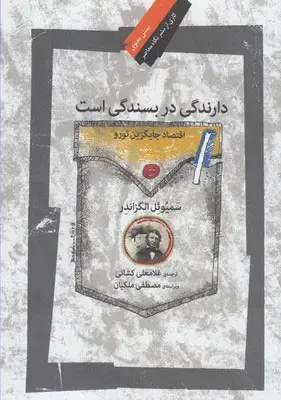
"Possession is in sufficiency" is the Persian translation of the book *Just Enough is Plenty: Thoreau's Alternative Economics* by Samuel Alexander; a book about an economic and ethical reading of the thought of Henry David Thoreau. In this work, Alexander seeks to explain Thoreau's ideas about simple living, individual independence, work, consumption, and freedom for today's reader.
The book's importance lies in introducing Thoreau not merely as a literary writer or naturalist, but as a thinker critical of consumer culture and growth economics. From Alexander's perspective, Thoreau shows that the good life is not necessarily summed up in increasing possessions and consumption; sometimes sufficiency is itself a form of wealth and freedom.
This book aligns with Samuel Alexander's central concerns: voluntary simplicity, the economics of sufficiency, the critique of consumerism, and the search for more sustainable forms of life. For readers interested in the philosophy of life, the ethics of consumption, the environment, post-growth economics, and the relationship between freedom and contentment, this book can serve as a concise and illuminating introduction.