Philosophy
Possession Lies in Sufficiency by Samuel Alexander
The good life lies in the integration of rationality and spirituality, and its fundamental question is not the existence of God, but 'What ought I to do?' The focus is on the second component of spirituality, namely 'the authentic life,' as discussed by philosophers and humanistic psychologists.

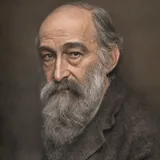
Samuel Alexander
AuthorAt the outset, I shall mention a few preliminary points necessary for entering the discussion, without providing arguments for them; for the argument for each is far, far more extensive than can be presented in this lecture.
First preliminary: The union of rationality and spirituality. In my opinion, if the ‘goodly life’ (the pure life) has an instance, its instance is a life in which ‘rationality’ and ‘spirituality’ are united and combined. Therefore, in whatever circumstances, time, and place we may be, we need a life in which rationality and spirituality are both present together, such that not an iota of rationality is sacrificed for spirituality, nor an iota of spirituality sacrificed for rationality.
Second preliminary: The graded components of spirituality
Spirituality has eight components, and when all of them come together, we refer to it as a spiritual life. These components are graded matters, yet at the same time, the presence of all of them is necessary for life to become spiritual, and if any one of them is missing, the life cannot be considered a spiritual life. Thus, since these components are graded, it is possible that you possess all of them at one level, I at another level, and a third person at yet another level, and so on.
In other words, the matter of the components is not a question of all or nothing, that we either have them or we do not; rather, they are graded matters. If a life is to be spiritual, all these components must exist, even if at different levels, and in that case, naturally, some humans are spiritual, some are more spiritual, some are even more spiritual, and so on.
Third preliminary: The first component of spirituality
The first and most important component of the spiritual life is ‘What ought I to do?’ or ‘What am I to do?’. In books of philosophy and theology, it is said that the fundamental and basic problems facing humanity are, for example: Does God exist or not? Did we exist somewhere before this worldly life? Will we go somewhere after this worldly life? What is the truth of the world? Is the universe purposeful or not? Does life have meaning or not? Is the natural world finite or not? And the like. Also, although the list of these varies in different books, almost all consider these several problems I mentioned to be among the fundamental problems.
But the spiritual human is one for whom none of these matters is the principal problem; rather, their principal problem is ‘What ought I to do?’ or ‘What am I to do?’. And the importance of any other problem depends on the extent to which the answer to that problem aids and assists them in resolving ‘What ought I to do?’. That is, when my problem is ‘What ought I to do?’, perhaps in answering it I have no choice but to answer several other problems, and on this basis, if other problems gain importance, it is because they are a prelude to solving this problem, and answering them is a prelude to answering this problem. In a third formulation, the fundamentality or non-fundamentality, the importance or unimportance, the essentiality or non-essentiality of any other problem is exactly proportionate to the degree of influence its answer has on the answer to the principal problem, ‘What am I to do?’.
Therefore, if ‘Does God exist or not?’ is important, its importance is only to the extent that it is effective in the problem of ‘What ought I to do?’, and if, by an impossible supposition, ‘Does God exist or not?’ had no effect whatsoever on my principal problem, answering it would be as unimportant as ‘How many sugar cubes are in this sugar bowl?’ is unimportant. Up to this point, I wished to make two points:
1) Contrary to what has been said, none of those problems are the fundamental problems of humanity; rather, the fundamental problem of the spiritual human is ‘What ought I to do?’.
2) The problems presented in books as fundamental problems can be essential problems, but their essentiality is proportionate to the effect answering them has on answering the principal problem, and this means that the importance of these problems derives from the importance of the principal problem, ‘What ought I to do?’.
Therefore — if my words are correct — each of you, if you wish to know whether you are spiritual or not, must see how much weight you give in your life to this ‘What is to be done?’.
This was the first component of spirituality, which of course is not my subject today, and I will move on to the next introduction, which is the topic of my talk today.
Fourth Introduction: The Second Component of Spirituality
The second component of spirituality is that a person should have an "authentic life"; that is, we are spiritual only and solely to the extent that we have an authentic life, and to whatever extent we lack an authentic life, we are distant from spirituality.
So the second component of spirituality is the authenticity of a person's life, which is otherwise referred to as a "borrowed life." Now I want to enter into this very discussion: what is an "authentic life"?
It might cross your mind why, among the eight components of spirituality, I have chosen this component as the subject of discussion. In response, I say that because epistemology—as one of the branches of philosophy—has a firm and close connection with this component of spirituality, and the subject of our discussion is "the relationship between authentic life and epistemology," consequently, I will only discuss this subject and will not address the other components; but setting this point aside, in my opinion, drawing attention to "authentic life" is very, very important, and if I were to say that the first thing we must teach others is to lead an authentic life, I would not be exaggerating at all.
Various individuals throughout history have discussed and debated "authentic life" and "what is an authentic life?", including:
1) The founders of religions and sects, who have usually had discussions—albeit scattered and disorganized—on this matter.
2) Mystics—in all cultures, religions, and sects—who have often paid great attention to it, both to lead an authentic life themselves and to invite others to an authentic life.
3) A large number of philosophers who are today referred to as existentialist philosophers. Figures such as the Danish Kierkegaard, the Russian Dostoevsky, the German Nietzsche and Heidegger, and the French Gabriel Marcel and Simone Weil, for whom one of the main themes of their discourse is the authentic life.
4) Psychologists of the third wave of psychology, that is, humanistic psychologists.
So far, throughout the history of psychology, three major movements have emerged:
a) Psychoanalytic psychology, whose founder, in one sense, is Freud.
b) Behaviorist psychology, whose founders are Watson and Skinner.
c) Humanistic psychology, whose proponents are usually also philosophers, and they include: Abraham Maslow, Carl Rogers, Erich Fromm, Karen Horney—all in America—and Jung—a Swiss with American lineage.
There is no time now to present the views of all these individuals—who number around 29 figures—to you, friends, but I will mention a few examples of these individuals. The reason for mentioning these examples is that in the perspective of each of them, a particular aspect of the authentic life has been given more attention, and by gradually considering the set of examples and juxtaposing the models presented by these scholars, you will mentally draw closer to what kind of life an authentic life is. So as not to make any value judgments, I will mention the examples in historical order, lest it be thought that I necessarily attach greater importance to the first.
The first example, historically, is Socrates. Socrates—the noble and highly distinguished philosopher of ancient Greece—said that my entire philosophy is based on two mottos: the first motto is "Know thyself," and the second motto is "The unexamined life is not worth living." I will only address the second motto here to see what this motto means.
Socrates said: If we carefully examine our own circumstances, we see that from the beginning of life, when we are born, we gradually receive a series of beliefs and convictions from those around us—from family members to teachers, mentors, and the people we deal with in our living environment—and later, we organize our lives based on these very inculcated and instilled beliefs and convictions.
Thus all decisions—wars, peaces, friendships, enmities, silences, speeches, and so on—rest entirely upon the beliefs we have received from others, and we have never gone about testing and examining these beliefs to see whether they are truly right or wrong, true or false, valid or invalid. In fact, we have based our entire lives upon beliefs, none of which have been put to our own personal test.
A more important point is that the more we move from unimportant beliefs toward important ones, the greater this lack of testing becomes. For instance, if someone tells me that this type of glass or shoe is more durable, I might test it and then accept it. But regarding whether "God exists or not?" I might accept that God exists without testing! Despite the fact that the importance of the second belief in life is certainly far greater than the first. It is as if we have made a pact with ourselves that the more important a belief is, the more groundlessly we accept it.
Socrates said: this kind of life, in which we have accepted beliefs without personally examining or testing them, is an unexamined life and is not worth living. A life worth living is one in which we ourselves have scrutinized the beliefs that influence our practical decisions, and in this life, if we see that a belief is true, we make it the basis of our decision even if the whole world says it is false, and vice versa. He said: the task I have set for myself is to go to each and every familiar belief and show that they have not been tested; and for this reason, I am a gadfly and I will settle upon the backs of all of you, which is of course irritating because it stings your beliefs and makes the members of society realize how very foolish they are. If someone tells you, "You are foolish," it will offend you. Foolishness is nothing other than accepting a statement without reason and making it the basis of collective decision-making.
So, in Socrates' view, the unexamined life is borrowed[۱] and not authentic[۲]; because in it, I have borrowed my beliefs from others.
The second example is from the Rumi, the mullah of Rum, Mawlana, who in the Masnavi frequently advises us to live an authentic life. In the second book of the Masnavi, he says: a Sufi entered a city, and since he was a stranger there, he asked for the Sufi lodge so that he could spend a few days in that city and have a place to sit, food, and so on. He finally found the Sufi lodge and handed his donkey over to the doorkeeper to stay there for a day or two. As it happened, the lodge's funds for their livelihood had been delayed for some time, and naturally, they were very hungry. When a group of them saw this donkey, they said: it would be good to sell it and prepare some food with its money to save ourselves from hunger. So they told the doorkeeper: take the donkey, sell it in the market, and prepare some food. Then they came and began to dance and perform Sama, and they started chanting, "The donkey is gone, the donkey is gone, the donkey is gone."
This newly arrived Sufi, in order to—in today's terms—conform to public opinion, also began clapping and stomping his feet, chanting, "The donkey is gone, the donkey is gone, the donkey is gone." The doorkeeper, who had been tasked with selling the donkey, said to them: this donkey is a trust with me, how can I sell it? This act is against morality. They said: come, go and ask him yourself.
The doorkeeper entered the gathering and saw that the person was—in Mawlana's words—more exuberantly than anyone else shouting, "The donkey is gone, the donkey is gone, the donkey is gone," and was happier and more delighted than all. The doorkeeper said to himself: well, then, he probably agrees, or rather consents, or even desires it; so, without saying anything, he sold the donkey, they prepared food, and ate. Later, when the Sufis dispersed, this traveler went to collect his donkey. The doorkeeper said: there is no donkey. He said: so where is my donkey? He said: we sold it and ate the food. He said: how could you sell my donkey?! He said: yes, not only could we, but we did. He said: but my permission?!
The doorkeeper said: I came and saw that you were giving more than permission, dancing and performing Sama with this "The donkey is gone, the donkey is gone, the donkey is gone." He said: I didn't understand what I was saying!
I saw that everyone was happy with this saying, I also liked it and repeated it.
Their imitation ruined my affairs, alas / O, a hundred curses be upon this imitation, alas
Therefore, it is possible for someone to take a step to their own detriment in order to conform to the crowd. In conformity with the crowd, there are two characteristics: one is that the person does not understand the meaning of the belief, proposition, or sentence, and does not know at all what “the donkey went” means. They do not understand that “the donkey went” means your donkey has been sold, yet they repeat it nonetheless. The second is that if they understood the meaning of the sentence, they would not agree with it. Now, when they utter a sentence, are they expressing their own opinion or the opinion of others?
In this example, we saw that they are, in fact, expressing the opinion of others. Therefore, their opinion is vicarious; consequently, their decision, and as a result their life, is vicarious.
The reason the term vicarious, meaning borrowed, is used here is that anything that does not arise from within a person and reaches them from outside is vicarious. In this state, a person is exactly like a cinema screen upon which the cinematograph and its film projector are always shining, and for this reason, every light and color seen on this screen is not the light and color of the screen itself. The true color of the cinema screen is only revealed when the projector is turned off.
We are just like this in our lives. Whenever I look at you, I see the thoughts of others, not your own thoughts. Like a cinema screen, you project every light—without showing any acceptance or rejection—without saying that you want a certain color and do not want a certain light. Remove that color you have projected, and project the color you have not projected.
Then Rumi begins to advise: “Do not imitate, only investigate.” Whenever I see this statement by Rumi, I am reminded of a hadith from Imam Ali (AS), who said: “There is no way or method in life better than investigation.” Investigation means to ascertain the truth of a matter for yourself. Investigation in this sense stands precisely in opposition to imitation and a vicarious life, and its meaning is that we accept incomprehensible and unacceptable beliefs from others.
The third example is Heidegger, the famous German existentialist philosopher. In his renowned book, Being and Time, which is his masterpiece, he has raised a discussion concerning the state of life of the vast majority of us human beings, and he intends, by depicting this state, to show that most of us lead a vicarious life. Heidegger says: Let each of you reflect upon your life and see whether these three characteristics I mention are present in your life or not. If they are, honestly admit to yourself that you are living a vicarious life, not an authentic one. Then he says: All of us human beings possess these three characteristics to a greater or lesser extent:
The first characteristic: We are afflicted with idle talk and chatter.[3] What kind of speech is idle talk? It is speech in which the act of speaking itself is important, not the content of the speech. What does it mean when they say we engage in idle talk at evening gatherings? It means it does not matter at all what we say; what matters is that we are saying something. In other words, the act of speaking itself has become the subject, whereas it should be a means, and something should be conveyed through speaking. In reality, we are constantly taking sentences, propositions, and beliefs from one group in our lives and transmitting them to another group (the transmission of unexamined information from others to me, and from me to others).[4] In this case, idle talk constitutes the entirety of my life and yours.
In truth, we have heard things from fathers, mothers, educators, public opinion, radio, television, the press, and mass media; then we transmit them to another just as we heard them, without examining them before this transmission to see whether these matters are true or false. It is as if we are merely and solely a device that is, on one side, a receiver of things you give to me, and on the other side, a transmitter of those same things to another, and I merely exist in this state of receiving and transmitting. He continues: In reality, we feel a particular pleasure in both receiving and transmitting, and it is this very pleasure that has caused our entire life to fall into this state. (Now reflect: are you not like this?)
From childhood until now you have learned things from fathers, mothers, teachers, instructors, and so on. Today and tomorrow, when you become a teacher, a father, a mother, etc., you will transmit those same things to your children, students, and trainees. Has it ever become clear, in the midst of all this, which of the things you had taken in were true and which were false? No—you simply took them in, derived some pleasure, and then, without reflection or scrutiny, you pass them on to others and will derive yet another pleasure.
The second characteristic: we move from the stage of idle chatter and prattle to the stage of prying, meddling, and nitpicking. Meddling means that as soon as I hear something and it enters my mind—since there was no intention of testing it—I immediately ask, "What else do you have?" That is, even though I have not yet grasped the first matter and it has not entered my digestion and understanding, I am already searching for something new. It is from this perspective that all of us, in word and deed, ask: "What's new?" And there is no one to ask us, "What have you done with the old things that you are looking for new ones? What artistry did the old ones display for you that you are now once again desirous of new ones?" So prying means being in love with novelty. For example, you have written a book, and by reading it I transfer your beliefs to myself, without paying the slightest attention to whether they are correct or not. Yet as soon as I meet you, I ask: "Sir, haven't you recently published a new book?" There is no one to say: "Well, of the previous books you read, which was true and which was false?!"
Therefore, the quest for novelty is a characteristic of people who live a borrowed life; and it is by virtue of this very characteristic that we slide from this thinker to that thinker, from this school of thought to that school; and we never pause to consider whether this school we have accepted until now is correct or incorrect.
It is also from this perspective that if you ask me, "Does God exist or not?" I will say with the utmost pride and honor that there are nine opinions on this matter. That is, I do not know whether God exists or not, but I have heard nine opinions about it. Whereas the question was not how many opinions exist; rather, you wanted to know whether, in the actual world, there is a God or not. Do you know why I give such an answer? Because instead of, upon hearing one of the opinions, settling accounts with it personally—determining whether it is ultimately correct or incorrect—I immediately said: "Never mind whether it is correct or incorrect; that was one opinion, anyway. What is the second opinion?" And so on, up to the ninth opinion, without any scrutiny or reflection upon them.
The third characteristic: confusion[5] and bewilderment. That is, I do not know what kind of world I am living in. For instance, I do not know whether the world is purposeful or purposeless; I do not know whether I live in a world with God or without God; I do not know whether war is better or peace. Yet at the same time, I know that there are many opinions about each of these questions and I can explain all of them to you. In reality, we stagger intellectually. Why? Because we have not made a decision for ourselves about anything and have merely been a vehicle for transmitting opinions. In other words, beliefs simply reach us and are transmitted from us to others, and because we have a lust for hearing and speaking, through the exercise of this lust we have sunk into bewilderment; that is, we have no personal, defensible opinion.
Let me give another example: I say to someone, "So-and-so! I want to research such-and-such a topic." He says, "Come, let's go to the internet." We go and see that there are 800 books, 9,000 articles, and thousands upon thousands of files. He says, "There you go," and is even proud of having informed me of all this. Whereas, amidst this heap of books, treatises, and articles, I did not want to see what writings exist on the matter of "whether A is B or not"; rather, I wanted to know "whether A is B or not." In reality, instead of our speech being about realities, it is about the speeches that have been made about realities, and we have never transitioned from these speeches to reality itself.
This intellectual staggering, which Heidegger interprets as dizziness, lostness, and bewilderment, comes about for a human being when, instead of dealing with realities himself, he deals only with the beliefs of others about reality.
Now if you have been paying attention, you will see that these three stages exist in all domains of life, even in everyday life. For example, if I ask you: why should one eat with a knife and fork? You say: well, they have said you should eat this way. If I ask why boys should propose to girls? You say: well, that's just what they've said! Why should a person attend a funeral reception, or why should one go to a wake at all? Well, you just have to go! People enjoy celebrations and joy—do you enjoy them too? I don't enjoy them, but because it is shameful before people to say I don't enjoy celebrations, I live as if I take pleasure in celebrations and joy!
Therefore, you yourself do not know why you should do such-and-such a thing, because nothing is clear to you and you are still in those three processes, and naturally you can easily be pulled this way and that; and since you have so far accepted what you have been told without reason, naturally tomorrow when they say something else, you will accept that too without reason, even if it contradicts the previous thing.
The fourth example is from one of the psychologists of the third force in psychology, the American Carl Rogers, of whom it may be said that after Abraham Maslow, no figure greater than him has emerged in humanistic psychology.
Rogers, regarding the adoption of our positions and value judgments in life, distinguished three stages from one another, the first and second of which exist in all human beings, and rare are the individuals who reach the third stage. He says: when a child is born, based on the real need of its organism, it has acceptance and rejection, approach and avoidance. For instance, the food it eats is for the benefit it brings to its bodily organism, and if it does not eat another food, it is because of the harm it causes to its organism.
Of course, not in the sense that it knows the reason itself, but rather in these early ages the organism dictates to it and shows it the way. So if it cries when hungry, it is because of the harm that hunger inflicts upon it, which it wishes to repel, and in this respect, the child has neither under-eating nor over-eating and eats only according to its need. In this way, the child's organism instinctively tells it: do this, which is to the benefit of me, the organism, and do not do that, which is to the detriment of me, the organism. This process is entirely natural, and all selections are based on the real needs of the organism. But gradually, from about two and a half years onward, another need arises in the child, which is the need to be loved; that is, the need arises in the child that I should be such that my mother, father, sisters, brothers, and in short, those around me, love me.
As soon as this need sprouts, the child finds itself at a crossroads: on one hand, the body's organism tells it to eat this because it is to my benefit; on the other hand, if it eats, for example, its mother becomes upset; that is, the mother's approval comes at the price of harming the organism, and the organism's benefit comes at the price of angering the mother.
Now, is it not possible to obtain both the organism's benefit and the mother's approval, and to combine being loved with the fulfillment of real needs? The answer is no. Why? Because sooner or later the child understands that others do not love its unmutilated and naked soul, and it is in this respect that the child finds itself at a crossroads: if I eat the food, despite helping the body, mother becomes angry, and if I do not eat, I have gained mother's approval and become loved by her, but I have acted to my own detriment. Since human beings prioritize being loved over their real needs, they gradually begin to censor themselves and, for example, say in the language of their state: "O water, you are good for my body, but if I reach out, father will frown, mother will become angry, my sister will sulk, and so... I will not drink you."
All self-censorship is aimed at making ourselves liked; because we want to win everyone's heart, and naturally, for every heart I want to win, I must tear off a piece of my own soul. Why? Because experience has shown that others do not love my un-mutilated soul. Therefore, I never expose my naked, unmutilated soul to your view. For example, you invite me to a movie, then ask: How was the film? Even though I disliked the film intensely, because I would lose your friendship if I said it was rubbish, I say: It was very interesting! My heart and inner need say: Tell them you didn't like the film and that it was utter rubbish, but my desire to be liked says: Bear in mind that if you say that, your friendship will be shaken or destroyed, and for that reason I falsely praise the film.
Thus, the first phase is the phase of the child's own value judgment about itself, but the second phase is the phase of value judgment from the perspective of "others." In the second phase, in order to become liked—by mutilating or concealing the self[6]—I censor myself.
According to Rogers, most of us human beings remain stuck in this need until the end of our lives and mutilate ourselves for the approval of others. In the famous prayer of the German mystic, it is said: "Lord, they are stealing me from myself." Because this friend says: This trait of yours is bad. I say: Well, if you say it is bad, I will do that. Another friend says: That trait is also bad, so I won't do that either, and in this way, they steal my belief, feeling, emotion, and everything from me. Thus, my beliefs, feelings, and emotions are the very beliefs, feelings, and emotions that you want, and so on.
Therefore, we always keep our inner child alive only within and never seek counsel from it, but rather seek counsel from others. In fact, our unspoken language to one another is always: Hey, you! You who are good—meaning you are the way I want you to be—how am I? While our spoken language in greetings is the opposite. In other words, in greetings, I ask you about my own state, and you ask me about yours, and we all embellish ourselves for the approval of others, while the inner child in each of us says: Don't do that.
Let me give another example: If you serve me a meal, I will never say that I do not like that food, and even though my inner child says: You don't like this food, and if you were at your own home, you would throw the food, plate and all, out the window! I say: That's true, but if I do that, I will lose my likability.
Most of us human beings remain stuck in this second stage, that is, the value judgment of others which leads to the mutilation of our own soul. But Rogers said: There are those who, at this stage, ask themselves: Whom am I sacrificing? In reality, I am sacrificing myself for others, and does any sane person sacrifice themselves for others?
In this way, individuals reach the third stage, that is, value judgment from their own perspective, and say: This is who we are; whoever likes us, let them like us; and whoever does not like us, we bid them farewell.
Charlie Chaplin, the famous actor, says a very wise sentence to his daughter—although this sentence pertains to moral and family matters, it is applicable in all aspects. He says: "My girl, bare your body to someone who loves your naked soul."
We must, in fact, accept such a characteristic and say: This is our naked soul; whoever approves, let them approve; and whoever does not approve, let them not approve. This becomes the authentic life.
The authentic life means living based on trusting one's own eyes to see, not blinding one's own eyes and seeing with the eyes of others; it means seeing life through one's own glasses, not trampling one's own glasses and putting on another's glasses; it means building my life based on my own personal dispositions, not suspending the demands of my inner self to gain another's approval. Rogers said: If people reach this third stage, they have, in fact, returned to the child of their childhood, but a much more mature child; because in childhood, the child acted on its real needs based on instinct, but in this third stage, it understands what its real needs are based on reason. In truth, that was a kind of unconscious discernment of needs, and here it is the conscious discernment of need.
Unfortunately, because we humans rarely reach this third stage, according to Rogers we continue our borrowed life until the end. For example, if someone is asked why they sing, and they reply: because it eases my melancholy, or because I like the sound of my own voice, this is an authentic life; but if they say: because people say I have a good voice, this is a borrowed life.
Another point is that in reality, the situation of others is the same as ours; that is, I take my cues from you, you from others, those others from yet others, and so on. Well, in this case, from whom do we ultimately take our cues and to whom are we subject? (Since the assumption is that others, too, do not act on their own spontaneous nature). This is where I must mention another example.
The fifth example is an Eastern European philosopher, mystic, and psychologist named Mr. Jaros, who is currently a professor in Canada and a professor of philosophy at American universities. He believes that a borrowed life is taking one's cues from an invisible individual, someone we do not see and cannot be seen at all.
Psychological experiments have shown that if a person is working alone in a room of a building and sees smoke coming into the room from under the door, upon seeing the smoke, they immediately head for the door to discover its cause or ask other people in the building. But if three people are in a room and see the same smoke, the earliest they might take action is 6 minutes after the smoke enters, and sometimes they do not move at all until their vision is obscured. Why? Because the first person says: if this smoke were something dangerous, those two would have reacted, and since those two are sitting still, it must not be dangerous, unaware that those two are also looking at the other two and making the same justification. That is, I suspend my own judgment because of what I see in those two. Unaware that the other two are thinking the same thing. Well, in this process, whom are we obeying? I obey you two, the second obeys us two, and the third obeys the first two, so in reality we are obeying "nobody"!
The sixth example is William James, the famous American philosopher and psychologist, who has a principle called the "principle of social proof."[7] The principle of social proof means the belief that whatever others say must have some proof behind it; and since I consider everyone except myself, and you consider everyone except yourself, and others do likewise, in reality we are obeying nobody. For instance, all of us sitting here say: God exists, but if each one of us is asked: why? we say it has been proven in its proper place, and in this answer, we use other members of society as the backing for our statement, assuming they also believe in this belief. Naturally, by this account, if we were in an environment where everyone said God does not exist, we would also say God does not exist!
In truth, all our beliefs are circular, because my belief is transferred to another, from another to yet another... and ultimately returns to me. Such a life is borrowed, meaning a life where I am not responsible for my own actions. Because I have drawn you into these beliefs, feelings, and emotions... and you have drawn me in. When this is the case, the sum total of these lives results in conformity with the crowd; that is, conformity with nobody; meaning in reality I conform to a crowd of nobodies in order to become beloved by a crowd that is everyone-but-me. As a result, I become beloved by everyone but detested by myself! Why? Because that inner agent commands me to something each time, but I refuse to obey it in order to gain your approval.
This state, where everyone loves us, but we ourselves do not love ourselves, is called "being in conflict with oneself."[8] All borrowed lives are drawn into this inner conflict, because one constantly acts contrary to one's own discernment.
Thus, the main characteristics of a borrowed life are as follows: we imitate, we follow blindly, we speak without reason, we accept the words of others without reason and others accept our words without reason, and we make a fuss over nothing; we are loyal to everyone except ourselves, we are honest with everyone except ourselves, we are straightforward with everyone except ourselves.
در حالی كه شاخصههای اصلی زندگی اصیل عبارتند از: به خود وفادار بودن نه به هیچ كس دیگر، با خود صداقت داشتن نه با هیچ كس دیگر، با خود یكرنگ بودن نه با هیچ كس دیگر.
زندگی اصیل یعنی زندگیای كه در آن انسان تنها به خودش وفادار است، و مساوی است با «در التزام خود حركت كردن» و «در معیت خود زیستن»، و بنابراین هرگاه وفاداری به خود فدای وفاداری به دیگر یا دیگرانی شود، زندگی من عاریتی خواهد بود.
وفاداری به خود یعنی چه؟معنای واضحتر وفاداری به خود، فقط بر اساس فهم خود عمل كردن و فهم خود را مبنای تصمیمگیریهای عملی قرار دادن است. پس هر كس كه فقط بر اساس فهم خود در زندگیاش تصمیمگیری كند، فهم خود را تعطیل نكرده و زندگی اصیل دارد.
چه وقت فهم خود را تعطیل میكنیم؟ آنگاه كه اساس زندگی ما اینها میشود: سنتهای نیازموده، تعبّد، تقلید افكار عمومی، همرنگی با جماعت، كسب محبوبیت به هر قیمتی، كسب رضای مردم و … . بنابراین كسانی زندگی اصیل دارند كه در واقع هیچ باور نیازمودهای را مبنا قرار نمیدهند، تقلید نمیكنند، تعبد نمیورزند، همرنگی با جماعت ندارند، افكار عمومی در آنها مؤثر نیست و در پی این نیستند كه محبوبیتشان را به هر قیمتی حفظ كنند؛ بلكه میگویند: من بر مبنای آنچه خود فهم میكنم، عمل میكنم. حال اگر با این «بر مبنای فهم خود عمل كردن» محبوبیتم حفظ شد، كه شد و اگر نشد، هیچ مهم نیست. یعنی من در واقع به هر قیمتی نمیخواهم در دل شما جا باز كنم من میخواهم در دل خود جا باز كنم؛ میخواهم خودم از خودم بدم نیاید، نه اینكه شما از من بدتان نیاید؛ چرا كه خوشایند خودم بر خوشایند شما تقدم دارد و زندگی اصیل در واقع یعنی همین. یعنی زندگیای كه در آن، من به خاطر اینكه در دل شما جا باز كنم یا برای اینكه رضای شما را به دست آورم، از فهم و استنباط خودم از واقعیات دست برندارم.
در آخر، مواردی از قرآن كریم ذكر میكنم كه بنا بر آنها گویی نظر قرآن كریم هم بر زندگی اصیل است. البته نمیخواهم بگویم نظر قرآن فلان است، بلكه میخواهم بگویم در قرآن هم آیات و شواهدی نزدیك به دیدگاههای ذكر شده وجود دارد، چه آیات خلاف هم باشد و چه نباشد. این آیات عبارتند از:
۱) آیهای در مورد یهودیان و مسیحیان كه میگوید: «إتَّخَذُوا أَحْبَارَهُمْ وَ رُهْبَانَهُمْ أَرْبَاباً مِنْ دُونِ اللهِ» [توبه: ۳۱]؛ میفرماید: اینان ــ یعنی مسیحیان و یهودیان ــ علمای دینی خود را، غیر از خدا یا علاوه بر خدا[۹]، میپرستیدند.
شخصی از امام باقر(ع) یا امام صادق(ع) میپرسد: آیا واقعاً اینها از مردم میخواستند كه «ما را بپرستید؟» امام میفرماید: نه، هیچ وقت آنها چنین دعوتی نمیكردند. حتی اگر چنین دعوتی هم میكردند، كسی پاسخ مثبت نمیداد. صحابی میپرسد: پس مقصود قرآن چیست؟ حضرت میفرماید: اینها همان معاملهای را با علمای خود میكردند كه تنها باید با خدا كرد. آن معامله این است كه انسان فقط باید سخن خدا را بیچون و چرا قبول كند و از هر كس دیگری برای سخنش دلیل بخواهد. چون اینها سخنان علمای خود را بیچون و چرا میپذیرفتند، در نتیجه، خداوند میفرماید كه اینها علمای خود را میپرستیدند: یك روز میگفتند یك ششم اموالتان را به عنوان وجوه شرعیه بپردازید، آنها هم میپرداختند. بعد از مدتی میگفتند: نه، باید یك هشتم بپردازید، آنها هم میگفتند: بفرما. نمیگفتند اگر الان یك هشتم راست است، پس یك ششم قبلی دروغ بوده و اگر یك ششم قبلی راست بوده پس الان دروغ میگویید. بدین ترتیب اینها فقط مقلّد و متعبد بودند.
۲) آیه دیگر درباره اهل جهنم است كه وقتی مورد خطاب قرار میگیرند یا خودشان مخاطبه میكنند و بر سر این موضوع بحث میكنند كه چه چیزی ما را به اینجا كشانید، همه میگویند: «اِنَّا أطَعْنَا سَادَتَنَا وَ كُبَرائِنَا فَأضَلُونَا السَّبِیلاً» [احزاب: ۶۷]، یعنی ما از اكابر خودمان حرفشنوی داشتیم و آنها ما را به این راهها كشانیدند. این یعنی زندگی عاریتی و حرفشنوی از كسی، با اینكه از درون ما چیز دیگری برمیخیزد.
۳) قرآن در مواردی، وقتی میخواهد از طرف مقابل حرفشنوی داشته باشد میگوید: از شما حرفشنوی میتوانیم داشته باشیم، ولی دلیلتان را بیاورید: «قُلْ هَاتُوا بُرْهَانَكُمْ إنْ كُنْتُمْ صَادِقینَ» [بقره: ۱۱۱].
4) Regarding our Prophet and certain other prophets, it is related that when they called people to faith, the people would say: We do not accept what you, the prophet, say. For the way of our fathers was different, and we shall follow that same way: “Indeed, we found our fathers upon a community, and indeed, upon their traces we are guided” [Zukhruf: 22].
“Athar” means footprint; that is, we place our foot exactly where our fathers’ footprints are and walk precisely the same path. The Qur’an says: Even if their fathers were devoid of sense and had no understanding, should they still follow? “What! Even though their fathers understood nothing?” [Al-Baqarah: 170].
5) Another example, again common to our Prophet (PBUH) and the prophets of old, is that they would usually stand against the public opinion of their own society. In the stories of the prophets, it is constantly seen that the prophets said things the people did not accept, yet they stood firm and did not say, “Very well, let us speak as public opinion does.”
I was once discussing this verse somewhere when someone said: “Fine, yes, you become a prophet, and then stand against public opinion.” I said to him: Did others accept the prophethood of the prophet, or did only he himself accept it? Naturally, others did not accept it, but for him the matter was clear. Now, if another belief is clear to me, for the same reason, I have the right to stand against you. That is, if a matter is as clear as the sun to me, whether you agree with me or not, I will not follow you. I do not hunt shadows; I do not abandon myself to follow after you. The prophethood of the prophet was clear to him, and therefore he said: Even if you place the sun in my right hand and the moon in my left, I will not turn back from my conviction.
6) Another instance I wish to cite from the Qur’an includes all the verses that come with phrases such as “most of them do not understand” and “most of them do not perceive,” which again seem to be for the negation of a borrowed life. “Most of them do not understand” means do not say the majority says this and so I accept it, for the majority neither understand nor comprehend. If you speak thus, it means you too are devoid of sense and follow other senseless people, and this is precisely a borrowed life.
Thus, it appears there is abundant evidence in the Qur’an concerning the authentic life, which says: If you yourself have found something to be true, follow it and act upon it, even if everyone opposes it.
Therefore, following social rules and norms is rationally defensible only when I myself have attained certainty of their rightness; otherwise, following them is tantamount to following public ignorance and the unknowingness of all.
According to what has been said, the second component of the spirituality of the spiritual person is the authentic life. The authentic person attends only to his own findings and follows only that which he has clearly found with the totality of his own perceptive faculties; and in this respect, the authentic and spiritual person never speaks on the basis of conjecture and the like.
Heidegger, continuing his discussion on this matter, says: One of the characteristics of borrowed people is that, since nothing is rooted in them, everything about them is based on guesswork and conjecture.
Here I am reminded of that Qur’anic verse which says: “They do nothing but conjecture” [Al-An‘am: 116]; or elsewhere it says: “They do nothing but guess” [Al-Baqarah: 78], “Indeed, conjecture avails nothing against the truth” [Yunus: 36]; meaning these are matters of guesswork. (A guess is that which does not well up from within you).
So, unless we take this step, we will not find our way to spirituality, and nothing will come alive or gain vitality for us, because we are always engaged in buffoonery and play-acting; just like a director who assigns a role to an actor, whether the actor likes it or not. It is as if some have—in the language of state—told us: If you want your social life to remain stable, you must live in this way, and we have accepted it! Oblivious to the saying of Imam Ali ibn Abi Talib (AS): “The satisfaction of people is an unattainable goal,” meaning the approval of people is a goal no one ever reaches.
Therefore, if you seek to gain people's approval, the price is that you will come to dislike yourself. Moreover, that approval of all people is not even attained, since in any case everyone has their own particular opinion that differs from another's, and naturally the behavior that pleases us displeases him: "God has struck a parable: a man in whom there are quarrelsome partners." What is a person who is the servant of four masters—masters who themselves quarrel with one another—to do? If they all said "Sit down," that would be fine. But one says "Sit down," another says "Go away"—what is this wretched servant to do?
So it is certain that we lose our own self-approval, and it is almost certain that we do not gain the approval of others either.
But the mystics were not like this; hence the well-known mystic said to his disciple: "Do not be a writer of tales; be such that tales are written about you," meaning, see what you yourself understand and do not constantly say so-and-so said this, such-and-such said that, so-and-so wants such and such… .
Here I will present two points to you. One is that those who have an authentic life in this sense may be theists or not, and in either case their life's authenticity is not harmed; because God is the only being who wants us just as we are, without adornment or pretense, and therefore we must not put on an act for Him. If someone does not believe in God, then a fortiori their life's authenticity suffers no harm. In other words, being honest with oneself and being true to oneself is not incompatible with fidelity to God—if there is a God in the world.
The second is that it might seem that if a borrowed life means accepting the sayings of others, then an authentic life must necessarily mean rejecting all sayings; but this is not so. An authentic life is attained when we are followers of conclusive, incontrovertible reason; otherwise, merely following the sayings of others is neither proof of their falsehood nor proof of their correctness and truth. Thus, what makes life authentic is: observing the side of reason, being a follower of proof, seeing the side of demonstration, and observing and safeguarding demonstration. For this reason, we must see what things can count as demonstration and what things cannot. Our moral duty requires us to acquire a serious epistemological understanding of the things that have or lack the capacity to serve as reasons.
Now I wish to present the connection between authentic life and the subject of epistemology. First, I will mention two preliminaries, and then, based on those two preliminaries, I will address a point that brings us into our own discussion.
First Preliminary: Mention of Three Factors
It cannot be claimed that the three factors of "ignorance," "error," and "ill will" have been eradicated from human history, and no one has offered any reason or proof that humanity today is not afflicted by these three maladies, defects, and flaws. Human beings are still—as before—afflicted by these three factors, and we still find ourselves, our fellow citizens in society, and all our fellow human beings to be this way.
The meaning of "ill will" is clear. "Ignorance" means the things we do not know. "Error" means compound and compounded ignorance. In fact, "error" is when I do not know the reality but I suppose that I do know; but if I do not know the reality and I know that I do not know, I am only afflicted by "ignorance."
In fact, these three are like malaria in human life, which cannot be said to have been eradicated. Well, if we are afflicted by these three maladies, how am I to know that what public opinion says does not stem from one, two, or all three factors? How am I to know that what has reached me through tradition, or what the followed tell us followers, is not afflicted by these three factors? How am I to know that those to whom I am doctrinally devoted, when they tell me something, are not afflicted by these three factors?
So, as long as we have not attained certainty that these three maladies have been eradicated, we must always keep alive within ourselves the suspicion that perhaps what another tells us stems from their "ill will," "error," or "ignorance."
Second Preliminary: Bacon's Idols
In the words of Francis Bacon, the English philosopher and thinker, we human beings suffer in life from the worship of four "idols," and because our opinions are influenced by these idols, we fall into erroneous thinking and incorrect thoughts take hold of us.
It is interesting to note that in European languages (English, for example) “idol” and “idea” share the same root: they use “idea” for the word “notion” and “idol” for the word “idol.” “Idolatry” means idol-worship. Many etymologists[10] have considered the reason for the shared root of these two words to be that humankind has felt its greatest idols are its own ideas.
So we have four classes of idols; that is, four classes of ideas which, although we have no right to worship them, we worship nonetheless. These idols are:
1) Idols of the Tribe: These idols are a series of illusions and false, erroneous beliefs to which all human beings — more or less — fall prey. Among the examples Bacon gives is that all human beings, consciously or unconsciously, willingly or unwillingly, are subject to “measuring others by oneself,” and many of a person’s beliefs, judgments, and assessments arise from this measuring of others by oneself.
Another idol of this same kind, to which all of us human beings — more or less — fall prey, is “rationalization.” “Rationalization”[11] in the precise sense of the word means counting the supporting evidence for our ideas, but paying no attention to the counter-evidence against them. The difference between “reasoning” and “rationalization” is precisely this: in rationalization I only attend to supporting evidence and pay absolutely no heed to the counter-evidence against my idea. A simple example is that if we have two veridical dreams in life, we pay attention to them, but we pay no attention to the billions of false dreams we have had in life, and then we issue judgments on this basis.
2) Idols of the Cave: These idols are not universal and general, but arise from the individual spiritual and personal characteristics of human beings. We humans have particularities that may create beliefs within us that we then worship. For instance, some human beings are of a skeptical temperament by nature and naturally adopt a skeptical approach to matters. Others are of a credulous, gullible, or naive temperament by nature and naturally have dogmatic tendencies[12] and say: this is so and it cannot be otherwise, for example, “A is B,” and anyone who says “A is not B” has denied self-evident truths.
Some human beings are such that when they attend to matters, the cases of similarity among them catch their eye, and others, conversely, notice the cases of difference more. And naturally, these two types find two types of belief or idea in life.
3) Idols of the Marketplace: These idols arise through association with people — of whom we ourselves are one — meaning that, many times, when we human beings gather together, we fall prey to illusion. A simple example, which gained great importance after Francis Bacon, especially in the twentieth century (though in Bacon’s time many individuals did not realize its importance), is that because language is a marketplace affair; that is, it has emerged through the social intercourse and association of human beings with one another, it usually lacks “clarity” and is subject to “ambiguity,” “equivocation,” and “obscurity.” The presence of these four factors in everyday, natural language causes us to acquire erroneous ideas. In other words, because we cannot have a language with mathematical-logical precision, we use a language that deceives us and leads us to incorrect ideas. Wittgenstein in the early 20th century said: the whole art of philosophy is to show our deceptions by language; that is, philosophy can show how much we are deceived (taken in) by our language and, despite the fact that human beings themselves have made language, how much they have been fooled by it!
4) Idols of the Theatre: This type of idol refers to the set of errors into which we human beings fall by following our great figures. The set of errors that is the product of following anyone who is considered great in our society and for this reason has become our authority and exemplar, toward whom we show devotion and who, in the idiom of European languages, has acquired a kind of “Authority,” that is, spiritual, intellectual, and cultural authority over us.
These great figures can appear in the guise of a philosopher, sage, mystic, moral scholar, political leader, social reformer, or a thousand other guises, and today they can even don the guise of actors.
When you converse with a movie star about the most serious questions of life, you are, in effect, thinking that because they have become a movie star in some respect, whatever they say is correct, and therefore it is possible to ask a movie star or a footballer anything from the smallest to the greatest questions!
Interestingly, the night before last I saw someone asking a footballer about the Night of Qadr! Well, when footballers are considered religious scholars and the devout are considered footballers, neither does football remain football, nor does religion remain religion.
When you ask a footballer, "What is the meaning of the Night of Qadr?", it implies that if someone's feet move well and they have agile, nimble muscles, they can also opine on the Night of Qadr. It is as if we must listen to the words of celebrities, and their words are necessarily true and sincere, and not susceptible to error or refutation.
Of course, these celebrities differ in various societies: in societies where the dominance of religion is greater, naturally, religious scholars and clerics hold this status. In a society like the contemporary West, movie stars and footballers might be this way. In other societies, it might be politicians or empirical scientists, and so on.
Even when you ask Einstein about the meaning of life, you have made the same error. Because he is a physicist and mathematician, and if you ask him such a thing, it is exactly like asking the dairy seller at the corner of the street this question, since neither has opined within their field of expertise.
Bacon, in this regard, calls such idols "Idols of the Theatre" because they are always the focus of our attention, and just as a person in a theatre always looks at the stage, it is as if celebrities are placed on the stage of society and our eyes are fixed on their lips and mouths.
Based on this, I will state two premises, the natural result of accepting and believing which is that, in Descartes' terms, we develop a kind of "methodological doubt." Methodological doubt means seeing whether we can doubt all these matters and then, after this doubt, arrive at certainty or not. Such doubt is "methodological." It should be noted that methodological doubt is different from other kinds of doubt, such as temperamental, argumentative, or interrogative doubt. Methodological doubt means: what harm is there in my setting out on the basis of calling into question everything others have instilled and inculcated in me, even if they outwardly appear to be a magnificent palace? I want to re-examine, one by one, the bricks that have formed the house of my beliefs, and thereby build a new house which, even if it is a mere hut, is preferable to that palace. I do not know where living in that palace would lead me, but since I have not built this hut based on the instillations and inculcations of others, towards whom I harbor suspicion of error, ill intent, and ignorance, but rather built it upon my own understanding, I know what fate living in it holds.
Let me emphasize that methodological doubt is the result of believing in those two premises, and if you wish to live an authentic life, you must first believe those two premises, then doubt; for if this is not the case, your doubt is also inauthentic. You must arrive, based on your own understanding, at the realization that Bacon's four idols are still alive, that the malaria of ignorance, error, and ill intent has not yet been eradicated, so that the natural result of believing in these two premises is a methodological doubt in which you say: I will proceed on the basis that my beliefs are incorrect, and for this reason, I must examine them one by one and see whether "Does God exist?", "Is there life after death?", "God's communication with certain humans through messengership and prophethood", "God speaking to certain individuals and conveying a message to all humanity through them", "The purposefulness of the created universe", "The meaningfulness of life", "The moral nature of the created order" are true or not?
So, a person can reflect anew on all these matters, the result of which may confirm or weaken their previous belief, and whichever it is, it is good. However, if after reflection you conclude that your inherited beliefs are incorrect, living based on these new beliefs is an authentic life, not one based on the previous beliefs.
I want to say that the correct process is to live based on one's own understanding, and it does not matter what beliefs are the outcome and product of this process; rather, we must welcome whatever belief accrues to us based on this process.
Many people, when they adopted an authentic life, found that their previous beliefs had been correct; for instance, when Ghazali doubted, after his doubt most of his beliefs were confirmed, and the same was true of Pascal. But when Spinoza doubted, after his doubt almost none of his previous beliefs were confirmed.
So Spinoza, Pascal, and Ghazali lived authentic lives, and you and I may also find an authentic life, but what product we arrive at after undergoing the process of an authentic life is not guaranteed in advance; your beliefs may be confirmed or they may not.
In any case, it is not necessary that after adopting an authentic life your beliefs are not confirmed; rather, it is possible that all of them are confirmed. The only difference between you now and before is that previously you lived by these beliefs because so-and-so had said them, but now you live by the same beliefs because you yourself have found them to be so. For example, up until the second or third year of middle school we say: the sum of the angles of a triangle is 180°, and if someone asks us, why? we say: because the teacher said so. Later, when a proof is presented for this matter, we still say the same thing, but if they ask for the reason we say: because a proof was presented to me in none of whose premises could I find room for doubt. This means that if tomorrow that same teacher says: my statement that 'the sum of the angles of a triangle is 180°' was wrong, we reply: we believe in that proposition, even if you retract your statement; because a proof has been established for this matter and my understanding tells me: the sum of the angles of a triangle is 180°.
Therefore, the difference between an authentic life and an inauthentic life lies in the process of acquiring beliefs, not in the beliefs themselves that emerge, and these beliefs that emerge may or may not be our previous beliefs. Thus, it seems that methodological doubt, in the sense of renewing and not being an imitator, is an important component of an authentic life, and if someone lives this way, they have peace and are happy and hopeful. So whatever this process leads to, I am still happy; because I reckon to myself that, firstly, I have made an honest effort and had no intention of deceiving myself or others. Secondly, I have truly striven and arrived at this belief with seriousness and honesty, and since it is clear to me, I live based on it; and since I must not sacrifice my clear belief for things inherited from others that lack clarity, I act accordingly, and whatever happens, I am a winner, not a loser.
I have said many times that if you live by beliefs acquired through an authentic life, if God exists you have not lost, and if it turns out God does not exist, you still have not lost. You have a state that Wittgenstein described as: "The religious person is one who feels secure." If you live an authentic life, you find such peace of mind. Because if a God exists, how and with what reasoning could He oppose an authentic life?
If a God and an afterlife existed, you would say: O God! I sought with complete honesty and seriousness to see what is true and false belief; I was not an imitator, a dogmatist, a conformist, or a seeker of popularity, and public opinion held no value for me; I myself, with complete honesty and seriousness, sought reality and arrived at the conclusion that 'A is B.' Now if this 'A is B' does not correspond to reality, what can be expected of me? I have not been negligent!
There is never a time when I bring up this discussion and do not recall Bertrand Russell's interesting remark, which, had he said only this one sentence, would have made me understand what a wise man he was.
Bertrand Russell, at the end of his life at the age of 99, had an interview with The Guardian newspaper. The reporter asked him: Professor, for 99 years you have been saying that God and the afterlife do not exist, and you will soon pass away; now, if you die and see that both God and the afterlife exist, what will you do?
Bertrand Russell replied: Madam Reporter, this God whom you say exists, and I say does not exist, is He just or not, after all?
The reporter said: Of course He is just.
Bertrand Russell said: If He is just, there is no problem.
The reporter: Why?!
Bertrand Russell said: Because if He is just, I will say to Him: O God! Either You should have made the proofs of the philosophers who demonstrated Your existence more convincing, or made my mind more simple and credulous than this—why should I pay the price for the weakness of their proofs? The fact that my mind is skeptical is not in my hands, since You Yourself created my mind; otherwise, if I were a simple, credulous person like the common folk in the streets and bazaars, these proofs—even though they are not convincing—would have been convincing for me as well.
In my opinion, this statement is very true; for God cannot ask of anyone more than their capacity: "God does not burden any soul beyond its capacity" (lā yukallifu Allāhu nafsan illā wusʿahā), and not only God, but no just being can ask for more. This verse means "No just being burdens a soul beyond its capacity."
A person who lives an authentic life says to God in this manner: I acted in life with complete honesty and seriousness. I sought out the proofs and weighed them. Thinking was not a mere luxury in my life—since for most of us, thinking is a luxury of life, meaning we think when we are tired and have nothing else to do—now, if there is a sound argument, I follow the stronger proof.
Therefore, it seems to me that if this kind of life is attained, we have, in fact, not lost anything; and attaining this kind of life depends on our "demanding reasons."
Here, our tunnel to epistemology, which is the main subject, becomes apparent; that is, we must demand reasons for every belief.
Of course, there is no doubt that now that you intend to demand reasons, you should not start with the smallest matter of life, but first go after the sound and important beliefs of your life. For instance, you have found no wall shorter than your spouse; as soon as they say, "Let's put this television there," you say, "Give me a reason!" While that is not your problem; your problem is those people who have imposed great and important beliefs upon you, and you have accordingly arranged your life based on them.
Do we, who go to ten different shops and inquire about the price for buying one kilogram of rice, not need to go elsewhere and inquire about the price for the largest and most critical issues of life? Has it really happened that you bought a kilogram of cheese simply because a certain shop is closer to you, or do you visit several dairies lest you buy the cheese at a high price? So how, and with what reasoning, have you taken your greatest beliefs from the most readily available people?! Doesn't it seem ridiculous to you that for something whose maximum loss is a thousand tomans, we go to a thousand places and probe, yet we take the fundamental beliefs of our life from the most convenient shop and say: well, these were the ones at hand!
Therefore, we must demand reasons, and demanding reasons leads us to examine and see: what actually counts as a reason? Which speech is a reason and which speech is not a reason?
For example, repeating a claim is not a reason. Repeating a claim is considered a reason by those who are in the business of propaganda.[13] For instance, they say: only an apple is like an apple. We ask: why? They say: because only an apple is like an apple. Whereas, even if they repeat the claim a hundred times, they still have not provided a reason.
Also, one must be careful that the reason for one matter is not the reason for another matter. This is a tautology and obvious; but it seems we do not accept it, and sometimes in life, we accept the reason for one matter as the reason for another matter. Suppose you say to me: Prove that "water boils at one hundred degrees." I say to you: I will take one look at the clock, and with my look, the wall clock will crumble to powder and fall down. If I do this, all of you will say: That person who said "water boils at one hundred degrees" was telling the truth, because a person who can turn a wall clock to powder with a single look cannot be saying something false. But is this really a reason? Or, for example, you say to me: Prove that there is life after death. I say: I will now place Mount Damavand, which is in the north of Tehran, in the south of Qom. If I do this, the vast majority of people on earth will say: So that person who said there is life after death was telling the truth; oblivious to the fact that by this act, he proved that his eye has a power beyond the power of other people's eyes, but he did not prove that life after death exists.
همچنین اگر من به جای اینكه اثبات كنم این ماژیك خوب نمینویسد، آن را تبدیل به خرگوش كنم هنوز اثبات نكردهام كه این ماژیك خوب نمینویسد، چون «این ماژیك خوب نمینویسد» دلیل دیگری میخواهد.
به عبارت دیگر، همانطور كه در بحث وجودشناسی به سنخیت علت و معلول قائلیم، در بخش معرفتشناسی هم باید به سنخیت دلیل و مدلول قائل باشیم. دلیل باید با مدلول متناسب باشد، همانطور كه در بحث وجودشناسی علت باید با معلولش سنخیت داشته باشد. همانطور كه هر چیزی علت هر چیزی نمیشود، هر دلیلی هم دلیل هر مدعایی نمیشود.
بنابراین باید از هر كسی دلیل ادعایش را بخواهیم و اگر هر دلیل دیگری آورد بگوییم: همه اینها سر جای خودش محفوظ، دلیل مدعای اصلیات چیست؟
مطلب دیگری كه باید به آن توجه كرد این است كه دلیلیت یك دلیل امری نسبی است و نمیشود بگویند كه این دلیل صدرای شیرازی را قانع كرده است، تو با این عقل كلّه گنجشكی چه میگویی؟ نباید فكر كرد كه اگر دلیلی ابن سینا را قانع كرد مرا هم باید قانع كند، و اگر مرا قانع نكرد حتماً ذهن من یك خللی دارد یا حتماً مغز من خوب كار نمیكند؛ بلكه ممكن است چیزی برای شما دلیل قانعكننده باشد، ولی برای من قانعكننده نباشد یا بالعكس. قانعكنندگی دلیل، كاملاً بسته به ذهن مخاطبی است كه دلیل برایش اقامه میشود و نباید گفت، این دلیل را فلان فیلسوف هم نتوانسته رد كند، چرا كه به من ربطی ندارد و به نظر من در یك، دو یا هشت تا از مقدمات آن میتوان تشكیك كرد.
من بارها گفتهام ــ چون از حقایقی است كه همیشه باید گفت، چرا كه بعد از شنیدن این حقایق دوباره خوابمان میبرد و باز هم باید كسی آن را متذكر شود ــ كه هیچگاه دكّه خودتان را به خاطر سوپر ماركت دیگران تعطیل نكنید.
اگر ابن سینا انسان بزرگی بوده است و سوپر ماركت عظیم فكری ـ فرهنگی داشته است، خوب داشته باشد؛ ما هم زیر این راه پلهها یك دكّهای داریم، چهار تا قوطی بغل هم گذاشتهایم و مقداری هم نخود و لوبیا در آنها ریختهایم. ما نباید در این دكّه را ببندیم. البته نمیگوییم كه ابن سینا سوپر ماركت خود را ببندد ولی شاید كسی جنس مورد نظر خود را در سوپر ماركت او پیدا نكرد و از ما خرید. البته انتظار نداریم كه همه عالم و آدم سراغ دكّه ما بیایند چرا كه تا ابن سینا هست، كسی سراغ ما نمیآید، ولی بالاخره اگر كسی هم آمد دكّه ما باز است.
بنابراین هر وقت كه دكّه خودتان را به خاطر اینكه كنار شما یك سوپر ماركت باز شده، بستید زندگی عاریتی دارید نه زندگی اصیل. مگر همین فلاسفه بزرگ ما نیستند كه یكی از ادلههایی كه برای زندگی پس از مرگ آوردهýاند چنین است: بسیاری از افرادی كه میمیرند پس از مرگشان به خواب نزدیكانشان میآیند و گاهی چیزهایی مطابق با واقع هم میگویند و پرده از اسراری برمیدارند. بعد میگویند: خوب، اینكه معلوم است بدنش پوسیده است. بنابراین مشخص میشود كه روحی داشته كه آن روح به خواب دیگری آمده است. میدانید مؤدای این دلیل چیست؟ این است كه تصویری به خواب شخصx آمده است و از نظر شخصx این تصویر شبیهترین تصویر به y است پس با y مساوی است. این استدلال را هیچ احدی نمیتواند قبول كند. این معادله كه «تصویری به خواب x میآید و از نظر x شبیهترین تصویر به تصویرy است مساوی است با y» مورد قبول هیچ ریاضیدانی نیست، ولی به هر حال ابن سینا آن را پذیرفته است. حالا آیا به دلیل اینكه اگر من تا آخر عمر هم جدّ و جهد كنم ممكن است یك صدم عظمت فكری ابن سینا را پیدا نكنم باید دكّهام را ببندم؟ و تازه این حرف ابن سیناست، چه برسد به فیلسوفان طراز ده و بیست و پنجاه. وقتی ما درباره ابن سینا چنین میگوییم شما چه انتظاری دارید كه حرف فیلسوف طراز ده را قبول كنیم؟
گالیله جمله بسیار عالیای دارد. او میگفت: كشیشان (نه روحانیون) از طرفی میگویند: بزرگترین نعمتی كه خدا به شما داده، عقل است؛ و از طرف دیگر میگویند هر مسألهای برای شما پیش آمد و خواستید در آن تصمیمگیری كنید بیایید و از ما كشیشان بپرسید! مثل این است كه كسی با هزار منّت ساعتی به شما هدیه بدهد، بعد بگوید: ولی هر وقت خواستی بدانی ساعت چند است باید از خودم بپرسی و به ساعتت نگاه نكنی. من به تو ساعت را میگویم و من میگویم: پس این ساعت تنها وزر و وبال من است. ساعتی كه هیچگاه نمیتوانم به آن نگاه كنم و وقت را بفهمم به چه درد من میخورد؟
Now you too say: the greatest blessing God has given you is reason, yet come and ask us about everything! So the only burden of this reason falls on us. Is this logic, and can it be considered a blessing?”
Therefore, we must keep our shop open and say to everyone: state your reason so I can see whether I can accept what you say or not. In that case, we have an authentic life; but as soon as we say: I accept because you are one of the greats, because public opinion says so, because I want to conform to the crowd, because my popularity will be preserved, because people’s approval will be maintained, because you are my father and mother, and so on … you no longer have an authentic life.
Let me also say this: anyone who has said one must obey one’s father and mother does not have an authentic life. Of course, there is no doubt about the rightness of respecting one’s father and mother, but respect is different from obedience. Why, indeed, should one obey one’s father and mother? Simply because two people caused me to come into the world, I must obey them? Is that a reason!
In the Quran, it is related that a group of people say: “Indeed, we found our fathers upon a religion, and we are, upon their traces, guided” [Zukhruf: 22]. Then the Quran says: “Even if their fathers understood nothing?” [Al-Baqarah: 170]. So how is it that their fathers understood nothing, but our fathers are not like that?
We have many such fathers and forefathers, from whom, because they are among the greats and so on, we must take heed, and therefore we do not have an authentic life. The first sign that we do not have an authentic life is that we are neither joyful, nor hopeful, nor at peace. Having an authentic life is necessary for the two reasons I will mention:
1) If you pay attention to your inner self and wish to have a flourishing interior, there is no way but this. Of course, test this for yourself and do not accept it merely because I say so or because the mystics have understood this point.
2) The vast majority of our social problems stem from the fact that we are idol-worshippers and unpaid laborers for the opinions and thoughts of others, and they organize our lives!
Thus, we are doubly in need of an authentic life, for human beings who have an authentic life both benefit themselves and, to the extent that society comes under their influence, society benefits from them.
O God, so ordain the outcome of the affair
That You are pleased, and we are saved
.
.
Endnotes
[۱] . vicarious
[۲] . authentic
[۳] . gossip
[۴]. Heidegger, under the influence of Socrates, uses the term “unexamined.”
[۵]. ambiguity
[۶]. Mutilation occurs when I replace a belief I wanted to hold with a belief you want me to hold. Concealment occurs when I preserve my integrated spirit but do not let you become aware of my real belief.
[۷]. principle of social proof
[۸]. selfchallenging
[۹]. Depending on whether “min dūn” is taken to mean “other than” or “in addition to”; since in the Arabic language it can mean both.
[۱۰]. Etymologists
[۱۱] . rationalization
[۱۲] . dogmatistic
[۱۳] . propaganda
Quoted from Matin Magazine, No. 15-16
The question posed by the book “Possession Lies in Sufficiency” is a general, existential, and simultaneously economic question about all of life: How should we work, how should we consume, and at the same time remain ever closer to our dreams?
The audience for this book is everyone, especially the young—young people who are on the threshold of choosing how to live. But the issues raised by the present text are not limited to career choice and individual life; rather, it targets the culture of capitalism and consumerism that has affected the entire life of the planet's inhabitants, an impact which, if not remedied as soon as possible, will drag everyone, from humans to animals and plants, into the abyss of destruction.
Alongside its critique of these two intertwined cultures, the book also addresses the growth of the independent, individuated, conscientious human being, and their conscience, morality, and free soul. The author of the book was more hopeful of posing questions before the reader to serve as a starting point for further discussions on how humanity should live on this earth. The reader of the book can, to the extent of their capacity and situation, provide answers to these questions and enable the presence of this discourse in their own mind and that of those around them.
.
.
pdf of the book Possession Lies in Sufficiency
Website of the esteemed translator of the book
.
.
Possession Lies in Sufficiency Thoreau's Alternative Economics Written by Samuel Alexander Translation: Gholamali Keshani
.
.





Discussion0 comments
No comments yet; let yours be the first voice.