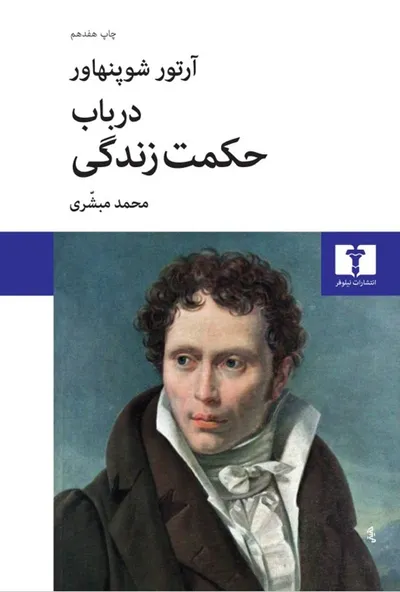
Why this book?
- To understand Schopenhauer's view on human happiness and suffering.
- To grasp the role of character and inner qualities in the quality of life.
- To learn a more realistic approach to dealing with the opinions of others.
- To become acquainted with one of the most important popular works of 19th-century philosophy.
About the book
On the Wisdom of Life is one of Arthur Schopenhauer's most famous later writings; a book that, contrary to the common image of him as a merely pessimistic philosopher, addresses the question of how to achieve a better life. In this work, Schopenhauer speaks with clear language and astute observation about the factors that shape the quality of human life.
The book's structure rests on three main axes: what we are, what we have, and what we represent. The author demonstrates that a person's inner qualities and character play a greater role in their level of satisfaction and contentment than external possessions and the judgment of others.
This work is suitable for those interested in philosophy, ethics, and thought about everyday life. Reading it can offer a fresh perspective to those grappling with comparison to others, unrealistic expectations, or the search for tranquility.
"On the stage, one plays the prince, another the courtier, and a third the servant or soldier or general, and so on. But these differences exist only in appearance. The inner reality and the core of these phenomena are the same in all men, and this reality is a poor player in a laughable drama with all its miseries and troubles."