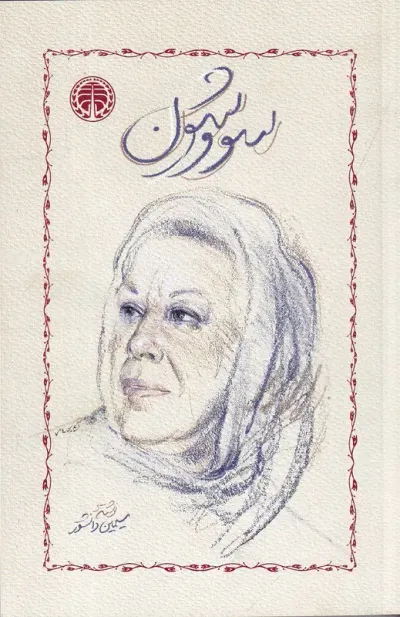
Why this book?
- It offers a fictional narrative of Iran's social and political life in the 1940s.
- It traces Zari's transformation from a cautious, traditional woman into a resilient character.
- It links historical realism with the myth of Siavash and Iranian symbolism.
- It blends standard language with elements of the Shirazi dialect, recreating the local atmosphere of Shiraz.
- It is one of Simin Daneshvar's major works and an influential piece in the trajectory of women's novel writing in Iran.
About the book
Savushun is Simin Daneshvar's first novel; a historical and social novel first published in 1969. The story takes place in Shiraz during World War II and the Allied occupation of Iran, and through the life of a single family, it depicts the political, economic, and social pressures of that era.
At the center of the story are Zari and her husband, Yousef. Yousef is a landowner who, in a time of scarcity and famine, refuses to hand over his provisions to the occupying forces, and this resistance draws him into a wider conflict. Zari, on the other hand, tries to preserve her family's safety, but the events around her gradually set the stage for her character's transformation.
One of the important features of Savushun is its fusion of historical realism with myth and symbol. The book's title refers to the mourning rites of Siavash, and this mythological background also manifests in the story's symbolic structure. In this way, the characters' fates do not remain a mere family narrative but become intertwined with themes such as resistance, oppression, mourning, and social destiny.
This novel holds a central place in Daneshvar's oeuvre and is considered one of the influential works of women's fiction writing in Iran. Its special attention to the experience and evolution of a female character, along with its simple and fluid language, characterization, and the local atmosphere of Shiraz, makes Savushun a compelling read for enthusiasts of contemporary Persian literature, historical and social novels, and researchers of Iranian fiction.
For tasks that carry the scent of danger, one needs mental and physical readiness, and her readiness was in the exact opposite direction of any danger. She knew she had neither the nerve nor the endurance for it. If she weren't so attached to the children and her husband, that would be another matter. * What is a human being? A small hope, a happy event—how quickly can it rekindle one's heart and hands for life? But when it's all slaps in the face and despair, one feels like pulp, a carcass, carrion fallen into the mud.