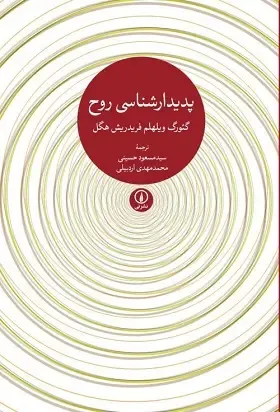
Why this book?
- This book shows the path of consciousness from sense to absolute knowledge in a dialectical manner.
- It provides the original Hegelian text in the precise translation of Mohammad Mahdi Ardabili.
- It is essential for understanding the roots of later philosophies such as those of Marx, Heidegger and Derrida.
- It presents a scientific and systematic structure of spirit instead of psychological or abstract explanations.
- It familiarizes the reader with the inner logic of one of the most complex works of German philosophy.
About the book
The Phenomenology of Spirit, first published in 1807, is Hegel’s preparation for his philosophical system. In this work Hegel regards the various forms of spirit as stations on a path; a path that begins with sensory consciousness and passes through self-consciousness, observing and acting reason, ethical and cultured spirit, and finally religious spirit, until it reaches pure knowledge or absolute spirit.
The apparently chaotic richness of the appearances of spirit is brought into a scientific order that displays the inner necessity of each stage. Incomplete forms dissolve and pass into higher ones until they find their final truth first in religion and then in science. This work replaces psychological explanations or abstract discussions about the foundation of knowledge and presents itself as the first science of philosophy.
Mohammad Mahdi Ardabili’s translation of this difficult text is one of the most important Persian efforts to make Hegel accessible. The book is an essential resource for students of philosophy, researchers of German thought, and those who wish to confront the roots of philosophical modernity.